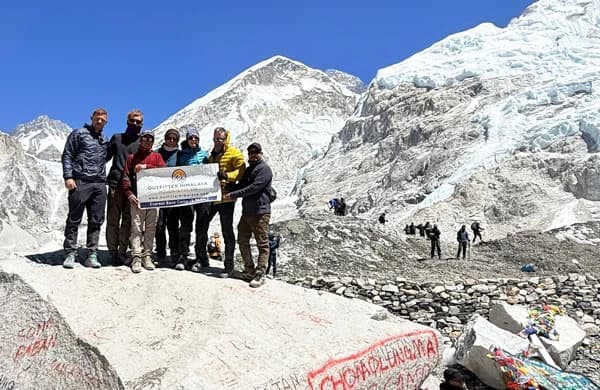
Introduction to the Everest Marathon Trek – 18 Days
The Everest Marathon Trek is a rare and powerful journey that combines classic Everest trekking with participation in the world’s highest marathon – the legendary Tenzing Hillary Everest Marathon. This 18-day adventure is not about running; it is a carefully paced high-altitude endurance experience that takes you deep into the heart of the Khumbu region, following the iconic route from Everest Base Camp to Namche Bazaar.
Unlike the standard Everest Base Camp trek, this itinerary is designed especially for marathon participants and endurance enthusiasts. It allows ample time for gradual acclimatization, cultural immersion, and physical preparation before race day. The journey unfolds through Sherpa villages; ancient monasteries, glacial valleys, and dramatic Himalayan landscapes, offering an authentic connection to the people and terrain that make the Everest region legendary.
The highlight of the trek is Marathon Day, where runners descend from Everest Base Camp through rugged trails, moraine paths, suspension bridges, and alpine settlements, an extraordinary test of stamina set against some of the most breathtaking mountain scenery on Earth. Even for non-competitive runners, simply following and witnessing this historic event is an unforgettable achievement.
Designed for marathon runners, endurance athletes, adventure travelers, and Everest enthusiasts, the Everest Marathon Trek balances challenge with safety, preparation with adventure, and performance with cultural discovery. It is a once-in-a-lifetime opportunity to experience the Everest region not just as a destination, but as a personal milestone.
What is The Everest Marathon?
A Tribute to Sir Edmund Hillary and Tenzing Norgay Sherpa
The Tenzing Hillary Everest Marathon is the World’s highest-altitude marathon, held annually on May 29 to commemorate the first ascent of Mount Everest by Sir Edmund Hillary and Tenzing Norgay in 1953. Unlike city marathons, it is a high-altitude endurance race set entirely in the Himalayas, which combines extreme terrain, thin air, and profound cultural landscapes.
Where the Tenzing Hillary Everest Marathon takes Place
The marathon starts at Everest Base Camp (5,364m) and descends through the Khumbu region to Namche Bazaar (3,440m). The marathon route follows classic Everest trails- glacial moraines, rocky paths, forested descents, and suspension bridges, making it one of the most demanding and scenic marathon courses on Earth.
Everest Marathon is more than just a race
The Everest Marathon is not just about speed. It’s a test of endurance, altitude adaptation, and mental strength. Participants come from around the World, ranging from elite runners to experienced endurance athletes who prepare for months to handle the altitude and rugged terrain. Many trekkers and supporters also join the journey to witness and experience the event alongside the runners.
Why the Everest Marathon is Unique
- The highest marathon start line in the World
- Conducted entirely in a remoteHimalayan environment
- Requires days of acclimatization trekking before race days
- Blends sport, culture, and adventure in one journey
- Supported by local Sherpa communities and international organizers
The Role of the Trek in the Everest Marathon
Participation in the Everest Marathon requires a structured trekking approach to acclimate safely to altitude. That’s why the Everest Marathon Trek (18 Days) is designed as a complete experience – guiding participants step by step from Kathmandu to Everest Base Camp, preparing both body and mind for marathon day.
Who takes Part in the Everest Marathon Trek?
The event attracts:
- Marathon and ultra-distance runners
- Endurance athletes seeking a unique challenge
- Adventure travelers with strong fitness backgrounds
- Supporters and spectators following the marathon journey
In essence, the Everest Marathon is a celebration of human endurance in the world’s most iconic mountain setting, and the trek that accompanies it transforms the race into a life-defining Himalayan adventure.
Highlights of the Everest Marathon Trek (18 days)
- Participate in the world’s highest marathon, the iconic Tenzing Hillary Everest Marathon, starting from Everest Base Camp.
- Trek the classic Everest Base Camp route with proper acclimatization at Namche Bazaar and Dingboche
- Marathon route from Everest Base Camp to Namche Bazaar, descending through rugged Himalayan terrain
- Experience the Everest region as both a trekker and endurance athlete, not just a visitor.
- Walk through legendary Sherpa villages such as Phakding, Namche Bazaar, Tengboche, Dingboche, and Lobuche.
- Visit Everest Base Camp and Kala Patthar, two of the most iconic viewpoints in the Himalayas.
- Run and trek through glacial moraines, alpine trails, suspension bridges, and forested descents.
- Immerse yourself in Sherpa culture, Buddhist monasteries, and mountain traditions.
- It is a carefully planned itinerary with adequate rest and acclimatization days for safety and performance.
- Supported journey with experienced guides, porters, and marathon logistics
- A rare opportunity to combine high-altitude trekking, cultural discovery, and a historic sporting event in one adventure
The Everest Marathon is not just about reaching Everest Base Camp, and it’s also about earning the journey, preparing for the challenge, and becoming part of one of the most extraordinary endurance events on Earth.
May 29: A Brief history of this Event – The Everest Marathon
The Tenzing Hillary Everest Marathon was first organized in 2003 to honor the historic ascent of Mount Everest by Sir Edmund Hillary and Tenzing Norgay Sherpa on May 29, 1953. Since then, the event has been held annually on the same date, turning a moment of mountaineering history into a global celebration of human endurance.
When the Tenzing Hillary Everest Marathon was first proposed, it quickly gained international recognition. Athletes from around the world began traveling to Nepal not just to compete, but to experience the Everest region in a way few have ever done. Over the years, the marathon evolved into a symbol of resilience, cultural respect, and adventure, deeply rooted in the Khumbu region and supported by local Sherpa communities.
Unlike conventional road marathons, the Everest Marathon has always emphasized preparation and acclimatization. Participants must trek to Everest Base Camp over several days before race day, reinforcing the Philosophy that success at altitude comes from patience, respect for the mountains, and physical readiness.
Today, the event is recognized as:
- The highest-altitude marathon in the world
- One of the most challenging endurance races ever organized
- A unique fusion of sport, Himalayan culture, and adventure travel
For many runners and trekkers alike, taking part in the Everest Marathon – whether as a competitor or supporter is not about winning, but about becoming part of a living Himalaya legacy.
Attraction and Experience on Everest Marathon Trek
The Everest Marathon Trek is far more than a high-altitude race; it is a multi-layered Himalayan experience that blends endurance, culture, scenery, and history. Find some of the key attractions and moments that make the trek one of the most extraordinary adventure journeys in the world.
Everest Base Camp – Where the Journey Reaches Its Peak
You will reach Everest Base Camp (5,364m), a defining moment of the trip. The base camp is set beneath the Khumbu Icefall, an iconic site not only the start point of the marathon but also the heart of Himalayan mountaineering. You will stand among expedition tents with Everest above, which delivers a powerful sense of achievement and connection to decades of climbing history.
The World’s Highest Marathon Route
The highlight of the trip is to participate in the Tenzing Hillary Everest Marathon, which descends from Everest Base Camp to Namche Bazaar. The Everest Marathon route crosses glacial moraines, rocky trails, suspension bridges, and forested paths, which offer an endurance challenge unmatched anywhere on Earth. It is a rare opportunity to experience sport at an extreme altitude within a living mountain landscape.
Kala Patthar – Legendary Everest Viewpoint
A hike to Kala Patthar (5,545m) rewards you with one of the best close-up views of Mount Everest, Nuptse, and the Khumbu Glacier. The sunrise or sunset view becomes the most photographed and emotionally resonant moment of the entire trek.
Sherpa Villages and Living Himalayan Culture
The trail passes through traditional Sherpa settlements such as Phakding, Namche Bazaar, Tengboche, Dingboche, and Lobuche. You experience daily life in the mountains, stone houses, prayer wheels, mani walls, and warm hospitality.
Tengboche Monastery – Spiritual Heart of the Khumbu
Set against a dramatic mountain backdrop, the Tengboche Monastery is the most important Buddhist center in the Everest region. Visiting the monastery provides insights into Sherpa spirituality and the deep respect local communities hold for the mountains.
Glaciers, Icefalls, and High-Alpine Terrain
As the trek ascends, the landscape transforms from forested valleys to stark alpine terrain. You walk alongside the Khumbu Glacier, cross moraines, and witness the raw geological forces that define the Himalayas.
Dramatic Landscape Transitions
One of the most striking experiences of the Everest Marathon Trek is the rapid change in scenery, which you will experience from green river valleys and pine forests to barren, wind-swept highlands. This contrast highlights Nepal’s extraordinary geographical diversity.
Physical, Mental, and Emotional achievement
Completing this Everest Marathon, especially around marathon day, is a profound personal milestone. The combination of altitude, endurance, preparation, and perseverance makes the journey as much mental and emotional as it is physical.
Unmatched Photography Opportunities
Every day presents iconic photo moments: the suspension bridges draped with prayer flags, snow-capped peaks at dawn, runners descending through mountain villages, and the vibrant energy of Namche bazaar.
An once-in-a-Lifetime Himalayan Experiences
Few journeys in the world combine high-altitude trekking, a historic endurance event, deep cultural immersion, and iconic mountain scenery in a single itinerary. It’s an experience that leaves a lasting imprint long after you return home.
Everest Marathon Route and Experience
The Everest Marathon Route is one of the most demanding and unique marathon courses in the world, not because of speed, but because of altitude, terrain variation, and environmental extremes. Understanding the route and what it feels like to move through it is essential for both runners and adventure trekkers.
Route Overview: Everest Base Camp to Namche Bazaar
The marathon begins at Everest Base Camp (5,364m) and descends to Namche Bazaar (3,440m), covering rugged Himalayan trails rather than paved roads. This downhill profile may sound easier, but the terrain's technical nature and altitude make it a true endurance challenge.
The route follows the classic Everest trekking trail, passing through Gorak Shep, Lobuche, Dingboche, Pangboche, Tengboche, and several smaller settlements before finishing in Namche.
Altitude and Oxygen Challenge
At the starting line, oxygen levels are nearly 50% lower than at sea level. Even with a descending route, runners must manage:
- Reduced aerobic capacity
- Rapid breathing and heart rate changes
- Increased fatigue despite downhill momentum
The Everest Marathon Trek includes multiple acclimatization days before race day – allowing the body to adapt safely and effectively.
Terrain: More Than Just a Trail
The route is highly varied and constantly changing:
- Glacial moraines near Everest Base Camp and Lobuche
- Rocky and uneven paths require careful foot placement
- Loose gravel and dust sections at mid-altitudes
- Forest trails with roots and steps below Tengboche
- Suspension bridges crossing deep gorges
There are no flat, predictable stretches; each kilometre demands focus, balance, and adaptability.
Supporters and trekkers follow the marathon route at a slower pace, witnessing runners pass through villages and high-altitude landscapes.
Weather and Surface Conditions
Weather on the route can vary dramatically:
- Cold mornings at high altitude
- Warmer conditions as you descend
- Occasional wind, dust, or light snow
The trail conditions can change daily, influenced by weather and foot traffic, making adaptability key.
Mental Endurance and Focus
Beyond physical effort, the route tests mental resilience. Navigating technical terrain at altitude requires constant concentration, pacing awareness, and self-management, making the Everest Marathon as much a mental journey as a physical one.
The Finish at Namche Bazaar
Reaching Namche Bazaar marks the completion of one of the world's most challenging marathon routes. The lively Sherpa town, set in a natural amphitheater, provides a powerful contrast to the stark high-altitude environment of the start, symbolizing both physical descent and personal triumph.
Why This Route Is Unmatched
- The highest marathon start point on Earth
- Entirely off-road, high-altitude Himalayan terrain
- Combines trekking paths, cultural villages, and alpine wilderness
- Demands endurance, technical skill, and mental strength
In summary, the Everest Marathon Route is not about chasing speed; it's about mastering altitude, terrain, and self-discipline in one of the most dramatic mountain environments on the planet.
Why Book Everest Marathon Trek with Outfitter Himalaya
Choosing the right company makes the difference between just completing a trip and transforming it into a safe, memorable, and life-defining experience. You are not just booking a trek; when you book a trek with Outfitter Himalaya, you also join a team with deep Himalayan expertise, an established local presence, and a proven safety–first approach.
Expert Guidance for a Unique Endurance Trek
The Everest Marathon Trek is not an ordinary trek; it combines a high-altitude trek, marathon preparation, and competitive performance. Outfitter Himalaya has extensive experience in designing and guiding multi-stage Himalayan journeys, especially those involving altitude progression, staged acclimatization, and physically demanding days.
Our guides don’t just lead the trail, they explain the environment, culture, terrain, and health considerations that matter most when running or trekking at altitude.
Structured Acclimatization and Safety-First Planning
Altitude is the biggest challenge in the Everest Marathon Trek. Unlike many operators who rush itineraries, we emphasize scientific, well-paced acclimatization with dedicated rest days at:
Your health and summit success are always our priority, and our itinerary reflects that.
Local Expertise and Cultural Insight
Outfitter Himalaya is a Nepal-based operator with deep roots in the Everest region and includes:
- Licensed local guides
- Sherpa support staff
- Long-term community relationships
We help you connect meaningfully with Sherpa culture, Buddhist traditions, and mountain life and turn the trek into a holistic Himalayan experience.
Seamless Logistics and Reliable Service
We take care of all expedition details so you can focus on your goals:
- Airport pickups and transfers
- Permits and park entry fees
- Accommodation from Kathmandu to the high Himalaya
- Porter support and crew coordination
- Flight tickets (Kathmandu ↔ Lukla)
- Emergency planning and communications
No stress, no guesswork, just clarity and confidence from start to finish.
Commitment to Safety and Responsible Travel
Your safety is paramount, and we emphasize:
- Daily health and altitude monitoring
- Weather-based scheduling decisions
- Emergency protocols and evacuation planning
- Accreditation and compliance with Nepalese regulations
Personalized Service and Transparent Communication
From your first inquiry to final departure:
- We listen to your needs
- We customize the trek to your profile
- We communicate clearly and honestly
- We provide guidance before, during, and after the trek
No hidden costs. No vague terms. Just trustworthy support and attention to detail.
A Journey Beyond the Trail
When you book the Everest Marathon Trek with Outfitter Himalaya, you get:
- Professional planning and genuine expertise
- Comfortable and safe pacing
- Cultural immersion
- Personal growth and achievement
We don’t just organize tours; we create meaningful, life-enriching Himalayan journeys that stay with you long after you return home.
How to Book the Everest Marathon Trek with Outfitter Himalaya
Booking your Everest Marathon Trek with us is simple and transparent:
- Please send an inquiry through our website or contact our team directly
- Receive a detailed itinerary, inclusions, and preparation guidance
- Confirm your spot with a deposit to secure marathon coordination and trekking arrangements
- Receive pre-trip support, including fitness preparation tips, packing guidance, and travel assistance
- Our team remains in close communication with you from the first inquiry until your safe return home.
Why Book Early?
- Limited marathon participation slots
- Restricted flight availability to Lukla
- Fixed annual marathon date
- Time required for proper preparation and acclimatization
Early booking ensures smooth logistics, better flight options, and complete peace of mind.
Personalized Support from Start to Finish
When you book with Outfitter Himalaya, you receive:
- Professional guidance from a Nepal-based, licensed tour operator
- Experienced guides familiar with Everest Marathon logistics
- Clear communication and honest pricing
- On-ground support before, during, and after the trek
We don’t just organize treks; we prepare you for a life-defining Himalayan challenge.
Ready to take on the World’s Highest Marathon in 2026 or 2027?
If you’re ready to combine high-altitude trekking, endurance sport, and Himalayan culture, the Everest Marathon Trek is your Ultimate adventure. Contact Outfitter Himalaya today to check availability, receive expert advice, and begin your journey toward one of the most extraordinary achievements on Earth.
Spaces are limited. Booking is highly recommended.