Book Now
Annapurna Base Camp Trek
US$850

Annapurna Base Camp Trek

281 reviews
108 reviews
Recommended by 99% of travelers

The Annapurna Base Camp Trek is a 14-day guided trek from Kathmandu to the heart of the Annapurna Sanctuary, reaching 4,130 meters. This classic ABC itinerary combines Ghorepani and Poon Hill with Chhomrong, Machhapuchhre Base Camp, and an overnight stay at Annapurna Base Camp. This moderate trek suits reasonably fit travelers and includes accommodation, meals, transportation, permits, a guide, a porter, and airport transfers.

Looking for a shorter itinerary? See our 5-Day Short ABC Trek or 9-Day ABC Trek via Poon Hill.

Trip Facts
Duration
14 Days
Trip Grade
Moderate
Country
Nepal
Maximum Altitude
4130 M
Group Size
1-12
Starts
Kathmandu
Ends
Kathmandu
Activities
Trekking
Best Time
Autumn and Spring Season
Overview

Overview: Annapurna Base Camp Trek – 14 Days

The Annapurna Base Camp Trek is a 14-day Himalayan trekking journey in Nepal's Annapurna Region. The Trek takes you from Kathmandu to Pokhara and then into the Annapurna Sanctuary. The Trek combines traditional mountain villages, rhododendron and bamboo forests, suspension bridges, waterfalls, panoramic Himalayan viewpoints, and the dramatic amphitheater of mountains surrounding Annapurna Base Camp at 4,130 meters (13,550 feet).

This classic Annapurna Base Camp Trek itinerary includes the sunrise viewpoint at Poon Hill, the Gurung and Magar villages of the lower Annapurna region, Tadapani and Chhomrong, Machhapuchhre Base Camp, and an overnight stay near Annapurna Base Camp before descending through Jhinu Danda and returning to Pokhara.

ABC Trek Itinerary is designed for travelers with reasonable fitness who can walk around 5–7 hours per day on mountain trails. The route is considered a moderate trek, with no technical climbing required; however, the ascent to 4,130 meters still requires proper pacing, hydration, preparation, and awareness of altitude.

Our 14-day package starts and ends in Kathmandu and includes accommodation, meals during the Trek, transportation, trekking permits, a licensed guide, porter service, and airport transfers. We also offer private departures and alternative Annapurna Base Camp itineraries for travelers who want a shorter trek, a Pokhara start, a helicopter return, or an extended Annapurna adventure.

Quick Facts – Annapurna Base Camp – 14 Days

  • Duration: 14 days
  • Trekking region: Annapurna region, Nepal
  • Highest point: Annapurna Base Camp – 4,130 m / 13,550 ft
  • Trek grade: Moderate
  • Trekking hours: Approximately 5–7 hours per day
  • Starting point: Nayapul, after traveling from Kathmandu via Pokhara
  • Major highlights: Poon Hill, Ghorepani, Tadapani, Chhomrong, Machhapuchhre Base Camp and Annapurna Base Camp
  • Accommodation: Hotels in Kathmandu and Pokhara; teahouses/lodges during the trek
  • Best seasons: Spring and autumn

Why Choose Our 14-Day Annapurna Base Camp Trek?

  • Classic Kathmandu-to-Kathmandu itinerary
  • Poon Hill sunrise and Annapurna Base Camp
  • Gradual approach through the Annapurna Sanctuary
  • Small-group departures and private departures available
  • Airport transfers and logistics handled from arrival to departure

Who Is the 14-Day Annapurna Base Camp Trek Suitable For?

The Annapurna Base Camp Trek is suitable for travelers who enjoy active holidays and can walk for several hours a day on uneven mountain trails. You do not need previous mountaineering or technical climbing experience. Still, you should have a reasonable level of fitness and be prepared for sustained uphill and downhill walking.

This trek is a good choice if you:

  • Want to experience a classic Himalayan trek without technical climbing
  • Have around two weeks available for a Nepal adventure
  • Enjoy mountain villages, forests, waterfalls, and Himalayan scenery
  • Are comfortable walking approximately 5–7 hours on trekking days
  • Prefer a guided and organized trekking experience
  • Want the option of joining a small group or traveling privately

Highlights of Annapurna Base Camp Trek – 14 Days

  • Trek through diverse landscapes of rhododendron forests, traditional villages, waterfalls, and high Himalayan valleys.
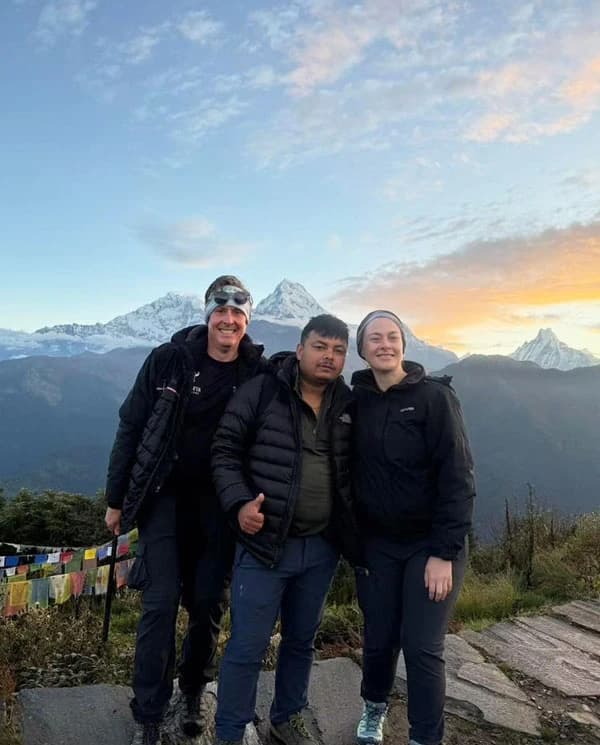
  • Watch the sunrise from Poon Hill with spectacular views of Annapurna, Dhaulagiri, Machhapuchhre, Nilgiri, and Hiunchuli.
  • Explore the Annapurna Sanctuary, including Machhapuchhre Base Camp and the dramatic trail to Annapurna Base Camp at 4,130 m (13,550 ft).
  • Spend a night at Annapurna Base Camp, surrounded by the towering peaks of the Annapurna massif and Himalayan glaciers.
  • Relax in Jhinu Danda’s natural hot springs and experience the warm hospitality and culture of the local Gurung and Magar communities.

What to Expect on the Annapurna Base Camp Trek – 14 Days

The 14-day Annapurna Base Camp Trek combines Himalayan scenery, village life, comfortable teahouse stays, and a gradual transition from the busy cities to the peaceful Annapurna Sanctuary. Here is what you can expect along the way:

  • A mix of culture and mountain adventure: Your journey begins with time in Kathmandu and Pokhara before entering the trekking region. You will experience Nepalese culture, local traditions, and mountain communities before the trail takes you deeper into the Himalayas.
  • Changing scenery every day: The landscape changes constantly as you gain elevation—from green hills and terraced farmland to dense forests, alpine valleys, and rugged mountain terrain. The changing scenery keeps each day of the trek different.
  • Authentic village life: You will stay overnight in local teahouses and pass through communities where daily life is closely connected to the mountains. There are opportunities to meet local people, enjoy traditional meals, and experience the welcoming atmosphere of the Annapurna region.
  • A rewarding high-altitude experience: The trail becomes increasingly dramatic as you enter the Annapurna Sanctuary. Reaching Annapurna Base Camp and spending the night there gives you time to experience the mountain environment beyond simply arriving at the destination.
  • A relaxing finish: After descending from the high mountains, the natural hot springs at Jhinu Danda provide a welcome opportunity to rest your tired muscles before returning to Pokhara and completing your Himalayan adventure.

How Difficult Is the Annapurna Base Camp Trek?

The Annapurna Base Camp Trek is a moderate-level trek suitable for travelers with a reasonable level of fitness. It does not require technical climbing or previous mountaineering experience. Still, you should be prepared for several hours of walking each day on uneven mountain trails.

The trail includes regular ascents and descents, stone steps, forest paths, and some steeper sections, particularly as you approach the higher parts of the Annapurna Sanctuary. The highest point is Annapurna Base Camp at 4,130 m (13,550 ft), so altitude becomes an important consideration.

You can prepare by building your walking endurance before the trek, especially through regular hiking, stair climbing, or cardio exercise. During the trek, walk at a comfortable pace, stay hydrated, eat well, and allow your body time to adjust as you gain elevation.

With proper preparation and a steady pace, most reasonably fit travelers can complete the Annapurna Base Camp Trek and enjoy the experience without needing technical trekking skills.

Length, Distance, Hours and Elevation on 14 Days ABC Itinerary

The 14-day Annapurna Base Camp Trek includes travel between Kathmandu and Pokhara, and approximately 85–90 km of trekking, depending on the exact trail and the short road transfers included in the itinerary. The trekking portion begins near Nayapul/Birethanti after traveling from Pokhara. It follows the classic route through Ghorepani, Poon Hill, Tadapani, Chhomrong, and the Annapurna Sanctuary before descending to Jhinu Danda.

You typically walk for 5–7 hours per day, though some days may be shorter or longer depending on the terrain. The most demanding sections include the stone-step climb toward Ghorepani and the ascent from the lower Modi Khola valley toward Annapurna Base Camp.

The highest point of the trek is Annapurna Base Camp at 4,130 meters (13,550 feet). The route gains elevation gradually, but the final approach into the Annapurna Sanctuary is at high altitude, so a steady pace, good hydration, and proper preparation are important.

Distance and Elevation on 14 Days Itinerary

Trekking Day Route Walking Distance Walking Time Elevation
Day 4 Nayapul/Birethanti to Tikhedhunga Approx. 7 km 3–4 hours 1,540 m
Day 5 Tikhedhunga to Ghorepani Approx. 11 km 7–8 hours 2,860 m
Day 6 Ghorepani – Poon Hill – Tadapani Approx. 12 km 6–7 hours Poon Hill 3,210 m
Day 7 Tadapani to Chhomrong Approx. 10 km 6–7 hours 2,170 m
Day 8 Chhomrong to Himalaya Approx. 11 km 6–7 hours 2,920 m
Day 9 Himalaya to Annapurna Base Camp Approx. 11 km 6–7 hours 4,130 m
Day 10 Annapurna Base Camp to Dovan Approx. 12 km 6–7 hours 2,600 m
Day 11 Dovan to Jhinu Danda Approx. 12 km 6–7 hours 1,760 m
Day 12 Jhinu Danda to Siwai and drive to Pokhara Short walk + road transfer Approx. 4–5 hours combined 830 m

How Much Do You Walk Each Day?

Most trekking days involve approximately 7–12 km of walking. The distance itself is only one part of the challenge because the trail includes frequent ascents and descents, stone steps, suspension bridges, forest paths, and uneven mountain terrain.

The climb from Tikhedhunga toward Ghorepani is one of the more demanding days because of the long stone staircase section near Ulleri. Later in the trek, the approach from the Himalaya to Annapurna Base Camp is challenging due to the increasing elevation and more rugged terrain.

After reaching Annapurna Base Camp, the route descends steadily toward Dovan and Jhinu Danda. The final trekking day includes a short walk toward Siwai followed by a road transfer to Pokhara.

How Much Elevation Do You Gain?

The route starts in the lower hills and gradually climbs toward the Annapurna Sanctuary. You will pass through several distinct elevation zones, from subtropical forests and terraced farmland to rhododendron forests and the high alpine environment surrounding Annapurna Base Camp.

The highest point is 4,130 meters (13,550 feet) at Annapurna Base Camp. Poon Hill, at 3,210 meters, is an important viewpoint but is not the highest point of the trek.

Because the route reaches more than 4,000 meters, altitude should be taken seriously. Your guide will monitor your pace and general condition. At the same time, you should stay hydrated, eat regularly, and communicate any symptoms of altitude sickness.

Why the 14-Day Itinerary Works Well

The 14-day itinerary includes Kathmandu and Pokhara as well as the trekking route, giving you time to experience the lower Annapurna region before reaching the higher mountains.

The route also includes Ghorepani and Poon Hill, which add a gradual approach to the Annapurna Sanctuary rather than taking the shortest route directly toward Base Camp. This gives you a wider variety of landscapes, villages, forests, viewpoints, and cultural experiences along the journey.

If you have less time, Outfitter Himalaya also offers shorter Annapurna Base Camp itineraries, while travelers looking for a longer Himalayan adventure can combine ABC with other Annapurna routes.

Which Annapurna Base Camp Trek Is Right for You?

Outfitter Himalaya has designed many Annapurna trek itineraries that include trek to Annapurna Base Camp beside of this 14 Days Itinerary, take a look and compare, which one is right for you!

  • 14-Day Annapurna Base Camp Trek: Choose this classic Kathmandu-to-Kathmandu itinerary if you want to combine Kathmandu sightseeing, Pokhara, Poon Hill, Ghorepani, and the complete Annapurna Base Camp trekking experience.
  • Choose 9-Day ABC via Poon Hill: If you want Poon Hill + ABC and are already in Pokhara or want to book trek portion, starting and ending in Pokhara.
  • 5-Day Short ABC Trek: Choose this if you have very limited time and want to reach ABC quickly from Pokhara.
  • 17-Day ABC + Mardi Himal Trek: Choose if you want a longer Annapurna adventure and experience the ABC with Mardi Himal together.
  • 21-Day Annapurna Circuit + ABC: Choose if you are an experienced trekker and want a much longer Himalayan journey and trek both Annapurna Circuit and Base camp together.
  • 12-Day ABC Trek with Heli Return: Choose if you want to explore Annapurna Base Camp more comfortably and take a heli return flight from ABC to Pokhara with upgraded 4 star accommodation in Kathmandu and Pokhara.

14-Day Annapurna Base Camp Trek Cost

We have fixed the cost for the ABC 14-Day Trek for 2026 and 2027, and it varies based on the number of people you are booking; see below.

Number of trekkers USD per person
1 Pax 1100.00
2 - 5 Pax 950.00
6 to 12 Pax 850.00

As Outfitter Himalaya offers many Annapurna Base Camp Trek Itineraries, the cost varies by package. See our Annapurna Base Camp Trek Cost to compare and choose the right ABC Trek according to your budget, time, and fitness level.

Why trek the Annapurna Base Camp with Outfitter Himalaya

  • Experienced local trekking team: Trek with knowledgeable local guides who understand the Annapurna region, trail conditions, altitude, and local culture.
  • Well-planned itinerary: Our itinerary is designed with a practical pace, allowing you to enjoy the journey as you gradually gain altitude.
  • Licensed trekking guides and porter support: Our professional team assists you throughout the trek, from navigation and logistics to carrying your main trekking luggage.
  • Small-group and private options: Travel with a group of up to 12 people, or choose a private trek for a more flexible, personalized experience.
  • Complete trekking arrangements: We handle essential trekking logistics, including accommodation, meals, transportation, permits, and other services included in your package.
  • Safety and altitude awareness: Our guides monitor your condition throughout the trek and provide support if you experience altitude-related difficulties or changing mountain conditions.
  • Local expertise and genuine experience: Trek through traditional Gurung and Magar villages, rhododendron forests, and the Annapurna Sanctuary with a team that knows the region firsthand.
  • Flexible trekking options: We can arrange customized itineraries and alternative Annapurna Base Camp routes according to your available time, interests, and trekking preferences.

Annapurna Base Camp Trek Outline Itinerary and Map

  • Day 01: Arrival in Kathmandu and Transfer to Hotel
  • Day 02: Kathmandu Sightseeing and Trek Preparation
  • Day 03: Drive from Kathmandu to Pokhara
  • Day 04: Drive to Nayapul and Trek to Tikhedhunga
  • Day 05: Trek from Tikhedhunga to Ghorepani
  • Day 06: Sunrise at Poon Hill and Trek to Tadapani
  • Day 07: Trek from Tadapani to Chhomrong
  • Day 08: Trek from Chhomrong to Himalaya
  • Day 09: Trek from Himalaya to Annapurna Base Camp
  • Day 10: Trek from Annapurna Base Camp to Dovan
  • Day 11: Trek from Dovan to Jhinu Danda
  • Day 12: Trek from Jhinu Danda to Siwai and drive to Pokhara
  • Day 13: Travel from Pokhara to Kathmandu
  • Day 14: Transfer to Kathmandu International Airport
Customize This Trip
The above itinerary does not meet your requirements, we can design individualized travel Itinerary based on your preferences and specification.
Annapurna Base Camp Trek route map
Cost Details

Service Details

Cost Includes

Accommodation and Meals

  • 3 nights' accommodation in Kathmandu in a comfortable 3-star hotel on a twin/double-sharing basis.
  • 2 nights' accommodation in Pokhara in a comfortable 2–3-star hotel on a twin/double-sharing basis.
  • 8 nights' accommodation during the trek in local teahouses/lodges on a twin-sharing or dormitory-sharing basis, depending on availability and location.
  • 31 meals during the trip: 13 breakfasts, 9 lunches, and 9 dinners, as outlined in the itinerary.

Transportation and Sightseeing

  • All scheduled airport transfers on arrival and departure by private tourist vehicle.
  • Guided sightseeing tour of Kathmandu on a private tourist vehicle.
  • Tourist bus transportation between Kathmandu and Pokhara, including the return journey.
  • Private transportation between Pokhara and the trekking trailhead, including transfers from Pokhara to Nayapul and from Jhinu Danda back to Pokhara.

Experienced Trekking Guide and Crew

  • An experienced, government-licensed trekking guide throughout the trek.
  • An assistant guide for groups of 9 or more trekkers.
  • Porter service, with one porter shared between two trekkers. Each porter carries up to approximately 20–22 kg of combined luggage.
  • All wages, meals, accommodation, transportation, insurance, equipment, and necessary medical expenses for the trekking staff.

Trekking Permits and Entry Fees

  • Annapurna Conservation Area Permit (ACAP).
  • Trekkers' Information Management System (TIMS) permit/card, where applicable.

Trekking Equipment and Additional Services

  • Arrangement of emergency helicopter evacuation when required (evacuation costs are covered by your travel insurance policy, subject to its terms and coverage).
  • Sleeping bag, down jacket, and duffel bag, if required (to be returned after the trek).
  • Seasonal fruit served after dinner during the trek, when available.
  • Annapurna Base Camp trekking route map.
  • Comprehensive first-aid kit and pulse oximeter for monitoring oxygen saturation.

Administrative Costs and Government Taxes

  • All necessary administrative and operational expenses.
  • Applicable government taxes and service charges.

Cost Not Includes

  • Nepal entry visa fees.
  • Comprehensive travel insurance covering high-altitude trekking and emergency evacuation.
  • Lunch and dinner while staying in Kathmandu and Pokhara, except where specifically mentioned in the itinerary.
  • Entrance fees for monuments and heritage sites during the Kathmandu sightseeing tour (approximately NPR 2,600 per person).
  • Personal expenses and shopping.
  • Alcoholic and non-alcoholic beverages, bottled water, chocolates, snacks, and bar bills.
  • Personal expenses for hot showers, Wi-Fi/internet, telephone calls, and laundry during the trek.
  • International airfare to and from Nepal.
  • Tips and gratuities for guides, porters, drivers, and other trekking staff.
  • Any services, activities, or expenses not specifically listed under What's Included.

Add-ons & Options

Upgrade to a Flight: Kathmandu - Pokhara

Don't want to spend long hours on the road? You can skip the 6-8 hour drive and book a quick 30-minute flight instead:

  • Kathmandu to Pokhara flight (Day 3) - USD $125
  • Pokhara to Kathmandu flight (Day 13) - USD $125

Trek Options

  • Are you Solo traveller and Joining a Group Trek and want to have private room: Solo traveller will be paired with another traveller when you are solo and join the group trek. We guarantee a single room in Kathmandu and Pokhara (5 nights) and most of the accommodations during the trek (you will have to share room with other at least for 3 nights in the higher altitude such Himalaya, ABC and Dovan). Please select 'Single room' at checkout time if you want to have private room.
  • Small Group Trek to Annapurna Base Camp: We have fixed dates for 2026 and 2027 to join the Small Group Trek ABC. The group size will range from 1 to 12 pax. Please select a date and book on your preferred date.
  • Solo Private Annapurna Base Camp Trek: We organize a solo private trek to Annapurna Base Camp, available on any date of the year. You can choose any date from the fixed dates or check availability if the given date is not suitable for you. There will be additional Costs applies to do a Solo Trek. Please select the Solo Private Trek option at checkout if you prefer this option.
  • Private Annapurna Base Camp Trek: If you are two or more and want to do a private trek to Annapurna Base Camp, An Additional fee applies. Please tick to make it private at checkout time, or check availability. This type of tour is available on any date of the year.
Trip Booking

Annapurna Base Camp Trek Departures

  • Group Trek: Outfitter Himalaya has set the Date for the 14-Day Annapurna Base Camp Trek for 2026 and 2027. Please select your preferred date and book.
  • Arrival in Nepal: The Trip date is your arrival date in Kathmandu.
  • Private Trek: If you want to trek privately, check availability or inquire with us. A private trek is available on your chosen date and is ideal if you want to walk at your own pace; it is suitable for solo travelers, couples, friends, and family.
Select your preferred date
Sep 2026
Oct 2026
Nov 2026
Dec 2026
Jan 2027
Feb 2027
Mar 2027
Apr 2027
May 2027
Jun 2027
Jul 2027
Aug 2027
Sep 2027
Oct 2027
Nov 2027
Dec 2027
Departure Date
Status
Price
Departure Date
Thursday - WednesdaySep 24, 2026 - Oct 07, 2026
Status
Guaranteed
Price
US$850
Departure Date
Wednesday - TuesdaySep 30, 2026 - Oct 13, 2026
Status
Guaranteed
Price
US$850
Roadmap

Annapurna Base Camp Trek Detailed Itinerary

The 14-day Annapurna Base Camp Trek combines the cultural highlights of Kathmandu and Pokhara with a classic Himalayan trekking route through Ghorepani, Poon Hill, Tadapani, Chhomrong, and the Annapurna Sanctuary.

After traveling from Kathmandu to Pokhara, the walk begins from Nayapul. It gradually gains elevation through villages, forests, and mountain valleys. The route reaches Annapurna Base Camp at 4,130 meters before descending through the sanctuary to Jhinu Danda and then to Pokhara.

The itinerary includes comfortable pacing, overnight stays in local teahouses, and several hours of walking on most trekking days. Our guide will help manage the pace, route, meals, accommodation, and altitude considerations throughout the trek.

Annapurna Base Camp Trek Daily Plan

Welcome to Kathmandu, the gateway to your Annapurna adventure.

  • Upon arrival at Tribhuvan International Airport, our representative will meet you and transfer you to your hotel. After checking in, you can rest after your journey or explore the surrounding area if you arrive early.
  • In the evening, your trekking team can brief you about the upcoming Annapurna Base Camp Trek and help you prepare for the journey.
Max Altitude: 1,345m / 4,412 ftAccommodation: HotelTravel Mode: Private Tourist Vehicle
Annapurna Base Camp Trek Day 1 Arrival Nepal
Highlight of the day
Welcome to Nepal!

Today is dedicated to exploring Kathmandu's cultural heritage before heading into the Annapurna region.

  • Depending on the sightseeing schedule, you will visit some of Kathmandu's important UNESCO-listed cultural sites, including Kathmandu Durbar Square, Swayambhunath, Boudhanath, and Pashupatinath.
  • You will also have time for a trek briefing with your guide. This is an opportunity to review the itinerary, check your trekking equipment, and discuss practical details for the journey ahead.
Max Altitude: 1,345m / 4,412 ftMeals: BreakfastAccommodation: HotelDuration: 6-7 HoursTravel Mode: Private Tourist Vehicle
Annapurna Base Camp Trek Day 2 Sight Seeing Tour Kathmandu
Highlight of the day
Explore Kathmandu

After breakfast, we leave Kathmandu and travel west toward Pokhara, the main gateway to the Annapurna region.

  • The journey follows Nepal's scenic hill roads, passing rivers, terraced farmland, small settlements, and green mountain landscapes. Although the drive takes several hours, it provides an interesting introduction to the changing scenery of central Nepal.
  • After arriving in Pokhara, check into your hotel and enjoy some free time around Lakeside and Phewa Lake.

A flight from Kathmandu to Pokhara can also be arranged as an alternative to the road journey.

Max Altitude: 930m / 3,051 ftMeals: BreakfastAccommodation: HotelDuration: 7-8 HoursDistance: 210km / 130 milesTravel Mode: Tourist Bus
Annapurna Base Camp Trek Day3 Pokhara
Highlight of the day
Explore Pokhara!

After breakfast, we drive from Pokhara toward Nayapul and continue to the trailhead near Birethanti.

  • From here, the trek begins. The trail follows the lower Annapurna foothills through small villages, cultivated hillsides, forests, and mountain streams. This is a relatively gentle introduction to the trek, allowing you to settle into your walking rhythm.

We continue toward Tikhedhunga, where we spend our first night on the trekking trail.

Max Altitude: 1,540m / 5,052 ftMeals: Breakfast, Lunch and DinnerAccommodation: Guest HouseDuration: 3-4 hoursDistance: 7km / 4 milesTravel Mode: Drive and Walking
Annapurna Base Camp Trek Day 4 Trek Trek To Tikhedungha
Highlight of the day
Trekking trail from Nayapul to Tikhedunga

Today is one of the more demanding days in the lower section of the trek.

  • After crossing a suspension bridge, the trail climbs steadily toward Ulleri, with a long section of stone steps. From Ulleri, the route continues through forests and mountain settlements toward Nangethanti, then climbs through rhododendron forests to Ghorepani.

At around 2,860 meters, Ghorepani is one of the best-known villages on the Annapurna trekking route. On clear days, you can see impressive views of the surrounding Himalayan peaks.

Max Altitude: 2,860m / 9,383 ftMeals: Breakfast, Lunch and DinnerAccommodation: Guest HouseDuration: 7-8 hoursDistance: 11km / 6 milesTravel Mode: Walking
Annapurna Base Camp Rek Day 5 Trek To Ghorepani
Highlight of the day
Welcome to Ghorepani Village!

We start early in the morning for the short but steep hike to Poon Hill, one of the most popular viewpoints in the Annapurna region.

  • At 3,210 meters, Poon Hill offers a panoramic Himalayan view, especially at sunrise. On a clear morning, you can see peaks including Annapurna South, Dhaulagiri, Machhapuchhre, Hiunchuli, Nilgiri, and other surrounding mountains.

After returning to Ghorepani for breakfast, we continue toward Tadapani. The trail passes through rhododendron and mixed mountain forests, with occasional mountain views along the way.

Max Altitude: 3,210m / 10,531 ftMeals: Breakfast, Lunch and DinnerAccommodation: Guest HouseDuration: 6-7 hoursDistance: 12km / 7 milesTravel Mode: Walking
Annapurna Base Camp Trek Day 6 Hike To Poonhill
Highlight of the day
Sunrise from Poon Hill!

Today we leave Tadapani and continue toward the main Annapurna Base Camp trail.

  • The route descends through forests and mountain villages before crossing streams and suspension bridges. As the trail approaches Chhomrong, the landscape opens up, and the views toward Annapurna South, Hiunchuli, and Machhapuchhre become increasingly impressive.

Chhomrong is one of the most important villages on the Annapurna Base Camp route and a major stopping point before entering the higher Modi Khola valley.

Max Altitude: 2,170m / 7,119 ftMeals: Breakfast, Lunch and DinnerAccommodation: Guest HouseDuration: 6-7 hoursDistance: 10km / 6 milesTravel Mode: Walking
Annapurna Base Camp Trek Day 7 Trek Fromtadapani Chhomrong
Highlight of the day
Trek to Chhomrong

From Chhomrong, the trail descends toward the Chhomrong Khola before climbing through the Modi Khola valley.

  • The route passes through forests and settlements such as Sinuwa and Dobhan. As we gain elevation, the vegetation gradually changes, and the landscape becomes increasingly mountainous.

We continue toward the Himalaya, where we spend the night in preparation for the final ascent into the Annapurna Sanctuary.

Max Altitude: 2,920m / 9,580 ftMeals: Breakfast, Lunch and DinnerAccommodation: Guest HouseDuration: 6-7 hoursDistance: 11km / 6 milesTravel Mode: Walking
Annapurna Base Camp Trek Day 8 Trek From Chhomrong To Himalaya
Highlight of the day
Trek to Himalaya!

Today is the highlight of the Annapurna Base Camp Trek as we enter the heart of the Annapurna Sanctuary.

  • The trail continues through increasingly rugged mountain terrain, passing Hinku Cave and following the Modi Khola valley toward Machhapuchhre Base Camp. From here, the surrounding peaks appear remarkably close.
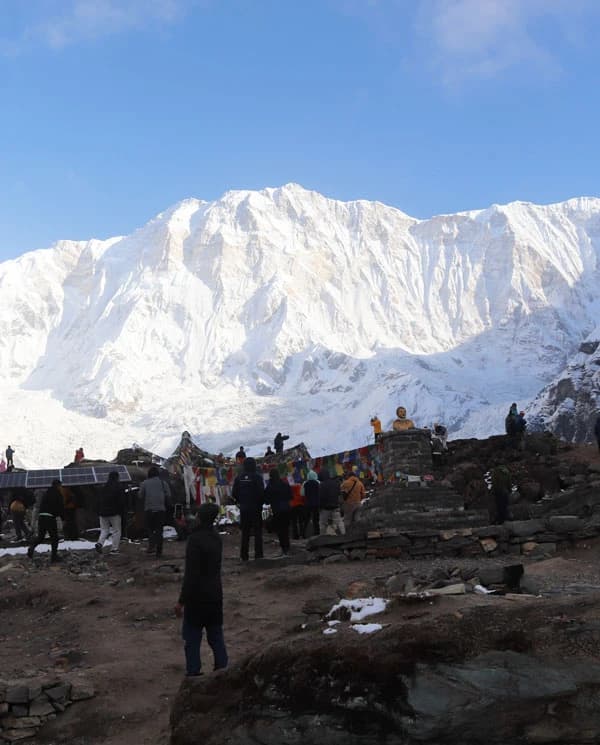
  • We continue toward Annapurna Base Camp at 4,130 meters. As you reach the sanctuary, the mountains rise dramatically around you, creating the famous natural amphitheater of the Annapurna massif.

After reaching ABC, take time to explore the area, photograph the surrounding mountains, and enjoy the unique atmosphere of spending the night at one of Nepal's most famous Himalayan base camps.

Max Altitude: 4,130m / 13,549 ftMeals: Breakfast, Lunch and DinnerAccommodation: Guest HouseDuration: 6-7 hoursDistance: 11km / 6 milesTravel Mode: Walking
Annapurna Base Camp Trek Day 9 From Himalaya To Abc
Highlight of the day
Reach Annapurna Base Camp!

Wake up surrounded by the mountains of the Annapurna Sanctuary and enjoy the Himalayan scenery before beginning the descent.

  • We retrace the trail through Machhapuchhre Base Camp and the upper Modi Khola valley. The route gradually loses elevation as we pass through rugged terrain and return toward greener forests.

The descent provides a different perspective of the landscape you experienced on the way up. We continue to Dovan for an overnight stay.

Max Altitude: 2,600m / 8,530 ftMeals: Breakfast, Lunch and DinnerAccommodation: Guest HouseDuration: 6-7 hoursDistance: 12km / 7 milesTravel Mode: Walking
Annaurna Base Camp Trek Day 10 Trek From Abc Dovan
Highlight of the day
Descend through the Annapurna Sanctuary and Modi Khola valley

Today we continue our descent through the lower Modi Khola valley.

  • The trail passes through bamboo, rhododendron, and mixed forests before reaching Sinuwa and continuing toward Chhomrong. From Chhomrong, the route descends toward Jhinu Danda.

After reaching Jhinu Danda, you can walk down to the natural hot springs and enjoy a relaxing soak after several days of trekking in the mountains.

Max Altitude: 1,760m / 5,774 ftMeals: Breakfast, Lunch and DinnerAccommodation: Guest HouseDuration: 6-7 hoursDistance: 12km / 7 milesTravel Mode: Walking
Annapurna Base Camp Trek Day 11 Trek Natural Hot Spring In Jhinu
Highlight of the day
Relax in the natural hot springs at Jhinu Danda

Today marks the end of the trekking portion of the Annapurna Base Camp adventure.

  • After breakfast, we make the final walk toward Siwai before continuing by road to Pokhara. The journey provides a relaxing transition from the mountain trails back to the city.

After arriving in Pokhara, check into your hotel and enjoy a free evening. You can relax around Phewa Lake, explore Lakeside, or simply rest after completing the trek.

Max Altitude: 830m / 2,723 ftMeals: Breakfast, and LunchAccommodation: HotelDuration: 4-5 hourTravel Mode: Walking and Drive
Annapurna Base Camp Trek Day 12 Trek From Jhinu To Nayapul
Highlight of the day
Cross the longest bridge!

After breakfast, we leave Pokhara and travel back to Kathmandu.

  • The journey follows the scenic route through the hills and river valleys of central Nepal. Once in Kathmandu, check into your hotel and enjoy the rest of the day at leisure.

In the evening, depending on the package and schedule, we can gather for a farewell dinner to celebrate the completion of your Annapurna Base Camp adventure.

Max Altitude: 1,345m / 4,412 ftMeals: BreakfastAccommodation: HotelDuration: 7-8 hoursDistance: 210km / 130 milesTravel Mode: Tourist Bus
Annapurna Base Camp Trek Day 13 Fare Well Dinner In Kathmandu
Highlight of the day
Farewell dinner in Kathmandu!

Your Annapurna Base Camp adventure comes to an end today.

  • Our airport representative will transfer you from your hotel to Tribhuvan International Airport according to your flight schedule.

We hope you return home with unforgettable memories of the Annapurna mountains, Himalayan villages, and the journey to Annapurna Base Camp.

Meals: BreakfastTravel Mode: Private Tourist vehicle
Equipments
Equipment & Packing

Packing appropriately is important for a comfortable Annapurna Base Camp Trek. The route passes through different climate zones, and temperatures can vary significantly between lower villages and Annapurna Base Camp. A porter carries your main duffel bag during the trek, while you carry a daypack containing your daily essentials.

Essential Clothing

  • Moisture-wicking trekking shirts.
  • Thermal base layers.
  • Fleece or insulated mid-layer.
  • Warm down jacket.
  • Waterproof and windproof jacket.
  • Trekking trousers.
  • Waterproof rain pants.
  • Warm hat and sun hat.
  • Gloves.
  • Trekking socks and comfortable underwear.

Footwear

  • Comfortable, broken-in trekking boots with good grip.
  • Lightweight sandals or slippers for use at the lodge.
  • Extra trekking socks.

Essential Trekking Gear

  • Daypack with rain cover.
  • Duffel bag for porter-carried luggage.
  • Sleeping bag.
  • Trekking poles.
  • Reusable water bottles or hydration system.
  • Headlamp with spare batteries.
  • Sunglasses with UV protection.
  • Sunscreen and lip balm.

Personal and Health Items

  • Personal toiletries.
  • Quick-dry towel.
  • Hand sanitizer and wet wipes.
  • Personal medication.
  • Basic first-aid supplies for personal use.
  • Water purification tablets or filtration system.

Electronics and Documents

  • Mobile phone and charger.
  • Power bank.
  • Universal travel adapter.
  • Camera and spare batteries, if required.
  • Passport and copies.
  • Travel insurance details.

Outfitter Himalaya can provide a sleeping bag, down jacket, and duffel bag upon request; these must be returned after the trek.

For a complete seasonal checklist, including recommended quantities and winter- or monsoon-specific equipment, please see our detailed Annapurna Base Camp Trek Packing List.

Tips: If you do not have the items listed above, you can also purchase them here in Kathmandu.

Must-Know

Practical Information

Accommodation on the Annapurna Base Camp Trek

The 14-day Annapurna Base Camp Trek combines comfortable city hotels with simple mountain teahouse accommodation along the trekking route.

You will spend 3 nights in Kathmandu and 2 nights in Pokhara in comfortable tourist-standard hotels on a twin/double-sharing basis. These stays provide a comfortable place to rest before and after your Himalayan adventure.

You will spend 8 nights in local teahouses and mountain lodges during the trek and the accommodation on the trail is simple but comfortable, generally offering twin-sharing rooms with beds, mattresses, pillows, and blankets. Most lodges also have a communal dining area where trekkers gather for meals and relaxation.

In popular lower villages, private rooms and attached bathrooms may be available, while at higher locations, including parts of the Annapurna Sanctuary, shared bathrooms and dormitory-style accommodation may be necessary due to limited facilities.

What to Expect at Teahouses

  • Twin-sharing rooms are standard where available.
  • Private rooms may be available at lower elevations but cannot always be guaranteed during peak trekking seasons.
  • Shared bathrooms are common, particularly at higher elevations.
  • Hot showers may be available at many lodges for an additional charge.
  • Blankets are generally provided, but a sleeping bag is recommended for additional warmth and comfort.
  • Accommodation at higher elevations is more basic because of the remote mountain location.

Note:

  • Know the detail of tea houses along the ABC Trail in our Annapurna base camp accommodation blog.
  • If you prefer upgraded accommodation in Kathmandu or Pokhara, 4- or 5-star hotel upgrades can be arranged at an additional cost before the trek begins.

Meals During the Annapurna Base Camp Trek

The 14-day Annapurna Base Camp Trek package includes 31 meals: 13 breakfasts, 9 lunches, and 9 dinners, as outlined in the itinerary.

During the trek, breakfast and dinner are served at the lodge where you stay overnight, while lunch is enjoyed at a teahouse along the trail. Meals are prepared fresh and provide the energy needed for several hours of daily walking.

The menu varies by location but generally includes traditional Nepali meals such as dal bhat, as well as rice dishes, noodles, soups, potatoes, vegetables, eggs, pasta, bread, and other trekking-friendly meals. Vegetarian options are widely available along the route.

  • Food choices become more limited as you reach higher elevations, particularly inside the Annapurna Sanctuary. We recommend choosing nutritious meals and eating enough to maintain your energy throughout the trek.
  • Please inform us in advance if you have special dietary requirements. We will do our best to accommodate them, although options may be more limited at higher elevations.

Read our detail blog about the meals and drinks in ABC Trail.

Drinking Water and Beverages

  • Safe drinking water is important throughout the Annapurna Base Camp Trek. Bottled, boiled, filtered, and treated water is available at different points along the route.
  • We recommend carrying a reusable water bottle and using properly treated drinking water rather than consuming untreated tap or stream water. Water purification tablets or a personal filtration system can also be useful during the trek.
  • Tea, coffee, soft drinks, alcoholic beverages, bottled water, and other personal drinks are generally not included in the trek package unless specifically mentioned. These items can be purchased at the teahouses along the route.
  • To reduce plastic waste in the mountains, we encourage trekkers to use refillable bottles whenever possible.

Transportation During the Annapurna Base Camp Trek

  • The 14-day Annapurna Base Camp Trek includes the necessary ground transportation from your arrival in Kathmandu until your departure.
  • All scheduled airport transfers and Kathmandu sightseeing transportation are provided in private tourist vehicles. The journey between Kathmandu and Pokhara is typically made by tourist bus, offering scenic views of Nepal's hills, rivers, towns, and countryside.
  • Private transportation is arranged between Pokhara and the trekking trailhead, including transfers to the trek's starting point and from the trekking region back to Pokhara.

Transportation Included in the Itinerary

  • Airport pickup and drop-off in Kathmandu.
  • Private vehicle for Kathmandu sightseeing.
  • Tourist bus between Kathmandu and Pokhara.
  • Private transportation between Pokhara and the trekking trailhead.
  • Private return transfer from the trekking exit point to Pokhara.

If you prefer to avoid the longer road journey between Kathmandu and Pokhara, domestic flight or private vehicle upgrades are available at an additional cost, subject to availability.

Annapurna Base Camp Trek Guide and Porter

  • Your trek is led by an experienced, government-licensed trekking guide who is familiar with the Annapurna region, trail conditions, local culture, and high-altitude trekking procedures. Your guide will manage the daily trekking schedule, coordinate accommodation and meals, monitor the group's well-being, and provide assistance throughout the journey.
  • For larger groups, an assistant guide is provided to offer additional support and help maintain a comfortable trekking pace.
  • Porter service is also included in the trek. One porter is generally assigned to two trekkers and carries approximately 20–22 kg of combined luggage, allowing each trekker to pack around 10–11 kg in the shared porter.
  • We recommend keeping essential items such as water, sunscreen, camera, valuables, rain gear, and personal medication in your daypack while trekking.
  • All wages, meals, accommodation, insurance, and necessary equipment for the trekking staff are included in the package.

Preparing for the Annapurna Base Camp Trek

Good preparation will make your Annapurna Base Camp Trek more enjoyable. Although the trek does not require technical climbing experience, you will walk for several consecutive days on mountain terrain and reach an altitude of 4,130 meters.

Fitness Level Required

  • The trek is suitable for travelers with reasonable fitness who are comfortable walking for approximately 5–7 hours a day. The trail includes uphill and downhill sections, stone staircases, uneven paths, and varying terrain.
  • You do not need to be an athlete, but improving your endurance before the trek will make the experience more comfortable.

Recommended Training

Start preparing few weeks before your trek, depending on your current fitness level. Useful activities include:

  • Regular walking or hiking.
  • Stair climbing.
  • Jogging, cycling, or swimming.
  • Longer weekend hikes with a small backpack.
  • Leg-strengthening exercises such as squats and lunges.

Try to gradually increase the duration and intensity of your training rather than doing intense exercise immediately before departure.

Our Tips Before the Trek

  • Break in your trekking boots before arriving in Nepal.
  • Avoid carrying unnecessary weight.
  • Stay hydrated and maintain a balanced diet.
  • Get adequate rest before beginning the trek.
  • Inform us in advance about any dietary requirements or relevant medical concerns.
  • Purchase appropriate travel insurance that covers high-altitude trekking and emergency evacuation.

A steady pace, good preparation, and a positive mindset are more important than speed on the Annapurna Base Camp Trek.

Altitude and Acclimatization on the Annapurna Base Camp Trek

  • Annapurna Base Camp is located at 4,130 meters (13,550 feet), making altitude an important consideration during the trek. As you gain elevation, the amount of available oxygen decreases, and your body needs time to adapt.
  • The itinerary follows a gradual route through the Annapurna region, allowing your body to adjust naturally as you move from lower villages toward the Annapurna Sanctuary. However, every trekker responds to altitude differently.

Common Symptoms of Altitude Sickness

Mild symptoms may include:

  • Headache
  • Loss of appetite
  • Nausea
  • Dizziness
  • Unusual tiredness
  • Difficulty sleeping

If you experience any symptoms, inform your trekking guide immediately. Do not ignore symptoms or continue ascending if they become worse.

How to Reduce the Risk

  • Walk at a comfortable and steady pace.
  • Stay well hydrated.
  • Eat regular meals.
  • Avoid rushing to gain altitude.
  • Avoid excessive alcohol consumption at higher elevations.
  • Listen to your guide and communicate honestly about how you feel.

Your guide carries a first-aid kit and can monitor oxygen saturation using an oximeter when necessary. If altitude symptoms become serious or worsen, descending to a lower elevation is the safest course of action. Your health and safety are always more important than reaching the destination.

Safety During the Annapurna Base Camp Trek

The Annapurna Base Camp Trek is a well-established trekking route. However, it is still a high-altitude mountain journey where weather and trail conditions can change. Your safety is supported through experienced trekking staff, careful itinerary planning, and regular monitoring throughout the journey.

  • Safety Measures During the Trek
  • Experienced, government-licensed trekking guide.
  • Assistant guide support for larger groups.
  • First-aid kit carried by the trekking team.
  • Pulse oximeter available for monitoring oxygen saturation when required.
  • Regular attention to weather and trail conditions.
  • Flexible pacing based on the group's condition.
  • Emergency helicopter evacuation arrangements when medically necessary, subject to travel insurance coverage.

We strongly recommend comprehensive travel insurance that covers high-altitude trekking, medical treatment, and emergency helicopter evacuation. The best way to stay safe is to trek responsibly, maintain a comfortable pace, stay hydrated, and inform your guide immediately if you feel unwell.

Wi-Fi, Electricity and Charging on the Trek

  • Wi-Fi and charging facilities are available at many teahouses along the Annapurna Base Camp route. Still, availability and reliability vary by location and altitude.
  • Wi-Fi is generally more accessible in lower villages and may become slower or unavailable at higher elevations. Where available, internet access is usually offered for an additional charge.
  • Charging facilities are available at many lodges, often for an additional fee. Because electricity can be limited in remote areas, we recommend carrying a fully charged power bank for your phone, camera, or other essential devices.
  • It is also a good idea to download important maps, travel documents, and entertainment before starting the trek, as internet connectivity cannot be guaranteed throughout the journey.

Best Time for the Annapurna Base Camp Trek

The Annapurna Base Camp Trek can be completed in most months of the year. Still, weather, temperatures, trail conditions, and mountain visibility vary significantly by season. For most trekkers, spring (March to May) and autumn (September to November) offer the most favorable conditions. These seasons generally provide a good balance of comfortable daytime temperatures, clearer mountain views, and stable trekking conditions.

However, the best time ultimately depends on your preferences. Spring is ideal for rhododendron blooms and warmer temperatures; autumn is known for clear mountain views; winter offers quieter trails but colder conditions; and the monsoon brings greener landscapes with more rain.

  • Spring (March, April and May): Spring is one of the most popular seasons for the Annapurna Base Camp Trek. The forests become colorful with blooming rhododendrons, temperatures gradually rise, and the mountain scenery is spectacular.
  • Autumn (September, October, and November): Autumn is another excellent time to trek. Following the monsoon, the air is often clearer, offering excellent views of Annapurna, Machhapuchhre, Dhaulagiri, and surrounding peaks.
  • Winter (December, January and February): Winter trekking is possible for travelers prepared for cold temperatures and possible snowfall at higher elevations. The trails are generally quieter, but warm clothing and flexible planning are essential.
  • Monsoon (June, July and August): The monsoon season brings frequent rainfall, greener landscapes, and fewer trekkers. Trails can be wet and slippery, while clouds may limit mountain views. However, it can still be an enjoyable experience for well-prepared trekkers.

For detailed month-by-month weather information, temperatures, and trekking conditions, see our complete guide to the Best Time to Trek Annapurna Base Camp.

Nepal Travel Information

Our FAQs

FAQs

General

Our standard Annapurna Base Camp Trek takes 14 days from Kathmandu to Kathmandu. This itinerary includes Kathmandu sightseeing, travel to Pokhara, the trek through Ghorepani and Poon Hill, Annapurna Base Camp, and the return journey to Kathmandu.

The trekking distance for this 14-day itinerary is approximately 85–90 km, depending on the specific trail and short road transfers. Most trekking days involve 5–7 hours of walking, with daily distances varying depending on the terrain and route.

Road journeys between Kathmandu, Pokhara, and the trekking trailhead are not included in the trekking-distance figure.

Annapurna Base Camp is located in the Annapurna Sanctuary in central Nepal, within the Annapurna region. Pokhara is the main gateway for the trek, and the 14-day itinerary begins and ends in Kathmandu.

Our 14-day itinerary starts in Kathmandu. After sightseeing and traveling to Pokhara, we continue by road to the trekking trailhead around Nayapul/Birethanti, where the walking portion of the trek begins.

Best Time, Weather and Temperature

The best seasons for the Annapurna region are spring (March to May) and autumn (September to November). Nepal Tourism Board identifies these as the best seasons for the Annapurna Conservation Area.

Spring is particularly attractive for rhododendron blooms, while autumn generally offers dry trails and clear mountain views after the monsoon.

Yes, the trek is possible in winter. Still, conditions can be colder, and snowfall may require higher sections of the route to be avoided.

Winter trekkers should be prepared for freezing temperatures, shorter daylight hours, and potentially snowy or icy trails around the higher parts of the Annapurna Sanctuary.

Yes, but June to August brings more rain, cloud cover, and wetter, slipperier trails, particularly at lower elevations.
If you trek during the monsoon, conditions can change quickly, and mountain views may be limited. Your guide will monitor trail and weather conditions throughout the journey.

Difficulty, Fitness and Preparation

Annapurna Base Camp trek is achievable with some preparation. You can start with some pre-trek exercise by walking or jogging, and when you are on the trek, pace yourself, stay hydrated, and allow your body to acclimatize naturally. You will genuinely be surprised how smooth the trek feels when you make some preparations and take your time!

No. Previous trekking or high-altitude experience is not essential for the Annapurna Base Camp Trek. However, you should have a reasonable level of fitness and be prepared to walk for several hours on consecutive days.

Regular walking, hiking, stair climbing, or cardio training before the trek can help improve your endurance. First-time trekkers should maintain a steady pace, stay hydrated, and follow their guide's advice throughout the journey.

Accommodation, Food and Drinks

You will stay in hotels in Kathmandu and Pokhara and local teahouses/lodges during the trek.

Most trekking accommodation is simple and comfortable, with twin-sharing rooms where available. At higher locations such as Dovan and Annapurna Base Camp, accommodation may be limited to shared or dormitory-style rooms because facilities are more limited.

Yes. Vegetarian meals are widely available along the route. Vegan and other specific dietary requirements can usually be accommodated, but choices may become more limited at higher elevations. Please inform us about your dietary requirements before the trek so we can coordinate with the lodges.

Teahouses serve a variety of meals, including traditional Nepali dishes such as dal bhat as well as rice, noodles, pasta, soup, potatoes, eggs, vegetables, and other common trekking meals.

Food choices become more limited at higher elevations, so we recommend maintaining a balanced diet and eating enough to support several hours of walking each day.

Yes. Water is available at teahouses and settlements along the trail.

We recommend carrying a reusable water bottle and using boiled, filtered, or properly treated water rather than relying on untreated tap or stream water. The Nepal Tourism Board also recommends bottled, boiled, and filtered water for travelers.

Private bathrooms are available in some lower-elevation lodges, but shared bathrooms are common, especially at higher elevations.

Accommodation becomes more basic as you approach Annapurna Base Camp, where facilities are limited.

Internet, WiFi, Electricity and Telephone

Wi-Fi is available at some teahouses, particularly at lower elevations, usually for an additional charge. Connectivity becomes less reliable the higher you go, and service may be limited or unavailable around Annapurna Base Camp.

It is best to expect intermittent connectivity rather than continuous internet access.

Charging facilities are available at many teahouses, usually for an additional fee. Availability can become more limited at higher elevations.
We recommend carrying a power bank and spare batteries, particularly if you use your phone or camera frequently.

Permits and Entrance

The trek requires the applicable Annapurna Conservation Area entry permit and TIMS card. Your trekking agency arranges the required permits and documentation before you enter the trekking area.

Guide and Staff

Yes. Under Nepal's current trekking regulations, the Poon Hill–ABC route requires trekkers to be accompanied by a licensed trekking guide and to carry an agency-issued TIMS card.

When you book with Outfitter Himalaya, we arrange the licensed guide, required trekking documentation, and other necessary logistics for your journey.

Altitude and Acclimatization

Yes. Because Annapurna Base Camp reaches 4,130 meters, altitude sickness is an important consideration.

Symptoms can include headache, dizziness, unusual tiredness, nausea, and shortness of breath. Walk at a comfortable pace, stay hydrated, eat regularly, and tell your guide immediately if you develop symptoms.

If symptoms become serious or worsen, descending to a lower elevation is the safest course of action.

The itinerary gains elevation progressively rather than taking you directly to Annapurna Base Camp.

Your guide will monitor your condition, encourage a steady walking pace, and advise you on hydration, rest, and altitude awareness. You should never ignore symptoms or continue ascending if you are becoming seriously unwell.

Height and Distance

Annapurna Base Camp is located at 4,130 meters (13,550 feet) above sea level. The trek reaches its highest point at ABC after a gradual ascent through the Annapurna Sanctuary.

Because the route reaches above 4,000 meters, proper pacing, hydration, and awareness of altitude-related symptoms are important.

Family and Age

Children can participate if they are fit, accustomed to walking, and accompanied by responsible adults.

Because the trek involves several hours of walking, elevation gain, and changing mountain conditions, suitability should be assessed based on the individual child's fitness and experience rather than age alone. For younger children, a private itinerary offers greater flexibility.

There is no universal age limit for the trek. Fitness, health, previous walking experience, and the ability to handle several consecutive days on mountain trails are more important considerations.

Families traveling with children or older trekkers should discuss their requirements with the trekking agency before booking.

Annapurna Base Camp Trek Review

Travelers' Choice
2025
We collect reviews from popular platforms, including Google Maps, TripAdvisor, Facebook, Trustpilot, and others; they are genuine feedback from our previous customers.
Margaret
Margaret - Australia
Sep 09, 2026
Exceptional experience with our trekking guide Suraj and our porters Roshan, Hari, and Balram.

Despite the monsoon season, flash flooding and devastating landslides in Nepal - our guides ensured we had fun and a safe passage throughout our journey. Truly a fun adventure meeting...

read more +
Guided By Suraj Pokhrel on Aug 24, 2026
S
Susan B - Australia
Apr 11, 2026
Challenging ABC trekking with fabulous support from Outfitter Himalaya!

Excellent customer service. We were met, supported and escorted safely from our arrival in Kathmandu to our departure. Porters were fantastic. We had a small group of 6 with 3...

read more +
108 reviews
79 reviews

Video Reviews

Annapurna Base Camp Trek in Monsoon (July)- A Video Review
Annapurna Base Camp Trek in Monsoon (July)- A Video Review!
Rhys - United Kingdom
Annapurna Base Camp Trek  – 2026 With Outfitter Himalaya Holidays!
Annapurna Base Camp Trek – 2026 With Outfitter Himalaya Holidays!
Paul - Australia
Annapurna Base Camp Trek Review- June 2026
Annapurna Base Camp Trek with Outfitter Himalaya
Mykola - Ukraine
Annapurna Base Camp Trek Review
Beautiful Annapurna Base Camp Trek
Alison - Australia

You May Also Like

Chitwan Jungle Safari

Chitwan Jungle Safari

Price from
US$200
Jungle Adventure
Lhasa Tibet Tour

Tibet Lhasa Tour

Price from
US$1600
Explore Lhasa
Bhutan Tour 5 Days

Bhutan Highlights Tour

Price from
US$1570
Bhutan Highlights
Need Help? Call Us+977 9851137380