Packing for the Ghorepani Poon Hill Trek is relatively straightforward, but the right clothing and equipment make a big difference to your comfort on the trail. Although Poon Hill is a short trek in Nepal, you will experience warm walking conditions, chilly mountain evenings, and a cold early-morning hike to the viewpoint at 3,210 meters.
Your Ghorepani Poon Hill Trek packing list should include comfortable trekking shoes, quick-drying clothing, warm layers, a waterproof jacket, a headlamp, trekking poles, a sleeping bag, and personal essentials. You do not need technical mountaineering equipment, but you should prepare for changing mountain weather.
Whether you choose the 3-day Poon Hill Trek or the 4-day Ghorepani Poon Hill Trek, the basic equipment is almost identical. The four-day itinerary requires enough extra clothing and personal supplies for another day.
This packing guide from Outfitter Himalaya explains what to bring, how much to carry, what to wear in different seasons, and which items you can leave at home.
Essential Ghorepani Poon Hill Trek Packing Checklist
Here is a practical packing checklist for a typical 3- or 4-day teahouse trek. Quantities include the clothes you wear while trekking.
Item
Suggested quantity
What to look for
Walking tops
2
Quick-drying fabric; include a long-sleeved option
Trekking trousers
1–2 pairs
Lightweight, comfortable and easy to move in
Thermal base layers
1 set
Keep dry for cold evenings and the sunrise hike
Fleece or warm mid-layer
1
A layer you can easily remove while climbing
Insulated jacket
1
Suitable for your season and cold viewpoint stops
Waterproof jacket and overtrousers
1 set
Protection from rain and wind
Underwear and trekking socks
3–4 sets/pairs
Include dry socks reserved for evenings
Sun hat, warm hat and gloves
1 of each
Cover both sunny walking and cold mornings
Trekking footwear
1 pair
Worn-in shoes or boots with reliable grip
Lightweight lodge footwear
1 pair, optional
For changing out of walking footwear
Sleeping bag
1
Choose its comfort rating for expected overnight conditions
Backpack and waterproof liner
1 of each
Sized for your load; keep clothing and sleeping gear dry
Headlamp
1, with spare power
Essential for the pre-dawn Poon Hill climb
Refillable water bottles
Around 2 litres total capacity
Carry sufficient water between refill stops; arrange safe drinking water
Sunglasses, sunscreen and lip balm
1 of each
Keep accessible during the day
Personal toiletries
Small travel quantities
Toothbrush, toothpaste, soap, sanitiser, toilet paper and menstrual supplies if needed
Personal first-aid
1 compact kit
Blister dressings, plasters and your regular medication
Phone and charging equipment
1 set
Cable, suitable adapter and a charged power bank
Documents and money
Documents and money
Passport, required permits, insurance details and Nepali cash
Trekking poles
1 pair, optional
Useful for repeated steps and descents
Snacks and rubbish bag
Small supply
Carry out wrappers and used tissues
What Clothing Should You Pack for the Poon Hill Trek?
Layering is the most practical way to dress for Poon Hill. You may feel warm climbing the stone steps to Ulleri, but you'll need a jacket soon after you stop at Ghorepani.
Trekking Shirts and Base Layers
Pack two or three lightweight, moisture-wicking trekking shirts. Synthetic or merino wool fabrics are good choices because they dry faster than ordinary cotton.
Include one long-sleeved shirt for sun protection and cooler walking conditions.
A thermal top and bottom are particularly useful for cold evenings and the early-morning Poon Hill hike.
Fleece and Warm Jacket
Carry a fleece jacket for moderate warmth and a down or synthetic insulated jacket for colder conditions.
You may not need your insulated jacket while walking uphill, but it becomes important when standing still at Poon Hill before sunrise.
Keep your warm jacket dry and easy to access.
Waterproof Jacket and Trousers
A waterproof outer layer is useful year-round because mountain weather can change unexpectedly.
During the monsoon, waterproof protection is particularly important. Even in spring and autumn, a lightweight waterproof jacket is worth carrying.
Trekking Trousers and Underwear
One or two pairs of comfortable, quick-drying trekking trousers are sufficient for most short itineraries.
Pack enough underwear for the duration of your trek, along with clean socks for evenings.
Avoid heavy jeans because they restrict movement and take longer to dry.
Best Footwear for Ghorepani Poon Hill Trek
Comfortable footwear is one of the most important items on your packing list.
The route includes stone staircases, forest paths, uneven surfaces, and several uphill and downhill sections. The famous Ulleri steps can be particularly tiring if your footwear does not fit properly.
Choose trekking shoes or boots with reliable grip, adequate support, and enough room for your toes during descents.
For most spring and autumn departures, well-fitting hiking shoes or lightweight boots are suitable. Waterproof boots may be preferable in wetter or snowy conditions.
Do not start the trek with brand-new footwear. Wear your shoes on several walks before arriving in Nepal.
A lightweight pair of sandals or lodge shoes is optional but useful after a long day of trekking.
What Backpack Size Do You Need for Poon Hill Trek?
Your ideal backpack depends on whether you hire a porter.
Trekking With a Porter
A daypack of about 20–30 liters is usually enough for water, snacks, a waterproof jacket, warm layers, a camera, and other daily essentials.
Your main clothing and sleeping equipment can travel separately in a duffel bag carried by your porter.
Trekking Without a Porter
If you carry everything yourself, you may need a larger backpack, approximately 35–50 liters, depending on the season and the volume of your equipment.
Avoid filling a large backpack simply because space is available.
How Much Should Your Backpack Weigh?
For comfortable walking, aim to keep your personal daypack around 3–5 kg where practical, excluding or accounting separately for changing water weight.
If you carry your complete equipment, reduce unnecessary clothing and choose lightweight items.
Outfitter Himalaya recommends keeping porter-carried luggage within the allowance confirmed for your booking. Check your agreed weight limit before departure.
What Should You Pack for the Poon Hill Sunrise Hike?
The sunrise hike is one of the highlights of the Ghorepani Poon Hill Trek.
You normally leave Ghorepani before daylight and climb to Poon Hill at 3,210 meters to watch the sun rise over the Annapurna and Dhaulagiri mountain ranges.
Because you start before sunrise, this can be one of the coldest parts of your trek.
Carry:
Headlamp with charged batteries
Warm down or insulated jacket
Fleece or thermal layer
Warm hat and gloves
Windproof or waterproof outer jacket
Drinking water
Small energy snack
Camera or smartphone
You can usually leave your main luggage at the Ghorepani teahouse and return for breakfast after visiting Poon Hill.
Outfitter Himalaya Tip: Keep your headlamp, gloves, and insulated jacket ready the night before. It is much easier than searching through your luggage in the dark.
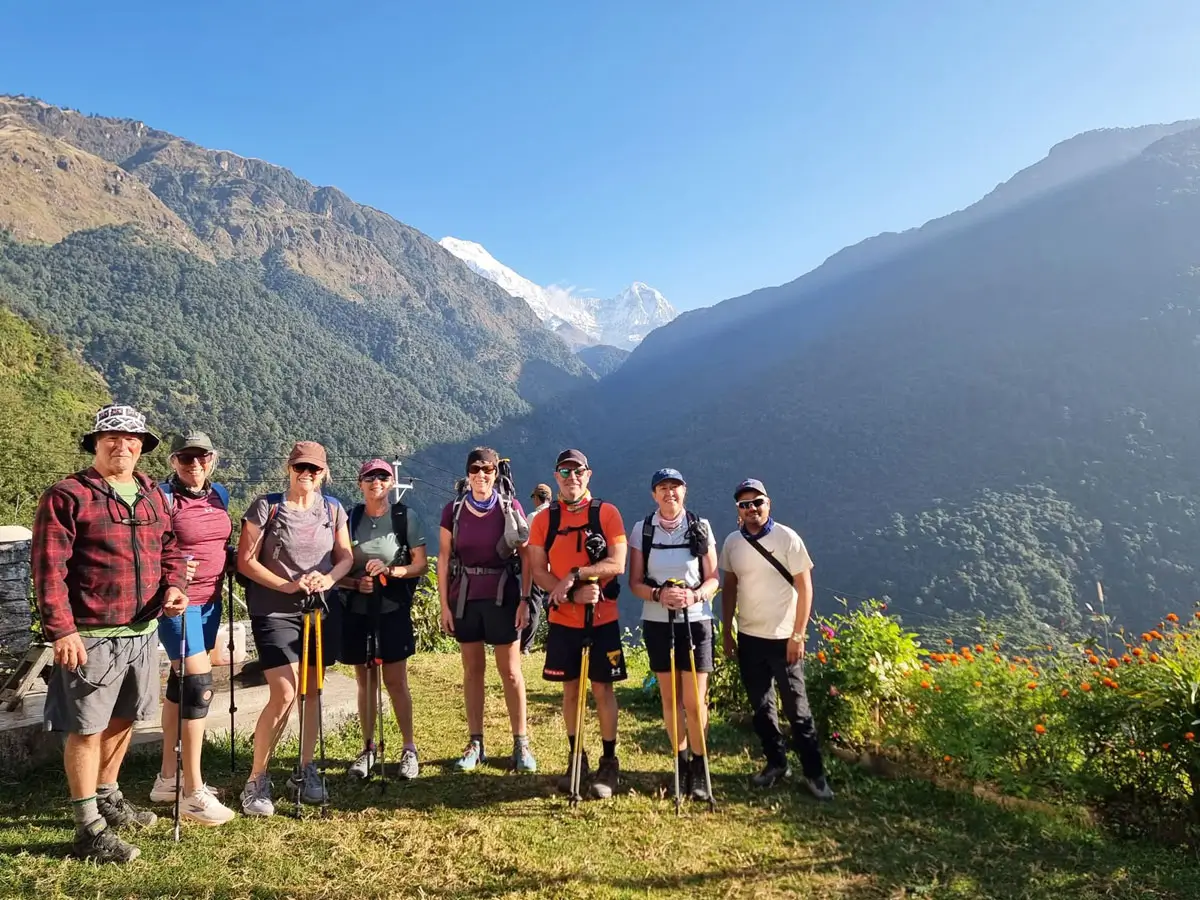
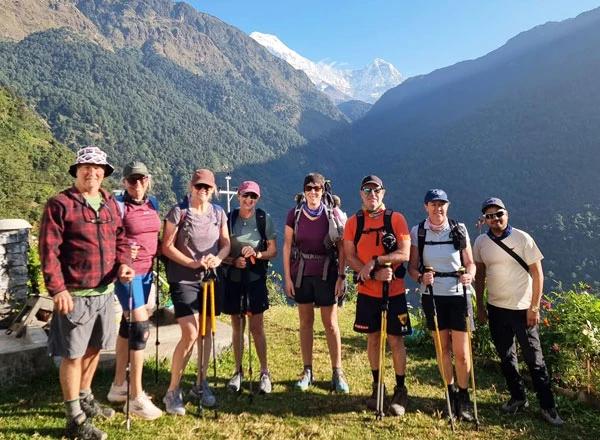
Outiftter Himalaya Tourists on Ghorepani Poon Hill Trek!
Ghorepani Poon Hill Trek Packing List by Season
The packing list changes slightly depending on when you visit Nepal.
Spring Packing List: March to May
Spring is one of the most popular seasons for the Poon Hill Trek, especially when rhododendrons bloom along the trail.
Bring lightweight trekking clothes, a fleece, an insulated jacket for the sunrise hike, and waterproof protection.
March can still be cold at higher elevations, while April and May often feel warmer during the day.
Summer and Monsoon Packing List: June to August
During the monsoon, rain and slippery trails are the main concerns.
Prioritize a reliable waterproof jacket, rain trousers, quick-drying clothes, waterproof packing liners, and footwear with good traction.
Leech protection, spare socks, and dry storage for electronics are also useful.
Check current trail and road conditions before departure, especially after heavy rainfall.
Autumn Packing List: September to November
Autumn generally offers favorable trekking conditions and excellent opportunities for mountain views.
Pack comfortable trekking clothes, a fleece jacket, thermal layers, and an insulated jacket for the sunrise hike.
Early September may still bring monsoon rain, while November can be noticeably colder in the mornings and evenings.
Winter Packing List: December to February
Winter requires extra preparation because temperatures can fall below freezing at higher elevations.
Carry warm thermal clothing, a properly insulated jacket, gloves, a warm hat, and a sleeping bag suitable for expected overnight temperatures.
Snow or ice may occasionally affect the trail. Depending on current conditions, your guide may recommend additional traction devices.
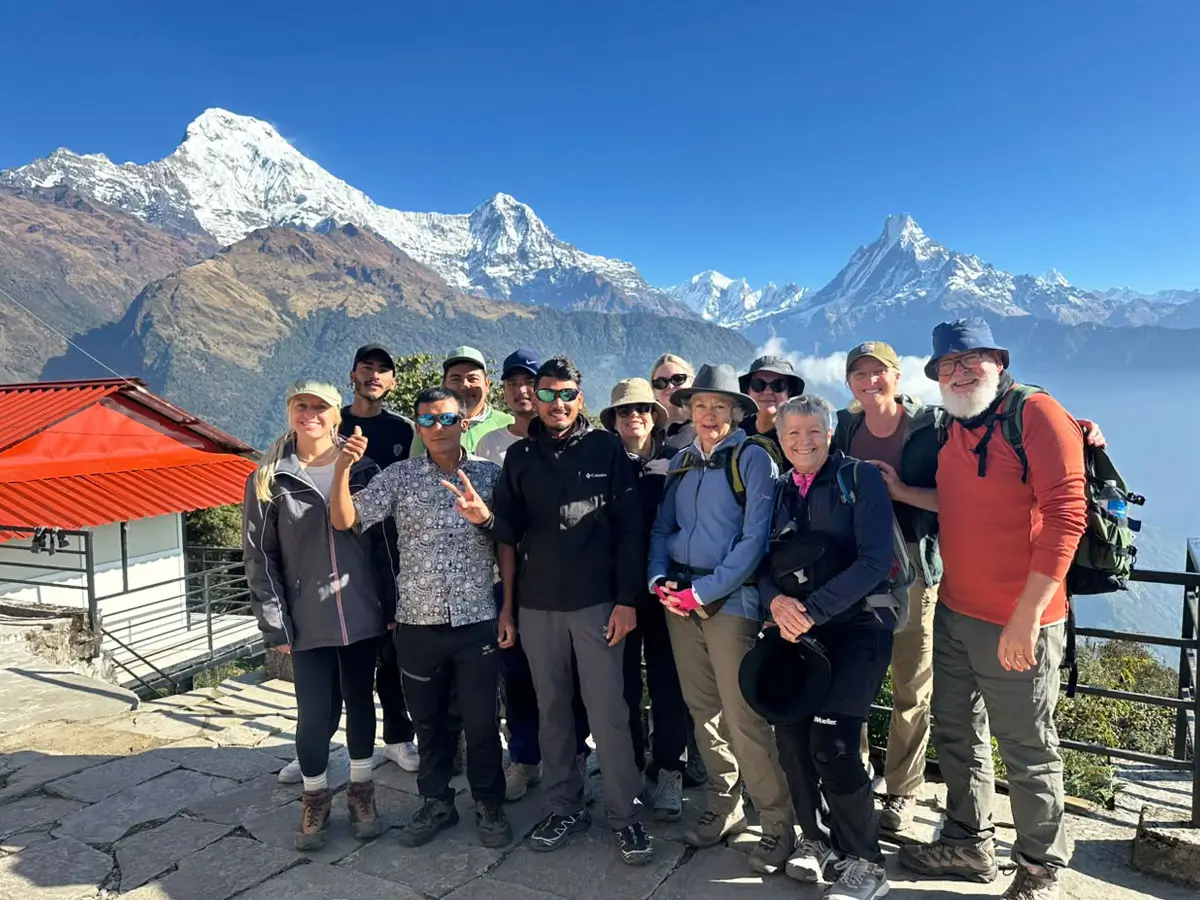
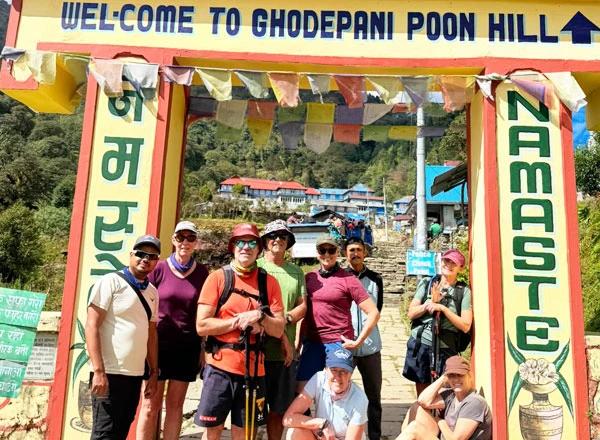
Suraj with Clients on Ghorepani- poon hill Trek, Outfitter Himalaya
What Trekking Gear Does Outfitter Himalaya Provide?
Both the three-day Poon Hill Trek and four-day Ghorepani Poon Hill Trek include a sleeping bag and, if needed, a down jacket to return after trekking.
Request these when booking and confirm the jacket size, sleeping bag comfort rating, and collection arrangements before departure. This helps you avoid buying or carrying duplicate equipment.
Bring your own footwear, personal clothing, waterproofs, headlamp, water bottles and toiletries. Ask separately about items such as trekking poles or a porter bag; do not assume they are supplied unless confirmed in your booking.
What Can You Leave Behind?
For a three- or four-day teahouse trek, leave out items that add weight without serving a useful purpose:
Tents, cooking equipment and camping utensils: These packages use lodges for accommodation and meals.
A Fresh outfit for every day: Reuse walking layers and keep one dry set for evenings.
Jeans and bulky cotton clothing: They become heavy when wet and take longer to dry.
Full-size toiletries: Pack small quantities for the trek.
Laptops, multiple shoes and duplicate gadgets: Bring only the electronics and footwear you expect to use.
Ask your Pokhara hotel about storing your remaining luggage, including any charges and security arrangements. Keep valuables and important documents with you.
Reduce unnecessary weight while keeping warm layers, rain protection, and personal essentials.
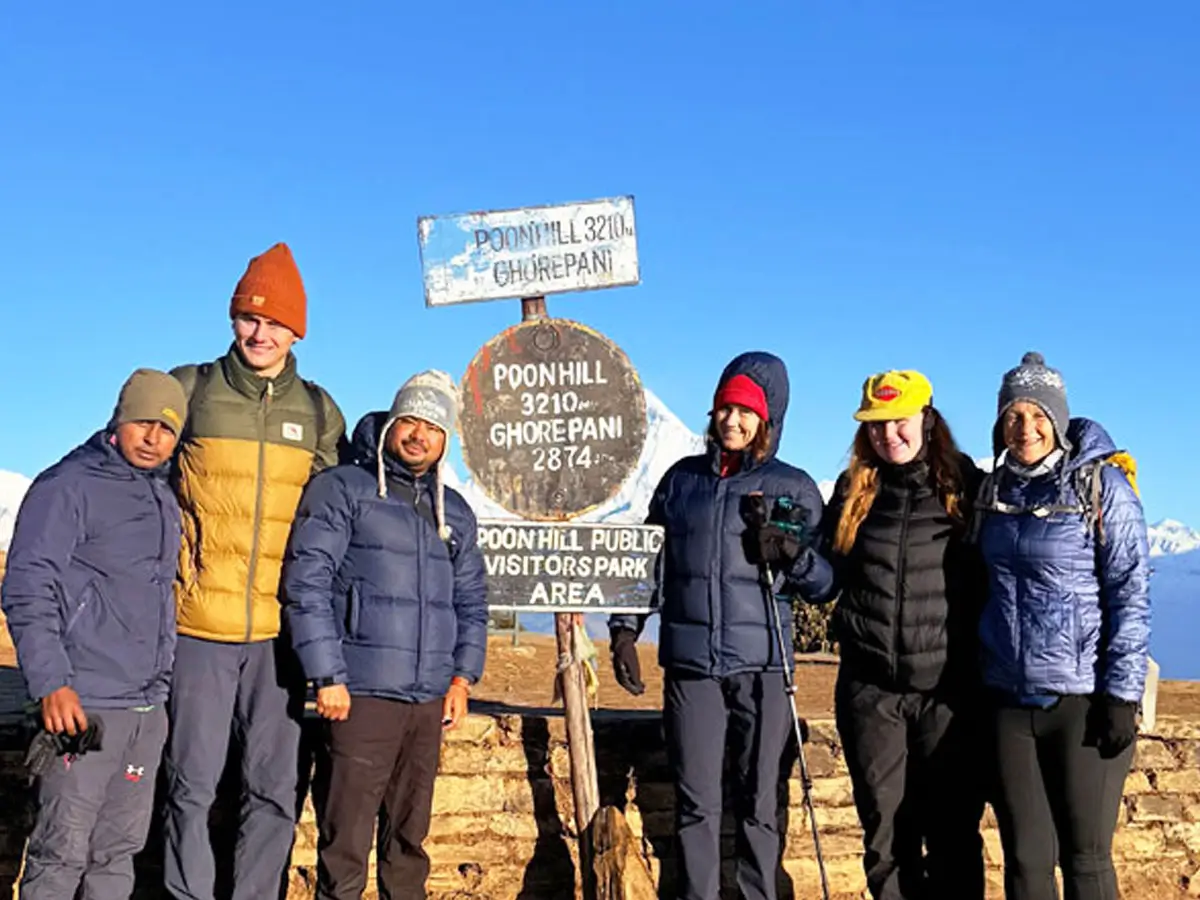
The poon Hill!
Ghorepani Poon Hill Trek Packing List FAQs
What should I pack for the Ghorepani Poon Hill Trek?
Bring comfortable trekking shoes, quick-drying clothes, thermal layers, a fleece, a warm jacket, waterproof protection, a headlamp, water bottles, trekking poles, a sleeping bag, and personal essentials.
Do I need a down jacket for Poon Hill Trek?
A warm insulated jacket is strongly recommended, especially for the pre-dawn hike to Poon Hill. The required insulation depends on the season and expected temperatures.
Do I need trekking boots for Poon Hill?
Technical mountaineering boots are unnecessary. Comfortable hiking shoes or trekking boots with good grip are generally suitable. Choose footwear based on trail conditions and personal comfort.
What size backpack is best for Poon Hill Trek?
A 20–30 liter daypack is usually sufficient when a porter carries your main luggage. If you carry everything yourself, you may need a larger backpack.
Do I need a sleeping bag for Poon Hill Trek?
A sleeping bag is recommended for comfort and warmth, particularly during colder months. Outfitter Himalaya can provide one as part of its trekking arrangements.
What should I wear for the Poon Hill sunrise?
Wear thermal layers, a fleece, an insulated jacket, warm gloves, and a hat. Carry a headlamp because the hike begins before daylight.
Can I rent trekking equipment in Pokhara?
Yes. You can buy or rent trekking equipment in Pokhara. Check the quality, fit, and condition of rental equipment before departure.
Are trekking poles necessary for Poon Hill?
They are not compulsory, but they are recommended for balance and comfort, especially on steep staircases and long downhill sections.
How much luggage should I carry on the Poon Hill Trek?
Carry only what you need. A light daypack makes walking more comfortable. If using a porter, follow the luggage allowance agreed with your trekking company.
Is the packing list different for winter?
Yes. Winter requires warmer insulation, suitable sleeping equipment, and potentially extra traction for snow or ice, depending on current trail conditions.
Final Packing Advice from Outfitter Himalaya
The best Ghorepani Poon Hill Trek packing list is not the longest one. It is the one that keeps you comfortable without making your backpack unnecessarily heavy.
Prioritize comfortable footwear, layered clothing, rain protection, and warm equipment for the sunrise hike. Adjust your packing according to the season and whether you have porter support.
At Outfitter Himalaya, we help trekkers prepare for their Himalayan adventures with practical local advice and suitable trekking arrangements.
Stone stairways lead into hillside villages, forest paths climb toward Ghorepani, and an early-morning walk brings you to Poon Hill’s mountain panorama. Both the three-day and four-day treks share this approach. The main difference is [...]
The Ghorepani Poon Hill Trek is moderately difficult and suitable for beginners who prepare for several days of hill walking. Its main challenges are stone-step staircases, repeated ascents and descents, and the early climb to [...]
The Ghorepani Poon Hill Trek cost ranges from USD 180 to USD 435 per person with Outfitter Himalaya, depending on the itinerary and group size. Our 3-day Poon Hill Trek costs USD 275 per [...]