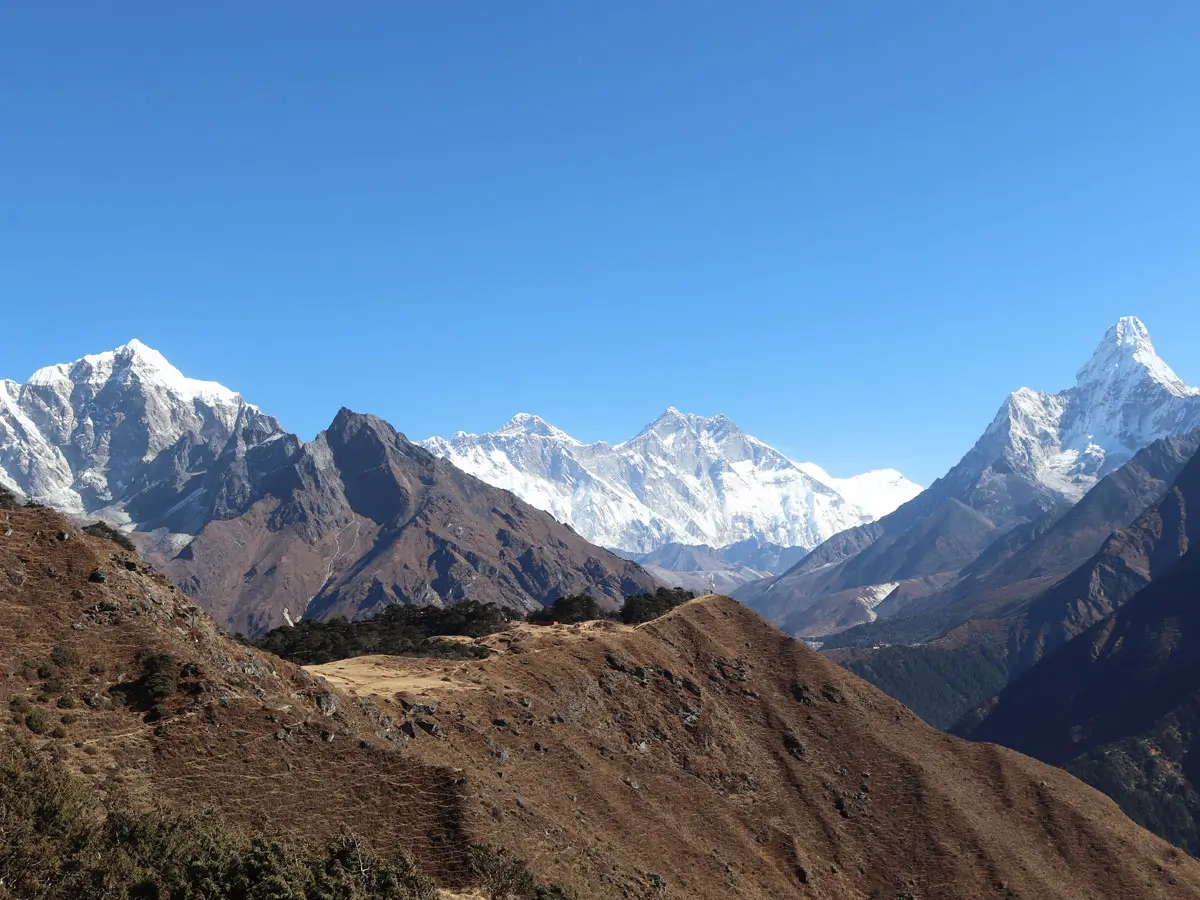
The best time for the Everest Cho La Pass Trek is autumn (October and November), when the route offers clear mountain views, established teahouse services, and favorable trekking conditions. Spring is another excellent season, bringing milder temperatures, colorful rhododendron forests and an energetic Everest atmosphere.
Based on Outfitter Himalaya’s crossing experience, the season alone cannot guarantee the condition of Cho La Pass. Recent snowfall, ice, visibility, and weather conditions must be assessed before crossing the Cho La, and the winter and monsoon journeys are possible for well-prepared trekkers with flexible itineraries and experienced local guidance.
Everest Cho La Pass Trek: An Introduction
The best time for the Everest Cho La Pass Trek is to choose a month or season with clear skies and good trekking conditions. The remarkable journey links the classic Everest Base Camp trail with the turquoise Gokyo Lakes by crossing Cho La Pass at 5,420 meters. The landscapes change dramatically with each season, from flowering forests in spring to Sharp Mountain light in autumn and peaceful snow-covered valleys in winter.
Cho La is the adventurous heart of the journey. Before sunrise, trekkers leave the warmth of their teahouse and begin climbing beneath dark ridgelines. As morning light reaches the surrounding peaks, the trail opens towards glaciers, rock formations and some of the most powerful scenery in the Khumbu.
Spring and autumn are the two main trekking seasons in Nepal, yet they offer different experiences. Spring brings warmer days, blooming rhododendrons and the excitement of Everest’s climbing season. Autumn follows the monsoon with cleaner air, clearer panoramas and well-established trail services. Winter and summer have their own beauty, but they require greater flexibility because snow, rain, cloud and lodge availability can influence the route.
Everest Cho La Pass Trek at a Glance
Trek fact
Details
Trekking region
Everest/Khumbu region, northeastern Nepal
Outfitter Himalaya itinerary
19 days
Approximate walking distance
125–130 km, depending on the final itinerary
Cho La Pass elevation
5,420 m
Highest point
Kala Patthar at approximately 5,545 m
Trek difficulty
Challenging high-altitude trek
Main route experiences
Everest Base Camp, Kala Patthar, Cho La Pass, Ngozumpa Glacier, Gokyo Lakes and Gokyo Ri
Accommodation
Teahouses and mountain lodges
Best overall season
Autumn
Recommended autumn period
October and November
Best alternative season
Spring
Winter suitability
Possible for properly equipped trekkers when the pass is accessible
Monsoon suitability
Possible but less predictable due to cloud, rain and flight disruption
Essential preparation
Good fitness, gradual acclimatization, suitable equipment and itinerary flexibility
Guide recommendation
Strongly recommended for assessing weather, snow and pass conditions
The Everest Cho La Pass Trek is considerably more varied than a standard walk to Everest Base Camp. It combines established village trails with glacial terrain and a high-pass crossing, making seasonal timing especially important. Conditions at Cho La may be very different from those in Lukla, Namche Bazaar, or even the nearby overnight settlements.
Distances, walking times, and maximum elevations can vary slightly depending on the route direction, acclimatization schedule, and optional viewpoints included in the itinerary.
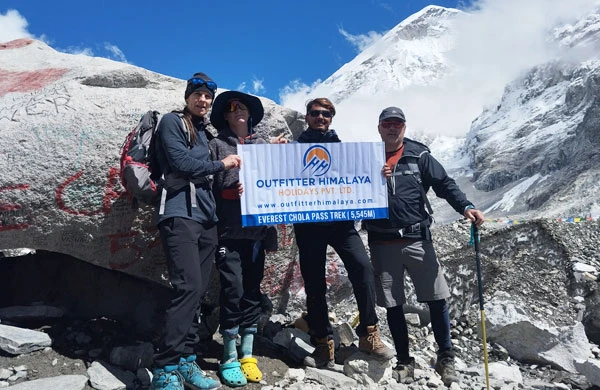
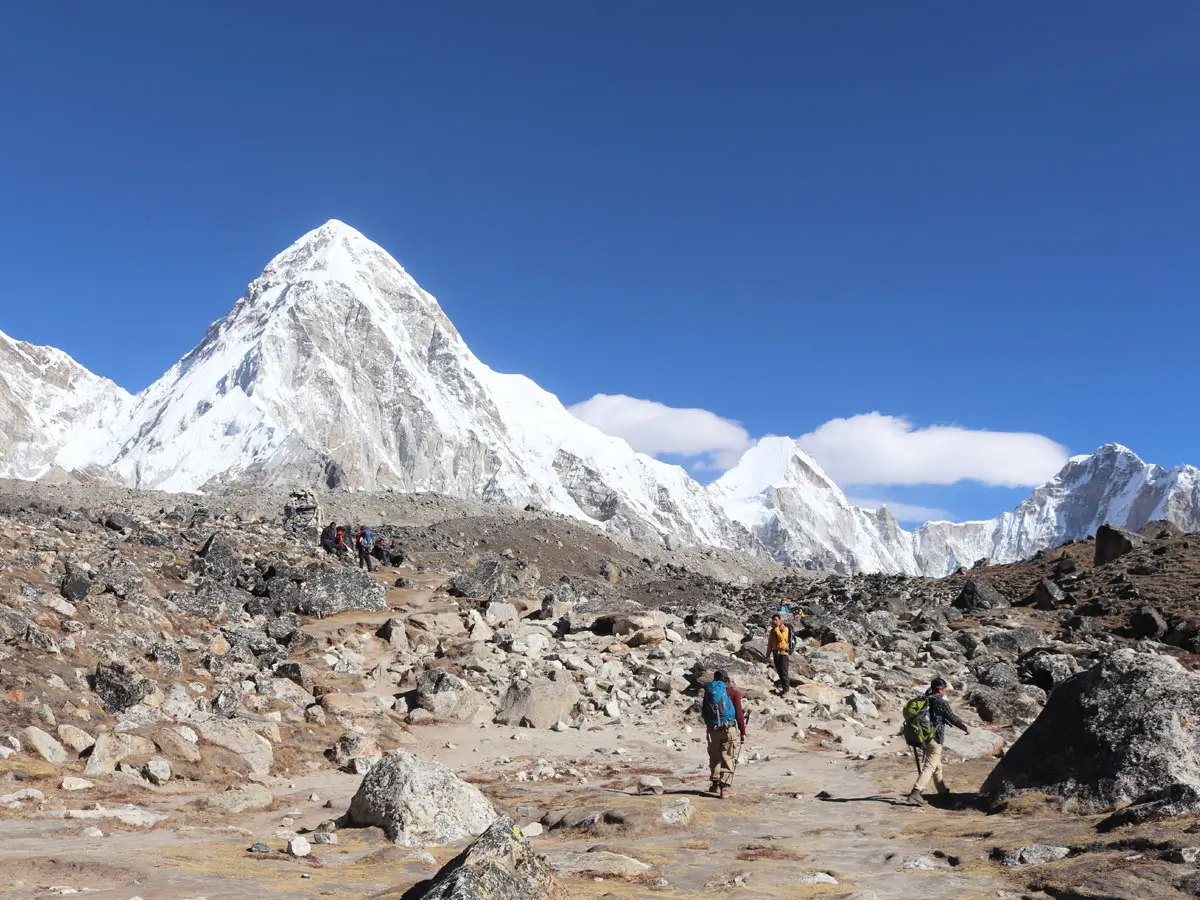
EBC Chola Pass Trail!
When is the Best Time for the Everest Cho La Pass Trek?
Autumn is the best overall season for the Everest Cho La Pass Trek. Following the summer monsoon, the atmosphere is often clearer, mountain visibility improves, and teahouses operate at full capacity. Outfitter Himalaya particularly recommends October, November, April, and May based on the team’s experience of crossing Cho La during the main trekking seasons.
Spring is another best time for Cho La Pass. Temperatures gradually grow milder, rhododendron forests brighten the lower trail, and the approach to Everest comes alive with trekkers and climbing expeditions in the spring season. Some snow or ice may remain around Cho La, but spring provides a rewarding balance of scenery and temperature.
Winter offers a quieter and more dramatic version of the route, with crisp mountain light, peaceful villages and snow-covered highlands. The crossing remains dependent on current snow and weather conditions, so winter trekkers need suitable equipment, professional guidance and flexibility. Monsoon brings green landscapes and nearly empty trails, although clouds, rainfall, and flight disruptions can make the journey less predictable.
Ultimately, the best season is the one that matches your priorities: Autumn suits travelers seeking the strongest overall balance; spring appeals to those wanting warmer, more colorful surroundings; and the quieter seasons reward well-prepared trekkers who are comfortable adapting their plans.
Four Seasons at a Glance
Season
Typical character
Mountain visibility
Crowds and services
Cho La conditions
Overall suitability
Spring (March–May)
Gradually warmer, colourful and energetic
Frequently clear in the mornings; more afternoon cloud later in the season
Moderate to busy, with most teahouses operating
Remaining snow or ice is possible, particularly earlier in the season
Highly recommended
Summer/Monsoon (June–August)
Green, quiet and atmospheric
Variable due to cloud and rainfall
Very few trekkers; some services may be limited
Wet approaches, variable visibility and changing trail conditions require flexibility
Suitable for flexible, experienced trekkers
Autumn (September–November)
Clearer, lively and well established
Often excellent after the monsoon
Busiest season, with the widest availability of services
Frequently favourable, although fresh snowfall can still affect the pass
Best overall season
Winter (December–February)
Cold, peaceful and visually dramatic
Often crisp during settled weather
Very quiet; some high-altitude lodges may close
Snow and ice are more likely, making access condition-dependent
Possible with preparation and professional guidance
Quick seasonal recommendation
Choose autumn for the strongest overall combination of visibility, trail support, and favorable trekking conditions.
Choose spring for milder temperatures, rhododendron scenery and an active Everest atmosphere.
Choose summer/monsoon for green landscapes and solitude if you can accept clouds, rain and possible travel delays.
Choose winter for peaceful trails and dramatic snow scenery if you have suitable equipment and a flexible itinerary.
These descriptions represent general seasonal patterns for the EBC Cho La Pass Trek. A recent storm can affect Cho La even during a normally favorable period, while a settled weather window can create rewarding conditions outside the main seasons.
What Everest Cho La Actually Feels Like in Spring: Weather, Crowds and Trail Conditions From Our Guides
Spring brings a gradual return of color and movement to the Everest region. Rhododendrons brighten sections of the lower trail, teahouses become lively again, and warmer daylight begins to soften the feeling of winter. Higher in the Khumbu, however, Cho La may still hold snow and ice long after the forests below have entered spring.
Spring weather, temperature and trail conditions
Daytime temperatures generally become more comfortable as the season progresses, although mornings and nights remain cold at higher elevations. Clear mornings often provide excellent views of Everest, Lhotse, AmaDablam and Cho Oyu, while clouds may develop later in the day, especially toward the end of spring.
Early in the season, winter snow may remain around Dzongla, Thagnak and the approaches to Cho La. Conditions commonly become more established as spring advances, but fresh snowfall is still possible at this altitude.
Spring temperatures become gradually milder, but conditions vary considerably between the lower villages and Cho La Pass. A warm afternoon around Lukla or Namche does not indicate what trekkers will experience above 5,000 meters.
Location or elevation zone
Approximate daytime temperature
Approximate night/early-morning temperature
Lukla and Phakding
8°C to 18°C
-2°C to 6°C
Namche Bazaar
5°C to 13°C
-6°C to 2°C
Dzongla and Gokyo area
-2°C to 8°C
-15°C to -5°C
Cho La Pass
Approximately -5°C to 5°C during crossing hours
An early crossing may begin around -15°C to -8°C
These are broad planning ranges rather than forecasts and the temperatures can fall below them during fresh snowfall, strong wind, or an early-spring cold spell. Wind exposure around Cho La can also make conditions feel significantly colder than the measured air temperature.
Outfitter Himalaya’s guides therefore assess the actual trail before deciding whether microspikes or additional precautions are necessary. Trekkers should therefore pack for below-freezing conditions even when the lower valleys feel pleasantly warm.
What makes spring special in Cho La Pass?
The journey begins beside rushing rivers and forested hills before rising into a world of rock, glaciers and high mountains. This transition feels particularly vivid in spring. The lower valleys carry fresh color, while the upper route retains its dramatic alpine character.
Later in the season, the Everest trail also gains the energy of the climbing period and you may meet expedition teams, mountaineers, guides, and porters traveling towards Base Camp, giving the route a lively international atmosphere.
Advantages of trekking to Cho La in Spring Season
Milder daytime temperatures than winter
Blooming rhododendrons along suitable lower-elevation sections
Frequently clear morning views
Most teahouses and trekking services operating
Longer daylight than in winter
Active Everest expedition atmosphere
Generally favorable conditions for properly planned crossings
Points to consider while trekking to Cho La in Spring
Snow or ice may remain around Cho La
Fresh snowfall can temporarily change the route
Popular sections become busy
Afternoon cloud may increase later in spring
Lukla flights and preferred lodges should be booked early
Warm conditions below Namche do not represent conditions at the pass
Who should choose spring Season for the EBC Cho La Pass Trek?
Spring is ideal for travelers, who want a balance of comfortable trekking temperatures, colorful lower landscapes, and high-mountain adventure and it is also a strong choice for photographers who appreciate the contrast between flowering forests and snow-covered peaks.
Outfitter Himalaya has completed many Cho La crossings during spring, but the company does not treat seasonal reputation as a guarantee. The final decision is based on current weather, snow, visibility, and the guide’s assessment of the trail.
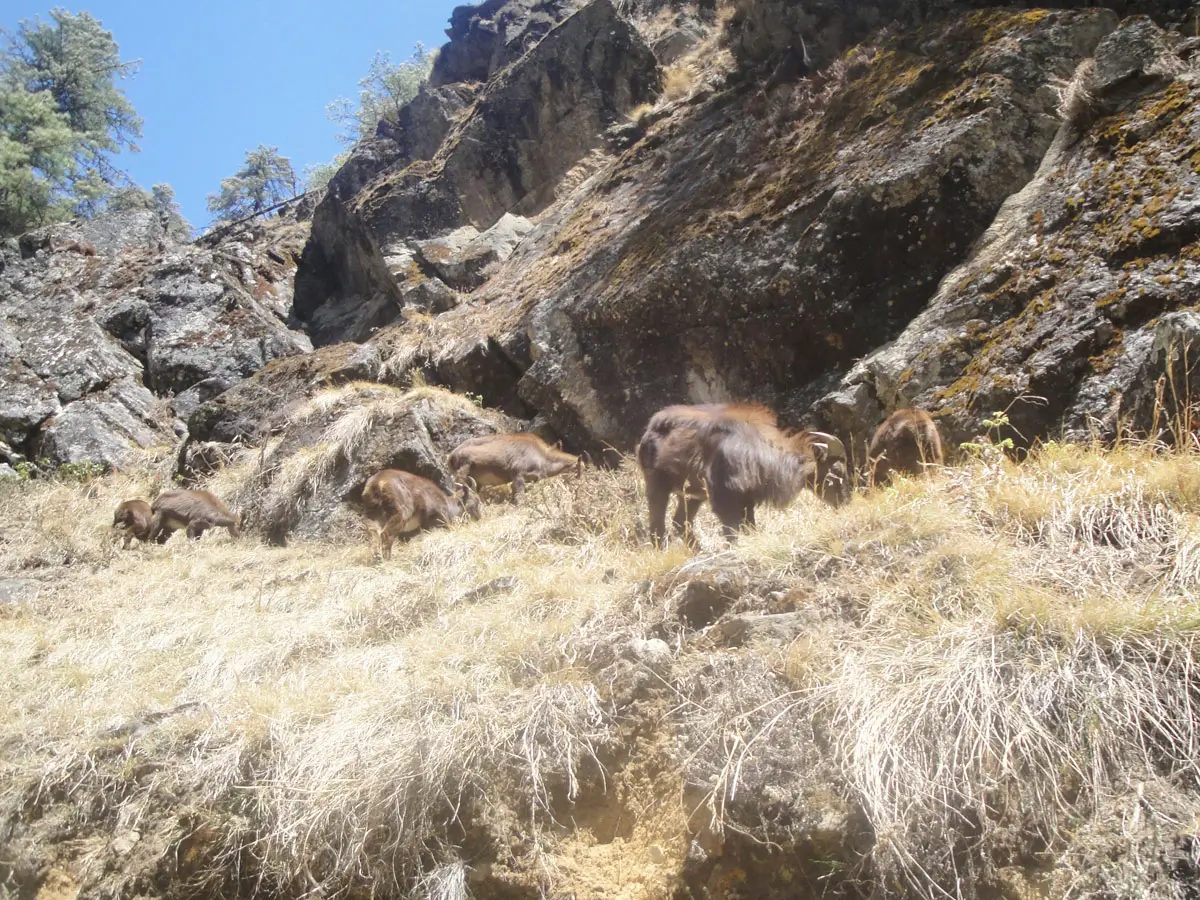
Wild Animal in Everest Region!
Everest Cho La Pass Trek in Autumn
What Everest Cho La Actually Feels Like in Autumn: Weather, Crowds and Trail Conditions From Our Guides
Autumn is the season when the Everest region feels most open. As the monsoon withdraws, moisture gradually leaves the air, distant ridgelines become sharper, and the great peaks appear with remarkable definition. Villages and teahouses return to full rhythm, while trekkers from around the world move between Everest Base Camp, Cho La and Gokyo.
Based on Outfitter Himalaya’s crossing experience, autumn is the best overall season, with October and November particularly recommended. It offers a strong combination of mountain visibility, operating trail services, and generally favorable conditions for the high-pass journey.
Autumn Weather, Temperature and Trail Conditions
Autumn begins relatively mild and becomes progressively colder. Conditions around Lukla and Namche may feel comfortable in direct sunlight, but temperatures fall quickly after sunset and remain much lower near Dzongla, Gokyo and Cho La.
Location or elevation zone
Approximate daytime temperature
Approximate night/early-morning temperature
Lukla and Phakding
10°C to 20°C
1°C to 10°C
Namche Bazaar
7°C to 15°C
-5°C to 5°C
Dzongla and Gokyo area
-2°C to 8°C
-12°C to -3°C
Cho La Pass
Approximately -5°C to 6°C during crossing hours
Early conditions may fall to around -15°C to -5°C
These figures are broad seasonal ranges; late-autumn nights, fresh snowfall, and strong winds can produce colder conditions, especially above 4,500 meters.
Trails frequently become drier and more established after the monsoon and the visibility often improves. However, early-autumn moisture may linger, and autumn snowfall can temporarily cover Cho La. Guides still need to check the latest weather and snow conditions before committing to the crossing.
What Makes Autumn Special for Everest Cho La Pass Trek?
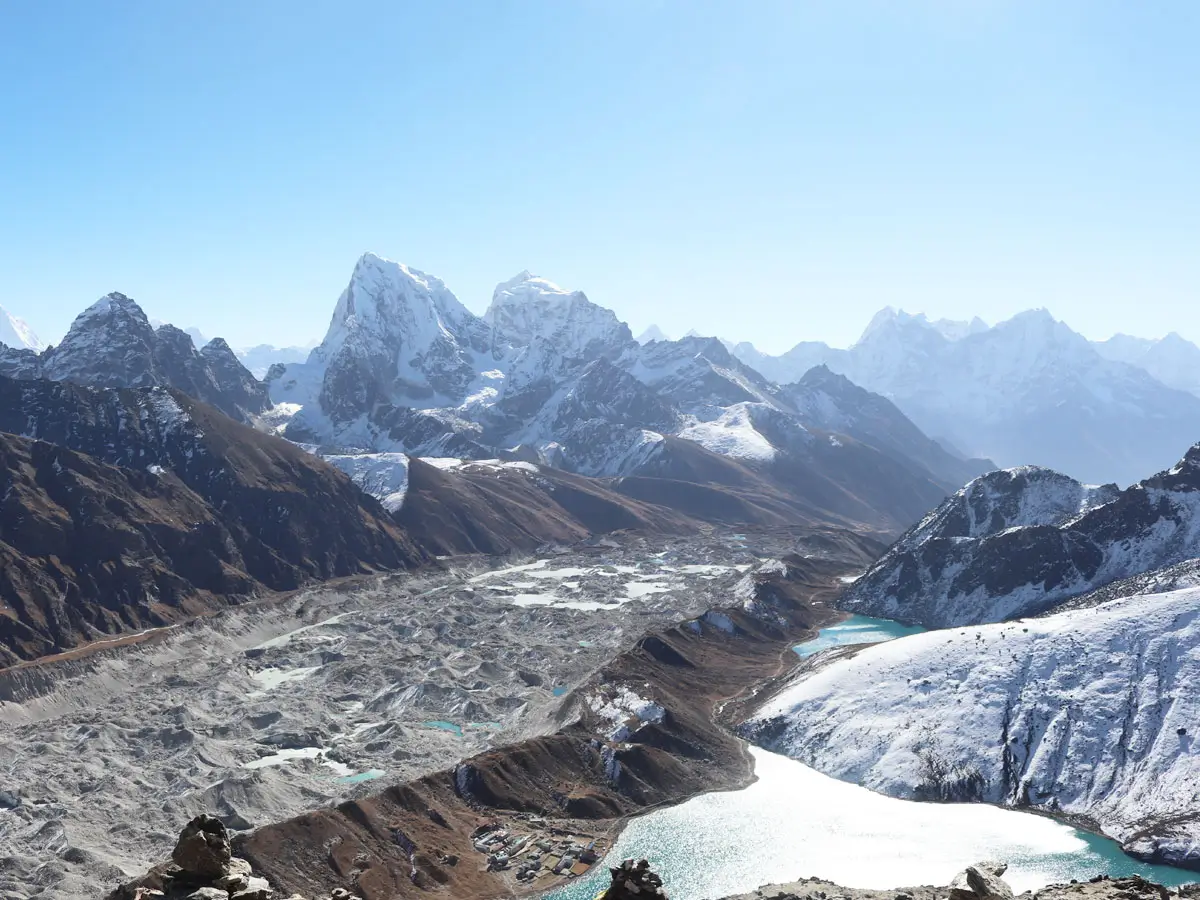
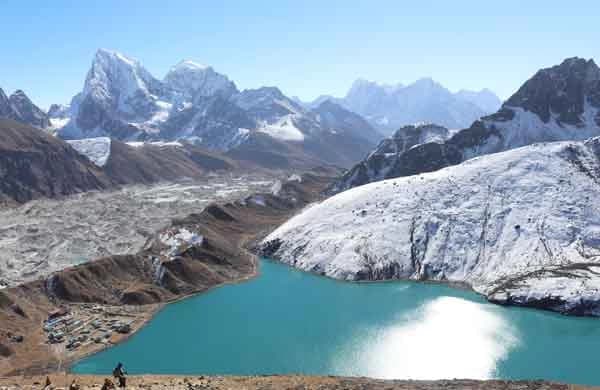
The greatest reward of Autumn is the clarity; from Kala Patthar, the Everest massif rises above a vast landscape of glaciers and dark ridges. Around Gokyo, the lakes reflect the surrounding peaks in deep blue, while the Ngozumpa Glacier stretches through the valley like a frozen river.
Autumn also brings a sociable trail atmosphere; the dining rooms fill with conversations among trekkers, guides, and expedition staff, which creates a sense of shared purpose without detracting from the mountains' scale.
Autumn Festivals and Cultural Experiences
Autumn is also the main festival season in Nepal. Depending on the trek dates, you may experience Dashain, Tihar, or Mani Rimdu celebrations that add a cultural dimension to the mountain journey.
Dashain is Nepal's longest Hindu festival and is centered on family reunions, blessings, and shared meals, and Tihar, known as the Festival of Lights, features oil lamps and colorful decorations. These festivals are celebrated most visibly in Kathmandu and Nepal's Hindu communities; traditions and participation vary among the predominantly Buddhist Sherpa communities of the Khumbu.
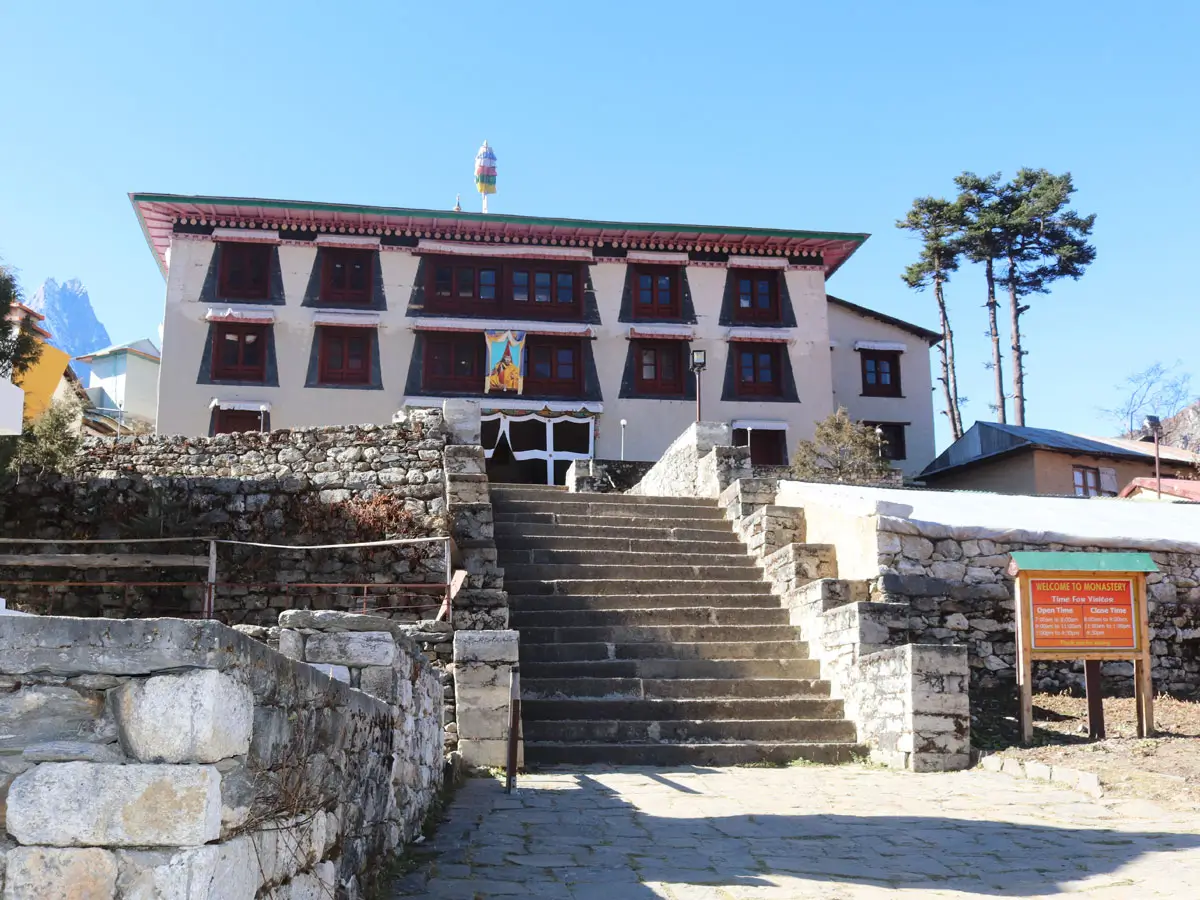
The most locally significant autumn celebration along the Everest trail is Mani Rimdu at Tengboche Monastery. This important Sherpa Buddhist festival includes prayers, blessings, monastic rituals and traditional masked dances. Its public celebrations generally take place in October or November, making it possible for some autumn itineraries to combine Himalayan trekking with living Sherpa culture.
Advantages of Autumn Trek to Everest Cho La Pass
Frequently excellent Himalayan visibility
Generally established trail conditions
Fully operating teahouses and trekking services
Comfortable daytime walking at lower elevations
Strong conditions for mountain photography
Easier coordination of accommodation and supplies
A lively international trekking atmosphere
Points to Consider while trekking to Everest Cho La in Autumn
Popular trails and teahouses become busy
Lukla flights can fill quickly
Advance room coordination is helpful near the high route
Temperatures become colder later in the season
Fresh snowfall can still affect Cho La
Clear weather should never be treated as guaranteed
Additional buffer days remain valuable
Who Should Choose Autumn for Everest's Cho La Pass Trek?
Autumn is the strongest choice for first-time Cho La trekkers, photographers, and travelers seeking the most balanced seasonal experience. It is particularly suitable for those who want dependable trail services and a greater likelihood of clear mountain views.
The busier atmosphere is the main trade-off. Travelers who prefer complete solitude may favor another season, but for the overall combination of scenery, logistics, and trekking conditions, Autumn remains Outfitter Himalaya's leading recommendation.
Tengboche Monastery!
Everest Cho La Pass Trek in Summer and Monsoon
The Summer or monsoon bring a quieter, greener personality to the Everest region and Cho La Pass Trail. Forests appear freshly washed, rivers run with greater energy, and clouds drift through the valleys. The mountains may not remain visible all day, but when the clouds open, the views can feel especially dramatic.
Monsoon Weather, Temperature and Trail Conditions
The temperatures are generally warmer in Monsoon than in other seasons, especially below Namche Bazaar and the Rainfall is more frequent along the lower route, while higher elevations may experience cloud, drizzle, sleet, or occasional snow depending on the weather system.
Location or elevation zone
Approximate daytime temperature
Approximate night/early-morning temperature
Lukla and Phakding
15°C to 22°C
8°C to 13°C
Namche Bazaar
12°C to 17°C
5°C to 9°C
Dzongla and Gokyo area
3°C to 10°C
-3°C to 3°C
Cho La Pass
Approximately 0°C to 7°C during crossing hours
Early conditions may fall to around -5°C
These are broad planning ranges. Rain, cloud cover, wind, and elevation changes can make conditions feel colder than expected.
Lower sections of the trail may become wet or muddy, while cloud can reduce visibility around the high route. The surface near Cho La may vary between wet rock, soft snow, and firmer, frozen sections. Guides must therefore assess visibility and trail conditions before beginning the crossing.
This is the quietest and most atmospheric version of the Everest trail. Villages settle into a slower rhythm, popular viewpoints become peaceful, and the hills below the alpine zone carry their richest shades of green. Trekkers willing to wait for changing clouds may experience beautiful moments of light over AmaDablam, Thamserku and the Gokyo Valley.
The main attraction is not guaranteed panoramic weather. It is the sense of traveling through a living mountain landscape shaped by rain, mist, and sudden openings in the sky.
Advantages of Trekking During Monsoon
Very few trekkers on most sections
Green and freshly revived lower valleys
Peaceful villages and teahouses
Greater accommodation choice where lodges remain open
Distinctive cloud and landscape photography
A more private experience at popular destinations
What are the monsoon season trekking risks?
Frequent clouds may hide mountain views
Rain can make lower trails wet and slippery
Lukla flights may face delays or cancellations
Some teahouses may offer reduced services
Visibility around Cho La can affect route decisions
Extra buffer days are particularly important
Waterproof clothing and pack protection are essential
Lukla Flights During the Monsoon
Low cloud, rain and reduced visibility can interrupt flights between Kathmandu or Ramechhap and Lukla during the monsoon. Delays may last several hours, and flights can occasionally be postponed to the following day when conditions do not improve.
Trekkers should keep at least two or three flexible days between their return from the mountains and their international departure. If the outbound Lukla flight is delayed, acclimatization or contingency days should not be removed to recover the schedule. Protecting these days is especially important on a high-altitude route involving Cho La Pass.
Morning flights are generally preferred because mountain weather may become more changeable later in the day, although no departure time guarantees operation. Travelers should remain flexible and follow the latest information from the airline and trekking company.
We can still discuss flight planning in greater detail later in the dedicated Lukla Flights and Seasonal Planning section, without repeating this explanation.
Who Should Choose Summer and Monsoon?
This season is best suited to experienced, patient travelers who value solitude and green landscapes and can keep their itinerary flexible. It is less suitable for visitors whose main priority is uninterrupted mountain visibility or who have no spare days for possible flight changes.
A monsoon journey should not be described as impossible, but neither should the Cho La crossing be promised in advance. With an experienced guide, suitable waterproof equipment, and enough time to respond to conditions, it can offer one of the most peaceful and unusual versions of the Everest region.
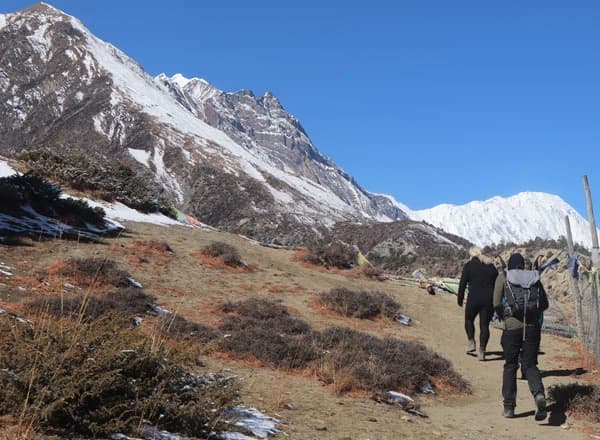
Walking towards EBC!
Everest Cho La Pass Trek in Winter
Winter transforms the Everest region into its quietest and most dramatic form, the snow may brighten the high valleys, mountain outlines appear sharp in settled weather, and teahouses feel peaceful after the busy autumn season. For well-prepared trekkers, the reward is an intimate Himalayan experience with very few people on the trail
After snowfall, the guide considers snow depth, visibility, overnight freezing, wind, and information from lodges or other guides before deciding whether to proceed.
Winter Weather, Temperature and Trail Conditions in Everest Cho La Pass
Days can be sunny and clear, but temperatures fall rapidly after sunset. Conditions become considerably colder around Dzongla, Gokyo and Cho La Pass.
Location or elevation zone
Approximate daytime temperature
Approximate night/early-morning temperature
Lukla and Phakding
2°C to 10°C
-8°C to 0°C
Namche Bazaar
-2°C to 7°C
-12°C to -5°C
Dzongla and Gokyo area
-10°C to 2°C
-22°C to -12°C
Cho La Pass
Approximately -12°C to 0°C during crossing hours
Early conditions may fall below -20°C
These are broad planning ranges. Wind, fresh snowfall, and cold-weather systems can make conditions feel considerably colder.
Snow and ice are more likely around the pass, and heavy accumulation may temporarily prevent a crossing. Outfitter Himalaya considers microspikes essential for winter departures. Warm boots, gaiters, a four-season sleeping bag, and reliable insulation are also important.
Advantages of Winter Trekking to Chola Pass
Very quiet trails and villages
Crisp mountain views during settled weather
Beautiful snow-covered landscapes
Peaceful teahouse atmosphere
Excellent conditions for distinctive winter photography
Points to Consider for Winter Trekking to Everest Cho La Pass
Cho La access depends on current snow conditions
Some high-altitude teahouses may close or provide limited services
Daylight is shorter than in spring and autumn
Water bottles and hydration systems require protection from freezing
Additional contingency days may be necessary
Accommodation should be confirmed before entering the high route
Winter suits experienced trekkers who are comfortable in cold conditions and willing to adapt their plans. It should not be presented as an impossible season, but the pass crossing cannot be guaranteed in advance. With suitable equipment, an experienced guide, and a favorable weather window, winter can reveal one of the most peaceful and memorable versions of the Everest region.
Is Cho La Pass Risky in Winter?
Cho La Pass becomes more demanding in winter because snow, hard ice, low temperatures, and shorter daylight can increase the difficulty of the crossing. Fresh snow may also cover sections of the trail and make route identification less obvious.
This does not mean the pass is always inaccessible. The level of risk depends on current conditions, the group’s preparation, and the guide’s judgment. Outfitter Himalaya proceeds only when the weather, visibility and snow conditions are suitable. Delaying or changing the route is the responsible decision when they are not.
What Extra Should You Pack for Winter?
In addition to a standard high-altitude trekking kit, winter trekkers should carry:
Microspikes
Insulated, waterproof trekking boots
Gaiters
Thermal base layers
Warm down jacket
Insulated gloves or mittens
Four-season sleeping bag suitable for expected sub-zero temperatures
Insulated water bottle or thermos
Spare batteries or a power bank, as cold reduces battery performance
This is enough detail here. The later seasonal packing section can provide a compact comparison without repeating the entire winter list.
Spring vs Autumn: Which Is Better for Cho La Pass?
Spring and autumn are both excellent seasons, but they create noticeably different experiences. Spring feels colorful and energetic, while autumn is generally clearer, busier, and more established.
Factor
Spring
Autumn
Overall conditions
Milder and gradually warming
Generally settled after the monsoon
Mountain visibility
Often clear in the morning; afternoon clouds may develop
Frequently sharp and clear, especially after the monsoon
Landscape
Rhododendrons and fresh lower valleys
Clean air, open panoramas and post-monsoon greenery
Snow and ice
Winter snow may remain early in the season
Fresh snowfall is possible later in the season
Daytime comfort
Usually warmer
Comfortable initially, becoming colder later
Trail atmosphere
Active, with Everest expedition energy
Lively, sociable and busiest overall
Teahouses
Most operate normally
Widest availability, but advance booking is helpful
Cultural experience
Spring mountain and Buddhist celebrations may occur
Dashain, Tihar and Mani Rimdu may coincide with the journey
Best suited to
Trekkers wanting warmth, flowers and expedition atmosphere
Trekkers prioritising visibility, services and balanced conditions
Which Season Does Outfitter Himalaya Recommend?
Outfitter Himalaya recommends autumn as the best overall season, particularly October and November. The combination of mountain visibility, operating teahouses, and generally established trail conditions makes it suitable for most Cho La trekkers.
Spring is an excellent alternative and choose Spring, if you prefer relatively warmer conditions, colorful forests, and the excitement surrounding Everest’s climbing season. Whichever season you select, current weather and snow conditions remain more important than the seasonal average.
Best Season According to Your Travel Priorities
Your main priority
Recommended season
Why it may suit you
Best overall trekking experience
Autumn
Strong balance of visibility, trail conditions and operating services
Relatively warmer conditions
Spring
Milder daytime temperatures and longer daylight
Clear mountain photography
Autumn
Frequently sharp post-monsoon visibility
Rhododendrons and colourful scenery
Spring
Flowering lower forests contrast beautifully with snowy peaks
Everest expedition atmosphere
Spring
The trail becomes lively during the climbing season
Festivals and local culture
Autumn
Possibility of experiencing Mani Rimdu, Dashain or Tihar
Fewer trekkers with clear winter light
Winter
Quiet trails and dramatic scenery during settled weather
Green landscapes and solitude
Summer/monsoon
Fresh valleys and very low visitor numbers
First Cho La crossing
Autumn or spring
More established services and generally favourable conditions
Flexible off-season adventure
Winter or monsoon
Distinctive scenery for prepared trekkers who can adapt their route
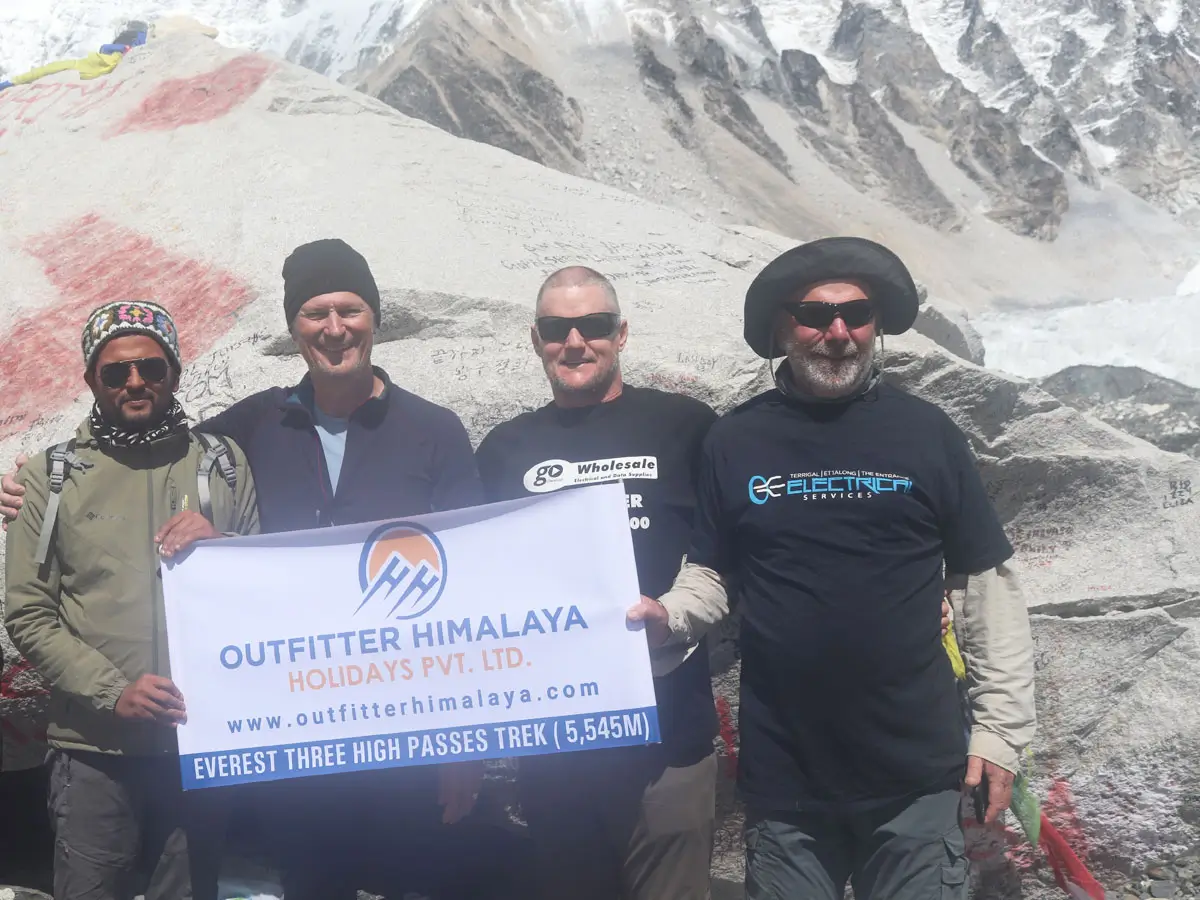
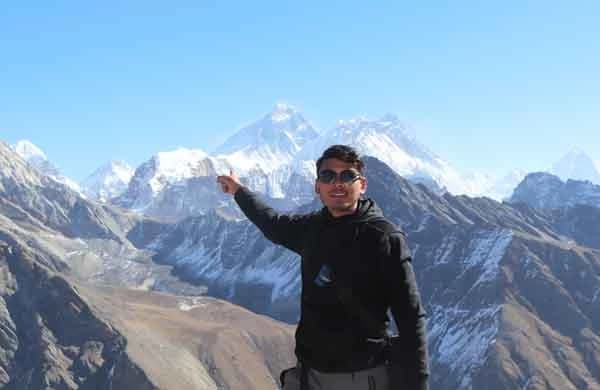
The Everest Base Camp!
Snow, Ice, and How Outfitter Himalayan Decides Weather to Cross Cho La
Snow at Cho La Pass is not Limited to winter. At 5,420 meters, fresh snowfall, hard ice, or frozen trail sections can appear during spring and autumn as well. The season provides a useful expectation, but the most recent weather determines the actual crossing conditions.
How Conditions Change by Season
Spring: Winter snow remains around the pass, particularly earlier in the season. Warmer daytime conditions can soften snow, while shaded areas may remain frozen.
Summer/monsoon: Rain affects the lower trail, while the high route may receive sleet or wet snow. Cloud and reduced visibility can be as important as the trail surface.
Autumn: Conditions are frequently favorable after the monsoon, but an unexpected snowfall can temporarily cover the route.
Winter: Snow and ice are more likely to accumulate, and the pass may become temporarily inaccessible after heavy snowfall.
Our Guides Check Before Crossing
Outfitter Himalaya does not decide whether to cross Cho La based on the itinerary date alone. Before proceeding, the guide considers:
Latest weather information
Recent and ongoing snowfall
Snow depth and trail visibility
Ice or slippery sections
Wind and visibility around the pass
Information from teahouses and other guides
The group’s health, acclimatization and walking pace
Whether there is enough daylight to complete the crossing comfortably
The trekkers normally leave early in the morning, before direct sunlight reaches the upper pass, and if conditions are unsuitable, the guide may delay the crossing, adjust the schedule, or recommend an alternative route. Such flexibility protects the group and prevents an itinerary from becoming more important than the conditions on the mountain.
Are Microspikes Necessary?
Outfitter Himalaya considers microspikes essential for winter departures. During spring and autumn, the guide may also recommend them when snow or ice remains on the route. Gaiters and trekking poles can provide additional comfort and stability.
Technical mountaineering equipment is not normally required for a standard Cho La crossing in favorable conditions. If conditions become serious enough to require skills or equipment beyond the planned trekking itinerary, postponing or changing the route may be the more responsible choice.
Cho La is an adventurous high pass, but it should not be approached with unnecessary fear. Proper acclimatization, suitable equipment, an early start, and experienced judgment allow trekkers to enjoy the challenge while respecting the changing Himalayan environment.
Crowds, Teahouses and Lukla Flights by Season
Season affects not only the condition of Cho La but also the practical rhythm of the entire journey. Accommodation demand, lodge operations, and flight reliability can influence how much flexibility the itinerary needs.
Season
Trail crowds
Teahouse situation
Lukla flights
Planning advice
Spring
Moderate to busy
Most lodges operate normally
Generally regular, but weather delays remain possible
Reserve flights and high-route rooms early
Summer/monsoon
Very quiet
Some lodges may offer limited services
Low cloud and rain can cause frequent disruption
Keep two or three buffer days
Autumn
Busiest season
Widest availability, but popular lodges fill quickly
High demand; occasional weather delays
Book early and avoid a rigid schedule
Winter
Very few trekkers
Some high-altitude lodges may close
Flights operate when conditions permit
Confirm accommodation before entering the high route
Rooms are easiest to coordinate during spring and autumn on Cho La Pass Trail because most teahouses are operating. However, the busiest settlements may fill quickly during peak periods. Around Dzongla, Thagnak and Gokyo, advance communication is particularly helpful to find accommodation.
During winter and monsoon, fewer trekkers do not always mean every lodge is available. Some owners temporarily close or reduce their menus and supplies. Outfitter Himalaya therefore confirms lodge availability before the group reaches the remote section.
Lukla Flight Planning
Flights to Lukla depend heavily on visibility, wind, and cloud conditions. Monsoon generally creates the greatest likelihood of disruption, but delays can occur in any season. Morning departures are commonly preferred because mountain weather may become more changeable later in the day.
During peak trekking periods, most Lukla flights operate from Ramechhap rather than Kathmandu. The departure airport and schedule should be reconfirmed before the trek because airline arrangements can change.
International travelers should avoid scheduling their flight home immediately after the planned return from Lukla. Keeping contingency days allows time for weather delays without removing important acclimatization or rest days from the trek.
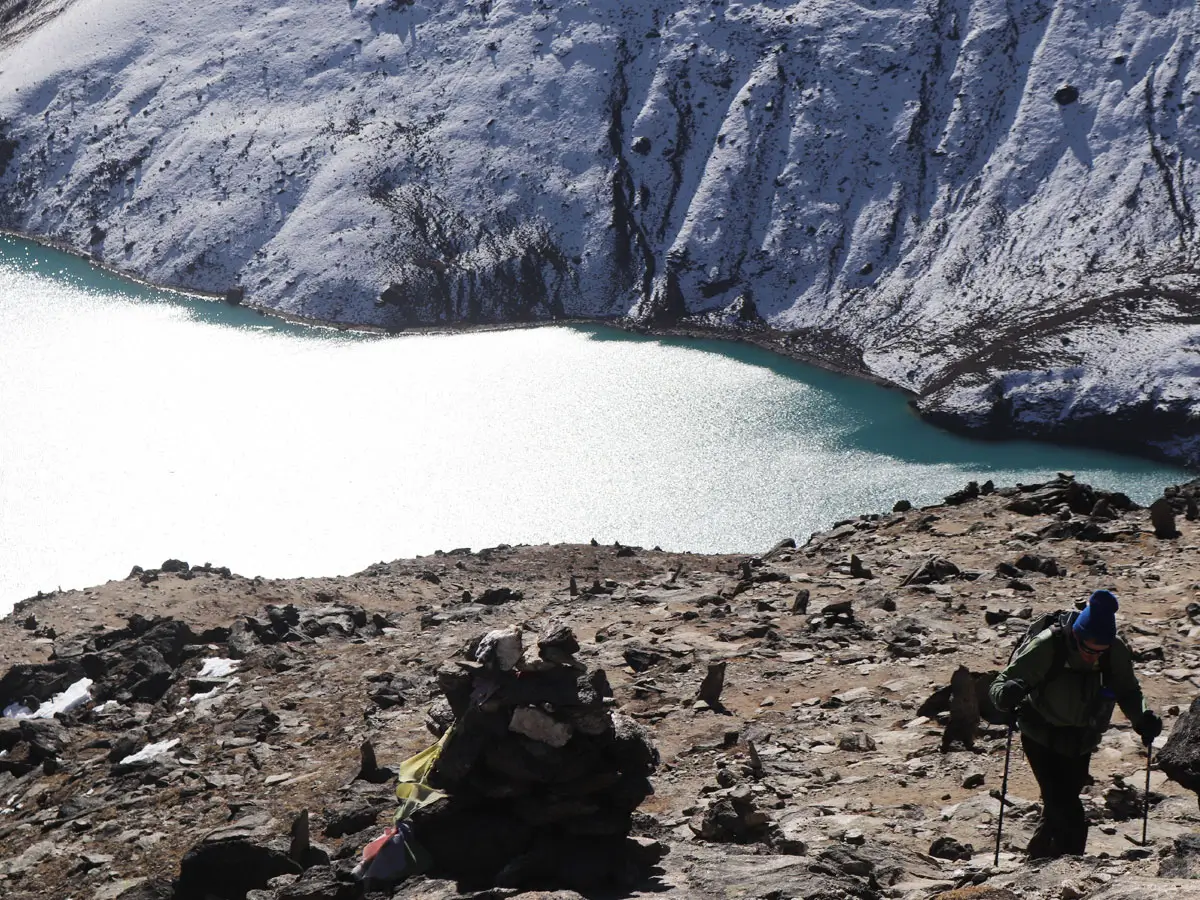
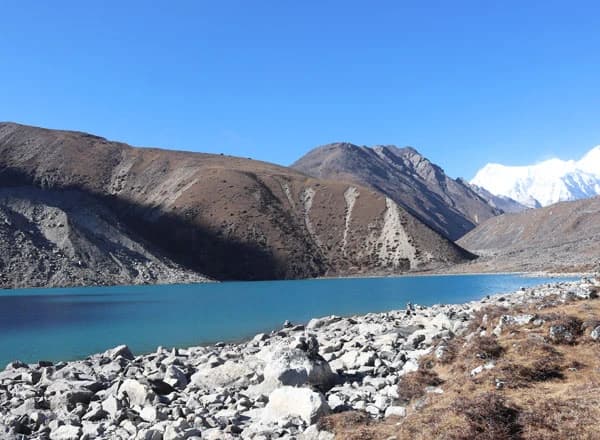
The Gokyo Lake!
Seasonal Packing Adjustments for the Cho La Pass Trek
A complete Cho La packing list remains largely the same throughout the year, but insulation, rain protection and traction equipment should change with the season.
Season
Additional packing priorities
Spring
Layered clothing, light down jacket, waterproof shell, gaiters and microspikes when advised
Summer/monsoon
Waterproof jacket and trousers, backpack cover, dry bags, quick-drying clothing and additional socks
Autumn
Warm layers, down jacket, sun protection and colder-weather accessories later in the season
Winter
Strong insulation, thermal base layers, four-season sleeping bag, insulated boots, gaiters, warm mittens, microspikes and an insulated bottle
Essential in Every Season
Regardless of the trekking period, pack:
Broken-in trekking boots
Moisture-wicking base layers
Fleece or insulated mid-layer
Waterproof and windproof outer shell
Warm hat and sun hat
UV-protective sunglasses
Trekking poles
Headlamp with spare batteries
Water purification method
High-SPF sunscreen and lip balm
Personal medicines and basic first-aid supplies
Cold weather reduces battery performance, so a power bank and spare batteries with protection are particularly helpful in late autumn and winter. Important clothing and electronics should be stored in waterproof bags, even when trekking outside the monsoon season.
Microspikes should not be packed only according to the calendar. Outfitter Himalaya treats them as essential in winter and may recommend them in any season when snow or ice affects Cho La.
Expert Tips for Choosing the Best Season and Crossing Cho La
Choose the experience, not only the temperature: Select autumn for the strongest overall balance, spring for warmth and color, winter for solitude, and monsoon for green landscapes and quiet trails.
Protect your acclimatization days: Do not remove rest or acclimatization days to make up for time lost to a delayed Lukla flight. Reaching Cho La gradually is more important than following the original calendar exactly.
Keep contingency days: Allow at least two or three flexible days before your intended departure, and these can absorb flight disruptions, weather changes, or delayed pass crossings.
Begin the crossing early: Outfitter Himalaya groups leave before direct sunlight reaches the upper pass. An early start provides sufficient daylight and allows the group to maintain a steady pace.
Carry traction when conditions require it: Microspikes are essential for Outfitter Himalaya's winter departures and may also be needed after snowfall in spring or autumn. Please confirm the expected equipment before leaving Kathmandu.
Confirm availability at high-altitude teahouses: Rooms may fill fast during peak seasons, while some lodges may close during winter or the monsoon. So, accommodation around the remote Cho La section should be checked in advance.
Follow the guide's judgment: A good forecast does not guarantee a suitable trail, and the guide considers visibility, snow, wind, the group's condition, and information from people already near the pass.
Purchase suitable travel insurance: Your travel policy should cover high-altitude trekking up to the itinerary's maximum elevation, emergency treatment, and helicopter evacuation. Read the exclusions rather than relying only on the policy title.
Prepare for cold in every season: Cho La remains a high Himalayan pass even when Namche feels warm. Keep gloves, a warm layer and a waterproof shell accessible in your daypack.
Treat flexibility as part of the adventure: Delaying or changing the route is not a failed trek. It is a responsible response to mountain conditions and can preserve the enjoyment of the wider Everest and Gokyo journey.
Outfitter Himalaya’s Field Perspective
Outfitter Himalaya’s team has completed the Cho La Pass crossing during both the spring and autumn trekking seasons, and based on this field experience, we particularly recommend October, November, April, and May for their frequent combination of clear Himalayan views, active teahouses, and favorable trail conditions.
On the crossing day, our groups begin early in the morning, before direct sunlight reaches the upper pass. An early departure provides more daylight for the long journey and allows the guide to manage the day at a steady, unhurried pace. However, departure alone does not determine whether the crossing should proceed.
Outfitter Himalaya considers microspikes essential equipment for the Winter Departure, and they may also be required during spring or autumn when recent snowfall or ice affects the route. The final equipment decision should always reflect current conditions rather than the season’s general reputation.
This is why our idea of the “best season” combines favorable weather with professional judgment, proper preparation, and the flexibility to respond to the mountain, as it is not simply as a calendar suggests it should be.
The Gokyo Lake and Glacier!
FAQS – Best Season for EBC Cho La Pass Trek, Nepal
What is the best season for the Everest Cho La Pass Trek?
Autumn is the best overall season because it frequently offers clear mountain views, established trail conditions, and fully operating teahouses. Outfitter Himalaya particularly recommends October and November.
Is spring or autumn better for Cho La Pass?
Autumn generally offers sharper post-monsoon visibility and the strongest overall conditions, and spring is better for travelers who prefer relatively warmer days, rhododendron scenery, and the atmosphere of Everest’s climbing season.
Why are October and November recommended?
October and November frequently combine clear skies, active teahouses, and favorable high-altitude trekking conditions. November is colder than October, but it may feel quieter as the main autumn crowds begin to decrease.
Can I cross Cho La Pass during winter?
A winter crossing may be possible when snow, visibility, and weather conditions are suitable, and you need proper cold-weather equipment, itinerary flexibility, and an experienced guide because access cannot be guaranteed after heavy snowfall.
Is Cho La Pass risky in winter?
Winter increases the challenge because snow, ice, low temperatures and shorter daylight can affect the route. The level of risk depends on current conditions, preparation, and guide judgment rather than winter alone.
Can Cho La Pass be crossed during the monsoon?
It may be crossed during a favorable weather window, but cloud, rainfall, wet trails, and flight disruption make the journey less predictable. Monsoon trekking is better suited to experienced travelers with flexible schedules.
Is there snow on Cho La Pass during spring or autumn?
Yes, snow and ice can remain from winter or appear after fresh snowfall during spring and autumn. The guide should assess the current surface before confirming the crossing.
Are microspikes required for Cho La Pass?
Outfitter Himalaya considers microspikes essential for winter departures. They may also be recommended during spring or autumn when snow or ice affects the route.
How cold does Cho La Pass become?
Temperatures around the 5,420-meter pass can remain below freezing during early-morning crossings, particularly in winter, early spring, and late autumn.
Which season has the clearest mountain views?
Autumn frequently provides the clearest and sharpest Himalayan panoramas after the monsoon. Winter can also produce exceptionally crisp views during settled weather, while spring often offers clear mornings.
When is the Everest Cho La trail most crowded?
The trail is busiest during autumn, followed by spring. Summer/monsoon and winter receive far fewer trekkers, although fewer visitors may also mean reduced teahouse services.
Are teahouses open throughout the year?
Most teahouses operate during spring and autumn, and some high-altitude lodges may close or offer limited services during winter and monsoon, so accommodation near Dzongla, Thagnak and Gokyo should be confirmed in advance.
Can Himalayan weather change the Cho La itinerary?
Yes, fresh snowfall, poor visibility, strong wind, or unsuitable trail conditions may require a delayed crossing or route adjustment. A flexible itinerary allows the guide to make a responsible decision without rushing the group.
What happens if I need an extra rest day?
An additional rest day may be added when contingency time permits. Resting because of fatigue, acclimatization, or weather is preferable to forcing the original schedule and can improve the overall trekking experience.
How many contingency days should I keep?
Keeping at least two or three flexible days before your international departure is sensible. These days can absorb Lukla flight disruption, changing mountain weather, or an adjusted Cho La crossing schedule.
The Best time for the Everest Cho La Pass Trek is autumn, when clear mountain views, active teahouses, and generally established trail conditions come together. Spring follows closely, offering milder temperatures, flowering forests and the energetic atmosphere of Everest’s climbing season.
Summer/monsoon and winter reveal quieter sides of the Khumbu. Green valleys, drifting clouds, crisp winter light and peaceful trails can be deeply rewarding, but these seasons require more flexibility with flights, accommodation and the condition of Cho La Pass.
Outfitter Himalaya’s 19-day Everest Cho La Pass Trek is planned with gradual acclimatization and practical flexibility, and if you are uncertain whether spring, autumn, or a quieter season suits you, our team can help you select a departure based on your experience, expectations, and preferred mountain atmosphere.
The Annapurna Circuit Trek covers approximately 102 kilometers of walking on Outfitter Himalaya’s classic 15-day itinerary, including the Manang acclimatization hike. The journey unfolds through riverside forests, mountain villages and open valleys before crossing Thorong La [...]
The Annapurna Circuit Trek costs about USD 650–1,900 per person with Outfitter Himalaya, depending on the itinerary, group size, and services included. Outfitter Himalaya’s 15-day Classic Annapurna Circuit Trek has published group-size prices of USD [...]
Foreign trekkers need a trekking permit to trek the Annapurna Circuit, and we suggest settling it before you head out. Arranging the correct paperwork before departure helps avoid extra charges and interruptions once your journey [...]