Gokyo Lake Trek in January and February (Winter) is a deep-winter journey in the Khumbu region that leads to Gokyo village and its sacred high-altitude lakes. January brings colder nights, shorter days, and more established ice, and February offers gradually longer daylight and slightly greater warmth in direct sunshine.
The lakes may be partly or extensively frozen, depending on the weather; despite the winter setting, the standard Gokyo route reaches Gokyo through Namche Bazaar, Dole, and Machhermo without crossing Cho La or Renjo La. The trek is achievable for fit and well-prepared travelers with proper acclimatization, suitable cold-weather equipment, confirmed teahouses, and an experienced local guide.
Gokyo Lake Trek in Winter: Frozen Lakes and Deep-Winter Khumbu – A Snow Paradise
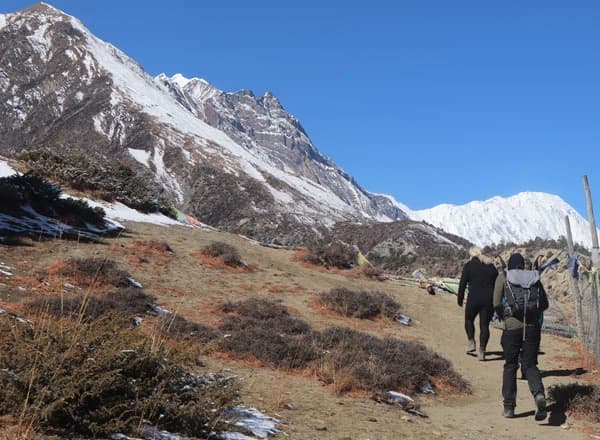
At nearly 4,790 meters, Gokyo village rests beside Dudh Pokhari beneath the immense presence of Cho Oyu. In January and February (Winter), the familiar colors of this high Himalayan valley change. Ice spreads across the lakes, snow settles into the folds of the surrounding slopes, and the enormous Ngozumpa Glacier appears even more rugged under the low winter sun.
Reaching this quiet corner of the Khumbu is a journey through several distinct worlds. After flying to Lukla, the trail follows the DudhKoshi River through pine forests, suspension bridges and small Sherpa communities. Namche Bazaar provides a lively pause before the route turns away from the busier Everest Base Camp trail and continues towards Dole, Machhermo and the open Gokyo Valley.
January represents winter at its deepest; the mornings are sharper, and days shorter. February remains cold, and daylight slowly increases, and the stronger midday sun begins to soften. These subtle differences offer each month its own mood rather than making them interchangeable winter periods.
The appearance of the lakes cannot be predicted precisely in the winter season; they may be extensively frozen, partly covered with ice, or reveal areas of dark blue water where sunlight, wind, or moving water interrupts the surface. The uncertainty is part of the experience, and the Gokyo does not present the same winter scene to every visitor.
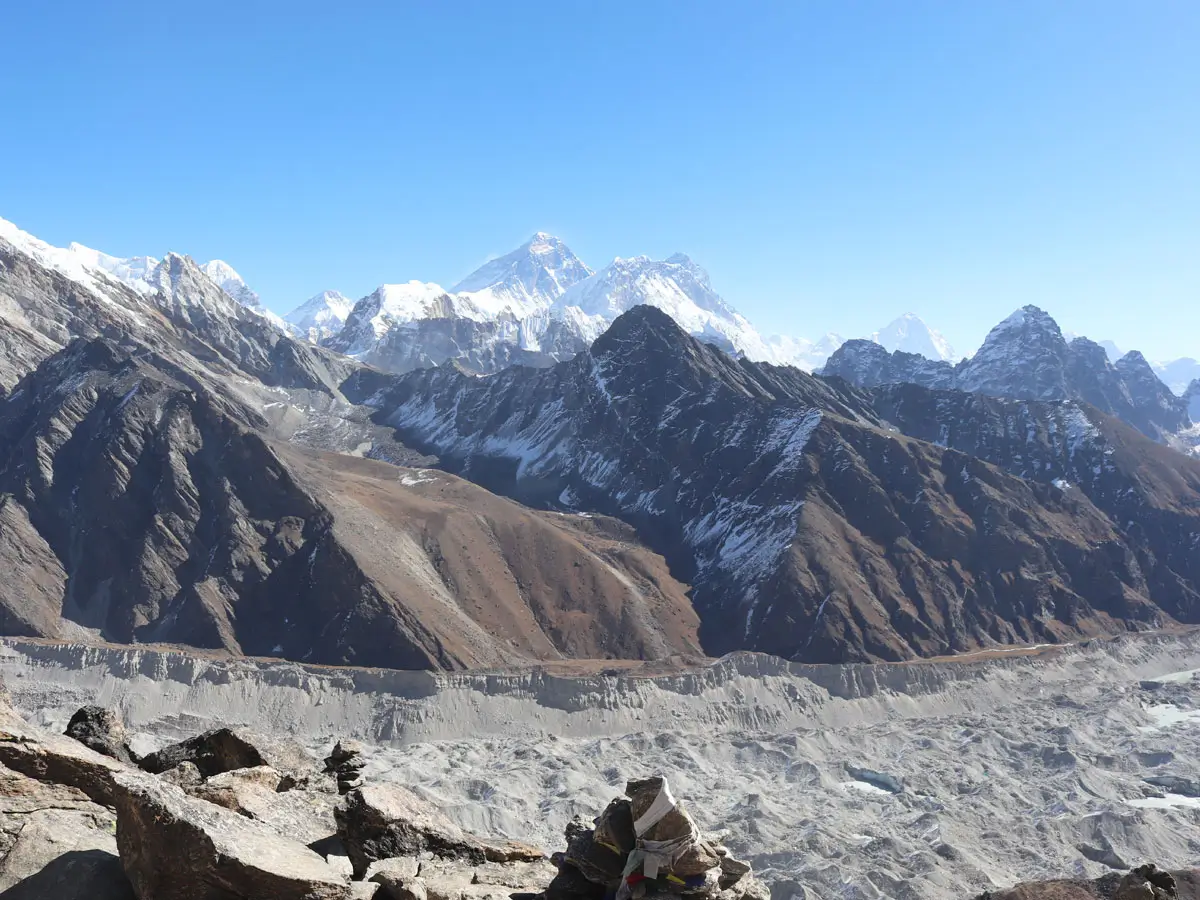
The climb to Gokyo Ri reveals Everest, Lhotse, Makalu and Cho Oyu beyond a vast landscape of lakes, moraine and glacier. Snow, wind and individual health determine whether the ascent is suitable on a particular day, but reaching Gokyo village alone remains a remarkable achievement.
The Gokyo Lake Trek in January and February is best suited to travelers who appreciate quiet landscapes, flexible plans and simple mountain hospitality. It is cold, but it need not feel frightening or extreme. With gradual acclimatization, dependable winter gear, confirmed lodges and knowledgeable local support, the journey becomes an inspiring encounter with the Khumbu during its most peaceful season.
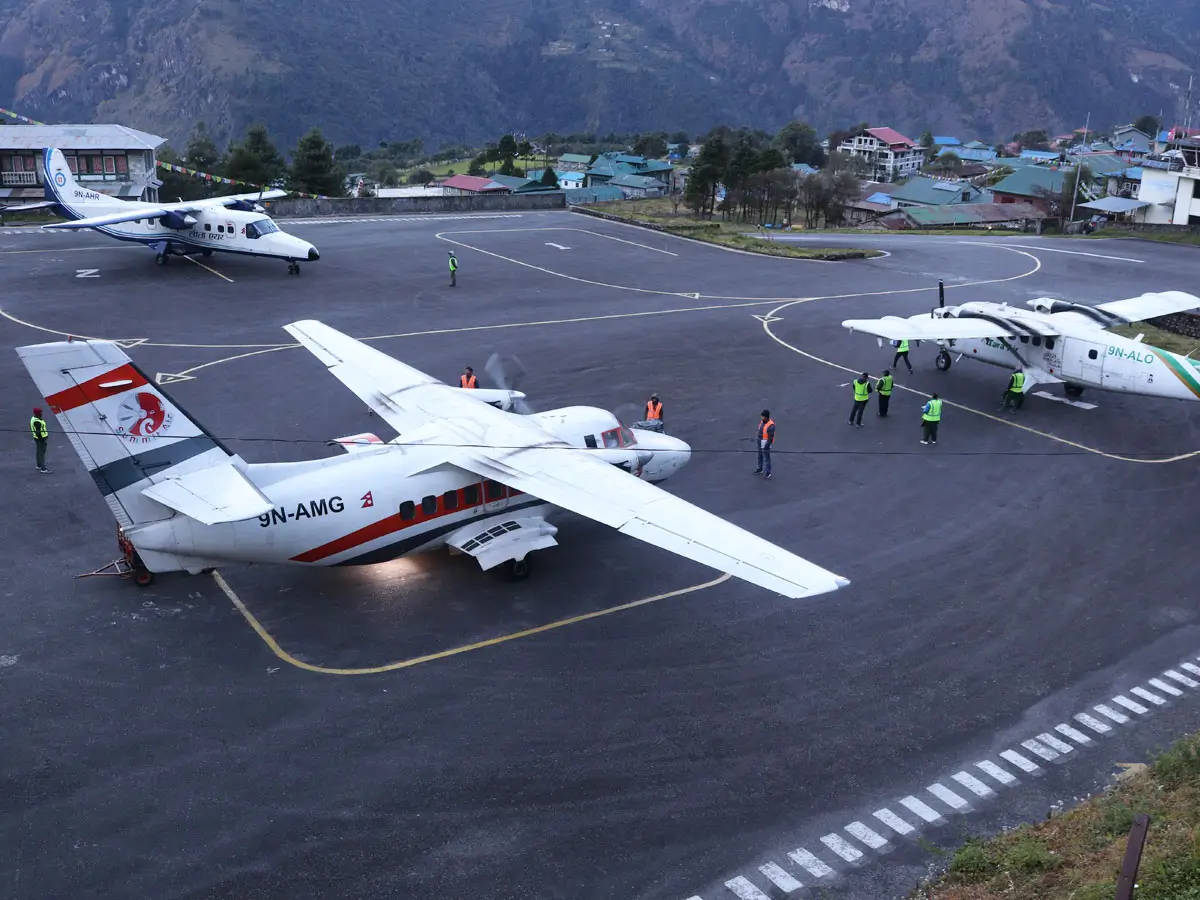
The Lukla Airport!
Gokyo Lake Trek in January and February – facts at a Glance
Trek detail
Winter information
Trekking region
Everest/Khumbu region of Nepal
Standard route
Lukla–Phakding–Namche Bazaar–Dole–Machhermo–Gokyo
Typical duration
Approximately 11–13 days, including flight and buffer days
Highest overnight point
Gokyo village, approximately 4,790 m
Highest optional viewpoint
Gokyo Ri, approximately 5,357 m
Trek difficulty
Moderate route with demanding altitude and winter conditions
Average walking time
Approximately 5–7 hours per trekking day
Accommodation
Locally operated teahouses with limited winter availability
January character
Deeper cold, shorter days and generally more established lake ice
February character
Longer daylight, stronger midday sun and slowly changing snow surfaces
Expected trail conditions
Dry ground, frost, compacted ice or snow, depending on elevation and recent weather
Lake conditions
Partly or extensively frozen; complete freezing cannot be guaranteed
Main mountain views
Everest, Lhotse, Makalu and Cho Oyu
High-pass crossing
Not required on the standard Gokyo Valley route
Guide
A licensed local guide is strongly recommended and may be required under current regulations
Best suited to
Fit travellers comfortable with cold conditions and flexible plans
Why Choose the Gokyo Lake Trek in January and February?
The Gokyo Lake Trek in January and February is for travelers who want to experience the Everest region more peacefully and reflectively. Instead of joining the familiar route towards Everest Base Camp, the trail turns west beyond Namche Bazaar. It enters a quieter valley shaped by sacred lakes, Sherpa settlements and the immense Ngozumpa Glacier.
January brings the deepest winter atmosphere, with stronger lake ice and profound mountain stillness. The lake ice becomes more established, snow remains longer in shaded areas, and the surrounding mountains appear especially striking beneath the lower seasonal sun. February remains peaceful but offers longer days and slightly warmer conditions in direct sunlight.
Attractions and Experiences on Winter Trek to Gokyo Lake
Gokyo Lakes: A Landscape Shaped by Ice and Light
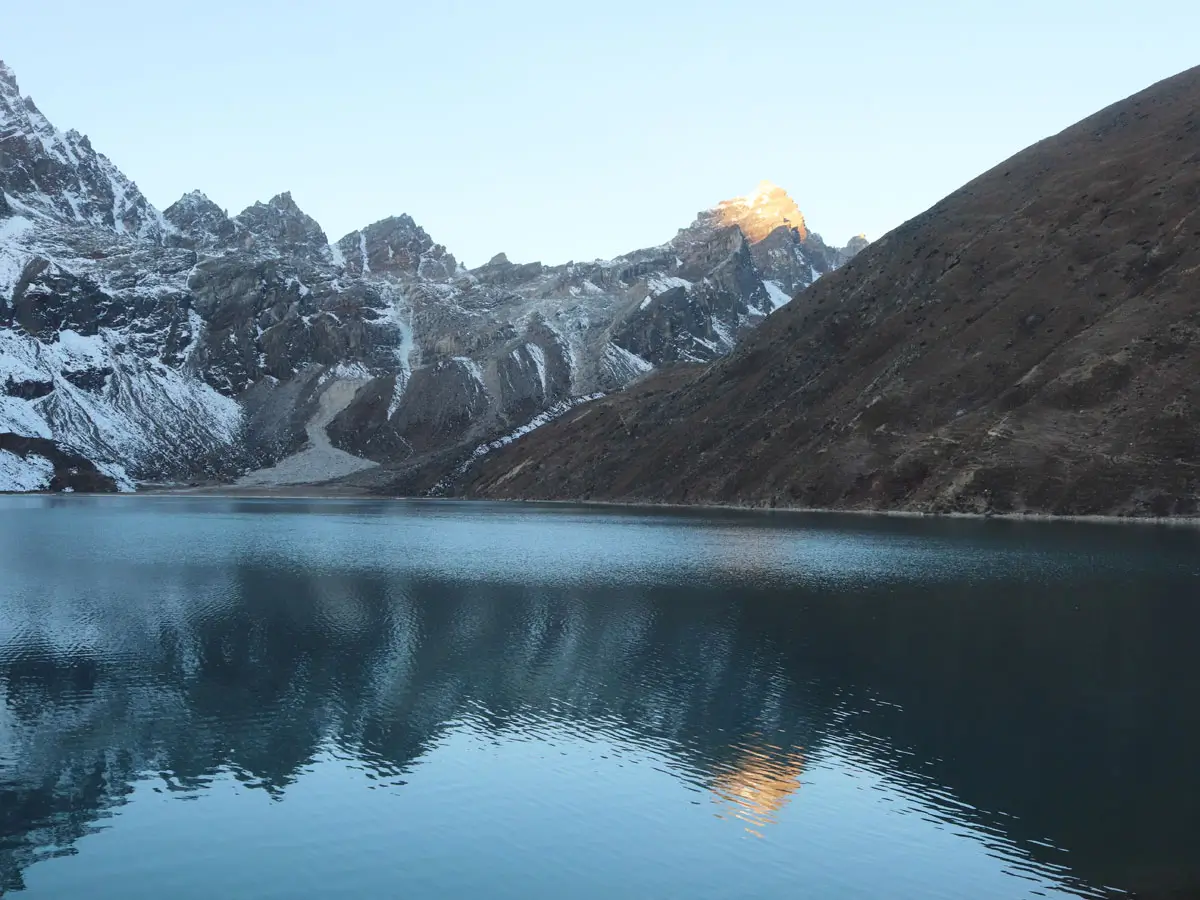
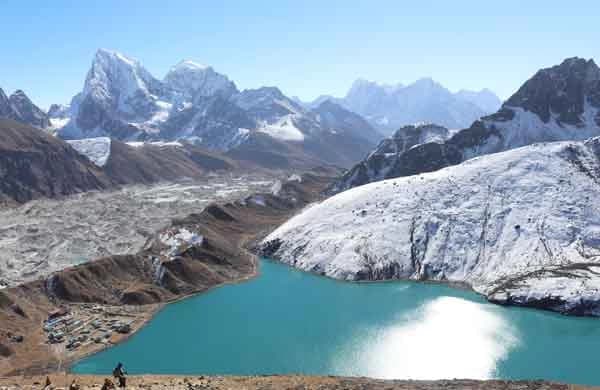
The Gokyo Lakes are the emotional center of the trek. As the trail rises beyond Machhermo, the first lakes appear one by one across a wide, treeless valley. During January and February, their familiar turquoise color may be replaced by a constantly changing mosaic of snow, ice and exposed water.
The mornings reveal smooth white surfaces beneath the surrounding peaks, and the sunlight uncovers dark-blue openings or illuminates cracks and patterns within the ice. The lakes do not freeze identically or on a fixed date, which means every winter arrival presents a slightly different scene.
These Lake waters are sacred to both Hindus and Buddhists, and their spiritual importance, fragile environment, and extraordinary altitude make them places to observe respectfully. You should remain on the shore and never attempt to walk across the ice.
Gokyo Village Beside Dudh Pokhari
Gokyo village stands beside Dudh Pokhari, the third and most frequently visited lake, at approximately 4,790 meters. In deep winter, the settlement appears remarkably small against the scale of the surrounding landscapes – just a cluster of stone lodges between the lake, glacier, and mountain slopes.
The evenings in January can bring an extraordinary stillness after the sunlight leaves the valley. By February, the afternoon light remains a little longer, allowing more time to explore the lakeshore before returning indoors.
Gokyo Ri and Four Himalayan Giants
Gokyo Ri rises directly above the village to approximately 5,357 meters, and from its upper slopes, the valley opens into one of the most complete panoramas in the Everest region.
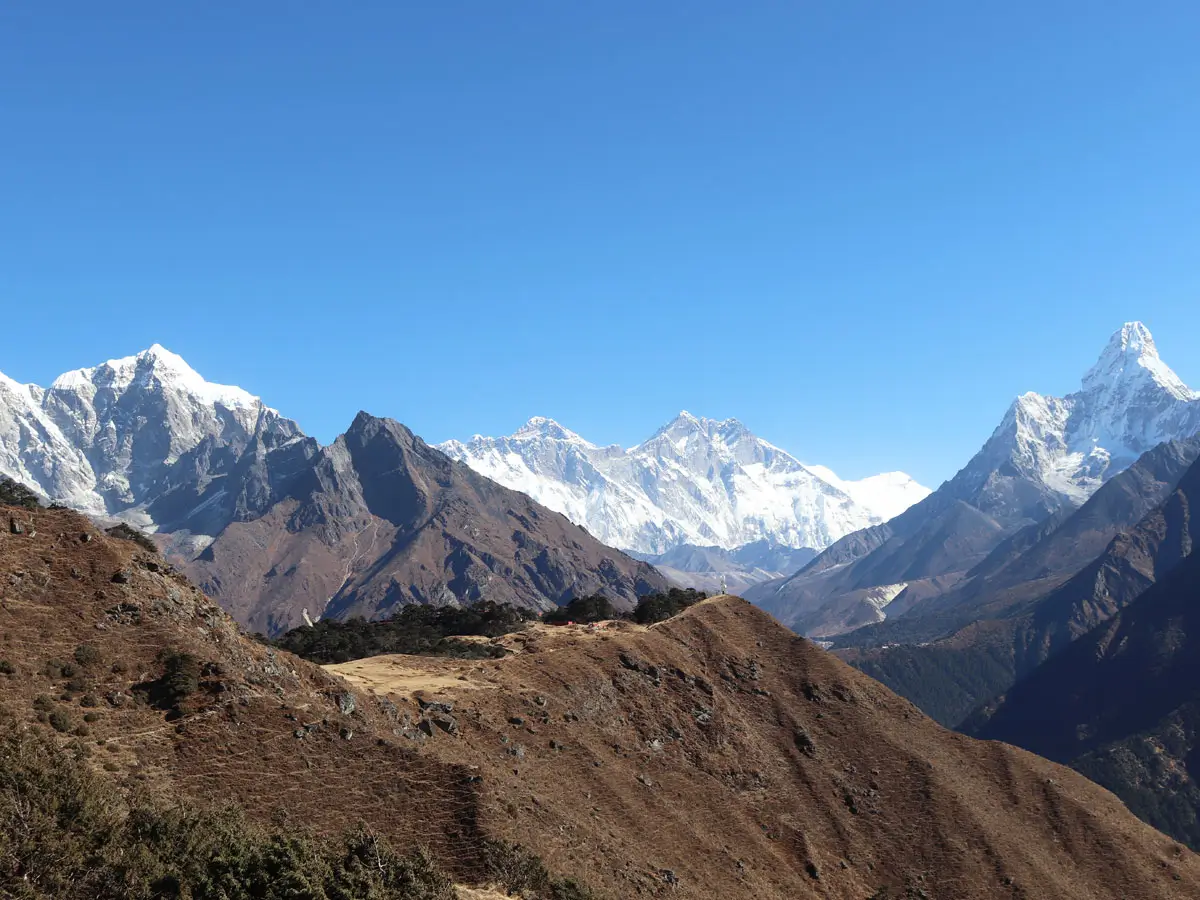
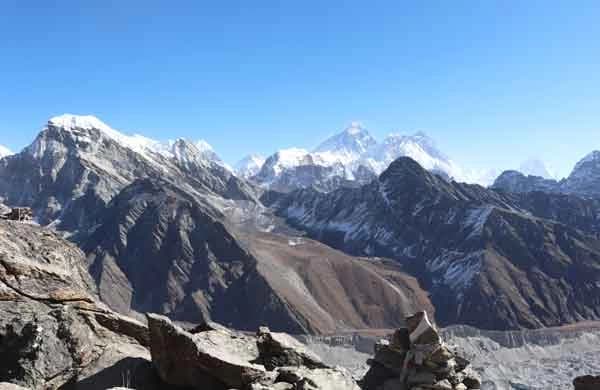
Everest, Lhotse, Makalu and Cho Oyu appear across the horizon, while the lakes and Gokyo village lie far below. The Ngozumpa Glacier stretches through the foreground, giving the viewpoint a combination of water, ice, settlement and mountains rarely seen from a single location.
Ngozumpa Glacier: The Wild Side of Gokyo
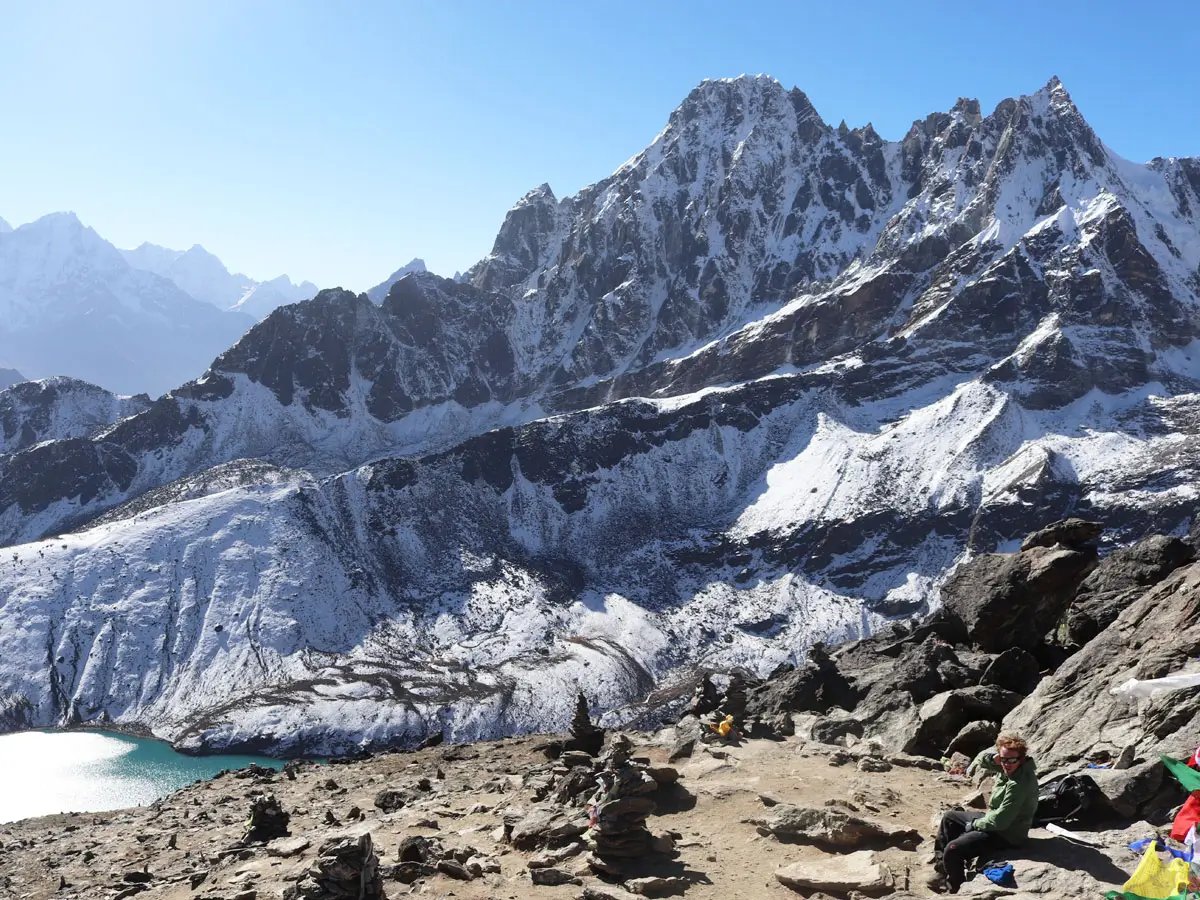
The vast Ngozumpa Glacier gives the valley its raw, untamed character. Unlike the calm surfaces of the lakes, the glacier appears fractured and restless—a broad world of moraine ridges, ice, rock, and shadow descending from the direction of Cho Oyu.
Namche Bazaar: The Gateway to the Quiet Valley
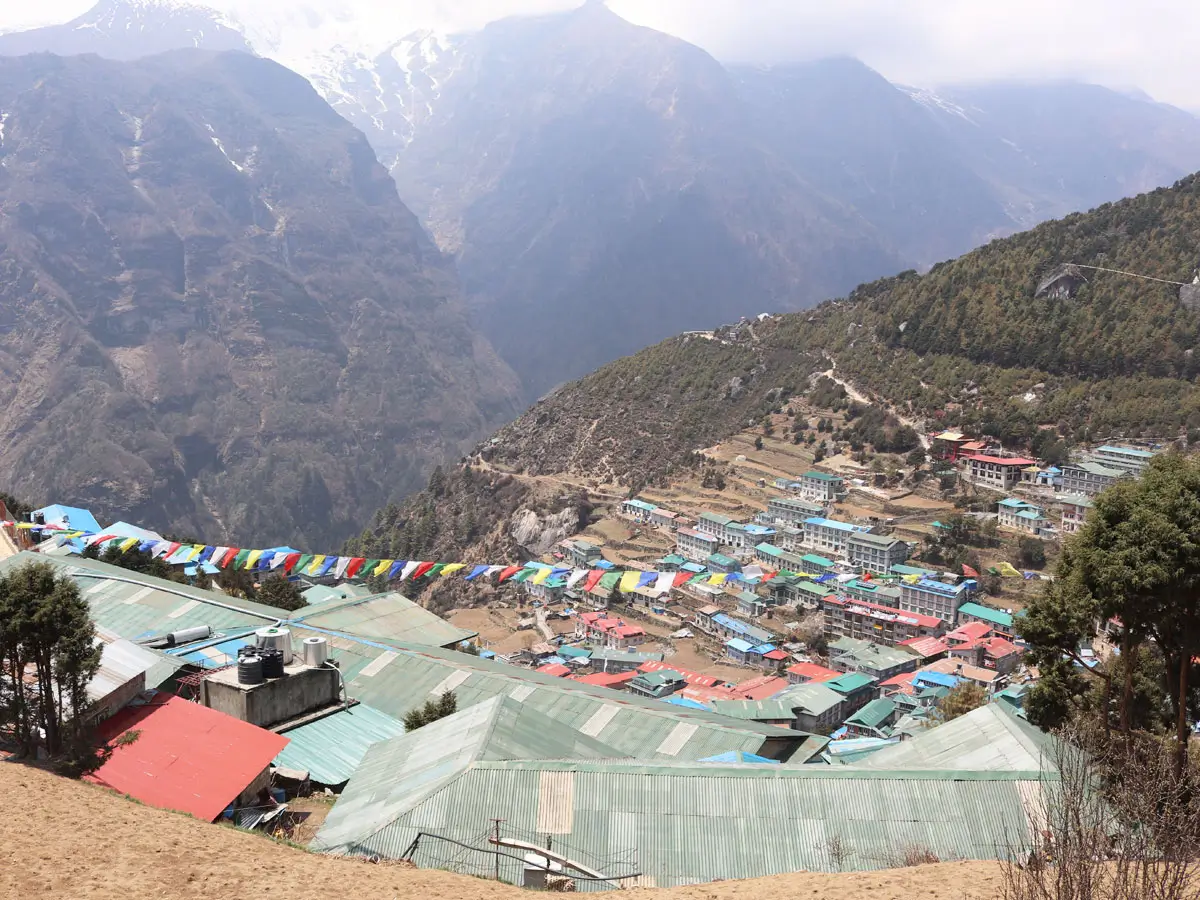
Namche Bazaar provides the most energetic contrast in the trek. Built in a natural mountain amphitheater, the town contains colorful lodges, cafés, bakeries, equipment shops, and traditional homes arranged across steep hillsides.
An acclimatization day in Namche allows trekkers to visit a nearby viewpoint and gain their first wider perspective of the Everest region. More importantly, it gives the body time to adjust before the route climbs beyond 4,000 meters.
Dole and Machhermo: The Journey into High Winter
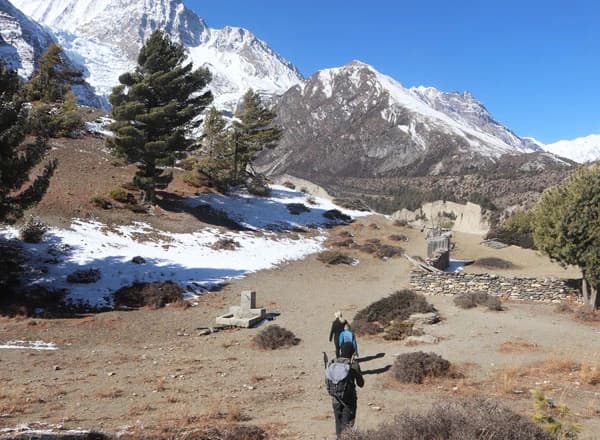
Dole sits where forest and alpine terrain begin to meet, and frost gathers beneath the trees, while patches of snow may remain on shaded ground long after exposed sections have dried.
Machhermo feels more open, set beneath high ridges at approximately 4,470 meters; it offers a valuable overnight stop before Gokyo. The settlement is quiet with a winter atmosphere.
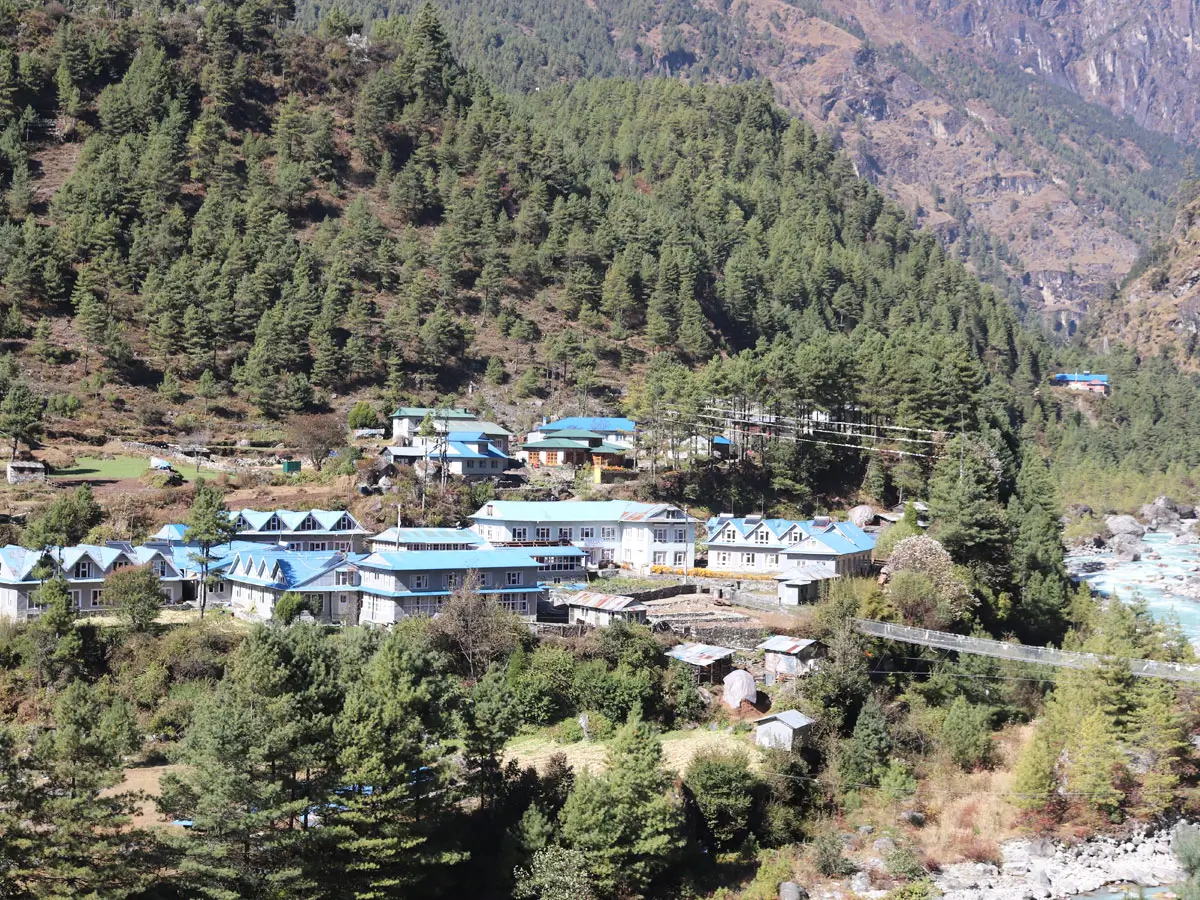
The Phakding Village!
Weather and Temperature by Elevation in the Gokyo Lake Trek in January and February
January and February are cold and dry in the Gokyo Valley, and clear mornings are common during settled weather. Still, temperatures vary considerably between sunny trails, shaded valleys, and exposed locations.
Approximate January Temperatures
Location
Elevation
Typical daytime range
Typical nighttime range
Lukla and Phakding
2,610–2,860 m
3°C to 9°C
-7°C to -1°C
Namche Bazaar
3,440 m
0°C to 6°C
-12°C to -6°C
Dole
4,038 m
-3°C to 4°C
-17°C to -9°C
Machhermo
4,470 m
-5°C to 2°C
-20°C to -12°C
Gokyo village
4,790 m
-8°C to 1°C
-23°C to -14°C
Approximate February Temperatures
Location
Elevation
Typical daytime range
Typical nighttime range
Lukla and Phakding
2,610–2,860 m
4°C to 10°C
-5°C to 0°C
Namche Bazaar
3,440 m
1°C to 7°C
-10°C to -4°C
Dole
4,038 m
-2°C to 5°C
-15°C to -8°C
Machhermo
4,470 m
-4°C to 3°C
-18°C to -10°C
Gokyo village
4,790 m
-7°C to 2°C
-21°C to -12°C
The mornings in winter usually begin with frost and firm ground and the walking becomes more comfortable once sunlight enters the valley, but the temperature drops quickly after late afternoon. Starting on time and reaching the next teahouse before sunset helps make winter trekking much more comfortable.
February does not suddenly become warm and its main advantage is gradually increasing daylight and stronger midday sunshine rather than a dramatic rise in air temperature.
Early January to Late February – How Conditions Change
Winter conditions do not remain identical throughout these two months. The daylight, surface ice, lodge availability, and the feel of the trail gradually change as February progresses.
Early January: Winter Fully Settled
Early January feels like the continuation of late December, but with colder mornings and more established ice around the upper lakes, and the trails are exceptionally quiet.
Late January: Deep Silence and Firm Winter Surfaces
Late January preserves the strongest deep-winter atmosphere, and the snow that has remained on the trail may become firm in shaded sections. The lakes are likely to have substantial ice.
Early February: Cold with Increasing Light
Early February can resemble January in Temperature and trail conditions. However, the days are slowly lengthening, giving trekkers more time to reach the next lodge and explore around Gokyo before evening.
Late February: Winter Begins to Loosen Its Hold
By late February, the direct sunlight feels stronger, exposed snow may soften during the afternoon, and the lakes can remain extensively frozen. Still, cracks, darker patches, or areas of open water may gradually appear.
A few more lodges may prepare for the approaching spring season, although availability should still be checked in advance.
When is the Best Period?
For the deepest winter atmosphere, choose mid to late January. For most travelers, mid to late February offers the best balance of frozen scenery, longer daylight, and slightly easier daily planning.
These are seasonal tendencies, not fixed promises. Current snowfall, temperature, and lodge operations should always guide the final itinerary.
Advantages of Gokyo Trekking in January and February
Remarkably Peaceful Trails: Only a few trekkers trek to Gokyo during deep winter. Beyond Namche Bazaar, the quieter trail creates more space to appreciate the landscape and walk at a comfortable pace.
Established Winter Scenery: Unlike December’s transition into winter, January and February reveal a more established seasonal landscape, with frozen lake surfaces, snow-marked slopes, and icy streams offering a distinctive appearance.
Excellent Mountain Visibility: The dry winter atmosphere can provide sharply defined views of Everest, Lhotse, Makalu, Cho Oyu and the surrounding peaks on settled days.
Beautiful Seasonal Light: The low sun casts long shadows across the Ngozumpa Glacier and illuminates patterns within the lake ice. February’s longer afternoons provide additional time for photography and lakeside exploration.
Personal Teahouse Hospitality: Fewer guests can make evenings in operating teahouses feel more intimate. Trekkers may have greater opportunities to speak with Sherpa hosts and experience the unhurried rhythm of winter village life.
The Namche Bazaar!
Gokyo Lake Trek in January vs February
Both months offer a genuine winter experience, but differences in daylight, temperature and atmosphere may influence your choice.
Factor
January
February
Winter character
Deepest and most settled winter atmosphere
Deep winter gradually moving towards early spring
Temperature
Usually the colder of the two months
Still very cold, with slightly greater daytime warmth later in the month
Daylight
Shorter days require earlier starts
Longer days provide more flexible walking and photography time
Lake appearance
Extensive ice cover is more likely
Lakes may remain extensively frozen, although surfaces can begin changing
Snow conditions
Snow may remain firm or powdery depending on recent weather
Older snow may become compacted or soften under stronger midday sunlight
Trail traffic
Exceptionally quiet
Quiet, with a gradual increase towards late February
Teahouses
Fewest operating options; advance confirmation is essential
Availability may slowly improve towards the end of the month
Gokyo Ri
Highly dependent on snow, wind and ice
Still condition-dependent, but longer daylight can help with timing
Best suited to
Trekkers seeking maximum solitude and deep-winter scenery
Trekkers preferring a better balance of winter beauty and daylight
Which Month Is Better, January or February?
February is generally the more practical choice for most winter trekkers, as the Gokyo Valley remains quiet and wintry, while increasing daylight and slightly stronger afternoon sunshine can make daily travel more comfortable.
January is better for travelers specifically drawn to deeper cold, stronger solitude, and the most established winter atmosphere. It requires more careful lodge coordination and greater flexibility.
Neither month guarantees snow, completely frozen lakes, or access to Gokyo Ri. The final experience depends on that year’s weather and the conditions immediately before the trek.
Snow, Ice, and Frozen – Lake Conditions in Gokyo Lake Trek in Winter
Are the Gokyo Lakes Frozen in January and February?
Extensive ice is more likely during these deep-winter months, but the lakes do not freeze uniformly or according to a fixed calendar. January commonly brings stronger, more continuous ice, while February’s increasing sunlight may gradually expose cracks, darker patches, or areas of open water.
Even when a lake appears completely frozen, its thickness can vary around the shoreline, inlets, and moving water. Trekkers must remain on established paths and never stop on the ice.
How Much Snow Can Trekkers Expect?
Snowfall varies considerably from one winter to another. Lukla, Phakding and sections below Namche may be dry, while snow is more likely to remain around Dole, Machhermo and Gokyo.
A recent storm may cover the upper trail with fresh powder. During longer dry periods, sun-exposed areas can clear while shaded sections retain firm snow and ice.
Can Winter Conditions Affect Gokyo Ri?
Yes, the fresh snow, hard ice, strong wind, or limited visibility may make the optional ascent unsuitable. A guide should inspect the trail and choose the safest departure time. Missing Gokyo Ri does not diminish the journey; the lakeshore, Gokyo village, and nearby viewpoints still reveal magnificent winter scenery.
Quick facts:
Did You Know? On 14 February 2020, frozen Gokyo Lake III hosted Nepal’s first figure-skating exhibition and international ice hockey friendly.
Organized for the Visit Nepal 2020 campaign, Skate Nepal brought international athletes to the lake at nearly 4,800 meters. The match demonstrated the extraordinary winter character of Gokyo at nearly 4,800 meters. It was a special promotional event, not an annual festival, and no regular winter schedule has been announced. Trekkers should never enter the frozen lakes independently because ice thickness varies and the lake system is sacred and environmentally sensitive.
Winter Light, Photography, and Mountain Views at Gokyo Lake in Winter
January and February offer a visual character that is rarely experienced during the busier trekking seasons. The lower winter sun creates long shadows across the lakes, moraine, and Ngozumpa Glacier, and reveals textures that softer seasonal light can hide.
Views of four 8,000-meter peaks
You will see Everest, Lhotse, Makalu, and Cho Oyu from Gokyo Ri when the weather and trail conditions are favorable, and Cho Oyu feels especially close from the Gokyo Valley. At the same time, Everest appears among a vast line of snowy ridges.
January’s Deep - Winter Light
January often produces crisp contrasts between pale lake ice, dark mountain rock, and intensely blue skies, and the short days create brief but dramatic periods of golden light, particularly around sunrise and late afternoon.
February’s Longer Photography Window
February provides gradually increasing daylight and stronger midday sunshine, offering more time to photograph Gokyo village, the lake shore, and surrounding glaciers without rushing before afternoon temperatures fall.
Winter Photography Tips
Keep spare batteries inside an inner pocket because cold drains them quickly.
Use a lens cloth to remove condensation and snow safely.
Allow cameras to warm gradually when entering a heated room.
Carry sunglasses because snow and ice reflect strong ultraviolet light.
Photograph from the shore without stepping onto frozen lakes.
Protect phones and cameras inside a dry bag or waterproof case.
Avoid promising a sunrise climb; choose the safest time for Gokyo Ri according to current conditions.
Himalaya view from Gokyo Trail!
Winter Gokyo Trek Challenges and Practical Solutions
The Gokyo Lake Trek in January and February requires thoughtful winter planning, but the standard route is not a technical expedition. Most challenges can be managed with suitable equipment, a flexible itinerary, and experienced local guidance.
Winter consideration
Practical response
Very cold mornings and nights
Use thermal layers, a dependable down jacket and a four-season sleeping bag suitable for sub-zero conditions.
Snow or compacted ice
Carry trekking poles and lightweight microspikes. Let the guide assess the trail before departure each morning.
Short January daylight
Start after safe visibility improves, maintain a steady pace and reach the next lodge before late afternoon.
Limited teahouse availability
Confirm operating lodges in Dole, Machhermo and Gokyo shortly before the trek.
High altitude
Acclimatize in Namche, ascend gradually and report unusual symptoms immediately.
Frozen water and plumbing
Keep bottles insulated, refill them with warm water and expect simpler toilet or washing facilities higher up.
Reduced battery performance
Carry a power bank and store phones, cameras and spare batteries close to the body.
Lukla flight disruption
Include at least one buffer day before the international departure.
Uncertain Gokyo Ri access
Treat the viewpoint as optional and attempt it only when health, weather and trail conditions align.
January demands stronger cold management, and February requires attention to snow that may soften in sunlight and refreeze overnight.
The key to a successful trek in Gokyo in Winter is flexibility. A delayed start, an additional night, or a decision to skip Gokyo Ri should be viewed as responsible winter planning. Reaching Gokyo and experiencing its frozen valley is already the journey’s greatest reward.
Standard Gokyo Route vs High-Pass Routes in Winter
A common misunderstanding is that Gokyo requires crossing Cho La or Renjo La, as the standard Gokyo Lake Trek follows the valley route through Dole and Machhermo, so no high-pass crossing is necessary.
Standard Gokyo Valley Route
The direct route to Gokyo travels from Lukla to Phakding, Namche Bazaar, Dole, Machhermo, and Gokyo, and follows established trekking trails, providing access to the lakes, Gokyo village, the Ngozumpa Glacier, and the optional Gokyo Ri.
This is the most practical route during January and February. Snow or ice may increase walking difficulty, but technical climbing is not normally involved.
Cho La Pass
Cho La connects Gokyo to the Everest Base Camp route at over 5,400 meters. In deep winter, steep snow, hard ice or heavy accumulation can make the crossing considerably more demanding or temporarily unsuitable.
Renjo La Pass
Renjo La links Gokyo with the Thame Valley. Although highly scenic, its exposed high-altitude terrain can become difficult to assess after snowfall and requires more favorable conditions than the standard valley route.
Route
High pass required?
Winter character
Direct Gokyo Valley route
No
Most suitable option for January and February
Gokyo via Cho La
Yes
More demanding and highly condition-dependent
Gokyo via Renjo La
Yes
Exposed and suitable only with favourable conditions
Three Passes Trek
Three passes
A serious winter undertaking for experienced teams
Travelers do not need to add a high pass to make the journey rewarding. The direct route already contains Gokyo’s defining experiences while allowing greater flexibility when winter conditions change.
Gokyo Lake Trek Difficulty in January and February
The standard Gokyo Lake Trek in Winter is moderately technical but demanding due to its altitude, cold, and duration. Most trekking days involve approximately five to seven hours of walking on established mountain paths.
The steady ascent beyond Namche is the main physical test, and you sleep above 4,000 meters in Dole and Machhermo before reaching Gokyo village at approximately 4,790 meters. Snow, firm ice, or strong wind may increase the effort required, but conditions vary along the route.
Can Beginners Complete the Winter Trek to Gokyo?
Yes, a fit beginner can consider the Gokyo route with proper training, gradual acclimatization, and experienced guidance. However, January and February are better suited for travelers who are comfortable walking for several consecutive days and managing cold conditions.
Previous high-altitude experience is helpful but not compulsory; patience, sensible pacing, and willingness to adjust the plan are more important.
Can You Climb Gokyo Ri in January and February?
Yes, Gokyo Ri can be climbed during January and February, but access depends entirely on snow, ice, wind, visibility, and your health. The viewpoint is located approximately 560 meters above Gokyo village, at an elevation of about 5,357 meters.
The trail is steep but typically non-technical, and winter conditions can slow it down; the round trip typically takes four to six hours. Trekking poles and microspikes may provide useful grip when snow becomes compacted or icy.
How to Prepare for the Gokyo Trek in Winter
Start training at least six weeks before departure and include:
Regular uphill walks or stair climbing
Cardio exercise three or four times weekly
Squats, lunges and step-ups for leg strength
Core and balance exercises
Longer weekend walks carrying a light daypack
Practice in the boots and layers intended for Nepal
The Gokyo Lake!
Altitude and Acclimatization to consider in the Gokyo Lake Trek in winter
Altitude is the main challenge of the Gokyo Lake Trek, regardless of the season. The route climbs from Lukla at approximately 2,860 meters to Gokyo village at 4,790 meters, while the optional Gokyo Ri viewpoint reaches around 5,357 meters.
Overnight location
Approximate elevation
Phakding
2,610 m
Namche Bazaar
3,440 m
Dole
4,038 m
Machhermo
4,470 m
Gokyo village
4,790 m
Acclimatizing Properly
A full acclimatization day in Namche Bazaar gives the body time to adjust before the route reaches elevations above 4,000 meters. A gentle hike to a higher viewpoint followed by a return to Namche for the night will support this process.
Beyond Namche, maintain a steady pace and avoid competing with other trekkers; fitness does not provide immunity from altitude sickness, so even strong walkers must ascend gradually.
Practical Advice
Follow an itinerary with gradual increases in altitude while sleeping.
Walk slowly and avoid unnecessary exertion.
Eat regularly and drink enough treated water.
Avoid alcohol during the high-altitude journey.
Rest properly at each overnight stop.
Inform the guide immediately about unusual symptoms.
Discuss altitude medication with a doctor before traveling.
Headache, nausea, dizziness, poor appetite or unusual tiredness may indicate difficulty acclimatizing. Do not continue ascending if symptoms worsen. Confusion, loss of coordination or breathlessness while resting requires immediate descent and urgent assistance.
Most trekkers adjust successfully with a sensible itinerary. Gokyo Ri should only be attempted when the trekker feels well, and the guide considers the conditions appropriate.
Accommodation and Winter Teahouse Experience in Gokyo Lake Trek
Locally operated teahouses provide accommodation on the Gokyo Lake Trek. Facilities become simpler with elevation, while the number of operating lodges decreases considerably during January and February.
What to Expect Along the Route
Location
Typical winter accommodation
Lukla and Phakding
Several lodges with comparatively comfortable facilities
Namche Bazaar
Best selection of rooms, shops, bakeries and upgraded lodges
Dole
Limited, basic accommodation that should be confirmed beforehand
Machhermo
Simple mountain lodges serving as an important acclimatization stop
Gokyo
A small number of operating teahouses beside DudhPokhari
The rooms in lodges normally contain twin beds, mattresses, pillows, and blankets. Bedrooms are rarely heated, so a four-season sleeping bag remains essential. A stove usually warms the shared dining room for part of the evening and becomes the social heart of the lodge.
Winter Facilities
The shared toilets are common, and frozen plumbing may make facilities more basic above Namche, and hot showers can occasionally be arranged for an additional fee, but many trekkers use warm water and a washcloth at higher elevations to avoid becoming chilled.
Charging, Wi-Fi, and hot water usually cost extra, and the availability depends on the lodge’s energy source, weather, and winter supply situation.
Are Teahouses on Gokyo Open in January and February?
Yes, most lodges remain open, but you should never arrive expecting every village to offer several choices. January generally has the fewest options, while limited services may begin returning towards late February.
The simplicity is part of the season’s character. After a quiet day across frozen terrain, a warm meal, hot drink and conversation around the stove can make a modest teahouse feel like the most welcoming place in the Himalayas.
Climbing Gokyo Ri!
Food, Drinking Water, Charging and Connectivity in Gokyo Lake Trek
Food on the Gokyo Winter Trail
Teahouses serve warm, filling meals throughout the trek. Namche Bazaar usually offers the widest selection, while menus become simpler towards Dole, Machhermo and Gokyo, and the common choices include:
Dal bhat with lentils, rice and vegetables
Sherpa stew and vegetable soup
Noodles, pasta and fried rice
Potatoes, eggs and momos
Porridge, pancakes, toast and Tibetan bread
Tea, coffee, hot lemon and hot chocolate
The cold and altitude can reduce appetite, so eat smaller meals regularly if necessary; the warm carbohydrate-rich dishes help provide energy and body warmth.
Drinking Water
Streams and taps may freeze at higher elevations of the route, and teahouses can usually provide boiled water for an additional charge.
Carry two reusable wide-mouth bottles with insulated covers, and filling one with warm water in the evening can also help keep the sleeping bag warm. Never drink untreated water, regardless of how clean it appears.
Charging and Battery Care
Charging is available for a fee, but solar power becomes less dependable during cloudy or snowy times, so bring a high-capacity power bank and spare batteries.
Cold drains batteries quickly. Keep phones, cameras, and power banks inside an inner pocket while walking and near your sleeping bag overnight.
Internet and Mobile Network
Connectivity is strongest in Lukla and Namche Bazaar but becomes intermittent farther into the Gokyo Valley; some lodges provide paid Wi-Fi, although speed and availability cannot be guaranteed.
We suggest that you download offline maps, permits, insurance documents, and emergency contacts before leaving Kathmandu.
Packing List for Gokyo Lake Trek in Winter
Deep-winter packing should provide dependable warmth without making the trekking bag unnecessarily heavy, and a flexible layering system works better than relying on a single bulky garment.
Clothing
Two sets of moisture-wicking thermal base layers
Warm fleece or synthetic insulated mid-layer
High-quality down jacket
Waterproof and windproof outer shell
Trekking trousers and insulated evening trousers
Warm hat, sun hat and neck gaiter
Liner gloves and insulated waterproof gloves
Wool or synthetic trekking socks
Lightweight clothes reserved for sleeping
Footwear and Trail Equipment
Waterproof, broken-in trekking boots
Comfortable teahouse footwear
Trekking poles with snow baskets
Lightweight microspikes
Gaiters for fresh or deeper snow
Headlamp with spare batteries
Daypack with a waterproof liner or dry bags
Technical crampons and an ice axe are not standard requirements for the direct Gokyo route. Their necessity should be decided from current trail conditions.
Sleeping and Cold Protection
Four-season sleeping bag with an appropriate comfort rating, ideally around -20°C
Insulated wide-mouth water bottles
Reusable hand warmers, if desired
Small thermos flask for warm drinks
Health and Personal Care
Personal medication and compact first-aid supplies
Blister treatment and rehydration salts
High-SPF sunscreen and protective lip balm
UV-protective sunglasses
Water filter or purification tablets
Hand sanitizer, toilet paper and wet wipes
Moisturizer for dry winter air
Electronics and Documents
High-capacity power bank
Spare camera and headlamp batteries
Charging cables and universal adapter
Passport, permits and insurance documents
Offline maps and emergency contact details
Nepali cash for trail expenses
Keep medication, documents, one warm layer and valuable electronics in the daypack rather than the porter’s duffel. Test every important item before leaving Kathmandu; Gokyo is not the place to discover that boots cause blisters or a sleeping bag is not sufficiently warm.
Expert Tips for January and February in Gokyo Lake Trek
Choose February for a gentler introduction to deep-winter trekking: The valley remains wintry, but longer daylight makes daily planning more comfortable.
Confirm the upper-valley lodges: Check before leaving Kathmandu and again from Namche, as winter opening plans can change.
Begin walking once the trail is clearly visible: This helps identify frozen patches without forcing an extremely cold pre-dawn departure.
Carry microspikes in the daypack: They are useful only when needed, particularly on compacted snow and shaded ice.
Keep one pair of socks exclusively for sleeping: Dry feet make cold teahouse nights considerably more comfortable.
Store boots inside the lodge: Remove the insoles and loosen the laces so damp footwear does not freeze overnight.
Protect water from freezing: Use insulated bottles, keep them upside down, and refill them with warm water whenever possible.
Manage February’s thaw-and-refreeze cycle: Sunlit snow may soften during the afternoon and become firm ice by the following morning.
Do not build the trek around Gokyo Ri: Consider it a bonus and allow weather, trail conditions, and acclimatization to decide.
Carry enough Nepali cash: ATMs are available in Namche, but machines, electricity, or connectivity may not always cooperate.
Keep batteries warm: Store phones and spare camera batteries inside an inner pocket rather than an outside backpack compartment.
Leave a buffer day after Lukla: Winter is often dry, but mountain flights still depend on safe visibility and wind conditions.
A successful winter journey depends less on following a rigid schedule and more on making sensible decisions each day.
Permits and Current Trekking Regulations
The Standard Gokyo route enters Khumbu Pasang Lhamu Rural Municipality and Sagarmatha National Park and you should carry the following permits or registrations for the Gokyo Lake Trek:
Sagarmatha National Park Permit
The currently listed fee is NPR 3,000 for most international visitors and NPR 1,500 for SAARC nationals for Gokyo Trek and the permit can be arranged before departure or at the relevant park entry checkpoint.
Khumbu Trek Card
The Khumbu municipality operates its own local visitor-registration system and the card or entry registration is generally processed in Lukla or at an authorized checkpoint. As fees and procedures may change, Outfitter Himalaya should confirm the latest amount before every departure.
TIMS Card and Licensed Guide
Current Nepal Tourism Board guidance specifically lists the Gokyo Trek as a route that require a licensed guide and an agency-issued TIMS Card. The applicable procedure should be reconfirmed close to the departure date because official and local systems can occasionally overlap or change.
Everest and Himalaya from Gokyo Ri!
Guide, Porter, and Travel Insurance for Gokyo Lake Trek
Guide
A licensed guide is particularly valuable during the January and February trek to Gokyo. Beyond route guidance, a guide can verify lodge openings, assess icy sections, monitor acclimatization, and adjust the schedule after snowfall or flight disruption.
Porter
A porter is optional, but winter equipment is heavier than a normal trekking-season kit. Carrying only a daypack allows you to conserve energy for the climbs between Namche, Dole, Machhermo and Gokyo.
Travel Insurance
Choose a travel insurance policy that clearly covers trekking to at least 5,500 meters, as Gokyo reaches approximately 5,357 meters. The standard holiday insurance may exclude high-altitude activities, and the recommended coverage includes:
High-altitude medical treatment
Emergency helicopter evacuation
Hospitalization and repatriation
Trip cancellation or interruption
Lukla flight delays or cancellations
Lost or delayed trekking equipment
You should disclose existing medical conditions and carefully read the altitude and activity exclusions. Printed and digital copies of the policy number and emergency contact details should remain accessible throughout the trek.
FAQS – Gokyo Trek in Winter
Is the Gokyo Lake Trek possible in January and February?
Yes, the Gokyo Valley route is possible in Winter for fit and well-prepared trekkers with gradual acclimatization, appropriate winter equipment, and flexible planning.
Is January or February better for the Gokyo Trek?
February is generally more practical for the Gokyo Trek because it offers longer daylight and slightly stronger daytime sunshine, and January is better for travelers seeking deeper winter solitude and more established lake ice.
How cold is Gokyo in January?
The daytime temperatures may range from -8°C to 1°C, and nights can fall between -23°C and -14°C. Colder periods are possible around Gokyo.
Is February noticeably warmer than January?
February remains cold, especially at night, and its main advantages are increasing daylight and stronger warmth in direct sunlight rather than a dramatic rise in air temperature.
Are the Gokyo Lakes completely frozen during Winter months?
The lakes are more likely to be extensively frozen, but complete ice coverage cannot be guaranteed. Wind, sunlight, currents, and yearly weather patterns affect each lake differently.
Can trekkers walk on the frozen Gokyo Lakes?
No, even apparently solid ice can be thin near shorelines, inlets, and moving water, and the lakes are also sacred and environmentally sensitive, so visitors should remain on recognized shores and trails.
Does it snow every day in January and February?
No, these months are generally dry, and several consecutive days may pass without snowfall. Fresh snow can occur, particularly in the upper valley, but it should never be guaranteed.
Was ice hockey really played at Gokyo Lake?
Yes, Nepal’s first figure skating exhibition and an international ice hockey friendly took place on the frozen Gokyo Lake III on 14 February 2020. It was a special event rather than an established annual festival.
Is there an annual Gokyo ice hockey event?
No, a regular annual program or fixed winter schedule is currently not confirmed. Travelers should not plan their trek expecting to watch or participate in ice hockey.
Is the Winter Gokyo Trek suitable for beginners?
A fit beginner can consider the direct route after proper training. However, comfort with cold weather, several consecutive days of walking, and flexible plans are important.
Must trekkers cross Cho La or Renjo La to reach Gokyo?
No, the standard route reaches Gokyo through Namche Bazaar, Dole, and Machhermo. Cho La, Renjo La and the Three Passes Trek are separate and more demanding itineraries.
Can Gokyo Ri be climbed in January or February?
Yes, however, access depends on snow, ice, wind, visibility, daylight, and your health. The ascent should remain optional rather than becoming the measure of a successful trek.
Are teahouses open throughout Winter?
Yes, most remain open, but choices are limited around Dole, Machhermo and Gokyo. Accommodation must be confirmed shortly before departure, especially in January.
How should drinking water be managed in extreme cold?
Use boiled, filtered or properly treated water and carry it in insulated wide-mouth bottles. Keeping bottles upside down can help prevent ice from forming around the opening first.
What should Winter trekking insurance cover?
The policy should cover trekking to at least 5,500 meters, high-altitude medical care, helicopter evacuation, repatriation, and trip interruption. Coverage for Lukla flight delays is also useful.
How many buffer days should be included?
At least one buffer day should remain in Kathmandu after the expected Lukla return flight. Travelers with inflexible international connections may prefer two.
Conclusion – Is winter a good time to Trek Gokyo?
The Gokyo Lake Trek in January and February reveals the Khumbu in its quietest and most reflective season. The journey leads beyond Namche Bazaar into a valley where frozen lakes, Sherpa lodges and the vast Ngozumpa Glacier rest beneath some of the world’s highest mountains.
January offers deeper winter stillness and more established ice, and February brings longer daylight and a gradual softening of the season.
Outfitter Himalaya coordinates permits, flights, accommodation, and a local trekking team for a flexible winter itinerary to Gokyo, allowing travelers to focus on the rare opportunity to experience Gokyo at its most peaceful. So, the Gokyo Trek in the winter season (January and February) is a great Himalayan Experience.
The Annapurna Circuit Trek covers approximately 102 kilometers of walking on Outfitter Himalaya’s classic 15-day itinerary, including the Manang acclimatization hike. The journey unfolds through riverside forests, mountain villages and open valleys before crossing Thorong La [...]
The Annapurna Circuit Trek costs about USD 650–1,900 per person with Outfitter Himalaya, depending on the itinerary, group size, and services included. Outfitter Himalaya’s 15-day Classic Annapurna Circuit Trek has published group-size prices of USD [...]
Foreign trekkers need a trekking permit to trek the Annapurna Circuit, and we suggest settling it before you head out. Arranging the correct paperwork before departure helps avoid extra charges and interruptions once your journey [...]