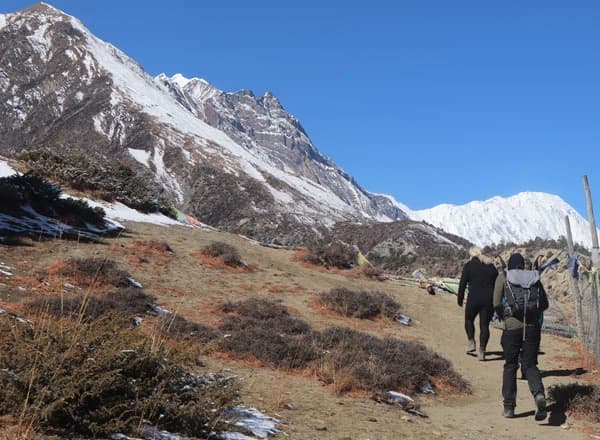
The best time for the Renjo La Pass Trek is autumn and spring. Post-monsoon autumn is the leading choice for the clearest panorama above Gokyo on the Renjo La Pass Trek. From Renjo La at 5,360 meters, the trail looks back across turquoise Gokyo lakes, the Ngozumpa Glacier and a skyline dominated by Everest and Cho Oyu before descending towards the quieter Thame Valley.
Spring is another excellent season, offering milder days, longer daylight and rhododendron color along the lower trail. However, snow may remain near the pass. Winter snow and monsoon cloud can affect visibility, lodge operations and route success, so current trail conditions should always guide the crossing decision. Although Renjo La is often considered more straightforward than other Everest high passes in favorable conditions, its elevation of 5,360 meters, steep terrain, and long crossing day still require proper acclimatization and preparation.
Introduction - Renjo La Pass Trek in Everest Region
Renjo La offers a different way to experience the Everest region. Instead of remaining on the busy trail to Everest Base Camp, the journey turns towards the wide Gokyo Valley, follows a chain of sacred glacial lakes, and crosses a 5,360-meter pass into the quieter settlements of the Thame Valley.
The Renjo La crossing day begins in the stillness of Gokyo, when you climb above the lake basin, the landscape expands with the turquoise water, the fractured surface of the Ngozumpa Glacier, and a skyline shaped by Everest, Lhotse, and Cho Oyu. After reaching the pass, the route descends west towards Lungden and Thame, where old monasteries and Sherpa villages reveal a less-traveled side of the Khumbu.
Renjo La is most rewarding when visibility is clear enough to see the relationship among the lakes, glacier, valleys, and mountains. Clouds can hide that scale, while fresh snow may change the condition of the high trail even when the villages below remain clear.
Autumn and spring offer the best opportunities to complete the route under favorable conditions; winter creates a quieter, snow-covered journey, while the monsoon brings green valleys and dramatic cloud movement. Each season changes the weather, the color of Gokyo, the atmosphere, the availability of lodges, and the character of the pass.
This guide examines the best time for the Renjo La Pass Trek by considering seasonal differences, helping you choose the version of the journey that matches your preferred scenery, comfort, and level of flexibility.
Renjo La Pass Trek at a Glance
Trek fact
Details
Trekking region
Everest/Khumbu region, Nepal
Mountain pass
Renjo La
Pass elevation
Approximately 5,360 m
Maximum elevation listed by Outfitter Himalaya
5,360 m at Ren Jo La
Outfitter Himalaya itinerary
15 days
Approximate walking distance
110–120 km, depending on the final route
Company trek grade
Moderate, with a challenging high-pass day
Average daily walking
Usually 5–7 hours
Renjo La crossing day
Approximately 8–9 hours, depending on pace and conditions
Main route direction
Gokyo Valley to Renjo La, then towards Lungden and Thame
Accommodation
Teahouses and mountain lodges
Best seasons
Autumn and spring
Main attractions
Gokyo Lakes, Gokyo Ri, Ngozumpa Glacier, Renjo La and Thame Valley
Major mountain views
Everest, Lhotse, Makalu, Cho Oyu, AmaDablam and surrounding Khumbu peaks
Required preparation
Good fitness, gradual acclimatization, suitable equipment and itinerary flexibility
Route character
Less crowded high-pass journey combining alpine scenery and Sherpa culture
Renjo La can be completed as part of the full Everest Three Passes Trek or as a focused stand-alone trek. Outfitter Himalaya offers both itineraries: the high-pass Trek and Rejo La Pass only.
The Lukla Airport, where you fly in and fly out for Renjo La Pass Trek!
When is the Best Time for the Renjo La Pass Trek?
Autumn and Spring are the best seasons for the Renjo La Pass Trek, with autumn generally offering the strongest overall experience. The value of good timing is especially visible here: Renjo La’s greatest reward is its wide panorama over the Gokyo Lakes, Ngozumpa Glacier, Everest, and Cho Oyu.
Autumn offers clearer air, well-established trails, and excellent visibility. October and November are particularly attractive.
Spring offers a different kind of beauty. Temperatures gradually become milder, daylight increases, and rhododendrons brighten the lower trail. Snow may remain around the pass earlier in the season, while afternoon cloud can become more common as Spring progresses.
Winter and monsoon should not automatically be described as impossible, as winter provides solitude, snow-covered scenery, and Sharp Mountain light, and the monsoon creates green valleys and nearly empty trails. However, both require greater flexibility because of snow, cloud cover, and flight disruptions.
For most travelers, the suggestions are:
Choose autumn for the best chance of expansive mountain views.
Choose Spring for milder trekking and colorful lower landscapes.
Choose an off-season only if you value solitude and can adapt the itinerary to current conditions.
Renjo La Pass Trek: Four Seasons at a Glance
Season
Landscape and atmosphere
Visibility from Renjo La
Pass conditions
Crowds and services
Overall suitability
Spring (March–May)
Rhododendron colour below the alpine zone; Gokyo gradually transitions out of winter
Frequently clear in the morning, with more afternoon cloud later in the season
Remaining snow is possible, especially earlier in spring
Moderate crowds; most teahouses operate normally
Highly recommended
Summer/monsoon (June–August)
Green lower valleys, flowing waterfalls and misty landscapes
Variable because cloud may hide the main panorama
Wet lower trails and reduced high-pass visibility require flexibility
Very quiet; flights and some services may be disrupted
Suitable mainly for flexible, experienced trekkers
Autumn (September–November)
Fresh post-monsoon valleys, open lakes and crisp alpine scenery
Often the clearest and most expansive of the year
Frequently established, though fresh snowfall remains possible
Busy between Lukla and Namche; generally quieter around Gokyo and Thame
Best overall season
Winter (December–February)
Snow-covered highlands, frozen or partly frozen lakes and deep solitude
Exceptionally sharp during settled weather
Snow and ice may cover the pass or temporarily prevent crossing
Very few trekkers; some high lodges may close
Condition-dependent and best for experienced trekkers
Autumn gives Renjo La its classic postcard character: open Gokyo Lakes beneath a sharply defined Himalayan skyline. Spring adds color and milder conditions, while winter and monsoon create quieter but less predictable versions of the route.
Renjo La Pass Trek in Spring: What is Spring like in Renjo La Pass?
Spring brings two landscapes together on the Renjo La route. Below the alpine zone, rhododendrons add red and pink color to the forests between Namche and Dole. Higher up, the Gokyo Valley may still carry terraces of winter, with snow around the ridges and sections of the lakes remaining frozen earlier in the season.
As conditions gradually warm, the lakes begin to reopen and recover their familiar turquoise color. This transition gives spring a visual identity that autumn lacks: flowering forests below, changing ice patterns around Gokyo, and white peaks rising above both.
Spring Weather and Temperature
Location
Approximate daytime temperature
Approximate night/early-morning temperature
Lukla and Phakding
8°C to 18°C
-2°C to 6°C
Namche Bazaar
5°C to 13°C
-6°C to 2°C
Gokyo
-2°C to 10°C
-15°C to -3°C
Renjo La Pass
Approximately -5°C to 5°C during crossing hours
An early start may begin around -15°C to -5°C
Why Choose Spring for Renjo La Pass Trek?
Rhododendrons brighten the lower route
Daytime temperatures become milder
Daylight is longer
Gokyo’s transition from ice to open water creates unusual photography
The trail generally feels less crowded than peak autumn
Clear mornings can provide excellent views from Gokyo Ri and Renjo La
Points to Consider while trekking to Renjo La in Spring
Snow or ice may remain near the pass
Gokyo Lakes may still be partly frozen earlier in spring
Afternoon clouds become more common later in the season
Warm weather in Namche does not represent conditions at Renjo La
Microspikes may be useful when winter snow remains
Spring is ideal for trekkers who want color, relatively mild walking conditions, and the changing seasonal character of Gokyo. It is especially appealing to photographers who prefer contrast—flowers and forests below, lingering snow and glacial scenery above.
The Namche Bazaar, where you spend 2 nights while going on Renjo La Pass Trek!
Renjo La Pass Trek in Autumn - What Autumn Feels Like in Renjo La Pass?
Autumn gives Renjo La the scenery for which it is best known. After the monsoon withdraws, the atmosphere frequently becomes clearer, the Gokyo Lakes remain open, and the high peaks appear with sharper definition. From the pass, the lakes and Ngozumpa Glacier form the foreground. At the same time, Everest and Cho Oyu rise across the eastern horizon.
October generally brings the busiest and liveliest trail atmosphere, and November becomes colder and gradually quieter.
Autumn Weather and Temperature
Location
Approximate daytime temperature
Approximate night/early-morning temperature
Lukla and Phakding
10°C to 20°C
1°C to 10°C
Namche Bazaar
7°C to 15°C
-5°C to 5°C
Gokyo
-2°C to 8°C
-12°C to -3°C
Renjo La Pass
Approximately -5°C to 6°C during crossing hours
Early conditions may fall to around -15°C to -5°C
Why Autumn Suits Renjo La So Well
You will see the Gokyo basin, glacier, and surrounding mountains together in Autumn. Autumn’s clearer post-monsoon air provides the strongest opportunity to appreciate that full scale.
Open water may also create striking color and reflections around the Gokyo Lakes. Calm conditions are never guaranteed, but Autumn generally offers photographers a better chance of combining blue water, glacial textures and sharply defined peaks in a single journey.
Crowds Along the Route
The trail between Lukla and Namche becomes very busy in Autumn. After turning towards Dole, Machhermo and Gokyo, the numbers usually decrease. The descent towards Lungden and Thame feels quieter still.
Autumn Festivals
Dashain and Tihar fall during the autumn festival period, and you may experience family gatherings, lights, decorations, and holiday activity in Kathmandu and lower settlements.
Mani Rimdu is also celebrated at Tengboche Monastery during October or November. However, Tengboche is not on Outfitter Himalaya’s standard Renjo La route, so attending the festival requires an itinerary adjustment. Exact festival dates change according to the lunar calendar and should be confirmed before planning. Let us know if you want to include the Mani Rimdu Festival in your itinerary.
Advantages of Autumn Trekking
Excellent visibility from Gokyo Ri and Renjo La
Open Gokyo Lakes and strong photography opportunities
Established trail and best teahouse services
Favorable high-pass conditions
A quieter experience beyond the main Lukla–Namche corridor
Possibility of experiencing Nepal’s festival season
Points to Consider
Flights and popular teahouses fill quickly
The Lukla–Namche section can be crowded
Fresh snow may temporarily affect Renjo La
Autumn is the strongest overall choice if your main priority is Renjo La’s panoramic scenery. It combines the route’s most recognizable landscape with reliable services and a lively trekking atmosphere.
Renjo La Pass Trek in Summer and Monsoon: Is Monsoon Good for Renjo La Pass?
Monsoon changes the purpose of the Renjo La journey. Instead of constant mountain panoramas, the trail becomes a study in green valleys, moving clouds, and brief openings in the sky. Forests below Namche appear freshly washed, streams and waterfalls grow stronger, and the route carries far fewer trekkers.
The main trade-off is visibility. Renjo La is celebrated for the view back over Gokyo, the Ngozumpa Glacier and the Everest–Cho Oyu skyline. During monsoon, clouds may hide this panorama even when the pass itself remains accessible.
Monsoon Weather and Temperature
Location
Approximate daytime temperature
Approximate night/early-morning temperature
Lukla and Phakding
15°C to 22°C
8°C to 13°C
Namche Bazaar
12°C to 17°C
5°C to 9°C
Gokyo
3°C to 10°C
-3°C to 3°C
Renjo La Pass
Approximately 0°C to 7°C during crossing hours
Early conditions may fall to around -5°C
Lukla Flights During Monsoon
Low clouds and reduced visibility frequently affect flights to and from Lukla. A delay at the beginning of the trek should not be compensated for by removing acclimatization time in Namche or Gokyo.
Keep at least two or three contingency days between the expected return from Lukla and your international departure while planning for the Renjo La Pass Trek in Monsoon.
Advantages of Monsoon Trekking
Very few trekkers
Deep-green lower valleys
Powerful rivers and waterfalls
Quiet teahouses where services remain available
Dramatic cloud and landscape photography
A more intimate experience in Gokyo and Thame
Points to Consider
The main Renjo La panorama may remain hidden
Wet rock can make the pass trail slippery
Lukla flights may be delayed or canceled
Waterproof clothing and pack protection are essential
The itinerary must remain flexible
The monsoon is best for patient and experienced travelers who value solitude and atmosphere over guaranteed mountain views. It should not be described as impossible, but it is not the strongest season for a trek.
The Everest View Hotel, where you hike on your rest day in Namche!
Renjo La Pass Trek in Winter: Is winter safe to trek?
Winter quiets the Gokyo and Thame valleys almost completely. Snow may soften the dark, rocky landscape; lakes can become partly or extensively frozen; and settled weather often produces exceptionally sharp mountain light. For trekkers seeking solitude, this can be the most atmospheric version of Renjo La.
The experience, however, depends heavily on recent snowfall. Renjo La does not involve the same well-known icy glacier character as Cho La. However, snow can still cover its rocky trail and stone steps, making the route harder to identify and the steep western descent more demanding.
Winter Weather and Temperature
Location
Approximate daytime temperature
Approximate night/early-morning temperature
Lukla and Phakding
2°C to 10°C
-8°C to 0°C
Namche Bazaar
-2°C to 7°C
-12°C to -5°C
Gokyo
-10°C to 2°C
-22°C to -12°C
Renjo La Pass
Approximately -12°C to 0°C during crossing hours
Early conditions may fall below -20°C
These are broad planning ranges. Wind exposure near the pass can make the temperature feel considerably colder, while a major winter weather system may push conditions below these estimates.
What Happens to the Gokyo Lakes?
The Gokyo Lakes may become partially or fully frozen during winter. Ice coverage varies with temperature, wind, sunlight, and the timing of the trek.
Frozen sections create a striking landscape, but trekkers should never walk onto the lake ice. Gokyo’s lakes are sacred, environmentally sensitive, and unsafe to enter without official local management.
Is Renjo La Risky in Winter?
Winter increases the difficulty of the trek as the snow may hide the trail, hard ice can affect footing, and cold temperatures reduce the margin for delays. The long descent towards Lungden also requires steady movement and careful foot placement.
This does not mean Renjo La is inaccessible throughout winter. The crossing is possible in settled weather. Outfitter Himalaya's guide decides based on snow depth, visibility, and trail conditions.
Winter Equipment Priorities
In addition to a normal trekking kit, winter travelers should have:
Microspikes
Gaiters
Insulated waterproof boots
Thermal base layers
Warm down jacket
Insulated gloves or mittens
Four-season sleeping bag
Insulated bottle or thermos
Spare batteries and a protected power bank
Advantages of Winter Trekking
Very few trekkers
Snow-covered Gokyo scenery
Crisp views during settled weather
Peaceful lodges and villages where services remain available
Distinctive frozen-lake and mountain photography
Points to Consider
Renjo La may become temporarily inaccessible after heavy snowfall
Some lodges around Gokyo or Lungden may close
Days are shorter and nights are much colder
Equipment and accommodation must be confirmed in advance
Additional contingency days are compulsory
Winter Renjo La is best suited to experienced and properly equipped trekkers.
Spring vs Autumn: Which Is Better for the Renjo La Pass Trek?
Both spring and autumn offer good conditions for crossing Renjo La, but they create noticeably different trekking experiences.
Factor
Spring
Autumn
Mountain visibility
Clear mornings, with occasional afternoon haze or cloud
Generally the clearest and most stable panoramic views
Gokyo scenery
A mix of lingering snow, thawing lakes and spring colour
Deep-blue lakes, dry trails and crisp mountain backdrops
Trail conditions
Snow or ice may remain near the pass, particularly earlier in the season
Usually drier, although late-autumn snowfall is possible
Temperature and daylight
Gradually warmer with longer walking days
Pleasant earlier in the season, becoming colder later
Crowds
Busy on popular routes but often calmer than peak autumn
The most popular period, especially around Namche and Gokyo
Photography
Rhododendrons, snowy upper slopes and softer spring light
Sharp visibility and classic views of Everest, Cho Oyu and the Gokyo Lakes
Best suited to
Trekkers seeking colour, longer days and a milder atmosphere
Trekkers prioritizing clear views and generally dependable trail conditions
Our Verdict
Choose Autumn: If your main reason for trekking Renjo La is to see the full panorama over the Gokyo Lakes, Ngozumpa Glacier, Everest, and Cho Oyu under crisp post-monsoon skies.
Choose Spring: If you prefer longer daylight, blooming rhododendrons on the lower trail, and the contrast between spring color and lingering snow in the high mountains.
The Gokyo Lake, one of the major attraction on Renjo La Pass Trek!
How Renjo La Differs from Cho La and Kongma La
Renjo La, Cho La, and Kongma La form the Everest Three Passes, but they are not interchangeable. Each connects different valleys, involves a different trail character, and creates a distinct Himalayan experience.
High pass
Elevation
Connects
Distinctive character
Kongma La
5,535 m
Chhukung Valley and Lobuche
The highest and often most remote-feeling of the three, with demanding moraine terrain
Known for snow, ice and its dramatic connection between the EBC and Gokyo routes
Renjo La
5,360 m
Gokyo Valley and Lungden/Thame
A scenic rocky crossing with expansive views over Gokyo, the Ngozumpa Glacier and the western Khumbu
Is Renjo La the Easiest of the Three Passes?
Renjo La is often described as the most straightforward of the Three Passes in favorable conditions. It is the lowest of the three and does not have the same reputation for icy glacier travel as Cho La. Sections of the trail have also been improved with stone steps.
However, calling it “easy” would be misleading. The crossing still reaches 5,360 meters and involves a long ascent and descent, exposing trekkers to cold, wind, and rapidly changing weather. Snow can cover the trail, making navigation or footing more difficult.
Difficulty also depends on:
The direction of travel
Current snow and ice
Acclimatization
Weather and visibility
The trekker’s fitness
Previous high-altitude experience
Why Choose Renjo La as a Stand-Alone Trek?
Renjo La is ideal for travelers who want one meaningful high-pass crossing without completing the entire Three Passes. Outfitter Himalaya’s route approaches through Gokyo, allowing time to visit the lakes and climb Gokyo Ri before crossing towards the peaceful Thame Valley.
The result is a focused journey that combines high-altitude adventure, extraordinary photography, and Sherpa culture. It feels less like a shortened Three Passes Trek and more like a complete route with its own natural beginning and conclusion.
Which Direction Is Better for Crossing Renjo La?
Renjo La can be crossed from Gokyo towards Lungden and Thame or in the opposite direction. Both are possible, but the elevation gain, scenery, and acclimatization patterns differ.
Direction
Approximate climbing pattern
Main advantage
Main consideration
Gokyo to Lungden/Thame
About 570 m of ascent to the pass, followed by a long descent
More gradual climb to Renjo La and outstanding views back across Gokyo
The western descent is steep and can be tiring
Lungden to Gokyo
Close to 1,000 m of ascent from Lungden, followed by a shorter descent
A dramatic arrival above the Gokyo Valley
Longer, more demanding ascent at high altitude
Why Outfitter Himalaya Crosses from Gokyo
Outfitter Himalaya's itinerary approaches Renjo La through Dole, Machhermo and Gokyo before crossing west towards the Thame Valley. This direction offers several advantages. Trekkers reach Gokyo gradually and spend time acclimatizing before the Renjo La pass. The climb to Gokyo Ri also offers an opportunity to observe how the body responds at elevations above 5,000 meters.
From Gokyo, the ascent to Renjo La involves less elevation gain than climbing from Lungden. As trekkers rise, the view opens behind them across the lakes, Ngozumpa Glacier, Everest and Cho Oyu. The scenery develops throughout the climb rather than appearing only after reaching the pass.
The main trade-off is the descent from Renjo La; the trail drops steeply towards Lungden and the western valley.
When Might the Opposite Direction Be Better?
Crossing from Lungden to Gokyo can suit itineraries that approach via Thame or complete the full Three Passes Trek in the opposite direction. The climb is longer, but reaching the pass and then seeing the Gokyo Valley spread below creates a powerful arrival.
There is no universally correct direction, and the best choice depends on the complete itinerary, the acclimatization schedule, your fitness, and current trail conditions. For Outfitter Himalaya's stand-alone Renjo La trek, however, the Gokyo-to-Thame route provides the more natural progression.
Choosing the Best Season Based on your Priorities
The best season for the Renjo La Pass Trek depends on the experience you value most.
Your priority
Most suitable season
Why
Clearest mountain panorama
Autumn
Post-monsoon air commonly provides sharp views of Everest, Cho Oyu, the Gokyo Lakes and Ngozumpa Glacier.
Rhododendrons and colourful lower trails
Spring
Forests below Namche and towards Dole become brighter as flowers bloom.
Milder high-altitude conditions
Late spring or early autumn
These periods generally avoid the deepest winter cold while offering useful daylight.
Fewer trekkers
Winter or monsoon
Trails are quieter, but snow, cloud, flight disruption and limited lodge services require greater flexibility.
Classic Gokyo Lake photography
Autumn
Clear skies and open blue lakes often create the most recognisable Gokyo scenery.
Snow-covered landscapes
Winter or early spring
Snow may transform the pass and surrounding peaks, although the crossing depends on safe trail conditions.
A balance of scenery and quieter trails
Spring
Spring remains popular but is often slightly calmer than the busiest autumn weeks.
What to Pack For Renjo La in Different Seasons
Packing for the Renjo La Pass Trek should follow a layering system. Conditions can change considerably between the forests below Namche, the lakeside at Gokyo, and the exposed pass at 5,360 meters.
Essential Gear for Every Season
Broken-in waterproof trekking boots
Moisture-wicking base Layers
Warm Fleece or lightweight insulated jacket
Waterproof and windproof outer shell
Down jacket for cold mornings and evenings
Warm hat, sun hat and neck gaiter
Insulated gloves with a waterproof outer layer
UV-protective sunglasses and high-SPF sunscreen
Trekking poles for the climb and long descent
Headlamp with spare batteries
Reusable water bottles and purification method
Personal first-aid kit and regular medication
Sleeping bag suitable for expected nighttime temperatures
Power bank, as charging becomes limited and expensive at higher elevations
Season
Useful additions
Spring
Gaiters, light microspikes when snow remains, extra warm socks and a rain shell for late-season showers
Flexible layers for warm lower trails and freezing high-altitude mornings; add warmer insulation later in the season
Winter
Heavier down insulation, thermal base layers, warm mittens, gaiters, insulated footwear, face protection, microspikes and a cold-weather sleeping bag
Microspikes are not automatically necessary on every spring or autumn departure. Still, they can be valuable when compact snow or ice covers the approach and descent. Their use should depend on recent trail information and the guide’s assessment.
Items needed during the crossing – water, snacks, shell jacket, gloves, sunglasses, and traction equipment – should remain in the daypack rather than in the porter’s duffel. Being able to reach them quickly makes the long pass much more comfortable and organized.
Gokyo Ri, one of the best view point to see Everest and other Himalayas!
Expert Tips for Choosing When to Trek Renjo La
Suraj Pokhrel, one of our senior guides who has crossed Renjo La more than 10 times, offers the following tips to choose the best season for the Renjo La Pass.
Match the season to your main purpose: Please choose autumn for the sharpest panorama, spring for color and longer days, winter for solitude, and monsoon only if you are comfortable with clouds and possible delays.
Include proper acclimatization: Spend adequate time around Namche, Machhermo and Gokyo before attempting Renjo La. A clear day does not compensate for poor acclimatization.
Keep the Gokyo acclimatization day: This gives your body more time to adjust and offers an opportunity to visit Gokyo Ri and check the latest pass conditions.
Do not rely only on long-range forecasts: Mountain conditions can change quickly. The most useful decision is based on recent snowfall, wind, visibility, and information gathered shortly before the crossing.
Prepare for the descent as well as the climb: The route towards Lungden is long and steep in places, and trekking poles and prior downhill training can reduce fatigue and improve control.
Allow contingency time: Keep extra days, as they help absorb Lukla flight delays or unsuitable crossing days without removing important acclimatization stops.
Purchase a suitable insurance policy: Your travel insurance policy should cover trekking above 5,000 meters and emergency evacuation. Check the altitude limit and exclusions carefully, and make sure your policy covers them.
The best times are spring and autumn. Autumn offers the clearest mountain views and driest trails, and spring offers longer days, milder conditions, and rhododendron blooms at lower elevations.
Which month is best for crossing Renjo La?
October is often the leading choice because post-monsoon skies are typically clear and temperatures are milder.
Is spring or autumn better for Renjo La?
Spring and autumn are both good; choose autumn for classic views of the Gokyo Lakes, Everest, Cho Oyu, and Ngozumpa Glacier. Choose spring for colorful lower trails, longer daylight, and a slightly warmer atmosphere. Both seasons can experience snowfall near the pass.
Can Renjo La be crossed in Winter?
Yes, but the crossing depends on snow depth, wind, visibility, and lodge availability, and it requires warmer gear, flexible planning, and up-to-date information about the pass.
Is the Renjo La Pass Trek possible during the monsoon?
It is possible, but clouds may obscure the famous panorama, and Lukla flights can be delayed. The wet trails and uncertain visibility make monsoon better suited to flexible trekkers.
Does Renjo La always have snow?
No, the snow conditions vary by season and year. Snow may remain during early spring, arrive in late autumn, or accumulate in Winter.
Do I need microspikes for Renjo La?
Microspikes are useful when compact snow or ice covers the trail. They are more likely to be required in Winter, early spring, or after fresh snowfall, but the decision should be based on recent trail conditions and the guide’s advice.
How difficult is the Renjo La Pass Trek?
The trek is moderately challenging overall, with a demanding pass day. The altitude, sustained climb, and long descent require good fitness.
Can a beginner complete the Renjo La Pass Trek?
A fit, well-prepared beginner can complete the trek with gradual acclimatization, appropriate training, and professional guidance. Previous multi-day hiking experience is helpful, as the itinerary involves consecutive days of walking at high altitude.
How should I acclimatize before crossing Renjo La?
The itinerary should gain elevation gradually and include acclimatization time around Namche and Gokyo. Hydration, steady pacing, and honest reporting of symptoms are more important than trying to walk quickly.
How long does the Renjo La crossing take?
Crossing from Gokyo to Lungden typically takes about 8 to 9 9s. The exact duration depends on the pace, snow, rest stops, visibility, and time spent enjoying the viewpoint.
Do I need a guide for Renjo La?
A knowledgeable local guide is strongly recommended because the trail can become difficult to follow after snowfall, and weather and individual health must be assessed on the day of the crossing.
Which permits are required for the Renjo La Pass Trek?
You require entry authorization for Sagarmatha National Park and the current local trekking or visitor registration applicable within Khumbu.
Are teahouses open throughout the year?
Most teahouses operate during spring and autumn, and some high-altitude lodges may close in Winter or offer limited services during quieter periods, so accommodation beyond Gokyo should be confirmed before departure.
Are Lukla Flights reliable in every season?
Lukla flights are weather-dependent throughout the year. Monsoon clouds can cause longer disruptions, but wind or poor visibility may also affect flights in spring, autumn, and Winter. Include contingency days before the international departure.
What insurance do I need for Renjo La?
Choose travel insurance that covers trekking above 5,000 meters and emergency helicopter evacuation.
Is mobile network coverage available on the trek?
Mobile reception becomes inconsistent beyond Namche and may be unavailable in parts of Gokyo, Renjo La, and Lungden. Some teahouses sell Wi-Fi access, but the speed and reliability vary with location and weather.
Can I charge my phone and camera batteries?
Yes, charging is available at teahouses for an additional fee, although access becomes less dependable at higher elevations. We also suggest carrying a power bank and keeping batteries warm.
Is drinking water available along the route?
Yes, teahouses provide boiled or filtered water for a small fee, and you can also treat suitable tap or stream water using a reliable filter or purification tablets.
Everest and other Himalayas, which you see on Reno La Pass Trek!
Conclusion: When Should You Trek Renjo La?
Autumn is generally the best time for the Renjo La Pass Trek, particularly for trekkers hoping to see the Gokyo lakes, Ngozumpa Glacier, Everest, and Cho Oyu beneath clear Himalayan skies. Spring follows closely, bringing longer days, gradually warmer conditions and rhododendron color along the lower trail.
Winter offers silence, snow-covered scenery, and a more secluded journey; the crossing depends on current conditions, wind, and snow. Monsoon trekking is also possible for flexible travelers who value green landscapes and quiet paths more than guaranteed mountain views.
Whichever season you choose, Renjo La should not be approached as a single difficult day. The journey unfolds through Sherpa settlements, the Gokyo Valley and the peaceful route towards Thame. With gradual acclimatization, suitable equipment and good timing, the pass becomes a memorable viewpoint connecting two of the Everest region’s most beautiful valleys.
Outfitter Himalaya can help you select a departure period that matches your preferred scenery, comfort level, and trekking experience while allowing enough flexibility for Himalayan conditions.
April is one of the best months for the Ghorepani Poon Hill Trek, offering rhododendron flowers, warmer daytime walks, and Himalayan sunrise views from 3,210 meters. Expect busy teahouses, chilly mornings, and possible afternoon cloud [...]
The Ghorepani Poon Hill Trek in March combines the beginning of rhododendron season with warming days and opportunities for clear Himalayan views. Sunrise at 3,210 meters remains cold, and higher paths can still have snow [...]
The Annapurna Circuit Trek covers approximately 102 kilometers of walking on Outfitter Himalaya’s classic 15-day itinerary, including the Manang acclimatization hike. The journey unfolds through riverside forests, mountain villages and open valleys before crossing Thorong La [...]