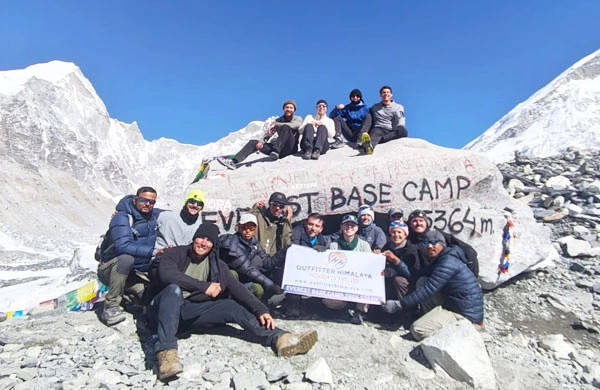
Gokyo Lake Trek in December is a peaceful winter journey through the Everest region, which leads from Lukla and Namche Bazaar to Gokyo village at approximately 4,789 meters. Trekkers can expect quiet trails, crisp mountain views and lakes that may be partly or extensively frozen depending on the season’s conditions.
December Days are often clear and nights become colder at higher elevations. With proper acclimatization, warm trekking gear, flexible planning and an experienced local guide, the Gokyo Valley route remains achievable. Gokyo Ri offers remarkable views of Everest, Lhotse, Makalu and Cho Oyu when weather and trail conditions allow.
Gokyo Lake Trek in December: Winter Lakes, Everest Views and a Quieter Khumbu
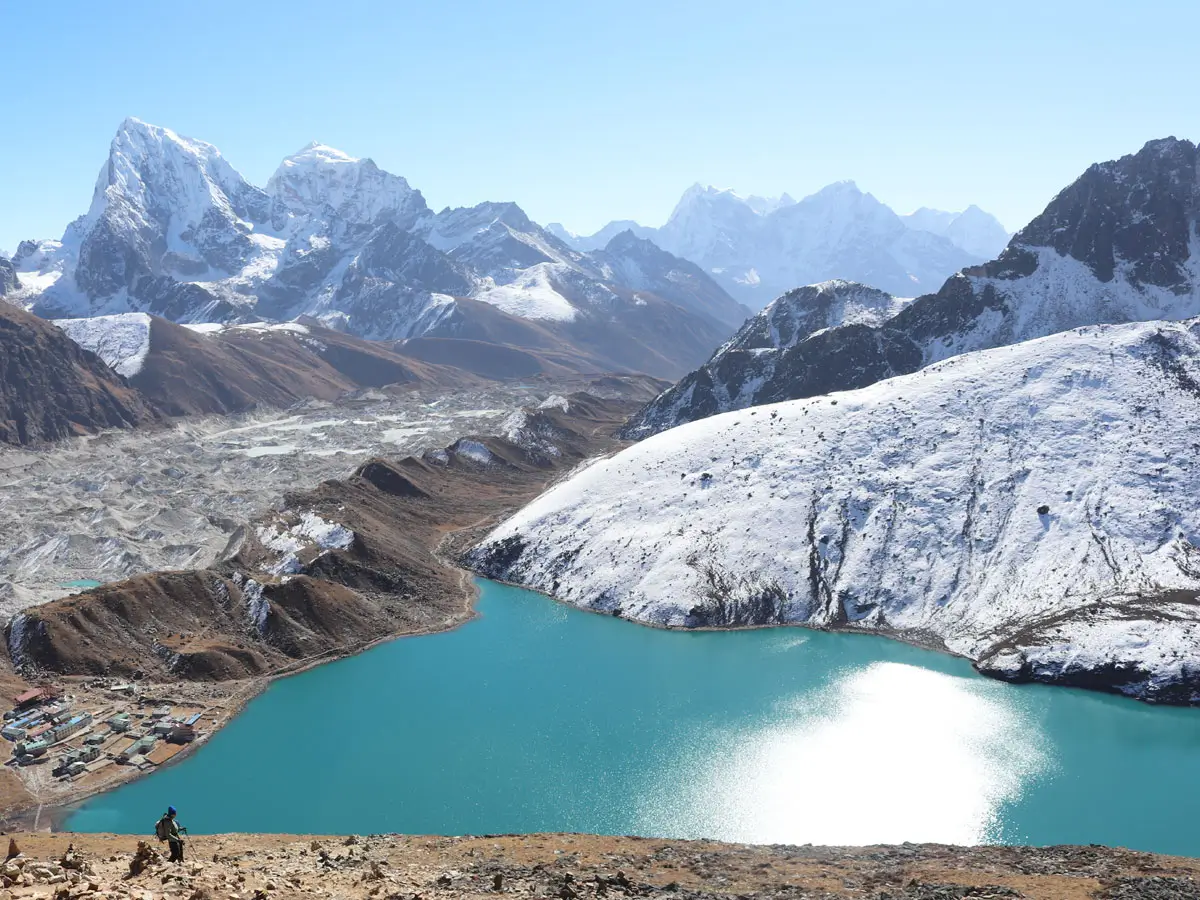
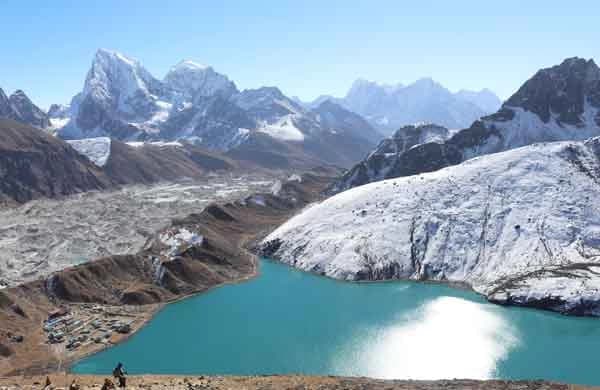
December trek to Gokyo Lake is a winter journey from the Dudh Koshi valley to the frozen edges of Gokyo, where Everest, Cho Oyu, Lhotse, and Makalu rise beyond the vast Ngozumpa Glacier. Hidden in a wide Himalayan valley west of Everest Base Camp, Gokyo is known for its sacred high-altitude lakes, Sherpa settlements, the vast Ngozumpa Glacier and remarkable views of the world’s highest mountains. In December, this celebrated corner of the Khumbu becomes quieter, colder and beautifully atmospheric.
The Gokyo Lake Trek in December begins with a flight to Lukla and follows the Dudh Koshi Valley through Phakding and Namche Bazaar. The trail separates from the busier Everest Base Camp route and climbs through Dole and Machhermo toward Gokyo village.
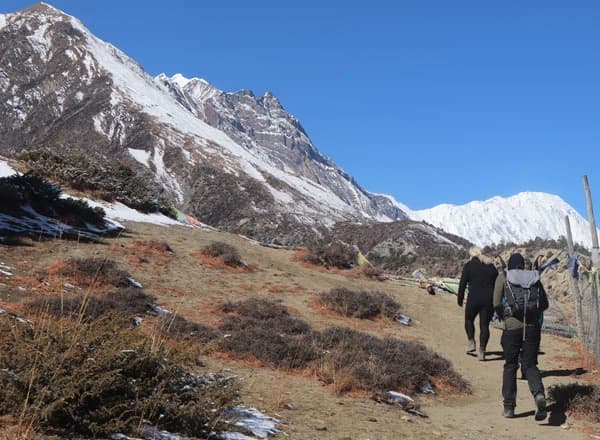
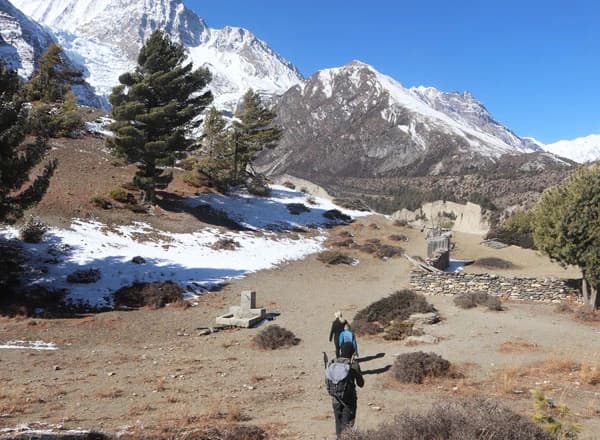
As the elevation increases, green forests gradually give way to open alpine slopes, frozen streams and frost-covered paths. The lakes may remain partly open, freeze around their edges or become more extensively covered later in the month. Their appearance changes with the temperature, snowfall and timing of each winter, making every December journey slightly different.
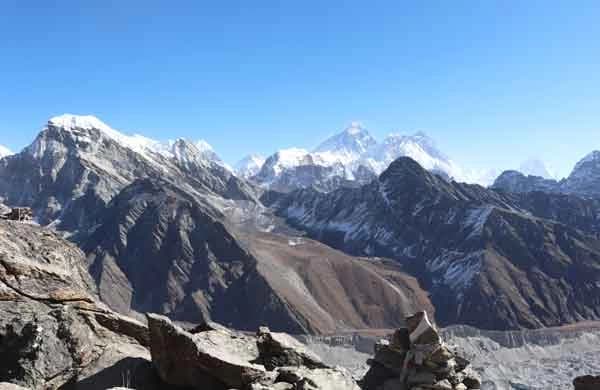
The reward is not limited to the lakes. You may see Everest, Lhotse, Makalu and Cho Oyu rising beyond glaciers and surrounding ridges from Gokyo Ri. The ascent to the Gokyo Peak is optional and should only be attempted when the weather, trail and individual health condition are suitable.
Gokyo Lake Trek in December – Facts at a Glance
Trek detail
December information
Region
Everest/Khumbu region of Nepal
Typical duration
Around 11–13 days, including arrival and flight buffer days
Starting and ending point
Lukla
Main route
Lukla–Phakding–Namche–Dole–Machhermo–Gokyo
Highest overnight location
Gokyo village, approximately 4,790 m
Highest optional viewpoint
Gokyo Ri, approximately 5,357 m
Trek difficulty
Moderate, with additional winter and high-altitude demands
Average walking time
Approximately 5–7 hours per trekking day
Accommodation
Local teahouses and mountain lodges
December trail conditions
Generally quiet, with possible frost, ice and snowfall at higher elevations
Lake appearance
Open, partly frozen or extensively frozen, depending on timing and yearly conditions
Guide recommendation
A knowledgeable local guide is strongly recommended in winter
Walk beside the Gokyo Lakes as winter gradually forms ice along their shores and, in colder periods, across larger sections of the water.
Enjoy sweeping views of Everest, Lhotse, Makalu and Cho Oyu from the slopes of Gokyo Ri when conditions permit.
Follow a quieter alternative to the classic Everest Base Camp trail, particularly after leaving Namche Bazaar.
Witness the immense Ngozumpa Glacier surrounded by rugged ridges and snow-dusted Himalayan peaks.
Experience the changing landscape from pine and rhododendron forests to the open alpine valley of Gokyo.
Spend peaceful evenings in Sherpa teahouses while frost settles across the surrounding mountains.
Photograph clear winter light, long mountain shadows and dramatic reflections wherever sections of the lakes remain open.
Explore the standard Gokyo Valley route without needing to cross Cho La, Renjo La or another technical high pass.
Experience a quieter side of the Khumbu, where the silence and open scenery make the journey feel deeply personal.
Why choose the Gokyo Lake Trek in December?
The Gokyo Lake Trek in December is an ideal winter adventure if you want to experience the Everest region beyond its busy trails. Many trekkers turn toward Everest Base Camp, and the route to Gokyo enters a broader, quieter valley shaped by lakes, glaciers, and views of four 8,000-meter peaks.
December offers the landscape a distinctive character as the frost brightens the trail, thin ice begins to form around streams and lake edges, and fresh snow softens the surrounding slopes. The lower number of visitors also creates more opportunities to speak with lodge owners, observe daily Sherpa life, and enjoy the mountains without constant foot traffic.
The journey to Gokyo is for photographers and nature lovers; clear weather can reveal sharp views across the Ngozumpa Glacier, while the low winter sun produces warm light and long shadows over the valley. Depending on the conditions, the lakes may appear deep blue, partly frozen or covered by wider patterns of ice.
Gokyo Trek suits well-prepared travelers who value solitude, scenery and a meaningful sense of journey. It is not necessary to cross a high pass to reach Gokyo, and with sensible acclimatization, suitable clothing and flexible planning, December can provide one of the most memorable experiences in the Khumbu.
Best Itineraries that include a visit to Gokyo Lake
Gokyo Lake Trek- 13 Days: This is a standard Gokyo Lake Trek following the normal route through Lukla, Namche, Dole, Machhermo, and Gokyo Valley.
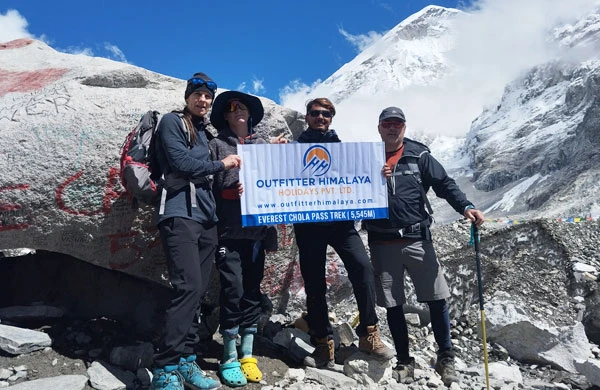
EBC Chola Pass with Gokyo: This is a 19-day itinerary following Lukla, Namche, Tengboche, Dingboche, Lobuche, Gorekshep, EBC, Chola Pass, and Gokyo.
Renjo La Pass – 15 Days: This is a 15-day itinerary following Lukla, Namche, Dole, Machhermo, Gokyo, Renjo La Pass, and Namche.
Major Attractions of the Gokyo Lake Trek in December
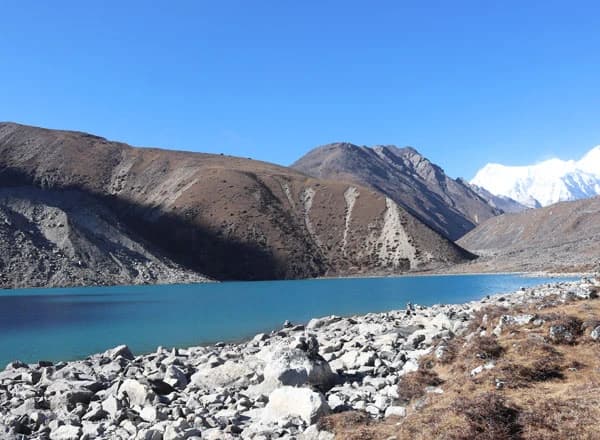
Gokyo Lakes: The Gokyo Lakes form the scenic heart of the journey; their appearance changes with the temperature in December: some sections may remain deep blue, while others develop frozen edges, delicate ice patterns, or broader sheets of ice. Surrounded by pale winter slopes and towering mountains, the lakes feel particularly peaceful at this time of year.
Gokyo Village and Dudh Pokhari: Gokyo village rests beside Dudh Pokhari, the third and most frequently visited lake, at approximately 4,790 meters. Its stone lodges appear small beneath the surrounding Himalayan landscape. Watching evening light move across the lake before returning to a warm teahouse is one of the trek’s most memorable winter experiences.
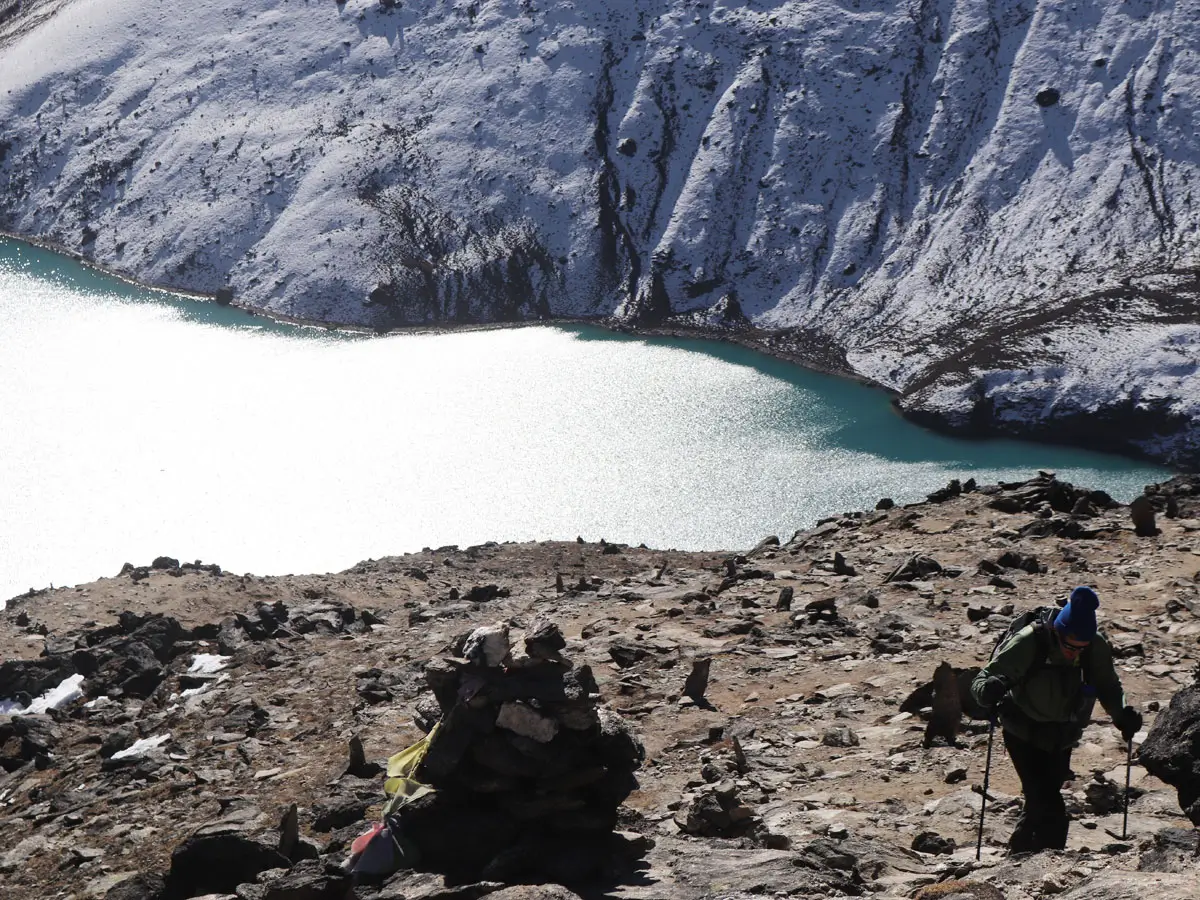
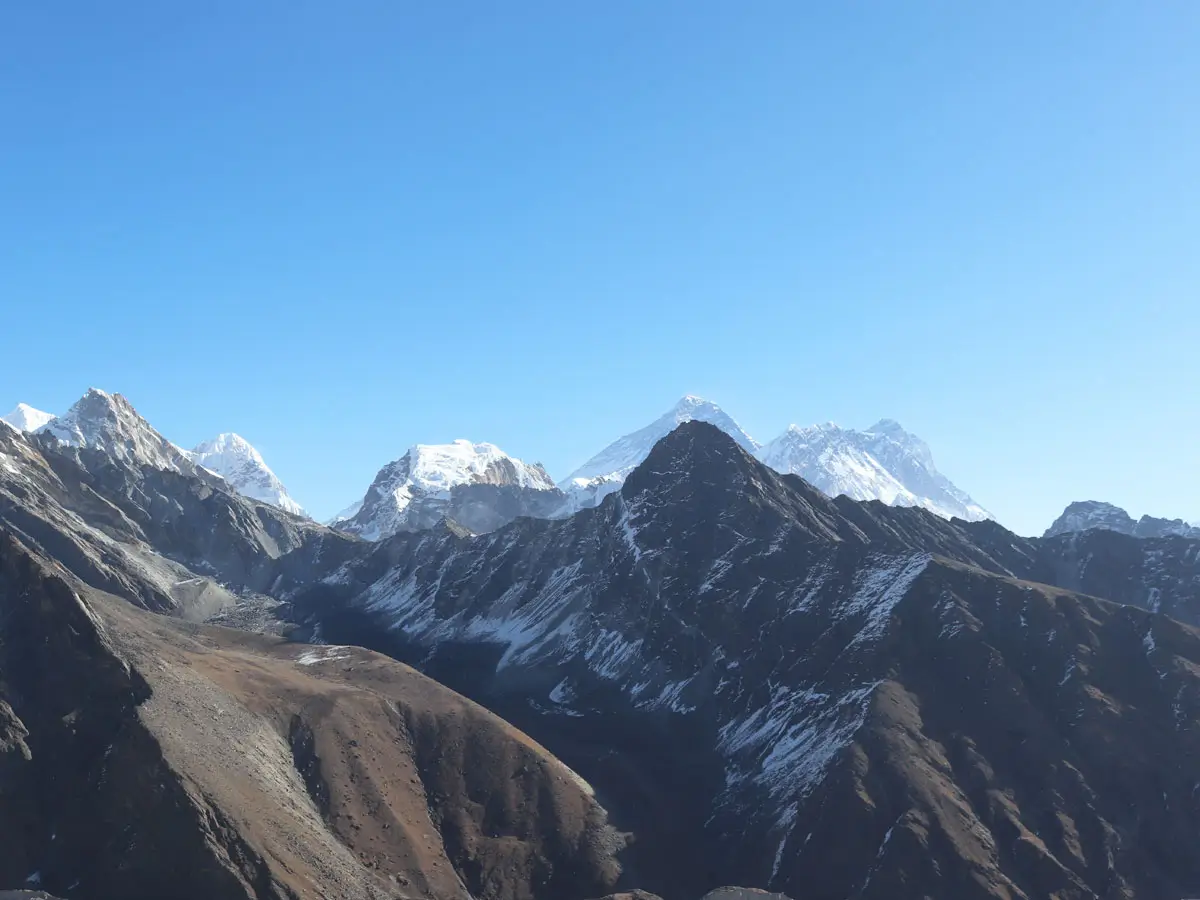
Gokyo Ri: Rising above the village, Gokyo Ri is the trek’s finest viewpoint. When the weather and trail are suitable, the climb reveals an extraordinary panorama containing Everest, Lhotse, Makalu and Cho Oyu. Below, the lakes, Gokyo settlement and Ngozumpa Glacier come together in one sweeping Himalayan scene. The ascent remains optional during winter.
Ngozumpa Glacier: The vast Ngozumpa Glacier gives the Gokyo Valley a wild and dramatic character. Its rugged surface of ice, rock and glacial debris stretches between high ridges beneath Cho Oyu. Winter light emphasizes its textures, making the surrounding viewpoints especially rewarding for photographers.
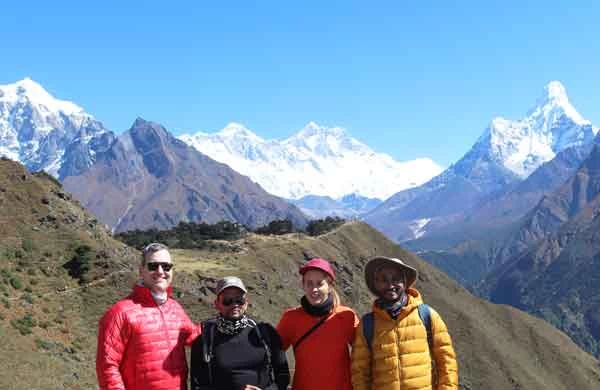
Namche Bazaar: Namche Bazaar provides a lively contrast to the quieter upper valley. This historic Sherpa trading town offers comfortable lodges, bakeries, equipment shops and valuable acclimatization opportunities. A nearby viewpoint hike may provide the trek’s first distant views of Everest before the route turns toward Dole.
Dole and Machhermo: Dole is surrounded by forest and steep valley scenery, while Machhermo introduces trekkers to a more open and distinctly alpine landscape. In December, frost-covered vegetation, frozen streams and snow-dusted ridges make the journey between these settlements especially beautiful.
Sherpa Culture and Winter Teahouse Life: The villages and lodges along the route offer more than shelter. Prayer flags, mani stones, monasteries and conversations around the dining-room stove provide meaningful glimpses into Sherpa culture. With fewer visitors in December, these small moments can become some of the most personal memories of the trek.
Gokyo Lake Trek Weather and Temperature in December
December marks the beginning of winter in the Gokyo Valley, and the month is generally dry, with crisp air and good mountain visibility on settled days. However, temperatures fall quickly after sunset and become progressively colder as the route climbs above Namche Bazaar.
Approximate December Temperatures by Elevation
Location
Elevation
Typical daytime temperature
Typical nighttime temperature
Lukla and Phakding
2,610–2,860 m
4°C to 10°C
-5°C to 0°C
Namche Bazaar
3,440 m
2°C to 8°C
-9°C to -3°C
Dole
4,038 m
0°C to 6°C
-12°C to -5°C
Machhermo
4,470 m
-2°C to 5°C
-14°C to -7°C
Gokyo village
4,790 m
-5°C to 3°C
-18°C to -10°C
These figures are practical planning ranges rather than guaranteed daily readings. Sunshine can make daytime walking feel comfortable, while wind, shade, or fresh snowfall may make it feel colder, and temperatures can also fall below the listed ranges during an unusually cold weather system.
What Does December Weather Feel Like on the Trail?
Mornings usually begin cold and frosty, but the sun gradually brings warmth to exposed sections of the trail. Clear winter air can provide excellent views, although deep valleys and shaded slopes remain cool throughout the day.
The temperature drops rapidly in the late afternoon around Machhermo and Gokyo, so starting early, maintaining a steady walking pace, and reaching the teahouse before sunset makes the daily routine much more comfortable.
December is one of the drier months in the Everest region, but dry weather does not mean snow-free conditions. A passing winter system can bring fresh snow at any elevation, with greater accumulation more likely in the upper Gokyo Valley.
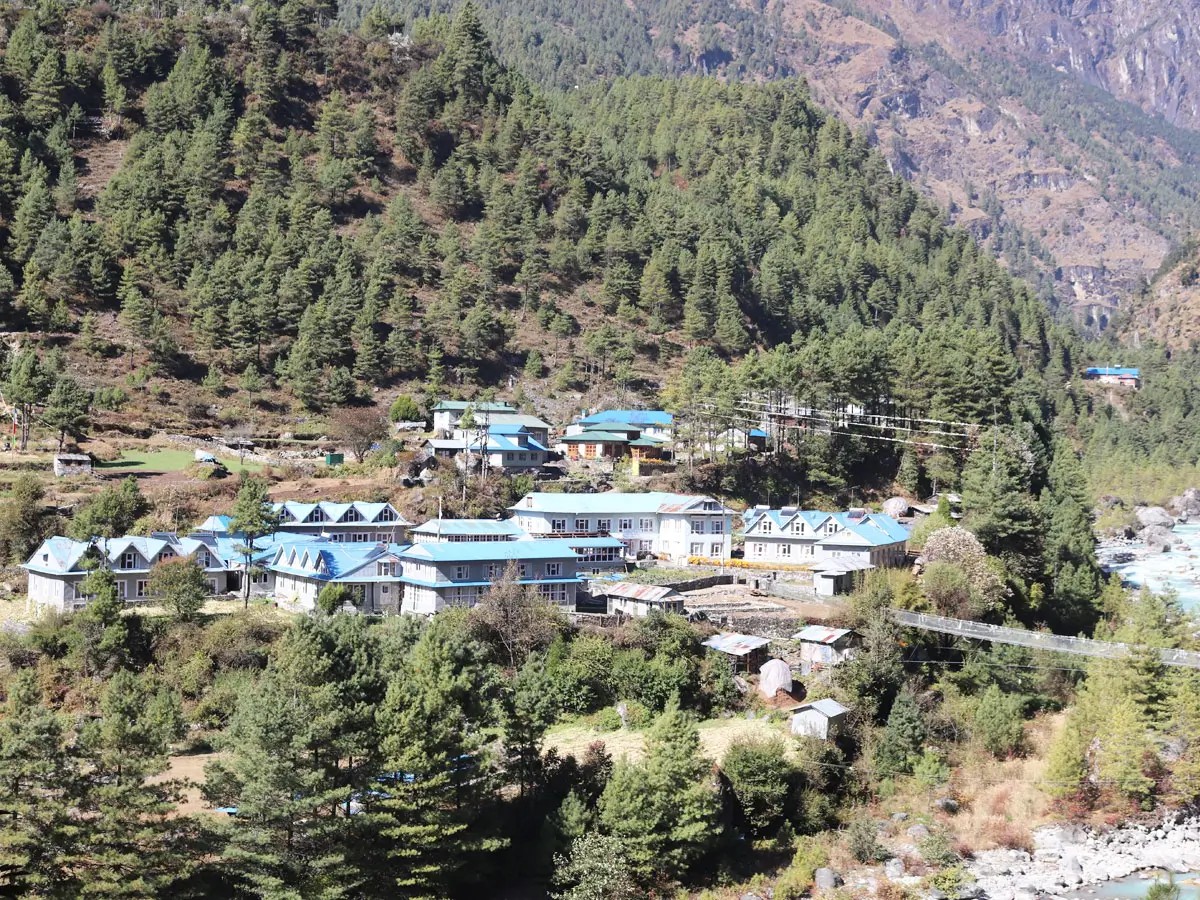
The Phakding village!
Advantages of the Gokyo Lake Trek in December
Fewer Trekkers on the Trail: December is quieter than October and November, especially beyond Namche Bazaar. The peaceful route allows you to walk at your own pace and appreciate the landscape without the movement of large trekking groups.
Crisp Himalayan Visibility: Dry winter air often brings excellent mountain visibility. On favorable days, Everest, Cho Oyu and the surrounding peaks appear exceptionally sharp against the deep blue sky.
A Distinctive Lakeside Landscape: December captures Gokyo during its transition into deep winter. The lakes may display a beautiful mixture of open blue water, frozen edges and natural ice patterns that change throughout the month.
More Personal Teahouse Experiences: With fewer guests, evenings inside operating lodges can feel warmer and more personal. You may have more time to interact with Sherpa hosts and learn about everyday life in the high Khumbu.
Excellent Winter Photography: Low-angle sunlight, snow-dusted slopes, clear air and long shadows create striking photographic conditions. Sunrise and late-afternoon light can be especially beautiful around Gokyo and the Ngozumpa Glacier.
A Stronger Sense of Achievement: Reaching the Gokyo village during the quiet winter season feels deeply rewarding, and the experience comes from steady preparation and patience rather than technical climbing, making it an attainable winter goal for fit and properly acclimatized trekkers.
Challenges and Practical Solutions for the Gokyo Lake Trek in December
The Gokyo Lake Trek in December has additional winter considerations, but they can be managed through sensible preparation and flexible planning.
December challenge
Practical solution
Cold mornings and nights
Carry a four-season sleeping bag, insulated down jacket, thermal layers and warm accessories. Dress in removable layers while walking.
Frost, ice or fresh snow
Walk steadily, use trekking poles and carry microspikes for slippery sections. Your guide can assess the trail each morning.
High altitude
Ascend gradually, include an acclimatization day in Namche and communicate immediately if you experience unusual symptoms.
Shorter daylight hours
Begin trekking early and aim to reach the next lodge before late afternoon.
Fewer operating teahouses
Confirm accommodation in advance, particularly around Dole, Machhermo and Gokyo later in December.
Lukla flight delays
Keep at least one flexible day in Kathmandu and avoid booking an international departure immediately after the trek.
Water freezing at higher elevations
Keep your bottle inside an insulated cover and store it near your sleeping bag overnight.
Changing Gokyo Ri conditions
Treat the viewpoint climb as optional and attempt it only when the trail, weather and your physical condition are favourable.
December does not automatically make the standard Gokyo route extreme; many challenges are practical rather than technical. Good equipment, gradual acclimatization and guidance from an experienced local team can make the journey comfortable, enjoyable and deeply rewarding.
Gokyo Lake Trek – Early, Mid and Late December Conditions
Conditions in the Gokyo Valley change noticeably throughout December, and choosing the right part of the month can influence temperatures, lake appearance, and the overall atmosphere of the trek.
Early December: The Most Balanced Period
Early December often carries some qualities of late autumn, such as reasonable daylight and comfortable daytime walking in the sunshine. Snow is possible, but the lower trail is often dry or frosty rather than continuously covered.
The lakes may remain partly open with ice beginning to form around their edges; early December is suitable if you are seeking a trek with winter scenery and manageable temperatures.
Mid December: A stronger Winter Character
By mid-December, the mornings and evenings usually feel colder, and frost becomes more common above Namche Bazaar. Ice may spread over larger sections of the lakes, although the extent varies each year.
The trails grow quieter, creating a peaceful atmosphere around Dole, Machhermo, and Gokyo. Confirming accommodation ahead becomes increasingly important as some lodge owners may leave the upper valley for winter.
Late December: Deeper Cold and Greater Solitude
Late December brings a more established winter environment, and the nights around Gokyo can become very cold, and water, trails, and lake surfaces may freeze more extensively. Fresh snowfall can temporarily alter walking conditions and access to Gokyo Ri.
The lodge in December can be wonderfully peaceful, but it requires warmer equipment and greater flexibility. Lodge availability, meals and other services should be checked before departure.
Which Part of December Is Best?
For most trekkers, early December offers the best balance of winter beauty, comparatively manageable cold and better teahouse availability. Mid and late December suit travelers who are comfortable with lower temperatures and prefer an even quieter Himalayan experience.
These are general patterns rather than fixed rules, and local weather can change from year to year, so current conditions should always guide the final trekking plan.
Snow, Ice and Frozen – Lake Condition of Gokyo Lake in December
Is there Snow on the Gokyo Trek in December?
Snow is possible in December, especially around Dole, Machhermo and Gokyo, but it is never guaranteed. The lower route between Lukla and Namche may remain mostly dry, while shaded areas can hold frost or thin ice. A passing winter weather system may bring fresh snow even when the previous days were clear.
Are the Gokyo Lakes Frozen in December?
The lakes do not freeze on a fixed date, and in early December, open blue water may remain visible while ice develops along the shoreline. As temperatures fall, larger areas can freeze, particularly during the middle and latter parts of the month.
The condition depends on nighttime temperatures, sunlight, wind, and recent weather. For this reason, travelers should expect a beautiful winter landscape without assuming that every lake will be either completely open or fully frozen.
Never walk onto a frozen lake. The surface may look solid while remaining thin or unstable in certain areas.
What Are the Trails Like?
Most of the standard Gokyo Valley route remains a normal trekking trail. Frost and compacted ice are more likely on shaded slopes, near streams and around the lake area. Fresh snow can temporarily hide uneven ground, but experienced local guides can help select the safest pace and route.
Trekking poles improve balance, while lightweight microspikes can provide extra grip when the trail becomes slippery; technical crampons are not normally necessary for the standard route, although equipment decisions should follow current conditions.
Can Snow Affect Gokyo Ri?
Yes, snow, ice, or strong wind may make the optional Gokyo Ri ascent unsuitable on a particular morning. The viewpoint should never be treated as compulsory. If conditions are favorable, it can be an unforgettable highlight; if not, the lake and glacier scenery around Gokyo village still makes the journey worthwhile.
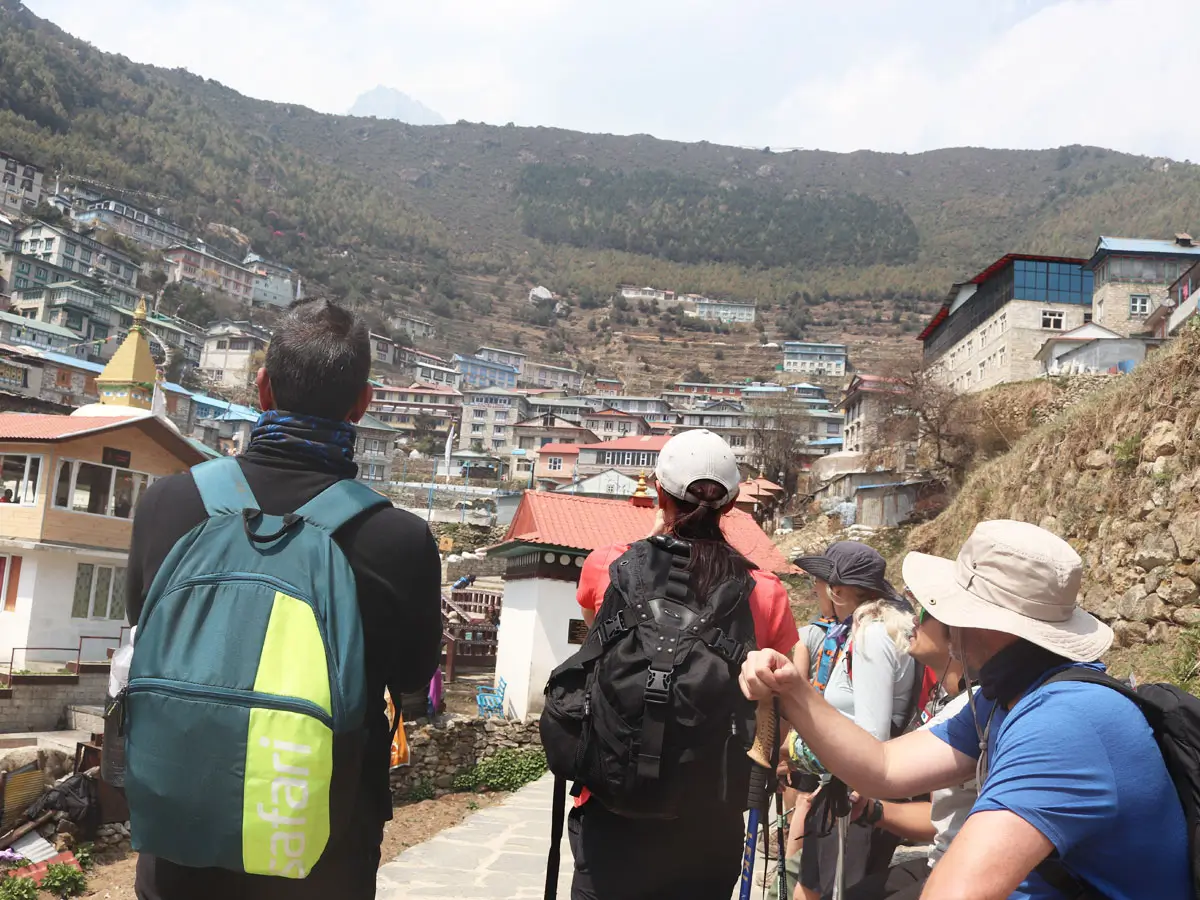
The Namche Bazaar!
Standard Gokyo Route vs Cho La and Renjo La in Winter
Many online guides incorrectly present every journey to Gokyo as a high-pass trek. In reality, the standard Gokyo Lake Trek does not require crossing Cho La, Renjo La or any other mountain pass.
Standard Gokyo Valley Route
The regular route travels from Lukla through Phakding, Namche Bazaar, Dole and Machhermo before reaching Gokyo. Trekkers normally return along the same valley, although daily stopping points may vary and the route follows established village trails and is the most practical choice in December.
Cho La Pass Route
Cho La connects the Gokyo Valley with the Everest Base Camp side of the Khumbu. The pass rises above 5,400 meters and may contain steep snow, hard ice, and difficult footing during winter. Crossing it requires suitable conditions, additional equipment and an experienced guide.
Condition-dependent and suited to experienced trekkers
Three Passes route
Three high passes
A more serious winter undertaking
Trekkers who want to experience Gokyo Lakes, Gokyo village, Ngozumpa Glacier, and Gokyo Ri can enjoy all these attractions without crossing a high pass. This distinction makes the standard route far more approachable than some winter trekking descriptions suggest.
Gokyo Lake Trek Difficulty in December
The Gokyo Lake Trek is moderate in technical difficulty, but its high altitude and December temperatures require good preparation. The Gokyo route does not involve mountaineering or compulsory high-pass crossings, and most days involve approximately five to seven hours of walking.
The main challenge is the steady climb from Namche Bazaar to Gokyo village, and you need to sleep progressively higher at Dole, Machhermo and Gokyo, where the thinner air naturally slows the waking pace. Frost, snow or ice may add some difficulty, but these conditions do not occur equally along the entire route.
Can Beginners Complete the Gokyo Trek in December?
Yes, a healthy and determined beginner can complete the standard route with prior training, gradual acclimatization and professional guidance. Previous high-altitude trekking experience is helpful but not compulsory.
However, December is not the right time to rush the itinerary, So, beginners should choose a schedule with an acclimatization day in Namche, reasonable walking distances, and enough flexibility for winter weather.
Recommended Physical Preparation
Begin training at least four to six weeks before your trek departure, and a useful routine should include:
Regular uphill walking or stair climbing
Cardiovascular exercise three or four times per week
Squats, lunges and step-ups for leg strength
Core and balance exercises
One longer walk each week while carrying a light backpack
Practice hikes in the boots intended for the trek
Training does not need to be extreme; the consistent walking, steady improvement, and familiarity with several hours of movement are more valuable than a few intense workouts. Mental preparation also matters, and walking slowly, accepting changing conditions, and treating Gokyo Ri as an optional goal allow you ou to enjoy the journey without unnecessary pressure.
Altitude and Acclimatization
Altitude is a greater consideration than technical difficulty on the Gokyo Lake Trek. The journey rises gradually from the forested DudhKoshi Valley to Gokyo village at approximately 4,790 meters, with the optional Gokyo Ri viewpoint reaching about 5,357 meters.
Overnight location
Approximate elevation
Phakding
2,610 m
Namche Bazaar
3,440 m
Dole
4,038 m
Machhermo
4,470 m
Gokyo village
4,790 m
Why Acclimatization Matters in December
The body needs time to adjust to the reduced oxygen level, and an acclimatization day in Namche Bazaar is therefore an essential part of the Gokyo itinerary. A gentle hike to a higher viewpoint followed by a return to Namche for the night supports the principle of climbing higher and sleeping lower.
Beyond Namche, walk slowly and avoid treating the day like a race, and December’s quieter trail makes it easier to maintain a comfortable personal pace.
Practical Acclimatization Tips
Include a full acclimatization day in Namche Bazaar
Maintain a slow and steady walking pace
Drink regularly without forcing excessive amounts of water
Eat sufficient carbohydrates, even if your appetite feels lower
Avoid alcohol and unnecessary physical exertion during the ascent
Sleep and rest properly at each overnight stop
Discuss preventive altitude medication with a doctor before traveling rather than self-prescribing it
Tell your guide immediately if you feel unwell
A mild headache, nausea, dizziness, unusual tiredness or loss of appetite may indicate that the body is not adjusting well. Do not continue climbing if symptoms are worsening. Breathlessness while resting, confusion or loss of coordination requires immediate descent and urgent assistance.
Most trekkers acclimatize successfully when the route is paced responsibly. The goal is not to reach Gokyo quickly, but to arrive feeling well enough to enjoy the lakes, glacier and surrounding mountains.
The Gokyo Lake Trek uses locally operated teahouses rather than tents, and the accommodation becomes simpler as the trail climbs, but even in December, an operating lodge provides a welcoming place to rest, eat, and share the evening with Sherpa hosts.
What are the Rooms Like?
Rooms generally contain two single beds with mattresses, pillows, and blankets, and bedrooms are not heated, so a four-season sleeping bag is essential. The shared dining room is usually the warmest part of the lodge, often heated by a stove during the evening.
Location
Typical December experience
Lukla and Phakding
Good selection of lodges with comparatively comfortable facilities
Namche Bazaar
Widest choice of rooms, bakeries, shops and upgraded accommodation
Dole
Fewer, simpler teahouses surrounded by forest and mountain scenery
Machhermo
Basic but welcoming lodges in a quiet alpine setting
Gokyo
Limited winter options beside DudhPokhari; advance confirmation is important
Toilets and Hot Showers
Many lodges in the Gokyo Trek route have shared toilets, although attached bathrooms may be available in selected lower-elevation properties and at the higher elevations; plumbing can freeze, so facilities become more basic.
Hot showers are mostly available for an additional charge, and availability depends on water and weather conditions. Many trekkers prefer a warm washcloth or wet wipes above Namche to avoid becoming chilled after bathing.
Are Teahouses Open in Gokyo Trail in December?
Yes, Lodges remain open throughout December. Namche normally retains the strongest range of services, but choices narrow toward Dole, Machhermo and Gokyo.
The Gokyo Lake!
Food, Drinking Water, Charging and Internet in Gokyo Lake
Food on the Gokyo Trek
Teahouses serve simple, filling meals designed for trekking, and the menus are more varied in Lukla and Namche Bazaar, while choices become narrower at Dole, Machhermo and Gokyo during winter. The common meals include:
Dal bhat with rice, lentils and vegetables
Sherpa stew, vegetable soup and garlic soup
Noodles, pasta and fried rice
Potatoes, eggs and seasonal vegetables
Porridge, pancakes, toast and Tibetan bread
Tea, coffee, hot lemon and hot chocolate
Dal bhat is particularly useful because it provides carbohydrates, protein and warmth in one meal, and at the higher elevations, freshly prepared vegetarian dishes are generally a more reliable choice than meat transported from lower areas.
Cold and the altitude can reduce appetite, but the body still needs energy, So, eating smaller portions regularly and carrying familiar snacks can make this easier.
Drinking Water
Bottled water creates unnecessary plastic waste and becomes expensive at higher elevations of the Gokyo Lake trek route. Better options include boiled water purchased from teahouses or locally available water treated with a reliable filter or purification tablets.
We suggest not drinking directly from a stream, even when the water appears clean. Please carry reusable bottles and use an insulated cover to slow freezing. A wide-mouth bottle is often easier to use in cold conditions.
Charging Electronic Devices
Charging is commonly available in teahouses for an additional fee. However, the power becomes less reliable above Namche. Some lodges depend on solar energy, which may be limited during cloudy or snowy weather.
Bring a high-capacity power bank, spare camera batteries and the necessary charging cables. Keep batteries close to your body during the day and inside your sleeping bag at night because cold temperatures reduce battery performance.
Internet and Mobile Network
Namche Bazaar generally has the best connectivity along the route. Mobile signals and lodge Wi-Fi become increasingly inconsistent toward Dole, Machhermo and Gokyo.
Some teahouses may offer paid internet, but it should not be expected to work continuously. Download maps, insurance details, booking documents and emergency contacts before leaving Kathmandu.
The limited connection can become part of December’s appeal, giving trekkers more time to enjoy the mountains, speak with local hosts and experience the quiet rhythm of the Gokyo Valley.
Reaching Gokyo Ri in December
Gokyo Ri rises to approximately 5,357 meters above Gokyo village and provides the trek’s most celebrated panorama. From the upper viewpoint, you see Everest, Lhotse, Makalu and Cho Oyu, along with the Gokyo Lakes, Ngozumpa Glacier and surrounding Himalayan ridges.
How Difficult is it to Climb the Gokyo Ri in December?
The climb is not technical, but the steep ascent, thin air and winter conditions make it physically demanding. The viewpoint stands approximately 560 meters above Gokyo village, and the round trip commonly takes around four to six hours, depending on fitness, acclimatization and trail conditions.
Walking slowly is essential, and you should only begin the ascent if you feel properly acclimatized and free from concerning altitude symptoms.
Sunrise or a Later Start?
Sunrise from Gokyo Ri can be spectacular, but pre-dawn temperatures are extremely cold in December, and the path may be harder to assess in darkness. A slightly later morning start often provides more warmth, better visibility of the trail, and a more comfortable experience.
The best departure time should be decided with the guide after checking:
Overnight snowfall
Ice on the trail
Wind strength
Cloud development
Individual health and energy
Available daylight for the return journey
What Should You Carry While Climbing Gokyo Ri?
For a December ascent to Gokyo Ri, carry warm gloves, an insulated jacket, thermal layers, a windproof outer shell, sunglasses, water, snacks, and a headlamp.
Trekking poles and microspikes may be useful when frost or compacted snow makes the path slippery.
Is Gokyo Ri Compulsory to Climb?
No, Gokyo Ri is an optional viewpoint and not required to complete the trek. If snow, wind, visibility, or personal health make the climb unsuitable, you can still enjoy remarkable views from Gokyo village, the lakeshore, and nearby glacier viewpoints.
Reaching Gokyo safely and experiencing its winter landscape is already a meaningful achievement. The summit should be considered an additional reward when the mountain and weather allow it.
Essential Packing list For the Gokyo trek in December
Packing for a December trek to Gokyo should focus on warmth, layering, and protection from wind, snow, and strong mountain sunlight, and the general list to pack is:
Clothing
Moisture-wicking thermal base layers
Fleece jacket or warm mid-layer
Insulated down jacket
Waterproof and windproof outer shell
Comfortable trekking trousers
Thermal leggings for high elevations and evenings
Warm hat, sun hat and neck gaiter
Thin inner gloves and insulated outer gloves
Few pairs of wool or synthetic trekking socks
Lightweight clothes for sleeping
Avoid cotton for trekking because it dries slowly and loses warmth when wet.
Footwear and Trail Equipment
Waterproof trekking boots that are already broken in
Comfortable footwear for teahouse evenings
Trekking poles
Gaiters for fresh or deeper snow
Backpack with waterproof cover
Duffel bag if traveling with a porter
Headlamp with spare batteries
Sleeping and Warmth
Four-season sleeping bag with a suitable comfort rating, ideally around -15°C to -20°C
Insulated reusable water bottle
Small hot-water bottle, if preferred
Personal Care and Health
Personal medication and a compact first-aid kit
Blister treatment and pain relief
High-SPF sunscreen and UV-protective lip balm
Sunglasses with strong UV protection
Hand sanitizer, toilet paper and wet wipes
Basic toiletries in small containers
Speak with a qualified medical professional before carrying altitude medication.
Electronics and Documents
High-capacity power bank
Spare camera and headlamp batteries
Phone, charging cables and universal adapter
Offline maps and downloaded travel documents
Passport and passport copies
Trekking permits
Travel-insurance details and emergency contacts
Some Nepali cash for trail expenses
Useful Snacks
Carry a small supply of energy bars, nuts, chocolate, dried fruit or another familiar snack. Food is available in teahouses, but personal snacks are useful during longer and colder walking days.
The best winter packing system is based on removable layers, and you should be able to reduce clothing while climbing in sunshine and add insulation quickly during breaks, wind, or late-afternoon temperature drops.
Sherpa Culture and Responsible Trekking in Gokyo Lake
The Gokyo Valley lies within the cultural homeland of the Sherpa people, and their relationship with the mountains, monasteries, trade routes, and seasonal environment gives the trek meaning beyond its scenery.
Respecting Local Culture
Prayer flags, mani walls, chortens, and small monasteries appear throughout the route, and walk clockwise around religious monuments whenever the trail allows; never sit or place bags on mani stones.
Ask permission before photographing local people, religious ceremonies or the interiors of monasteries. A friendly “Namaste” is always appreciated, while a simple “Tashi Delek” may also be used as a respectful Tibetan-influenced greeting.
Remember that Sherpa refers to an ethnic community, not a general word for every guide or porter.
Responsible Winter Trekking
Carry reusable bottles and avoid buying unnecessary plastic.
Bring wrappers, batteries, and non-biodegradable waste back to Kathmandu.
Use established trails instead of creating shortcuts.
Never walk onto frozen lakes or throw anything into the water.
Avoid touching prayer objects without permission.
Choose locally operated lodges and purchase meals where you stay.
Use water and electricity thoughtfully because both are limited at higher elevations.
Keep a respectful distance from wildlife and never feed animals.
Treat guides and porters fairly and follow agreed weight limits.
December places additional pressure on local resources because fewer lodges remain open and supplies are harder to transport. Small actions, including reducing waste, conserving energy and respecting local advice, e help protect both the environment and the communities supporting the trek.
Responsible travel also creates a better personal experience, and when trekkers slow down, listen and engage respectfully, Gokyo becomes more than a beautiful destination; it becomes a place of genuine cultural connection.
Expert Tips for the Gokyo Lake Trek in December
Choose early December for the easiest balance: Temperatures are generally less severe, more lodges may remain open, and the valley already feels noticeably quieter.
Let your guide confirm lodges ahead: Winter opening schedules can change quickly, especially around Dole, Machhermo and Gokyo.
Start walking after daylight whenever possible: The sun helps reveal icy patches and makes the first part of the day more comfortable.
Keep boots and insoles inside overnight: Damp footwear can become stiff or frozen if left in an exposed corridor.
Carry two pairs of gloves: Thin liner gloves make it easier to use trekking poles or cameras without exposing bare hands, while insulated gloves provide warmth during breaks.
Store batteries close to your body: Phones, cameras and power banks lose charge rapidly in cold temperatures.
Keep water bottles upside down inside an insulated cover: Water usually freezes first near the opening, so this simple method can help keep the lid usable.
Do not chase a sunrise at any cost: Gokyo Ri can still offer magnificent views after sunrise, when the path is brighter and the temperature more comfortable.
Stay on the standard valley route unless conditions support more: Reaching Gokyo does not require Cho La or Renjo La, so there is no need to add a high pass merely for a stronger sense of adventure.
Carry flexible expectations for the lakes: Open water, frozen edges and wide ice patterns are all authentic versions of Gokyo in December.
Protect exposed skin from the sun: Snow and ice reflect ultraviolet light even when the air feels cold.
Keep a buffer day after the trek: Lukla flights depend on mountain visibility, and a flexible schedule prevents unnecessary pressure at the end of the journey.
The most successful December trekkers are not those who move fastest. They are the ones who manage warmth carefully, listen to local advice, and allow the conditions to shape the experience.
Climbing Gokyo Ri!
Recommended Gokyo Lake Trek Itinerary for December
A December itinerary should include gradual acclimatization, early daily departures, and a buffer day for Lukla flights. The following 13-day plan follows the standard Gokyo Valley route without crossing a high pass.
Day
Journey
Approximate altitude
December planning note
1
Arrive in Kathmandu
1,400 m
Equipment check and winter trek briefing
2
Fly to Lukla and trek to Phakding
2,610 m
A gentle first walk through the DudhKoshi Valley
3
Trek from Phakding to Namche Bazaar
3,440 m
A longer climbing day; maintain a comfortable pace
4
Acclimatization day in Namche
3,440 m
Hike to a nearby viewpoint and return to sleep in Namche
5
Trek from Namche to Dole
4,038 m
Leave the main EBC trail and enter the quieter Gokyo Valley
6
Trek from Dole to Machhermo
4,470 m
A shorter day supporting gradual altitude adjustment
7
Trek from Machhermo to Gokyo
4,790 m
Pass the first lakes before reaching DudhPokhari and Gokyo village
8
Optional Gokyo Ri ascent and descend to Machhermo
4,470 m
Attempt the viewpoint only if weather, trail and health conditions are favourable
9
Trek from Machhermo to Namche Bazaar
3,440 m
Descend into thicker air and return to the lively Sherpa town
10
Trek from Namche to Lukla
2,860 m
Final full day on the trail
11
Fly from Lukla to Kathmandu
1,400 m
Flight timing depends on mountain weather and visibility
12
Buffer day in Kathmandu
1,400 m
Protects the international travel schedule from possible flight delays
13
Final departure
—
Transfer to the airport
Important Winter Adjustment
Day 8 can be demanding because it combines Gokyo Ri with the descent to Machhermo. If conditions are slow or the group would benefit from more rest, an extra night in Gokyo can create a more flexible and enjoyable winter itinerary. The final schedule should respond to the trekkers’ health, available lodges and current trail conditions.
Lukla Flights and December Transportation Planning for Gokyo Lake Trek in December
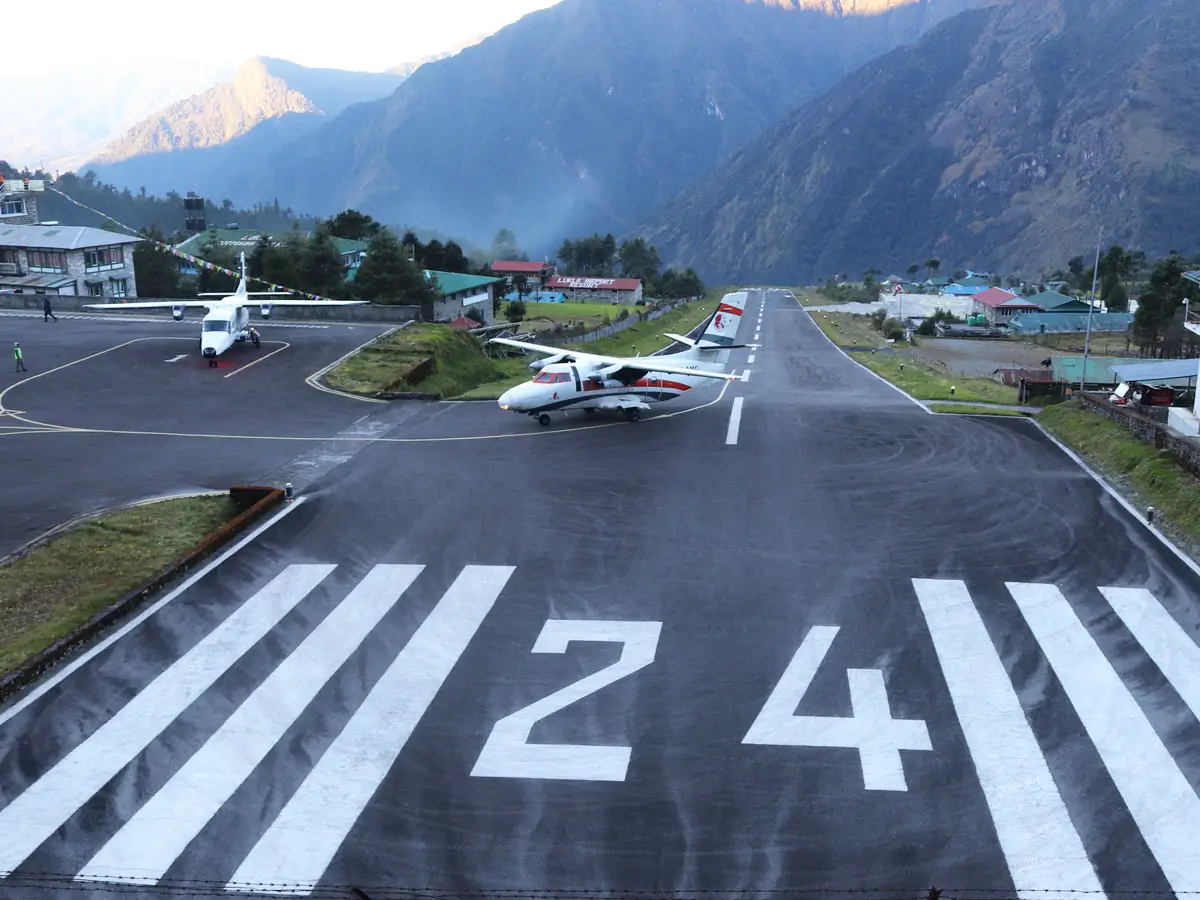
The Gokyo Lake Trek normally begins with a short mountain flight to Lukla. December flights often operate directly from Kathmandu because it is outside the busiest trekking period, but this should never be treated as guaranteed.
Kathmandu or Ramechhap Airport?
Departure airport
Approximate travel time
Important information
Kathmandu to Lukla
30–35 minutes by air
The more convenient option and commonly used outside peak periods
Ramechhap to Lukla
Around 20 minutes by air
Requires an approximately 4–5-hour drive from Kathmandu
Flight operations may shift between airports because of air traffic, airline planning, or operational decisions. Outfitter Himalaya should confirm the final departure airport shortly before the trek.
Weather Delays
December is generally dry, but Lukla flights still depend on visibility and safe flying conditions. Cloud, wind, or changing mountain weather can delay or cancel a flight.
Keep at least one buffer day in Kathmandu after returning from Lukla and avoid booking an international flight or another fixed activity for the same day you expect to leave the mountains.
Baggage Allowance
A common allowance on Lukla flights is:
10 kg of checked baggage
5 kg of hand luggage
Rules can vary by airline, aircraft, and ticket, so the confirmed allowance should be checked before packing, and excess baggage may cost extra and cannot always be carried when aircraft payload is limited.
Practical Flight Tips
Pack essential medication, documents and one warm layer in your hand luggage.
Use a soft duffel rather than a large hard-shell suitcase.
Keep non-trekking luggage at your Kathmandu hotel.
Prepare for an early-morning airport transfer.
Remain flexible if the flight time or departure airport changes.
Consider a helicopter only as an optional contingency; availability, weather and additional cost still apply. The flight to Lukla is more than transportation. On a clear December morning, it offers an unforgettable first view of Nepal’s hills and Himalayan ranges before the trek begins.
The Standard Gokyo Lake Trek passes through Khumbu Pasang Lhamu Rural Municipality and Sagarmatha National Park. Trekkers should arrange the following documents before or at the beginning of the journey.
Permit or registration
Purpose
Where it is arranged
Sagarmatha National Park Entry Permit
Allows entry into the protected national park
Kathmandu or the park checkpoint at Monjo
Khumbu PasangLhamu Trek Card/local registration
Registers visitors entering the Khumbu municipality
Commonly processed in Lukla or at the relevant local checkpoint
TIMS Card
Records the trekker, guide and trekking route
Issued through a registered trekking agency when required
Sagarmatha National Park Entry Permit
The official entry fee currently listed for international visitors is NPR 3,000, while SAARC nationals pay NPR 1,500 for Sagarmatha National Park; permit charges can change and should be reconfirmed before publication or departure.
Khumbu Trek Card
The Khumbu Pasang Lhamu Rural Municipality operates a local entry and digital Trek Card system, and this registration is separate from the national park permit and supports visitor management and local infrastructure.
Because the local fee and issuing process may be revised, Outfitter Himalaya should confirm the current amount and arrange the registration according to the latest municipal procedure.
Is a TIMS Card Required for Gokyo?
There is conflicting information that appears across trekking websites, but the Nepal Tourism Board’s current official TIMS page specifically lists the Gokyo Trek among routes requiring a licensed guide and an agency-issued TIMS Card.
The safest and most accurate advice is to confirm the rule immediately before travel and let a government-registered trekking agency arrange every document required at that time.
Is a Special Restricted-Area Permit Required?
No, the special restricted-area permit or mountaineering permit is required for the standard route to Gokyo village and the trekking viewpoint of Gokyo Ri.
Everest and Himalayas from Gokyo Ri!
Do You Need a Guide, Porter, and Travel Insurance in December?
Guide
A licensed local guide is strongly recommended for the Gokyo Lake Trek in December. The guide checks daily trail conditions, confirms teahouses, monitors the acclimatization, and adjusts the itinerary after snowfall or flight delays.
Porter
Hiring a porter is optional, but it can make a winter trek considerably more comfortable. December equipment, including a warm sleeping bag, insulated clothing and extra layers, usually weighs more than a normal trekking-season kit.
A lighter backpack helps you to conserve energy and maintain a steady pace at altitude. Porters should be provided with suitable winter clothing, accommodation, meals, insurance and a responsible weight limit.
Travel Insurance
Every traveler should obtain insurance that specifically covers trekking up to at least 5,500 meters, and Gokyo Ri reaches approximately 5,357 meters. A general holiday policy may exclude high-altitude activities, and the policy should ideally include:
Emergency helicopter evacuation
High-altitude medical treatment
Hospitalization and repatriation
Trip cancellation or interruption
Delayed or canceled domestic flights
Loss or delay of trekking equipment
You should disclose existing medical conditions, read the altitude limit carefully, and also carry both digital and printed copies of your policy number and emergency-assistance contact details.
A guide, porter and suitable insurance do not remove every uncertainty from a winter trek, but together they create a more comfortable, organized and responsible journey.
Yes, the Gokyo Valley is possible in December for properly prepared trekkers. Warm equipment, gradual acclimatization, and flexible planning are essential.
What is the weather like in Gokyo during December?
December is generally dry, cold and quieter than the main autumn season. Settled days can offer excellent mountain visibility, while temperatures fall rapidly after sunset.
How cold is Gokyo Lake in December?
Daytime temperatures around Gokyo may range from approximately -5°C to 3°C, and nights commonly fall between -10°C and -18°C.
Does it snow on the Gokyo Trek in December?
Snow is possible but not guaranteed; the lower sections may remain dry or frosty, while snowfall and lingering snow become more likely around Dole, Machhermo and Gokyo.
Are the Gokyo Lakes completely frozen in December?
Not always. The lakes may remain partly open, freeze around their edges, or develop more extensive ice later in the month. Their appearance varies with temperature, sunlight, wind and recent snowfall.
How difficult is the Gokyo Lake Trek in December?
The Gokyo trek in December is moderately difficult, with additional demands created by altitude and cold weather. It does not normally require technical climbing or a high-pass crossing.
Can beginners complete the trek in December?
Yes, fit beginners can complete it with prior training, a gradual itinerary, and professional guidance, and they should allow sufficient acclimatization and avoid rushing toward Gokyo.
Do I need to cross Cho La or Renjo La?
No, the standard route reaches Gokyo through Dole and Machhermo without crossing either pass. Cho La, Renjo La and the Three Passes route are separate.
Can I climb Gokyo Ri in December?
Yes, when the trail, weather and individual health are favorable. The ascent is optional and should be postponed or skipped after heavy snowfall, strong winds or concerning altitude symptoms.
Should I hire a porter?
A porter is optional but helpful because winter sleeping bags and insulated clothing add weight; carrying only a daypack can conserve energy during long climbs at altitude.
Do Lukla flights operate in December?
Yes, but every flight depends on visibility and safe weather conditions. December services often depart from Kathmandu, although the airport and schedule must be confirmed shortly before travel.
How can I reduce the risk of altitude sickness?
Follow a gradual itinerary, acclimatize in Namche, walk slowly and report symptoms promptly. Never continue ascending when symptoms are worsening, and only attempt Gokyo Ri when feeling well.
Conclusion – Is December a good time for the Gokyo Trek?
The Gokyo Lake Trek in December reveals a quieter and more intimate side of the Everest region. Beyond Namche Bazaar, the trail enters a peaceful valley of frost-covered forests, Sherpa settlements, changing lake ice and the immense Ngozumpa Glacier.
The lakes may remain open, develop intricate frozen edges or become more extensively covered later in the month. Fresh snow may brighten the upper valley, while clear winter days can reveal Everest, Lhotse, Makalu and Cho Oyu in remarkable detail.
Outfitter Himalaya can arrange the permits, local guide, porter, winter accommodation and flexible itinerary needed for a well-organized journey. Rather than simply reaching a destination, the Gokyo Lake Trek in December offers the rare feeling of watching the Khumbu settle into winter – one silent trail, warm teahouse and mountain sunrise at a time. So, December is a good time to experience the Gokyo Trek in Nepal.
The Annapurna Circuit Trek covers approximately 102 kilometers of walking on Outfitter Himalaya’s classic 15-day itinerary, including the Manang acclimatization hike. The journey unfolds through riverside forests, mountain villages and open valleys before crossing Thorong La [...]
The Annapurna Circuit Trek costs about USD 650–1,900 per person with Outfitter Himalaya, depending on the itinerary, group size, and services included. Outfitter Himalaya’s 15-day Classic Annapurna Circuit Trek has published group-size prices of USD [...]
Foreign trekkers need a trekking permit to trek the Annapurna Circuit, and we suggest settling it before you head out. Arranging the correct paperwork before departure helps avoid extra charges and interruptions once your journey [...]