Watching the sunrise from Poon Hill (3,210 meters) is one of the most memorable experiences on a short trek in Nepal. From this famous viewpoint above Ghorepani, the first morning light gradually illuminates the snow-covered Annapurna and Dhaulagiri ranges, revealing a spectacular Himalayan panorama.
The Poon Hill sunrise hike starts before dawn from Ghorepani village and usually takes 45–60 minutes uphill, though slower walkers may need up to 90 minutes. The best departure time depends on the season, local sunrise time, weather conditions, and your walking pace.
On a clear morning, you can see Dhaulagiri I (8,167m), Annapurna I (8,091m), Annapurna South (7,219m), Machhapuchhre (6,993m), and several other Himalayan peaks.
Both the three-day Poon Hill Trek from Pokhara and the four-day Ghorepani Poon Hill Trek include this sunrise hike. This guide explains how to plan that morning, from departure timing conditions to recognizing the peaks and capturing the changing light.
In this guide, Outfitter Himalaya explains when to start the sunrise hike, which mountains you can see, the best months to visit, what to wear, and how to make the most of your morning at Poon Hill.
Poon Hill Sunrise Hike at a Glance
The sunrise hike starts from Ghorepani, where you stay the night before. It is an uphill morning excursion within your trek, so allow time for both the climb and the return to your lodge.
Detail
What to expect
Starting point
Your lodge in Ghorepani
Viewpoint elevation
3,210 metres
Uphill walking time
Approximately 45–90 minutes, depending on pace and conditions
Trail
A sustained climb, mainly on stone steps through forest
Departure time
Before dawn, adjusted to the date’s sunrise and your walking pace
Mountain panorama
Annapurna and Dhaulagiri ranges, weather permitting
After the visit
Walk back to Ghorepani for breakfast
Out Tips: Plan to arrive before sunrise, giving yourself time to catch your breath, put on warm layers and watch the first colours appear.
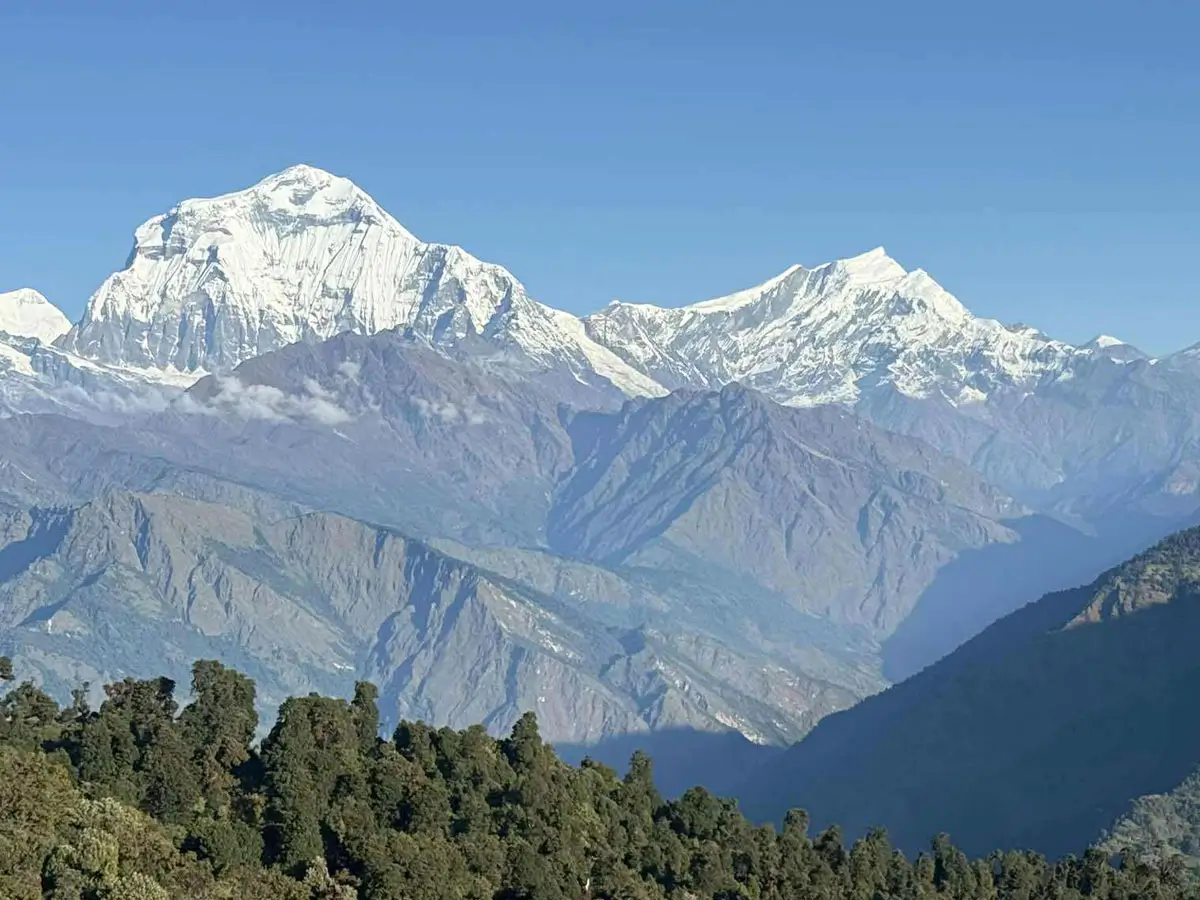
Dhaulagiri View from Poon Hill!
What time does the sun rise at Poon Hill?
Sunrise at Poon Hill changes throughout the year. It generally occurs earlier during late spring and summer and later during winter.
For example, in October, sunrise is approximately 6:00–6:20 AM, while in November it can occur around 6:20–6:45 AM. Exact times vary by date, and the surrounding mountain horizon can affect when the sun becomes visible.
To enjoy the experience without rushing, plan to reach Poon Hill approximately 15–30 minutes before sunrise.
Most trekkers leave Ghorepani around 60–90 minutes before the expected sunrise, depending on their pace.
Outfitter Himalaya's Local Tip: Ask your guide to confirm the next morning's sunrise time and weather forecast before going to bed. Don't rely on a fixed departure time year-round.
How Long Does It Take to Hike from Ghorepani to Poon Hill?
The sunrise hike from Ghorepani to Poon Hill generally takes 45–60 minutes uphill, although slower trekkers may need up to 90 minutes.
The trail climbs through forest, mainly along stone steps, gaining approximately 350 meters in elevation.
You don't need technical climbing experience, but the continuous uphill section can feel demanding in the dark, especially in cold weather.
After enjoying the sunrise, most trekkers return to Ghorepani in approximately 30–45 minutes for breakfast.
Which Mountains Can You See from Poon Hill at Sunrise?
Poon Hill offers a panoramic view of the Annapurna and Dhaulagiri mountain ranges. On a clear morning, some of the most prominent mountains include:
Mountain
Elevation
Dhaulagiri I
8,167 meters
Annapurna I
8,091 meters
Annapurna South
7,219 meters
Nilgiri
7,061 meters
Machhapuchhre (Fishtail
6,993 meters
Tukuche Peak
6,920 meters
Hiunchuli
6,441 meters
Dhaulagiri dominates the western skyline, while Annapurna South and Machhapuchhre are among the most recognizable peaks in the panorama.
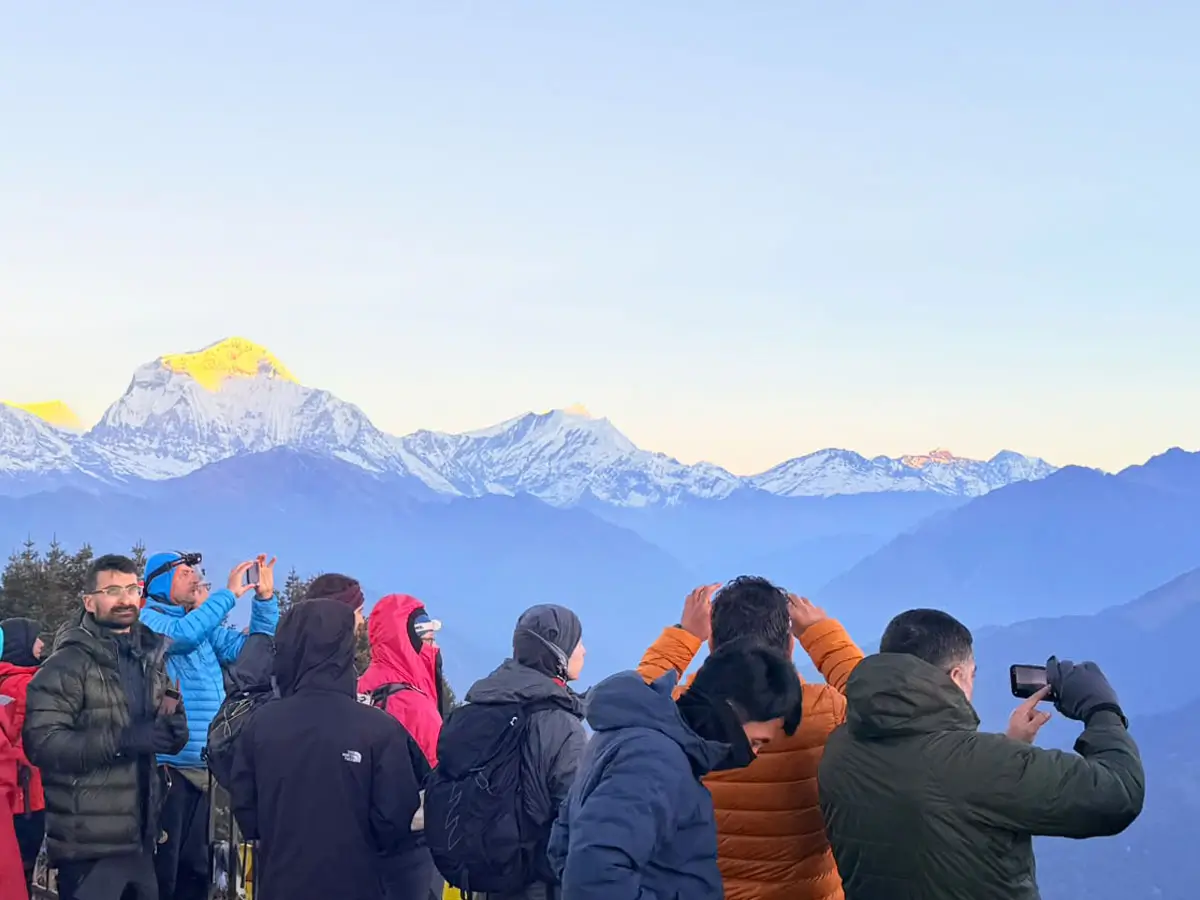
The mountains do not all light up at exactly the same moment. As daylight increases, the higher snow-covered summits catch the first warm colors while the valleys remain in shadow.
The visibility of individual peaks depends on cloud cover, haze, and the position of the observer.
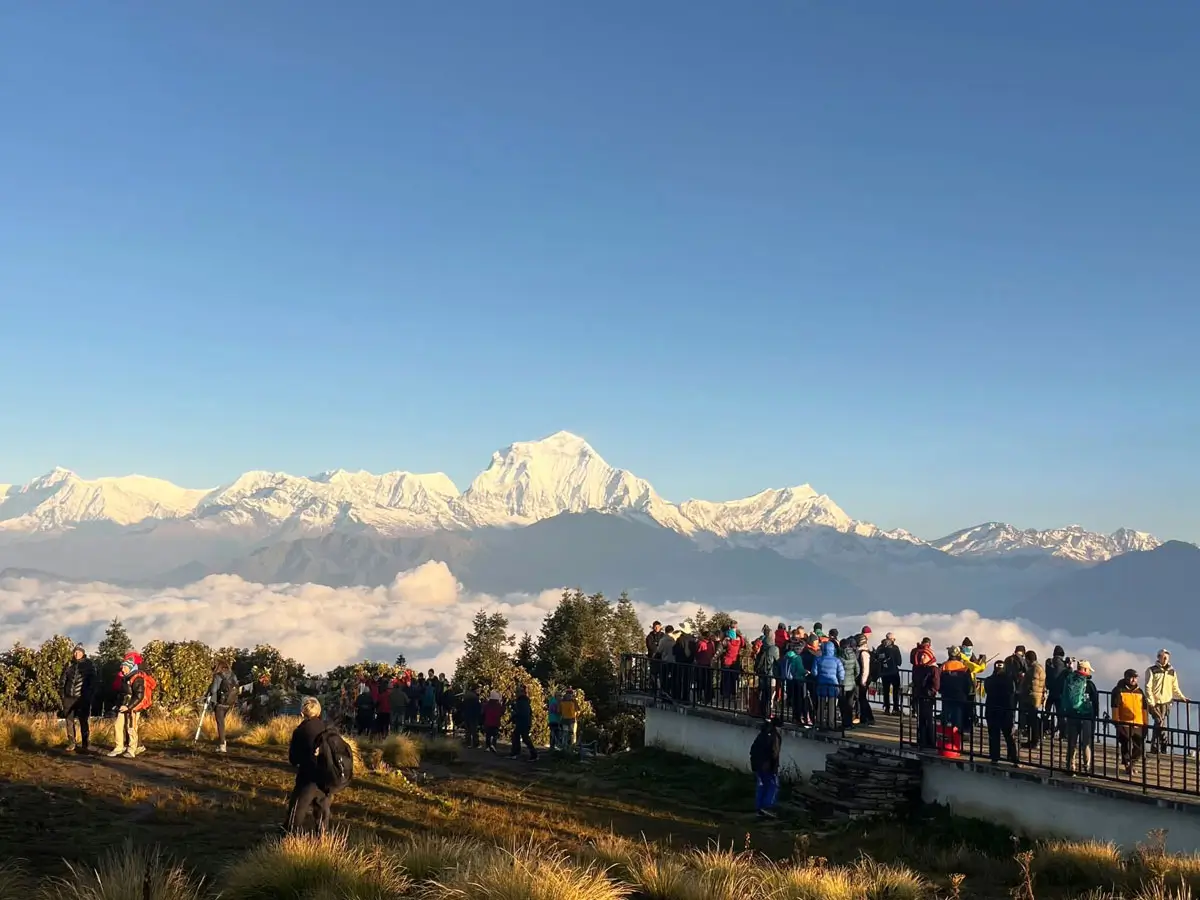
Sunrise from Poon Hill!
What Is the Best Time of Year for Poon Hill Sunrise?
The best times to enjoy the sunrise from Poon Hill are generally spring (March to May) and autumn (October to November).
Spring: March to May
Spring brings warmer trekking conditions and blooming rhododendron forests. March and April are particularly attractive for trekkers who want to combine mountain views with colorful forest scenery.
Clouds and afternoon haze can increase later in the season, so clear views are not guaranteed.
Autumn: October to November
Autumn is one of the most popular seasons for Poon Hill sunrise photography. After the monsoon, the mountain air is often clearer, and the Annapurna and Dhaulagiri ranges can appear particularly sharp.
Early mornings are chilly, especially in November, so warm layers are essential.
Winter: December to February
Winter can offer excellent mountain visibility, but mornings are much colder. Snow or ice may occasionally affect the trail, and appropriate footwear and insulation are important.
Monsoon: June to September
The monsoon brings frequent cloud cover, rain, and reduced mountain visibility. The landscape is green, but sunrise views are less predictable.
Trekkers should prepare for wet and slippery trails and check conditions before departure.
What Should You Wear for the Poon Hill Sunrise Hike?
The early-morning climb can be cold, even when daytime trekking conditions are comfortable.
Wear moisture-wicking trekking clothes with a fleece or thermal layer, and carry an insulated jacket for the viewpoint.
Bring a warm hat, gloves, comfortable hiking shoes, and a windproof or waterproof outer layer.
A headlamp is essential because you will usually begin walking before daylight.
Also carry drinking water, a small snack, and a camera or smartphone if you want to take photos.
Avoid wearing all your warm layers during the uphill climb. You may become sweaty and then feel much colder when you stop at the summit.
Best Photography Tips for Poon Hill Sunrise
Poon Hill is a popular destination for Himalayan landscape photography.
Arrive before sunrise to photograph the changing colors, not just the moment the sun appears.
Start with wide landscape photographs that include several peaks, then capture individual mountains as the light changes.
Try including prayer flags, the surrounding hills, or trekkers in the foreground to add depth and a sense of scale.
If you're using a smartphone, keep the lens clean, avoid excessive digital zoom, and adjust exposure to preserve detail in the bright snow.
Do not rush back immediately after sunrise. The light keeps changing, and the mountain panorama can become clearer as the morning progresses.
Is Poon Hill Sunrise Worth the Early Morning Hike?
Yes, for trekkers who enjoy mountain scenery, Poon Hill sunrise is one of the highlights of the Ghorepani trek.
The combination of a relatively short uphill hike, a high viewpoint, and panoramic views of the Annapurna and Dhaulagiri ranges makes it particularly rewarding.
However, the sunrise experience depends on the weather. Clouds can obscure the mountains, and the viewpoint may be crowded during peak trekking seasons.
Approach the morning with realistic expectations and enjoy the changing mountain atmosphere, even if the weather is not perfect.
Sunrise from Poon Hill!
Frequently Asked Questions About Poon Hill Sunrise
What time is sunrise at Poon Hill?
Sunrise times vary throughout the year. In October, sunrise is approximately 6:00–6:20 AM, while in November it is around 6:20–6:45 AM. Check the exact time for your trekking date.
What time should I leave Ghorepani for Poon Hill sunrise?
Plan to leave Ghorepani around 60–90 minutes before sunrise, depending on your walking pace and trail conditions. Aim to reach the viewpoint at least 15–30 minutes before sunrise.
How long is the Poon Hill sunrise hike?
The uphill hike generally takes 45–60 minutes, although some trekkers need up to 90 minutes. The return walk usually takes around 30–45 minutes.
Can you see Mount Everest from Poon Hill?
No. Mount Everest is not visible from Poon Hill. The viewpoint is famous for its views of the Annapurna and Dhaulagiri ranges, including Annapurna I, Dhaulagiri I, Annapurna South, and Machhapuchhre.
What is the best month for Poon Hill sunrise?
October and November generally offer excellent conditions for mountain visibility. March and April are also popular for pleasant trekking conditions and rhododendron blooms.
Is there an entrance fee for Poon Hill sunrise?
A separate local viewpoint entrance fee may be collected at Poon Hill. This is different from the permits required for trekking in the Annapurna region. Confirm the current amount and whether it is included in your trekking package before departure.
Is the Poon Hill sunrise hike difficult?
The sunrise hike is short but involves a continuous uphill climb on stone steps. It is manageable for many reasonably fit beginners, although the early start, cold weather, and altitude can make it tiring.
Can I visit Poon Hill without staying overnight in Ghorepani?
For the usual sunrise experience, staying overnight in Ghorepani is the most practical option. It lets you start the short uphill hike before dawn and return for breakfast afterward.
Stone stairways lead into hillside villages, forest paths climb toward Ghorepani, and an early-morning walk brings you to Poon Hill’s mountain panorama. Both the three-day and four-day treks share this approach. The main difference is [...]
Packing for the Ghorepani Poon Hill Trek is relatively straightforward, but the right clothing and equipment make a big difference to your comfort on the trail. Although Poon Hill is a short trek in Nepal, [...]
The Ghorepani Poon Hill Trek is moderately difficult and suitable for beginners who prepare for several days of hill walking. Its main challenges are stone-step staircases, repeated ascents and descents, and the early climb to [...]