The Poon Hill Trek in July and August offers a completely different Himalayan experience compared to the popular spring and autumn seasons. These months fall during Nepal’s peak monsoon period, when the Annapurna region transforms into a vibrant, green landscape filled with life, movement, and dramatic scenery.
While trekkers avoid the monsoon, those who choose to explore the Ghorepani Poon Hill Trek in July and August are rewarded with quieter trails, refreshing forest walks, and a deeper connection with nature. The hills become intensely green, waterfalls flow more powerfully, and the entire trekking environment feels alive.
Unlike the crystal - clear skies of autumn, monsoon trekking is defined by shifting clouds, misty valleys, and atmospheric mountain views. Peaks such as Annapurna South, Machhapuchhre, and Dhaulagiri often appear between clouds, creating a unique and dynamic Himalayan experience.
For travelers seeking solitude, lush scenery, and a different perspective of the Annapurna region, trekking to Poon Hill during Peak Monsoon can be both peaceful and memorable.
Trekking Poon Hill during Peak Monsoon - A Lush Monsoon Himalayan Escape
Ghorepani Poon Hill trek in Summer (July and August) offers a unique monsoon-season perspective on one of Nepal’s most popular short Himalayan treks. This trek takes place during Nepal’s monsoon season. Rainfall becomes more frequent, particularly at lower elevations, and weather conditions can change throughout the day.
Despite this, the Poon Hill trek remains accessible during the monsoon season due to its relatively low altitude (3,210m) and well-established trails. Located in the scenic Annapurna Region, Poon Hill stands at 3,210 meters and is famous for its breathtaking sunrise views over the Himalayas. Mornings are often the best time for trekking.
The trek usually begins in Pokhara and passes through charming villages such as Nayapul, Ulleri, and Ghorepani. Over 3-5 days, trekkers walk through dense forests, terraced fields, and traditional Gurung and Magar settlements, gradually ascending to the famous Poon Hill viewpoint.
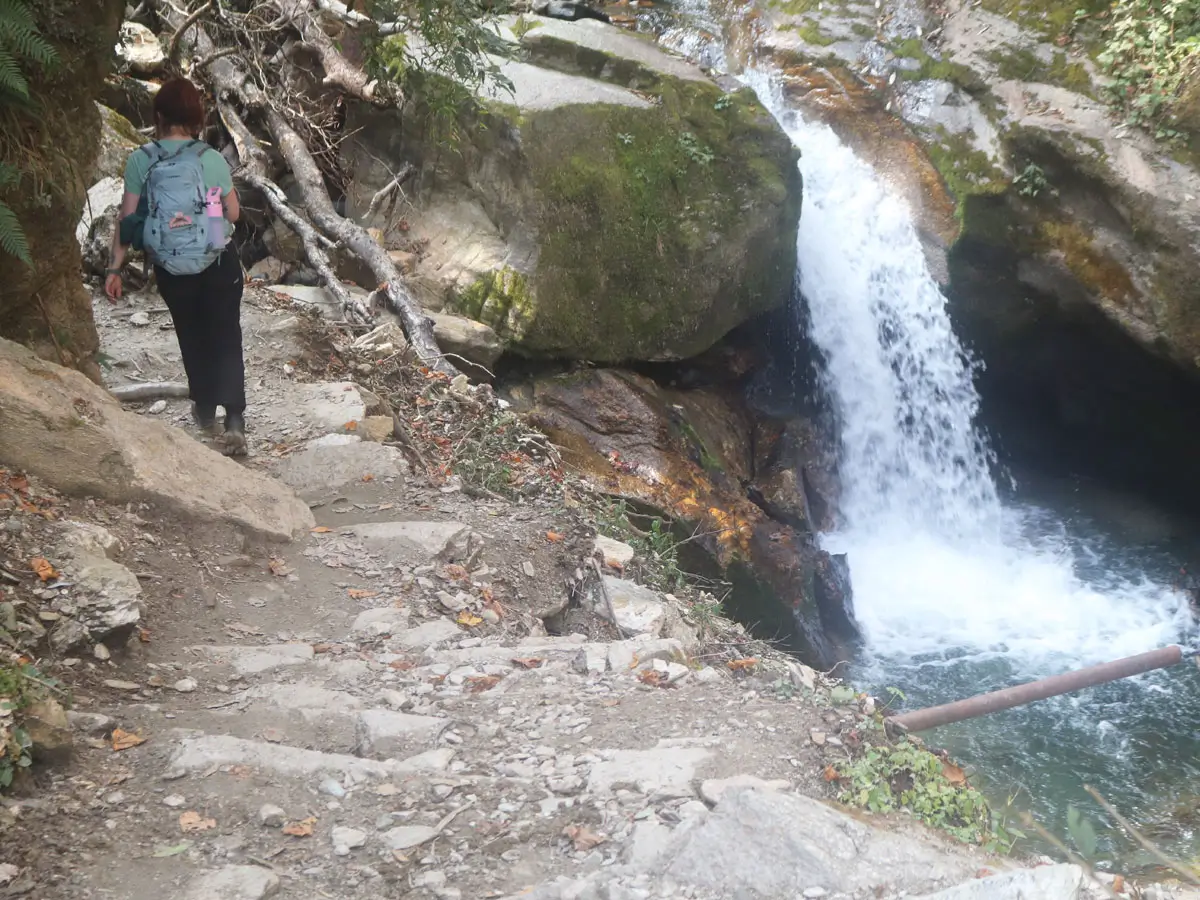
Water fall in Poon Hill Trek!
During the summer, the monsoon transforms the landscape into a lush green paradise. Forests become vibrant, waterfalls flow strongly, and mist often drifts through the hills, creating a dramatic and peaceful atmosphere. Although clouds and rain are more frequent, early mornings can still offer glimpses of iconic peaks such as Annapurna South and Machhapuchhre. As the day progresses, mist and light rain showers may appear, especially in forested sections.
For trekkers seeking fewer crowds, rich greenery, and a more tranquil Himalayan journey, the Poon Hill trek in July and August can be a rewarding and memorable adventure when planned properly.
Highlights of Poon Hill Trek in Monsoon
Lush Monsoon Green Landscapes at Their Peak: One of the biggest highlights of the Poon Hill trek in July and August is the incredibly vibrant greenery. The monsoon transforms the hills of the Annapurna Region into a rich, green paradise, with dense forests, lush vegetation, and terraced fields glowing with life, creating the year's most vibrant scenery.
Sunrise Views Through Mist and Clouds: Although mountain views are not always constant, early mornings often provide beautiful glimpses of Annapurna South, Machhapuchhre, and Dhaulagiri rising above the clouds.
Peaceful Trails with Fewer Trekkers: Unlike the busy spring and autumn seasons, the monsoon season sees significantly fewer visitors. This allows you to enjoy a more peaceful journey, quieter tea houses, and a deeper connection with nature and local culture.
Dramatic Mist, Clouds, and Himalayan Atmosphere: The monsoon imbues the trek with a mystical charm. Clouds drift through valleys and forests, creating ever-changing scenery. Around Poon Hill, the combination of mist and mountain silhouettes offers a unique and atmospheric experience.
Refreshing Forest Walks and Cool Environment: Trekking through shaded forests near villages like Ghorepani becomes especially enjoyable during the monsoon. The air feels fresh and cool, making long walks more comfortable despite the humidity.
Flowing Waterfalls and Streams: The Summer (July and August) brings many small waterfalls and streams to life along the trail, adding beauty, sound, and energy to the trek, making the journey visually engaging throughout.
Authentic Village Experience: Villages such as Ghorepani, Tadapani, and Ghandruk remain active with farming and daily life, giving trekkers insight into local culture during the monsoon season.
Short Yet Rewarding Himalayan Adventure: Starting near Pokhara, the trek typically takes just 3-5 days. Despite its short duration, the Poon Hill trek in July and August offers a complete Himalayan experience with nature, culture, and scenic diversity.
Unique Photography Opportunities: The mix of mist, rain, sunlight, and greenery creates dramatic, unique photographic conditions rarely seen during peak trekking seasons.
Weather and Temperature on Ghorepani - Poon Hill Trek in Monsoon
The Poon Hill Trek in July and August falls during Nepal's peak monsoon season. Weather conditions during the summer months are characterized by regular rainfall, high humidity, and frequent cloud movement across the Annapurna region.
Rainfall is more consistent compared to June, especially in lower elevations such as Nayapul, Tikhedhunga, and Ulleri. However, it rarely rains all day continuously. Most days follow a pattern in which mornings are relatively calm, then cloud cover increases and rain showers occur later in the afternoon or evening.
Despite the rain, the landscapes become exceptionally vibrant. Forests feel cooler, the air becomes fresh, and the entire trekking environment turns lush and alive.
Daytime Temperature in July and August
Daytime temperatures remain warm and comfortable for trekking, though humidity can make lower sections feel warmer.
Lower elevations (1,000–1,800 m): 20°C – 28°C
Ghorepani area (around 2,800 m): 14°C – 20°C
When the sun appears between clouds, it can feel warmer, especially in open areas.
Morning Temperature
Mornings are generally cooler and are the best time for trekking and sunrise viewing.
Ghorepani / Poon Hill (3,210 m): 7°C – 12°C
Trekkers usually hike early in the morning to enjoy clearer conditions before clouds develop.
Nighttime Temperature
Evenings and nights remain mild compared to colder seasons, but still require light warm clothing.
Ghorepani: 8°C – 12°C
A light jacket or fleece is sufficient for most trekkers.
Typical Weather Pattern in Monsoon Months
Common weather conditions during July and August include:
Frequent rain showers, especially in the afternoon
High humidity in the lower valleys
Cloud cover is moving across the mountain ridges
Clear or partially clear mornings
Lush green forests and active waterfalls
Monsoon Atmosphere on the Trail
The Poon Hill Trek in July and August is less about constant mountain visibility and more about experiencing the Himalayas in motion. Mist rising from valleys, rain refreshing the forests, and clouds shifting across peaks create a unique and immersive trekking environment.
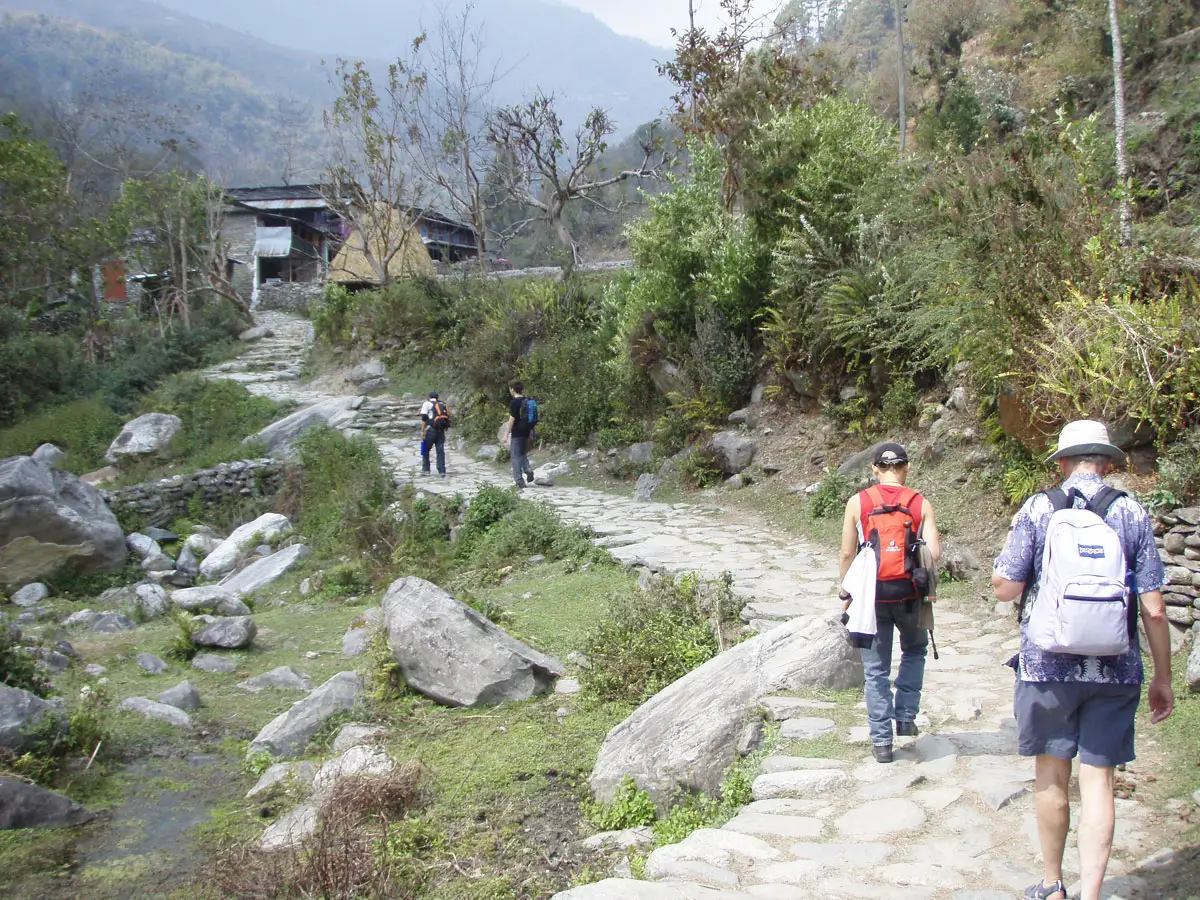
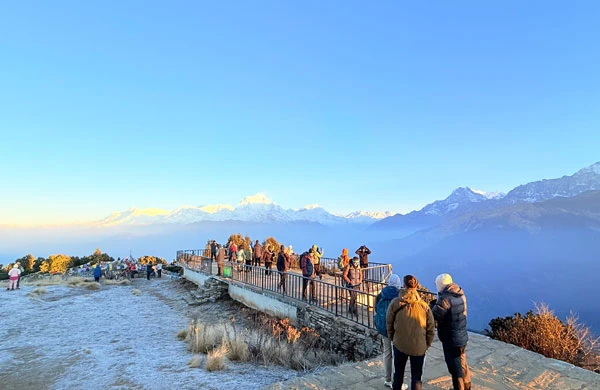
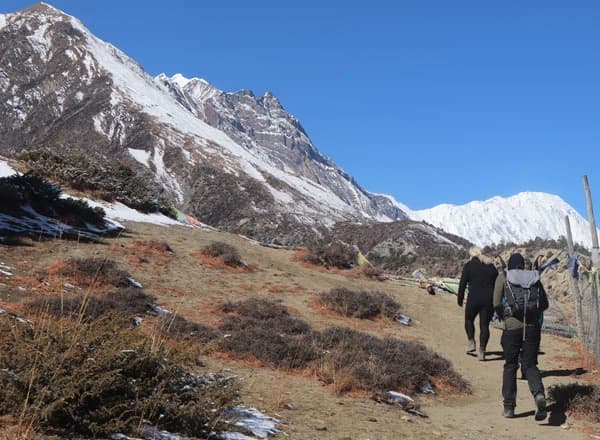
Walking towards Poon Hill!
Best Ghorepani - Poon Hill Trek During Monsoon/Summer
We have many trekking Itineraries that include a visit to Poon Hill View Point, and some of the most popular Ghorepani-Poon Hill Trek itineraries for Monsoon season (July and August) are:
Poon Hill Trek – 3 Days: Poon Hill Trek is a short 3-day trek that starts and ends in Pokhara and is suitable for those who want a short trek in the Annapurna region and are already in Pokhara, or who want to start and end the Trek in Pokhara.
Ghorepani-Ghandruk Trek - 4 Days: This is a 4-day Ghorepani – Poon Hill Trek that starts and ends in Pokhara, includes treks to Tadapani and Ghandruk, and is suitable for those already in Pokhara looking for a private or small-group trek.
Ghorepani Poon Hill Trek - 10 Days: The 10-day Ghorepani Poon Hill Trek starts and ends in Kathmandu and includes a tour of Kathmandu, a tour of Pokhara, and 4 days of trekking to Poon Hill, suitable for those looking for a packaged tour from arrival to departure.
Annapurna Panorama Trek- 5 Days: The 5-day Annapurna Panorama Trek starts and ends in Pokhara, and this itinerary includes a trek to Poon Hill and also Jhinu Hot Spring.
Khopra Ridge with Poon Hill- 8 Days: The 8-day Khopra Trek with Poon Hill starts and ends in Pokhara and includes a trek to Khopra Ridge (Khayer Lake) and Poon Hill.
Poon Hill – ABC and Mardi Himal – 17 Days: This 17-Day Poon Hill, ABC, and Mardi Himal Trek is suitable for trekkers who want to spend many days in the Himalaya and is for older trekkers, as it is a lower-altitude trek.
ABC Via Poon Hill Trek- 14 Days: The 14-Day itinerary starts and ends in Kathmandu and also includes your arrival and departure days to and from Nepal, plus a day tour in Kathmandu. This Trek is suitable for those looking for a small-group packaged trek.
Why Trek Poon Hill in Monsoon - Benefits of Poon Hill Trek in July and August
Trekking to Poon Hill in July and August may not be the most conventional choice, but for the right traveler, it offers a deeply rewarding, unique Himalayan experience. These months reveal a different side of the Annapurna region–one that is quieter, greener, and more atmospheric.
Peak Greenery and Fresh Landscapes
July and August bring the full strength of the Monsoon, transforming the Annapurna foothills into a lush, living landscape. Forests become lush and vibrant, terraced farms glow in bright green, and hillsides appear refreshed after rainfall.
Unlike the dry winter conditions or the dusty trails of late spring, the environment feels alive and full of natural energy during this period.
Fewer Trekkers and Peaceful Trails
The monsoon months are considered the off-season for trekking in Nepal. As a result, the Ghorepani Poon Hill Trek in July and August sees significantly fewer visitors, which means:
Quieter trails
Less crowded viewpoints
A more personal trekking experience
For travelers who prefer solitude over busy trekking routes, this is one of the biggest advantages.
Refreshing and Cooler Trekking Environment
Although rain is present, it often cools down the environment, especially within forest sections. The air feels fresh, and the temperature remains comfortable for walking, unlike in hotter summer conditions in cities.
The occasional rain showers also reduce dust, making the trails cleaner and more pleasant.
Dramatic and Atmospheric Mountain Views
Instead of constant clear skies, July and August offer a more dynamic Himalayan experience. Clouds move across valleys, mist rises from forests, and mountain peaks appear suddenly through openings in the sky.
This creates a sense of mystery and beauty that many trekkers find more memorable than predictable, clear-weather views.
Waterfalls and Active Natural Features
With increased rainfall, small streams and waterfalls become more visible along the trekking route. These flowing water features add sound, movement, and life to the landscape.
The Budhi Gandaki-like energy (for analogy) isn’t here, but the Annapurna foothills still feel active and alive.
Authentic Agricultural Life in Villages
July and August are important farming months in mountain communities. Trekkers passing through villages like Ghandruk, Ghorepani, and Tadapani can observe local people working in the fields, planting crops, and going about their daily lives.
This adds a strong cultural dimension to the trekking experience.
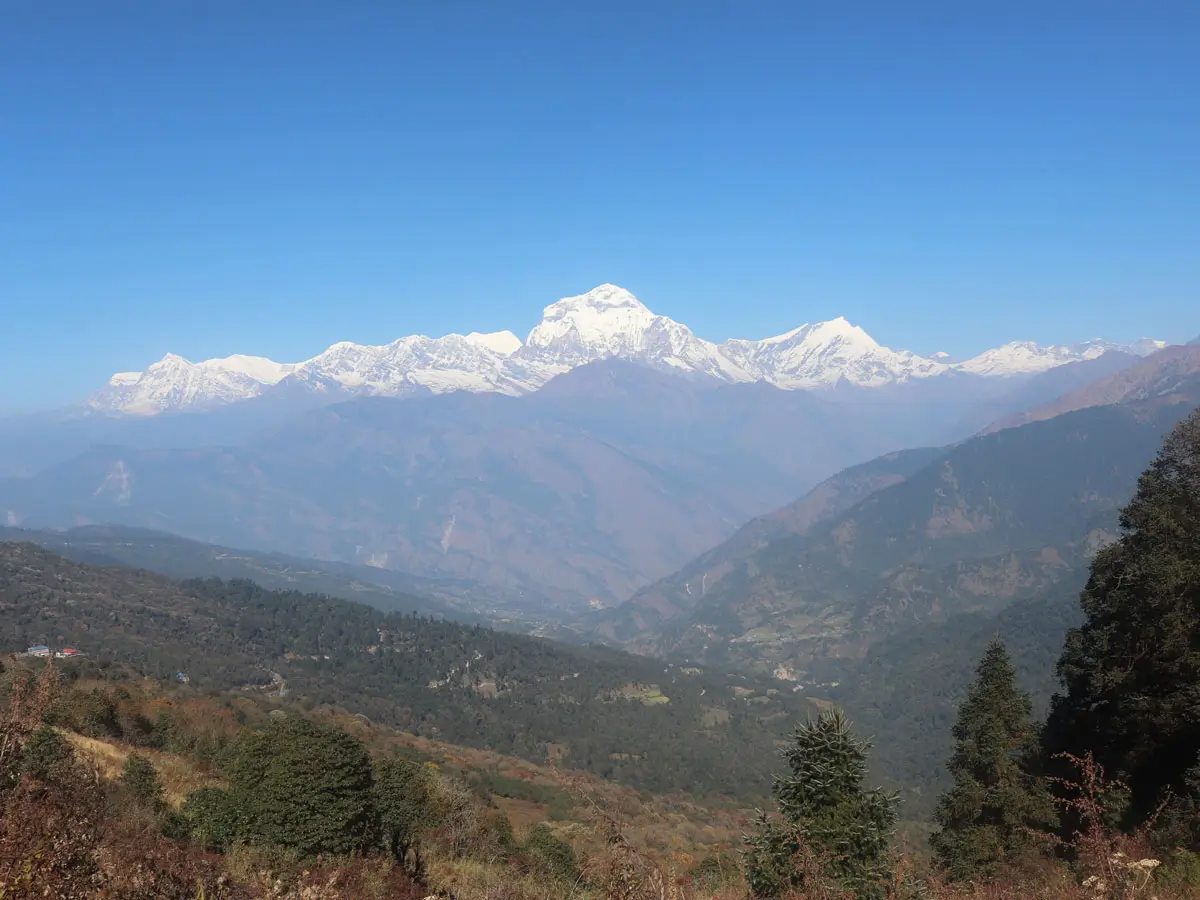
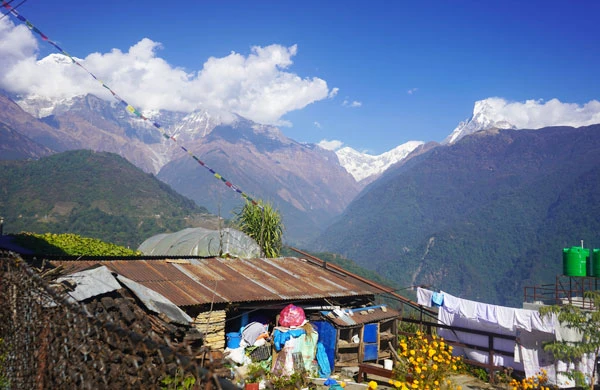
Himalaya View on Ghorepani -Poon Hill Trek!
Great for Photography Enthusiasts
The combination of lush greenery, moving clouds, and changing light conditions creates excellent opportunities for unique photography. Even though mountain views may be partially hidden at times, peaks like Annapurna South and Machapuchhre can still appear dramatically through the clouds during early mornings.
Ideal short Trek, even in the monsoon
Unlike high-altitude treks, the Poon Hill route remains relatively safe and manageable during the Monsoon because:
It says below extreme altitudes
Trails are well-established
Lodges remain open
This makes it one of the best trekking options in Nepal during the rainy season.
The Monsoon Perspective
The Poon Hill Trek in July and August is not about perfect blue skies, it's about experiencing the Himalayas in their most natural and dynamic state.
For trekkers who appreciate solitude, vibrant landscapes, and a more immersive experience, this season offers a completely different, memorable journey.
Cons of Poon Hill Trek In July and August – Disadvantages of Poon Hill Trek in Monsoon
While the Poon Hill Trek in July and August offers lush scenery and peaceful trails, it also falls during Nepal’s peak monsoon season. Trekkers should understand these seasonal challenges to prepare properly and set realistic expectations.
Frequent Rainfall Throughout the Day
July and August receive the highest rainfall of the year in the Annapurna region. Rain can occur more frequently than in June, sometimes extending beyond brief afternoon showers.
Although it does not rain continuously every day, trekkers should be prepared for wet conditions and sudden weather changes.
Limited Mountain Visibility
The weather at Poon Hill in July and August is often cloudy and misty, which can block views of the Himalayas. Unlike spring and autumn, clear mountain views are not guaranteed during monsoon months. Clouds often cover peaks such as Annapurna South and Machhapuchhre, especially during midday.
Early mornings may still offer partial views, but visibility can change quickly.
Slippery and Muddy Trails
Continuous moisture makes trails muddy, especially in forested areas, and stone steps slippery, particularly between Tikhedhunga, Ulleri, and Ghorepani.
Careful walking, proper footwear, and trekking poles become important for safety.
Leeches and Insects in Forest Sections
During the monsoon, leeches are more common along forest trails in the Annapurna Region. While harmless, they can be uncomfortable for some trekkers.
High humidity and Sweating
Trekking to Poon Hill in July and August often involves higher humidity levels. Even at moderate temperatures, the air can feel heavy, making uphill sections more physically demanding than in drier seasons.
Possible Travel Delays
Weather conditions can sometimes affect transportation to and from Pokhara. Road travel may be slower due to rain, and occasional flight delays can occur, so it’s wise to keep some flexibility in your itinerary.
A Realistic Perspective
Despite these challenges, the Poon Hill Trek in July and August remains manageable for prepared trekkers. With the right gear, early starts, and a flexible mindset, many of these conditions can be handled comfortably.
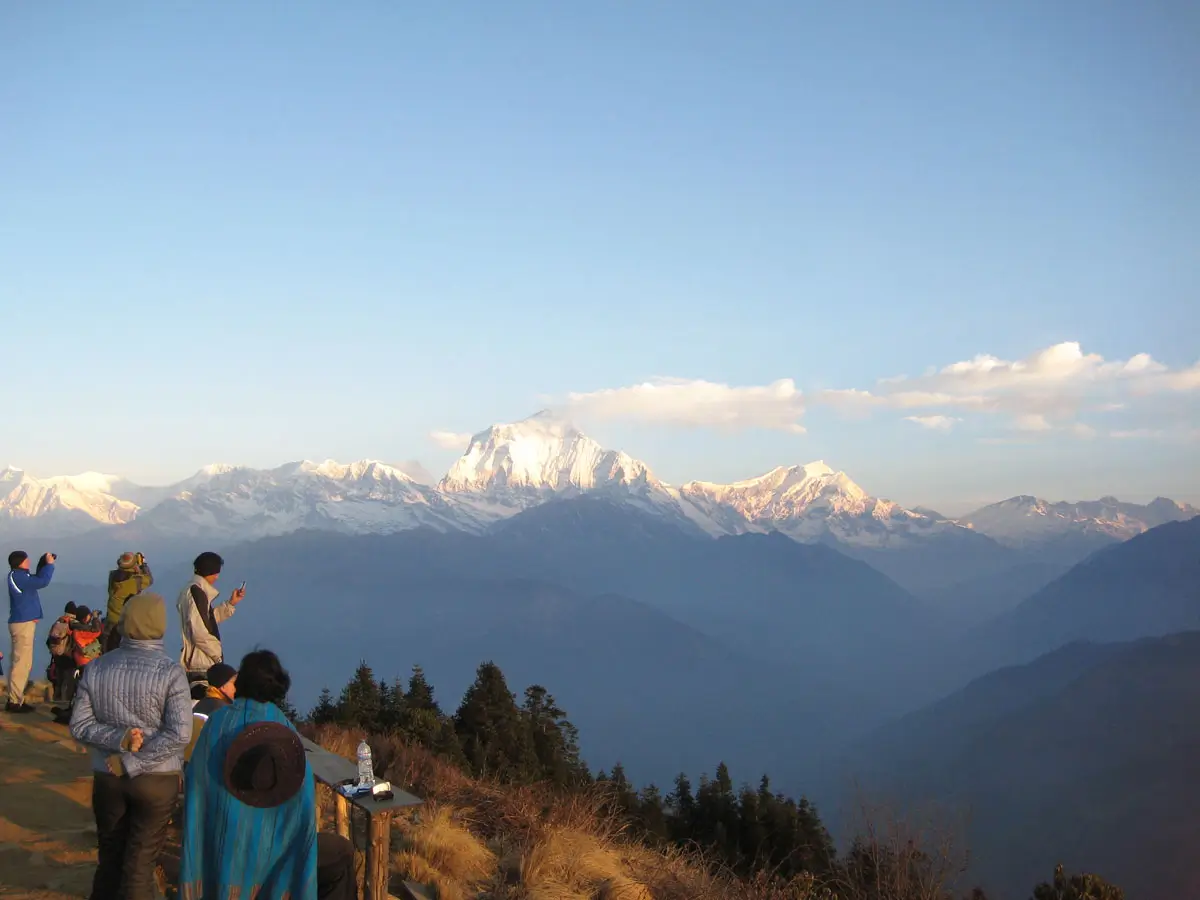
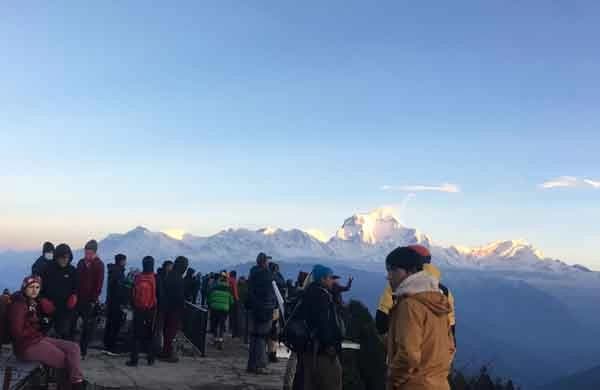
Himalaya view from Poon Hill!
Difficulty of the Poon Hill Trek in July and August
The Poon Hill Trek in July and August remains moderate and beginner-friendly, but monsoon conditions can slightly increase the difficulty.
The main challenges during this season come from:
slippery trails after rainfall
muddy sections in forest areas
humidity in lower elevations
The route itself poses little high-altitude risk (the highest point is 3,210 m at Poon Hill), so altitude sickness is rarely a concern. However, extra care is needed while walking on wet stone steps, especially between Ulleri and Ghorepani.
With proper footwear, steady pacing, and basic preparation, most trekkers can comfortably complete the trek even during monsoon months.
Essential Packing Tips for Poon Hill Trek in July and August
Packing the right gear is important for a comfortable monsoon trekking experience in Nepal.
Rain Protection: Carry a waterproof jacket, poncho, and backpack rain cover to stay dry during sudden showers.
Proper Footwear: Wear water-resistant trekking shoes with a strong grip to handle wet and slippery trails.
Waterproof Storage: Use dry bags or plastic covers inside your backpack to protect clothes and electronics.
Extra Socks and Quick-Dry Clothes: Humidity and rain can keep clothes damp, so pack extra socks and quick-dry clothing.
Basic Insect Protection: Bring insect repellent and long socks to deal with leeches in forest areas.
Is it possible to do the Poon Hill Trek during the monsoon?
Yes, the Poon Hill Trek in July and August is possible. The trail remains open, and many trekkers complete it successfully with proper preparation.
How much does it rain during July and August?
Rainfall is frequent during these months, especially in the afternoon and evening. However, it usually does not rain all day continuously.
Will I see mountain views in July and August?
Mountain views are less consistent due to cloud cover. However, early mornings often provide clear or partial views from Poon Hill.
Is the Poon Hill Trek difficult in the monsoon?
The trek remains beginner-friendly, but monsoon conditions like slippery trails and humidity can make it slightly more challenging than in dry seasons.
Yes, teahouses along the route stay open during the monsoon, although fewer trekkers visit during this period.
Are leeches a problem on the Poon Hill Trek?
Leeches can be present in forest areas during the monsoon. They are harmless but can be avoided with proper clothing and insect repellent.
What is the temperature during July and August?
Daytime temperatures range from 20°C to 28°C in lower areas, while mornings at Poon Hill are cooler at around 7°C to 12°C.
Is Poon Hill crowded in July and August?
No, this is the off-season, so the trails are quieter than during peak trekking months.
Do I need permits for the Poon Hill Trek?
Yes, trekkers need:
Annapurna Conservation Area Permit (ACAP)
TIMS Card
What is the best time of day to trek during the monsoon?
Early morning is the best time to trek, as weather conditions are usually clearer and more stable before afternoon clouds and rain develop.
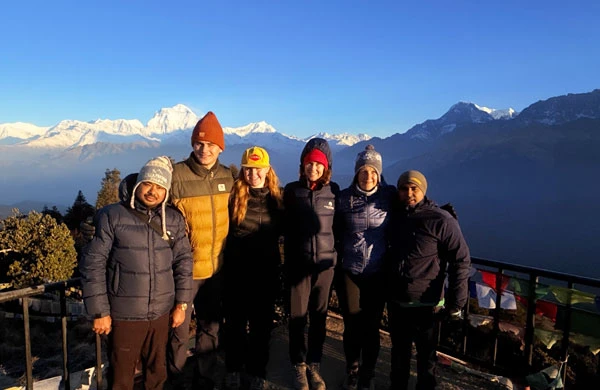
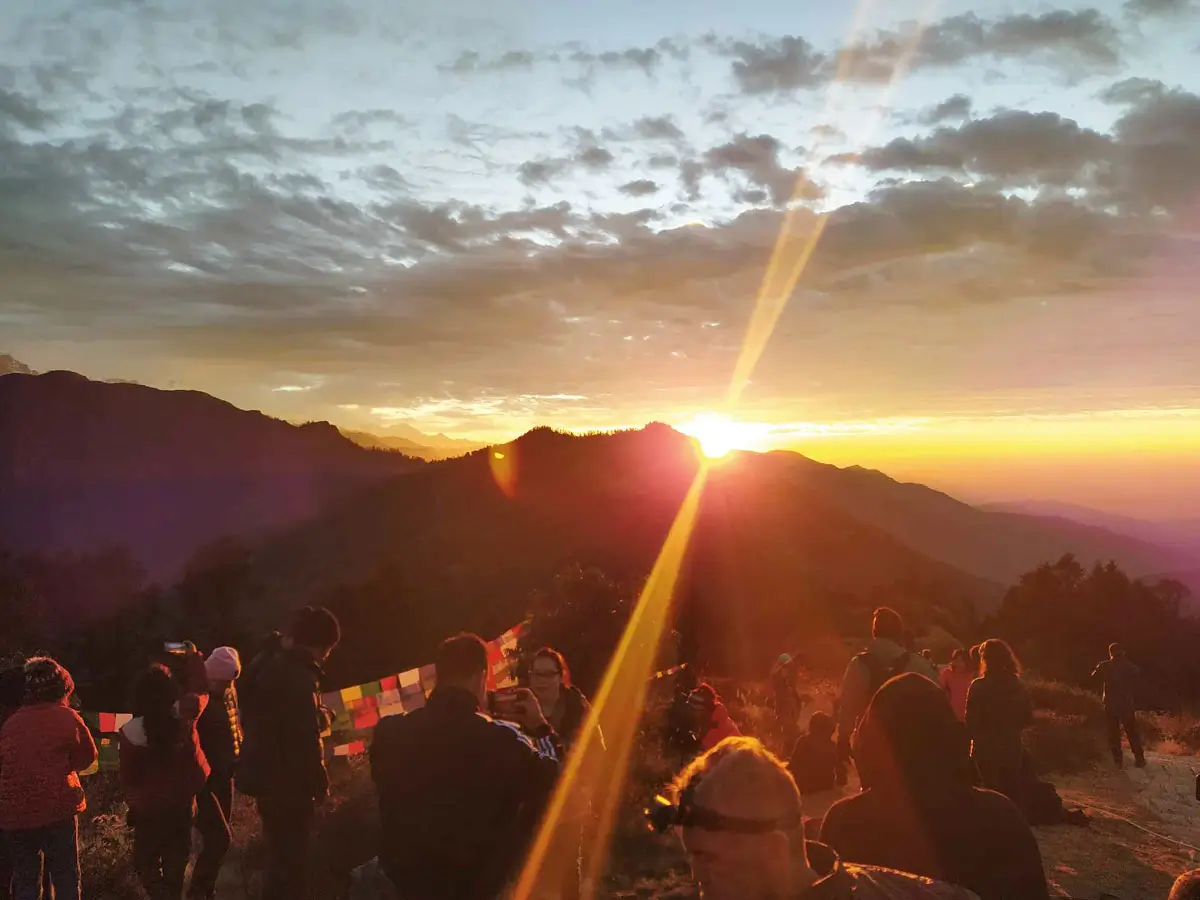
Sunrise from Poon Hill!!
Expert Tips for Poon Hill Trek in July and August
Trekking the Poon Hill Trek in July and August requires a slightly different approach compared to peak seasons. With proper preparation and the right mindset, monsoon trekking can be comfortable and highly rewarding.
Start Early to Avoid Rain
Monsoon weather usually builds up in the afternoon. Begin your trek early in the morning to enjoy clearer skies, better visibility, and a lower chance of rainfall.
Carry Proper Rain Protection
A waterproof jacket, a backpack rain cover, and quick-dry clothing are essential during these months. Sudden rain showers are common, and staying dry improves overall comfort.
Use Trekking Shoes with a Strong Grip
Wet trails and stone steps can become slippery. Wearing sturdy trekking shoes with good traction will help prevent slips, especially on steep sections.
Protect Against Leeches and Insects
Leeches are common in forest areas during the monsoon. Wearing long socks, using insect repellent, and checking your shoes regularly can help avoid discomfort.
Stay Hydrated in Humid Conditions
Humidity can make trekking feel more tiring. Drink enough water and take regular breaks, especially during uphill climbs.
Pack Smart and Keep Gear Dry
Use waterproof bags or dry sacks inside your backpack to protect important items such as electronics, clothes, and documents.
Be Flexible with Your Schedule
Weather conditions can change quickly during July and August. Keep a flexible itinerary and allow extra time if needed.
Carry a Light Warm Layer
Even during the monsoon, early mornings at Poon Hill (3,210 m) can feel cool. A light jacket is enough for comfort.
The Right Mindset for Monsoon Trekking
The Poon Hill Trek in July and August is about embracing changing weather, lush landscapes, and a quieter trekking experience. Instead of focusing only on clear views, enjoy the atmosphere, greenery, and unique Himalayan environment.
Conclusion: Is the Poon Hill Trek Worth It in July and August?
The Poon Hill Trek in July and August offers a completely different Himalayan experience compared to the classic trekking seasons of spring and autumn. Instead of clear blue skies and crowded trails, these monsoon months reveal a quieter, greener, and more atmospheric side of the Annapurna region.
The hills come alive with vibrant vegetation, waterfalls flow along the trail, and forests feel fresh after rainfall. While mountain views may not always be constant, early mornings still offer beautiful glimpses of peaks like Annapurna South and Machhapuchhre rising above the clouds.
One of the biggest advantages of trekking during the Monsoon is the peaceful environment. With fewer trekkers on the trail, the journey feels more personal, allowing a deeper connection with nature and local village life.
Although rain, humidity, and slippery trails require extra preparation, these challenges are manageable with proper gear and planning. For travelers who appreciate lush landscapes, unique scenery, and a calm trekking atmosphere, the Poon Hill Trek in the Monsoon (July and August) can be a surprisingly rewarding adventure.
The Annapurna Circuit Trek covers approximately 102 kilometers of walking on Outfitter Himalaya’s classic 15-day itinerary, including the Manang acclimatization hike. The journey unfolds through riverside forests, mountain villages and open valleys before crossing Thorong La [...]
The Annapurna Circuit Trek costs about USD 650–1,900 per person with Outfitter Himalaya, depending on the itinerary, group size, and services included. Outfitter Himalaya’s 15-day Classic Annapurna Circuit Trek has published group-size prices of USD [...]
Foreign trekkers need a trekking permit to trek the Annapurna Circuit, and we suggest settling it before you head out. Arranging the correct paperwork before departure helps avoid extra charges and interruptions once your journey [...]