April is one of the best months for the Annapurna Circuit Trek, combining warmer valley walks, spring flowers and dramatic mountain scenery. However, Thorong La Pass at 5,416 meters remains a serious high-altitude crossing, where freezing temperatures, snow, and changing weather still require preparation.
Where Spring Flowers Meet Snow-Covered Mountains
Imagine stepping outside a mountain teahouse as the first sunlight touches the snowy ridges. A morning on the Annapurna Circuit can begin with sunlight reaching a village courtyard and end beneath mountains that still belong to winter. Along the forested sections, spring brings fresh color. Farther south, rhododendron flowers bring red and pink to the forest, adding a softer beauty to the vast Himalayan landscape. Higher in Manang, the landscape opens into wide valleys, stone settlements and snow-covered ridges.
This contrast makes the Annapurna Circuit Trek in April particularly memorable. You experience the changing landscapes around the Annapurna massif, from wooded hills to the exposed approach to Thorong La and the dry country beyond Muktinath. Routes continuing through Ghorepani add another spring highlight: rhododendron forests beneath the Annapurna and Dhaulagiri ranges.
April rewards preparation as much as enthusiasm; choosing the right itinerary, allowing time to acclimatize, and packing for both warm afternoons and freezing mornings will help you enjoy the journey.
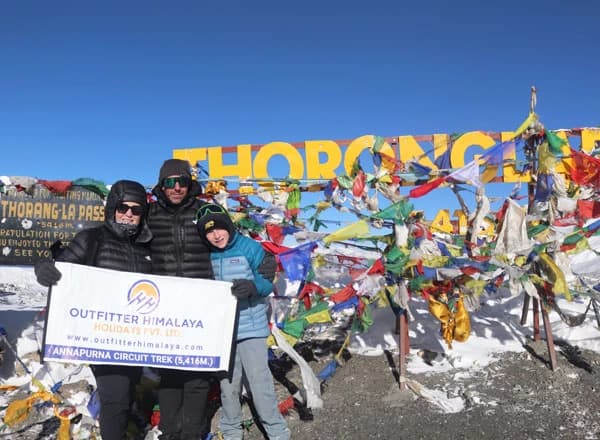
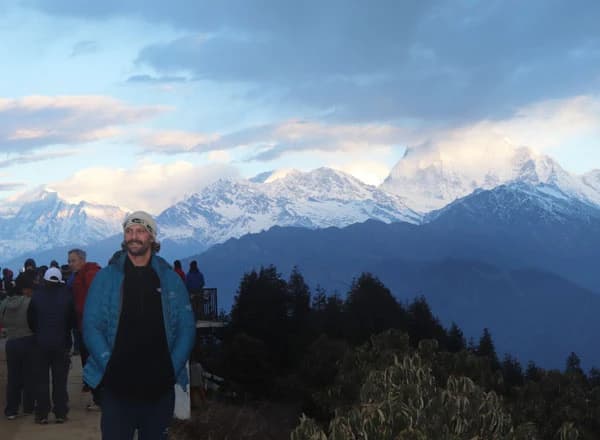
Guest enjoying the trek in April!
What Makes the Annapurna Circuit Beautiful in April?
Snowy Mountains Above the Manang Valley
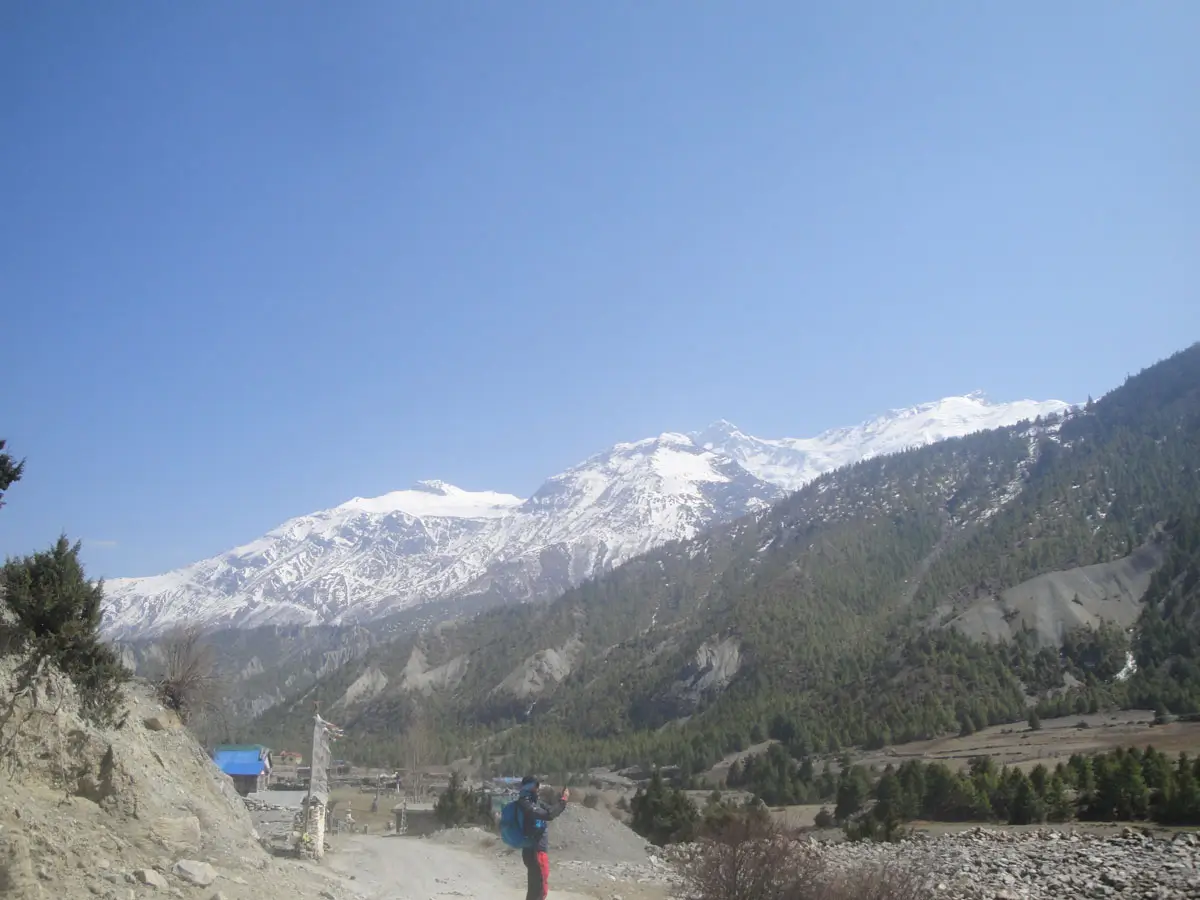
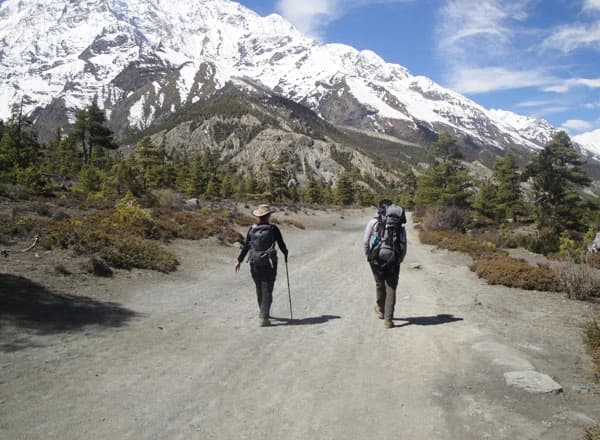
Around Pisang and Manang, the mountains become a constant presence. Annapurna II, Annapurna III, Annapurna IV, and Gangapurna rise above villages, grazing slopes, and rocky ridges.
Where your itinerary follows the higher trail through Ghyaru and Ngawal, the elevated perspective is a particular attraction. Clear mornings reveal the range's scale before afternoon clouds soften the view.
Rhododendron Forests Bringing Spring Color to the Trail
Rhododendrons are among the loveliest attractions of an April Annapurna Circuit Trek, particularly on itineraries continuing through Ghorepani. April can bring red and pink rhododendron blossoms to suitable forested elevations. Red and Pink blossoms brighten the forest canopy, sometimes framing glimpses of distant snowy mountains.
Flowering shifts with altitude, species, and the weather, so the entire Circuit does not bloom at once.
Ghorepani is especially worth including if flowers are a priority. Its extensive rhododendron forest offers a different spring experience from the dry upper Manang Valley. An itinerary ending after Muktinath misses this southern forest section, even though it completes the main pass crossing.
Blue Sheep and the Wildlife of the High Slopes
The open country around Manang provides habitat for blue sheep, also called Bharal or Naur. Their grey-brown coloring blends into the rocky slopes, so spotting a group can begin with noticing a small movement above the trail.
Sightings are possible, not guaranteed, and April is not an exclusive wildlife-viewing season. Watch quietly from a distance without approaching or feeding animals. Forests, birds, and the changing vegetation add interest lower down, even when larger wildlife remains out of sight.
The Unforgettable Crossing of Thorong La
At 5,416 meters, Thorong La marks both the highest point and a defining moment of the Circuit. Reaching its prayer flags after the long ascent brings a powerful sense of scale, with bare mountain slopes and snowy ridges stretching around you.
April provides favorable crossing opportunities, but snow and strong winds remain possible. Enjoying this highlight depends on suitable conditions, proper acclimatization, and a willingness to adjust the plan.
Poon Hill Sunrise and a Warm Finish at Tatopani
On itineraries including Tatopani and Ghorepani, the days after Thorong La offer more than a journey back to Pokhara. Tatopani offers a hot-spring visit, while the climb to Ghorepani returns you to forested hills.
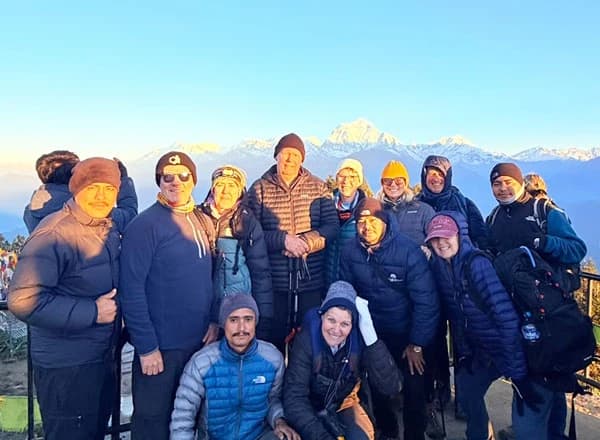
From Poon Hill, 3,210 meters, clear sunrise conditions reveal the Annapurna and Dhaulagiri ranges above the surrounding ridges. In April, this combination of flowers, forests and mountain light makes a fitting final chapter.
What Are the Weather and Temperatures Like on the Annapurna Circuit in April?
April brings warmer days to the lower valleys, comfortable walking conditions through many middle-elevation sections, and cold nights in the high mountains. You may walk in light layers near the start, then need thermal clothing, gloves, and an insulated jacket around Thorong Phedi.
Elevation creates major differences along the route, regardless of the month. Sunshine can feel warm while walking, but shade, wind, and stopping for a break can quickly change how cold you feel. A comfortable afternoon near the trailhead tells you little about the following week’s pre-dawn conditions above Thorong Phedi.
How Does Temperature Change with Elevation?
The following figures are approximate operator-published planning estimates, not measured climate averages or a forecast.
Location
Approximate elevation
Daytime estimate
Nighttime estimate
Besisahar
760 m
22°C to 28°C
12°C to 16°C
Dharapani
1,900 m
16°C to 22°C
6°C to 10°C
Chame
2,670 m
12°C to 18°C
0°C to 5°C
Upper Pisang
3,300 m
10°C to 16°C
−2°C to 3°C
Manang
3,540 m
8°C to 14°C
−5°C to 0°C
Thorong Phedi
Around 4,500 m
4°C to 9°C
−10°C to −5°C
Thorong La
5,416 m
−5°C to 0°C
−15°C to −10°C
Muktinath area
Around 3,700–3,800 m
8°C to 14°C
−3°C to 2°C
Thorong La is a crossing point, not an overnight stop. Its nighttime figures illustrate the cold possible around the early crossing period. Conditions can fall outside every range shown, and wind makes exposed areas feel colder.
What to Expect in the Morning, Afternoon, and Night
Morning: Cold starts at altitude, with often promising opportunities for mountain views, and shaded paths may retain ice.
Afternoon: Lower trails warm up, while clouds, showers, and stronger winds can develop.
Night: Temperatures drop quickly after sunset. Prepare for freezing conditions around Manang and colder nights nearer the pass.
The northern Manang and Mustang sections lie in a rain shadow, but that doesn't make them storm-free. Rain is possible lower down, and precipitation can fall as snow higher up.
Does It Rain or Snow in April?
April falls before the summer monsoon, but rain is still possible. Lower valleys and southern forest sections can receive spring showers, occasionally accompanied by thunderstorms. Around Manang and Mustang, the rain-shadow setting generally creates drier conditions, though it doesn't eliminate the possibility of storms.
Higher up, precipitation can fall as snow. Older snow and ice may also remain on shaded sections approaching Thorong La. A warm day in Manang does not guarantee a snow-free crossing. Our guide checks the mountain forecast and recent trail information before moving towards the pass.
Will the Mountains Be Clear All Day?
Mornings often provide better viewing opportunities, while afternoon cloud or spring haze can soften distant scenery. Clear views are possible throughout the month, but visibility varies from day to day. Keep your camera accessible in good conditions, and carry rain protection even when the morning starts bright.
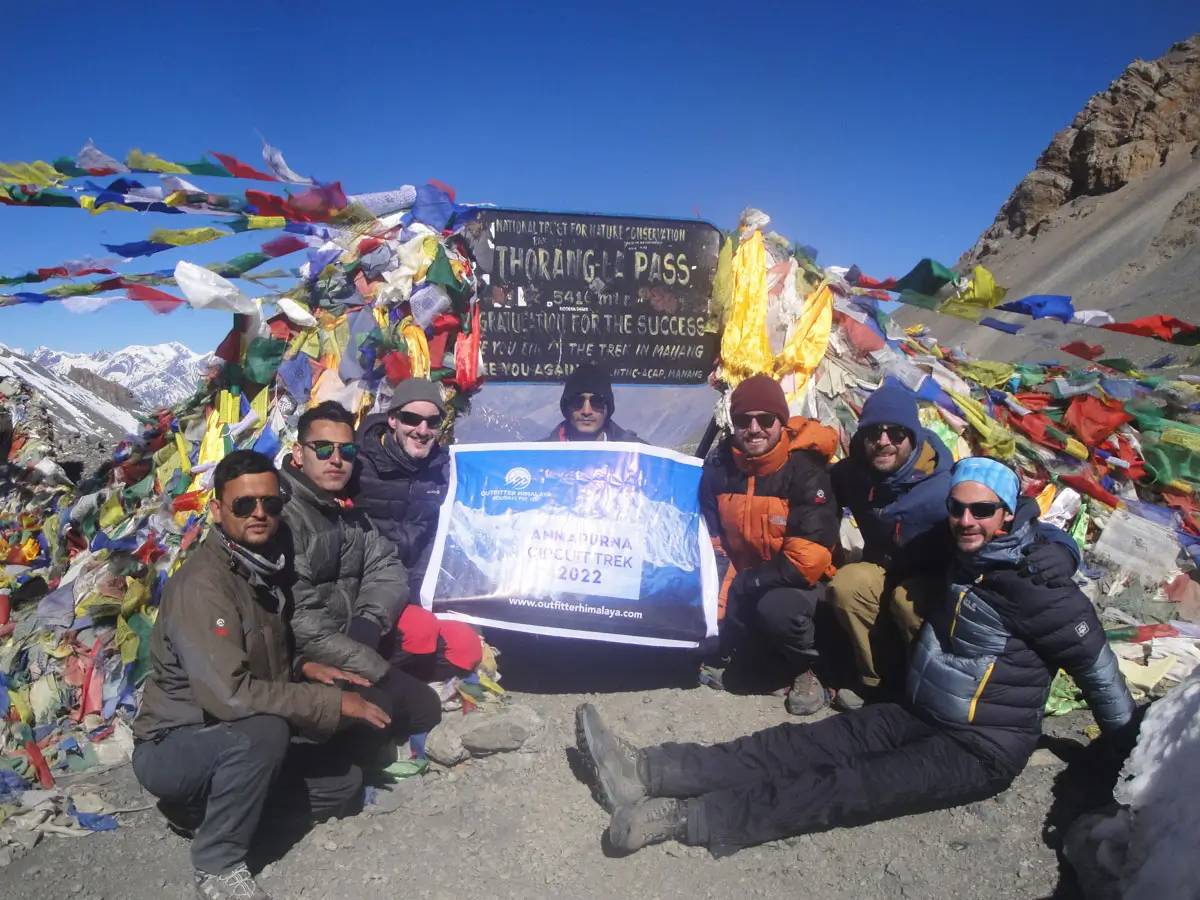
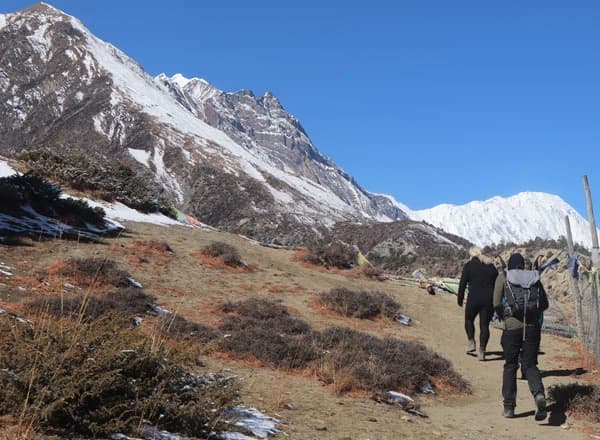
Our guest reached Thorong La Pass!
Early, Mid, or Late April: Which Part of the Month Should You Choose?
April gradually warms, but mountain conditions don't change on fixed dates. These periods offer useful planning guidance; recent snowfall and the forecast matter more for your actual crossing.
Early April: Fresh Spring Scenery and Colder Heights
Early April, roughly 1–10 April, suits trekkers who enjoy cooler walking conditions and mountains retaining a stronger winter appearance. Flowers may brighten lower forests, while shaded upper trails can still hold snow and ice. We suggest staying flexible on the Thorong La crossing rather than assuming spring has reached every elevation.
Mid-April: A Good Balance of Flowers and Walking Conditions
Mid-April, roughly 11–20 April, offers a good mix of spring warmth, flowering forests, and high-mountain scenery, and it is also a popular trekking period, so we suggest booking accommodation and guides in advance. Rhododendron displays depend on your route and elevation, with no single week guaranteeing peak bloom everywhere.
Late April: Warmer Valleys and Longer Days
Late April, roughly 21–30 April, appeals to travelers who prefer warmer lower-elevation walks. Flowers can remain attractive in higher forest sections, while afternoon cloud, haze and showers may become more noticeable.
How Should You Choose Your Dates?
For a balanced spring experience, mid-April is a sensible starting point, with your route and flexibility guiding the final choice.
Check when your itinerary reaches each highlight. Outfitter Himalaya's Classic Circuit schedules Thorong La before its later Ghorepani and Poon Hill stages, so you experience these places several days apart. A late-April departure may also place your crossing in May. Choose dates around the journey's key stages and your arrival in Nepal.
What Are the Annapurna Circuit Trail Conditions Like in April?
April often brings comfortable walking conditions to the lower and middle sections, but the terrain changes considerably as you climb. Expect a mix of forest paths, stone steps, rocky trails, and some road sections, with possible snow or ice near Thorong La. Conditions change substantially along the journey:
What Should You Expect Along Each Section?
Route section
What to expect
Lower approach towards Chame
Forest paths, stone steps and road sections; dust in dry weather and slippery patches after rain
Pisang to Manang
Open valley trails and higher village alternatives, with additional climbing on the upper route
Manang to Yak Kharka and Thorong Phedi
Rougher, exposed ground; lingering snow or frozen patches are possible
Thorong La to Muktinath
A demanding high crossing followed by a long descent; snow, wind and visibility determine conditions
Tatopani to Ghorepani and Poon Hill
A substantial uphill forest walk, stone steps and potentially slippery surfaces after showers
Which Section Needs the Most Care?
The Thorong La crossing is the most demanding section. The ascent from Thorong Phedi or High Camp combines altitude, cold, and exposure, followed by a lengthy descent towards Muktinath. Even in April, fresh snow can obscure the trail or slow progress.
Departure time and any need for traction equipment should follow the conditions and your guide’s assessment. Be prepared to delay or change plans if the crossing is unsuitable.
A substantial uphill forest walk, stone steps and potentially slippery surfaces after showers
How difficult is the Annapurna Circuit Trek in April, and is it Suitable for beginners?
The Annapurna Circuit Trek in April is strenuous, despite the favorable spring season. The main challenges are consecutive walking days, steep ascents and descents, and the reduced oxygen availability at higher elevations. Technical climbing skills are generally unnecessary in normal trail conditions, but good stamina and preparation remain essential.
Prepare for several days involving around five to seven hours of walking, with shorter stages where the itinerary limits altitude gain.
Can a first-Time Trekker Manage It?
A prepared beginner can consider the Circuit, particularly someone already comfortable with long hill walks. Build up through regular hikes, stair climbing, and back-to-back walking days using your intended boots and daypack.
Before booking, discuss your walking experience with Outfitter Himalaya and choose an itinerary that allows a realistic pace. A shorter package still crosses the same high pass, and upgraded accommodation does not reduce the trail's physical demands.
Which Is the Hardest Section?
The crossing from Thorong Phedi or High Camp over Thorong La to Muktinath is usually the hardest day. It combines the trek’s highest altitude with a cold early start, sustained ascent, and a lengthy descent. Outfitter Himalaya’s Short Circuit itinerary allows approximately nine hours for this stage; actual time varies with conditions and pace.
A guide should assess the forecast, recent snowfall, trail condition, and the group’s health before attempting the crossing. April does not guarantee that the pass will be suitable on your planned day.
How Much Acclimatization Do You Need?
Warmer weather does not prevent altitude sickness, and physical fitness does not protect you from it. Keep the scheduled acclimatization time in Manang and allow additional time if your response to altitude requires it.
Tell your guide about a new headache accompanied by nausea, dizziness, or unusual fatigue, and do not ascend if you suspect altitude illness. Worsening symptoms require descent. Confusion, difficulty walking normally or breathlessness at rest require urgent medical help and assisted descent.
April can make the walking more enjoyable, but a successful journey still depends on preparation, suitable conditions and responding honestly to how you feel.
What Are the Advantages and Disadvantages of Trekking the Annapurna Circuit in April?
April combines spring color with a high mountain adventure. Its main appeal is the variety: comfortable walks through lower valleys, flowering forests on suitable routes, and snowy peaks above Manang. However, popular trails and winter-like conditions around Thorong La still need consideration.
Advantages of trekking in April
Spring scenery: Flowering forests add color to routes. Rhododendrons brighten forested sections, particularly around Ghorepani on itineraries that include Poon Hill.
Warmer valley days: Lower sections are generally more comfortable. Warmer days make village walks and outdoor breaks more enjoyable than during winter, although exposed upper sections remain cold.
Mountain contrasts: Snowy peaks rise above increasingly lively villages and forests with rewarding photography opportunities when visibility is good.
An established trekking season: More travelers and operating services create a sociable atmosphere.
Varied itineraries: Combine the main Circuit with Poon Hill or continue towards Annapurna Base Camp.
Disadvantages
Busy accommodation: Popular overnight stops can feel crowded.
Cold upper sections: Warm afternoons below do not remove the need for winter clothing at altitude.
Possible snow disruption: Thorong La can still be affected by storms.
Variable visibility: Afternoon cloud and spring haze may obscure mountain views.
Dust and showers: Lower road sections can be dusty, and rainfall can make some paths slippery.
April suits travelers who value spring scenery and can accept both peak-season demand and high-mountain uncertainty.
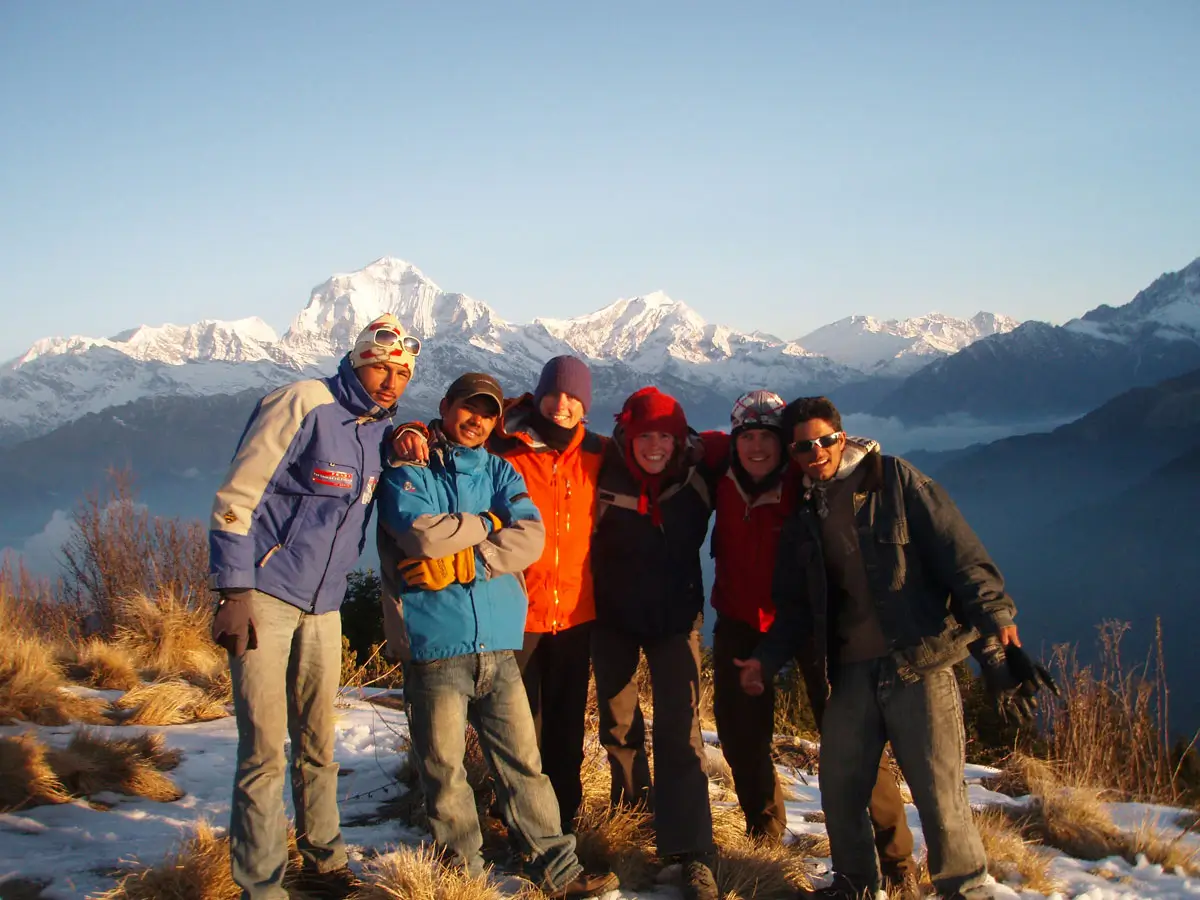
Himalayan View from Poon Hill in April!
Which Annapurna Circuit Itinerary Should You Choose for April?
The right itinerary depends on your available time, preferred accommodation, and the scenery you want to experience. All five options cross Thorong La, but they differ in duration, services, and later route.
Adds Poon Hill and the Annapurna Sanctuary for a longer mountain holiday.
Notes
These are total package durations, including their scheduled transfers and other activities—not continuous walking days.
For flowers and a varied spring journey, choose an itinerary that includes Ghorepani and Poon Hill. A shorter package still crosses the same high pass; upgraded accommodation also does not reduce the altitude challenge.
What Are Accommodation and Meals Like in April?
Expect teahouse accommodation along the trail, with facilities becoming simpler at higher stops. Bedrooms are often unheated, and shared bathrooms are common. Read the Annapurna Circuit Accommodation blog for details.
Meals commonly include dal bhat, soups, noodles, potatoes, porridge and eggs. Arrange dietary requirements before departure, carry suitable water treatment, and budget for drinks and personal extras. Learn more about the food and drinks on the Annapurna Circuit trail in our foods and drinks blog.
What Should You Pack for an April Trek?
Pack for changing elevations rather than the weather in Kathmandu:
Walking layers: Quick-drying tops, trekking trousers and a fleece.
Cold protection: Thermal layers, an insulated jacket, a warm hat and gloves.
Weather protection: Waterproof jacket and trousers, plus dry bags.
Footwear: Broken-in trekking boots and suitable socks.
High-pass essentials: Headlamp, trekking poles, sunglasses, sunscreen and lip protection.
Overnight equipment: A sleeping bag with a comfort rating appropriate for your highest overnight stop.
Personal items: Water treatment, regular medication, basic first aid and a power bank.
What Should You Know About Permits, Cost, and Travel Arrangements?
The standard Circuit requires ACAP and TIMS. Published fees for foreign non-SAARC trekkers are NPR 3,000 for ACAP and NPR 2,000 for TIMS. Nepal Tourism Board also lists the Circuit among routes requiring a licensed guide under its revised TIMS arrangements.
Porter arrangements differ: the Classic and Comfort packages include porters, while the Short, Pokhara-start and Circuit-with-ABC packages list them as extras. Compare the complete service rather than the headline price.
Choose insurance that explicitly covers trekking to 5,416 meters, altitude-related medical treatment, and medically necessary evacuation. Check exclusions and assistance procedures with the insurer. Keep time between the trek and your international flight for possible disruption.
Annapurna Circuit FAQS for April
Can beginners do the Annapurna Circuit in April?
Prepared beginners can consider it, especially those comfortable with consecutive days of hill walking. Choose a realistic itinerary, retain acclimatization time, and discuss your experience with the operator.
Is April Better Than October for the Annapurna Circuit?
Choose April for Spring flowers and the contrast between flowering forests and snowy mountains. October generally offers clearer skies after the monsoon. Both are popular trekking months, and neither guarantees perfect weather or an uncomplicated pass crossing.
Will there still be snow in April?
Yes, snow can remain or fall again around the upper route and Thorong La. Lower trails may feel like spring while the crossing remains wintry. Check conditions close to your crossing date.
Is April better than March or May?
April often offers a useful middle ground: warmer than early spring, with flowers and generally less pre-monsoon influence than later spring. March appeals for cooler conditions and May for warmer walking. Individual weather systems can outweigh these broad differences.
Can I experience Nepali New Year during the trip?
Nepali New Year falls around mid-April. Depending on your dates, celebrations may add interest to time in Kathmandu or Pokhara. Check that year’s calendar and local events rather than expecting organized festivities in every trail village.
Is the Comfort trek easier than the Classic trek?
Its accommodation and transport arrangements provide additional comfort, but both cross Thorong La. You still need preparation, acclimatization, and suitable mountain equipment.
Can I add Tilicho Lake in April?
An extension may be possible, but it needs additional itinerary planning and a separate assessment of snow, trail conditions, and acclimatization. It is not automatically included in the five packages compared here; take our Annapurna Circuit with Tilicho Lake itinerary for details.
Should I Book My April Trek in Advance?
Yes, especially if your dates are fixed, or you want particular accommodation. Spring is busy, and preferred lodges can fill quickly. Confirm your itinerary, guide, porter requirements, and accommodation arrangements once your travel plans are settled.
Conclusion: Is April the Right Time for Your Annapurna Circuit Adventure?
April offers a remarkable combination: spring forests below, mountain villages along the way, and the challenge of Thorong La above. Choose a route that includes the experiences you most want, with enough time to enjoy them.
April is one of the best months for the Ghorepani Poon Hill Trek, offering rhododendron flowers, warmer daytime walks, and Himalayan sunrise views from 3,210 meters. Expect busy teahouses, chilly mornings, and possible afternoon cloud [...]
The Ghorepani Poon Hill Trek in March combines the beginning of rhododendron season with warming days and opportunities for clear Himalayan views. Sunrise at 3,210 meters remains cold, and higher paths can still have snow [...]
The Annapurna Circuit Trek covers approximately 102 kilometers of walking on Outfitter Himalaya’s classic 15-day itinerary, including the Manang acclimatization hike. The journey unfolds through riverside forests, mountain villages and open valleys before crossing Thorong La [...]