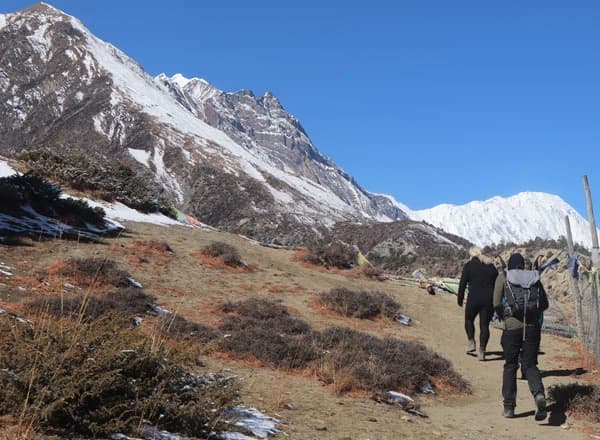
Mardi Himal Trek in December is a rewarding winter journey with generally dry days, crisp mountain views and peaceful trails. Early and mid- December usually offer the most manageable conditions, while snow or ice becomes more likely around High Camp and the Upper Viewpoint later in the month. With warm clothing, suitable footwear and flexible planning, Mardi Himal Base Camp trek is achievable for prepared beginners seeking frosted forests, golden sunrises and magnificent views of Machhapuchhre.
Mardi Himal Trek in December: Frosted Forests, Golden Sunrises and Fishtail Views
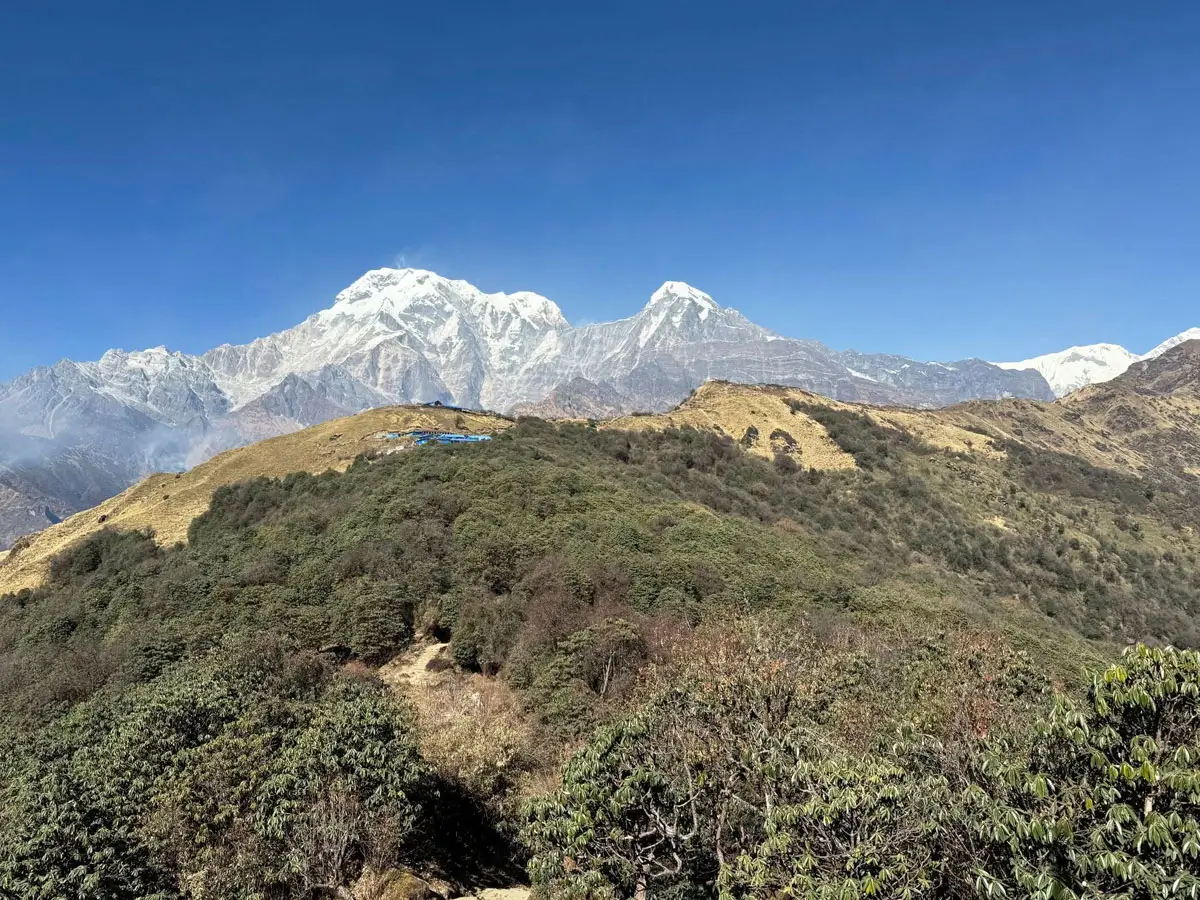
Mardi Himal Base Camp Trek in December offers a beautiful introduction to winter trekking in Nepal, combining peaceful rhododendron forests, open mountain ridges and close-up views of Machhapuchhre. As the trail rises from the green hills above Pokhara, the surroundings gradually change. Frost may rest on fallen leaves near Deurali, while shafts of winter sunlight pass through the forest. Higher above Low Camp, the forest begins to open, and Machhapuchhre (known as Fishtail Mountain) appears increasingly close. By the time you reach Badal Danda, the landscape has changed into a beautiful mountain ridge suspended above the clouds.
This gradual transformation gives the Mardi Himal Trek in December its special character. It is not simply a snowy version of the regular trek. The colder air, softer winter light and quieter teahouses create a noticeably different experience from the busy spring and autumn seasons.
Located in the Annapurna region and conveniently reachable from Pokhara, Mardi Himal is one of the most accessible mid-altitude ridge treks in Nepal. The Mardi trekking route passes through sheltered forests before climbing toward Low Camp, Badal Danda and High Camp at approximately 3,580 meters. From High Camp, trekkers usually make an early-morning ascent toward the Upper Viewpoint at approximately 4,120 meters.
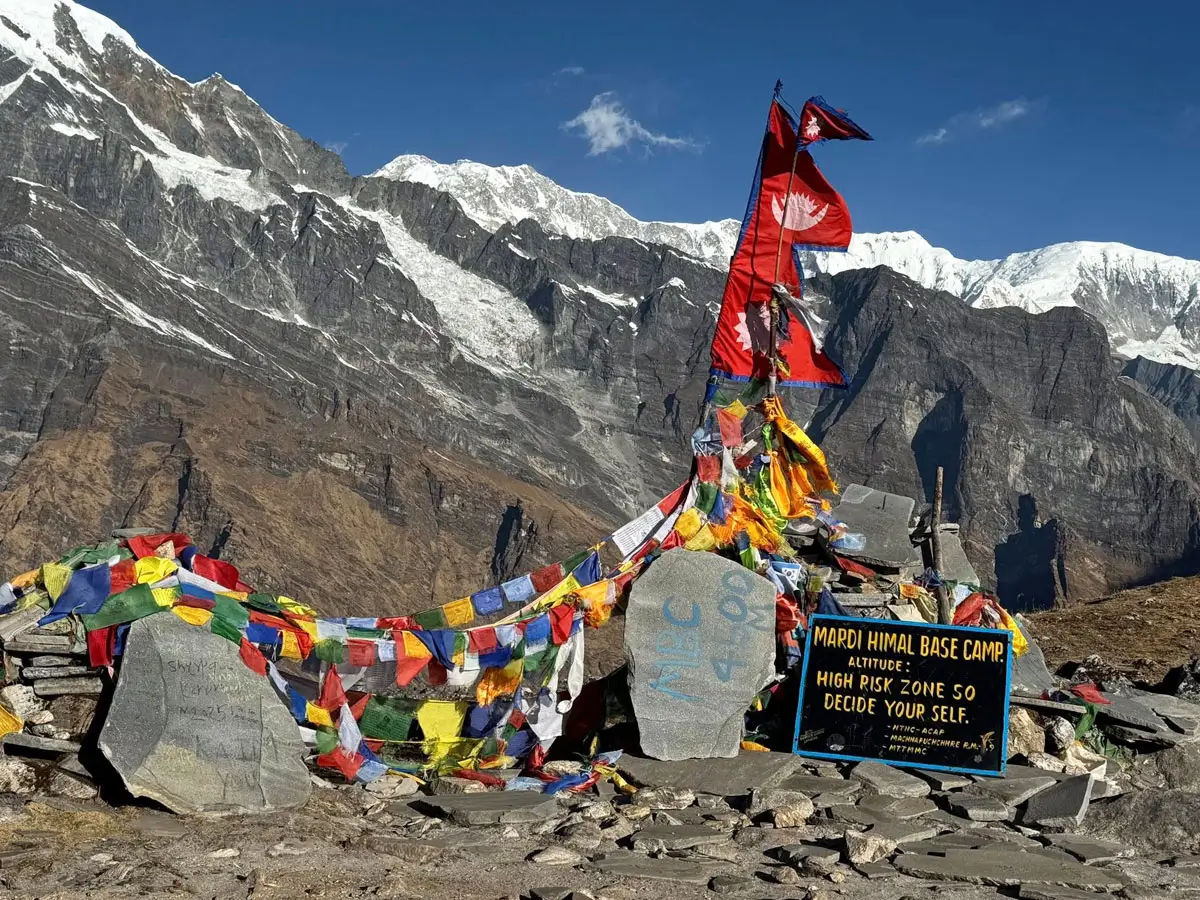
The Upper Viewpoint should not be confused with Mardi Himal Base Camp, which is generally described as around 4,500 meters. Many standard itineraries, including practical winter programs, use the Upper Viewpoint as the main objective because it already provides exceptional views of Machhapuchhre, Mardi Himal, Annapurna South and Hiunchuli. Continuing farther depends on the itinerary, fitness, daylight, and current trail conditions.
December is the beginning of winter in Nepal, but conditions do not remain identical, as early December often feels like a transition from late autumn, with relatively dry trails and manageable temperatures. Mornings and nights become colder as the month progresses, while the possibility of frost, ice, or snowfall increases around High Camp and the upper ridge.
Snow can make the landscape exceptionally beautiful, and you may encounter a dry ridge beneath a deep blue sky. This natural variation is part of the December experience. Despite reaching above 4,000 meters, Mardi Himal does not involve crossing a major mountain pass. The trek is generally considered moderate and can be completed by active beginners who can walk at a sensible pace and carry appropriate winter clothing. The forest climbs require stamina, while the colder pre-dawn walk from High Camp is usually the most demanding part.
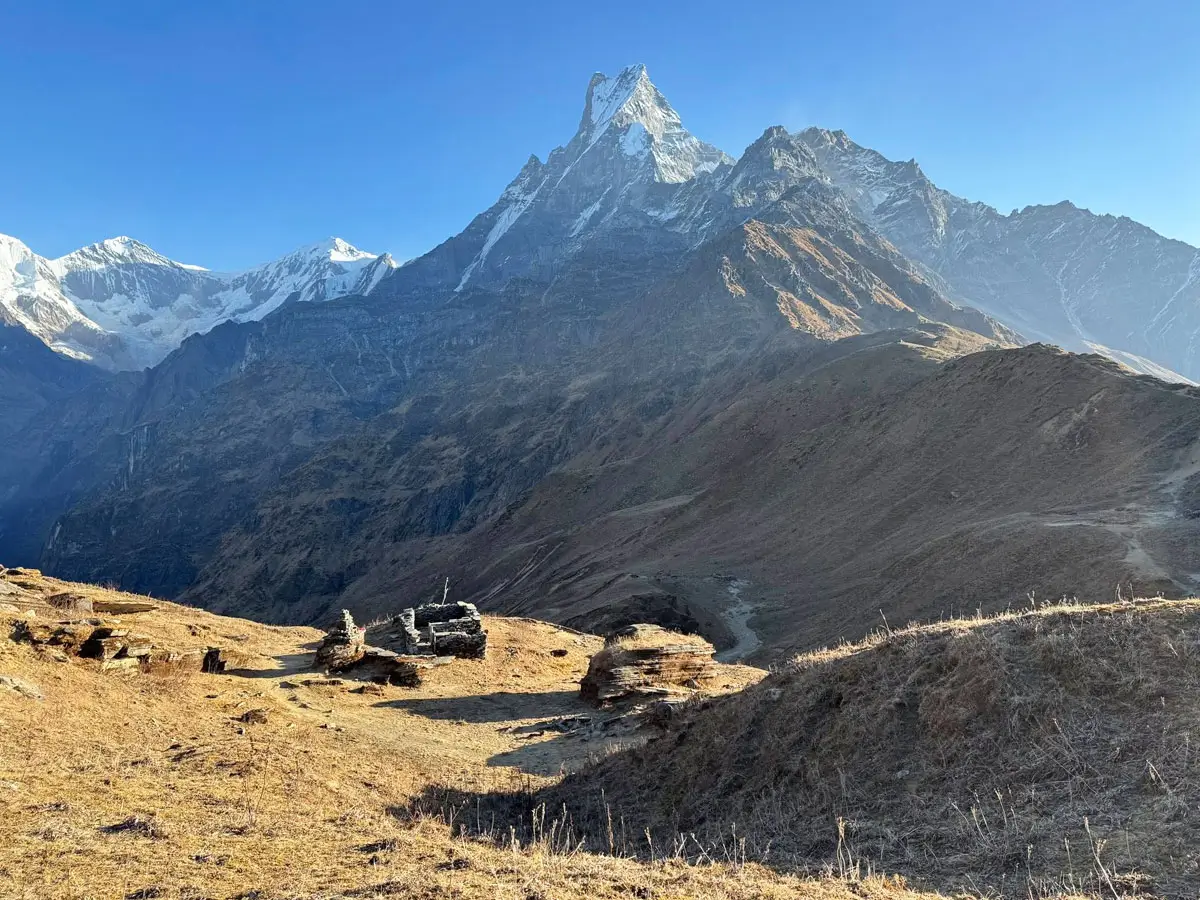
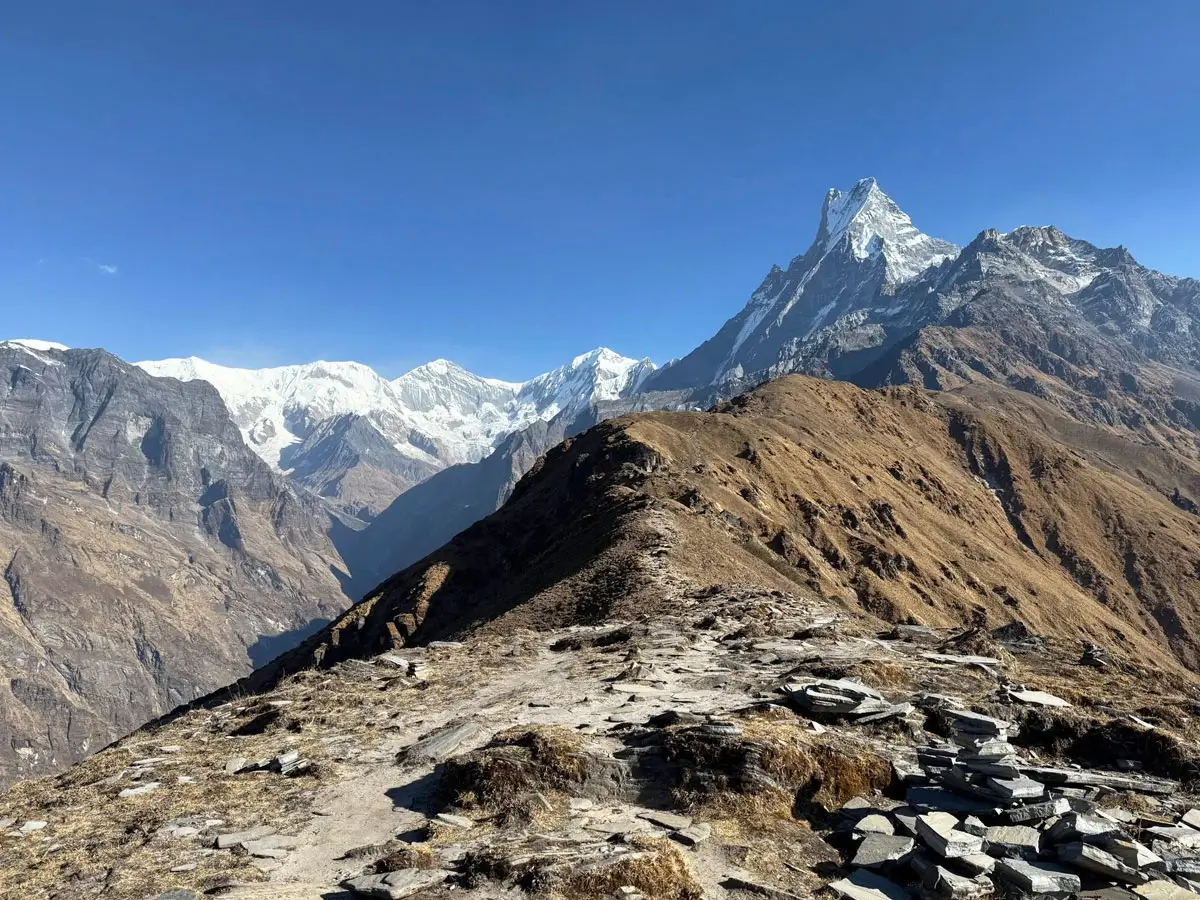
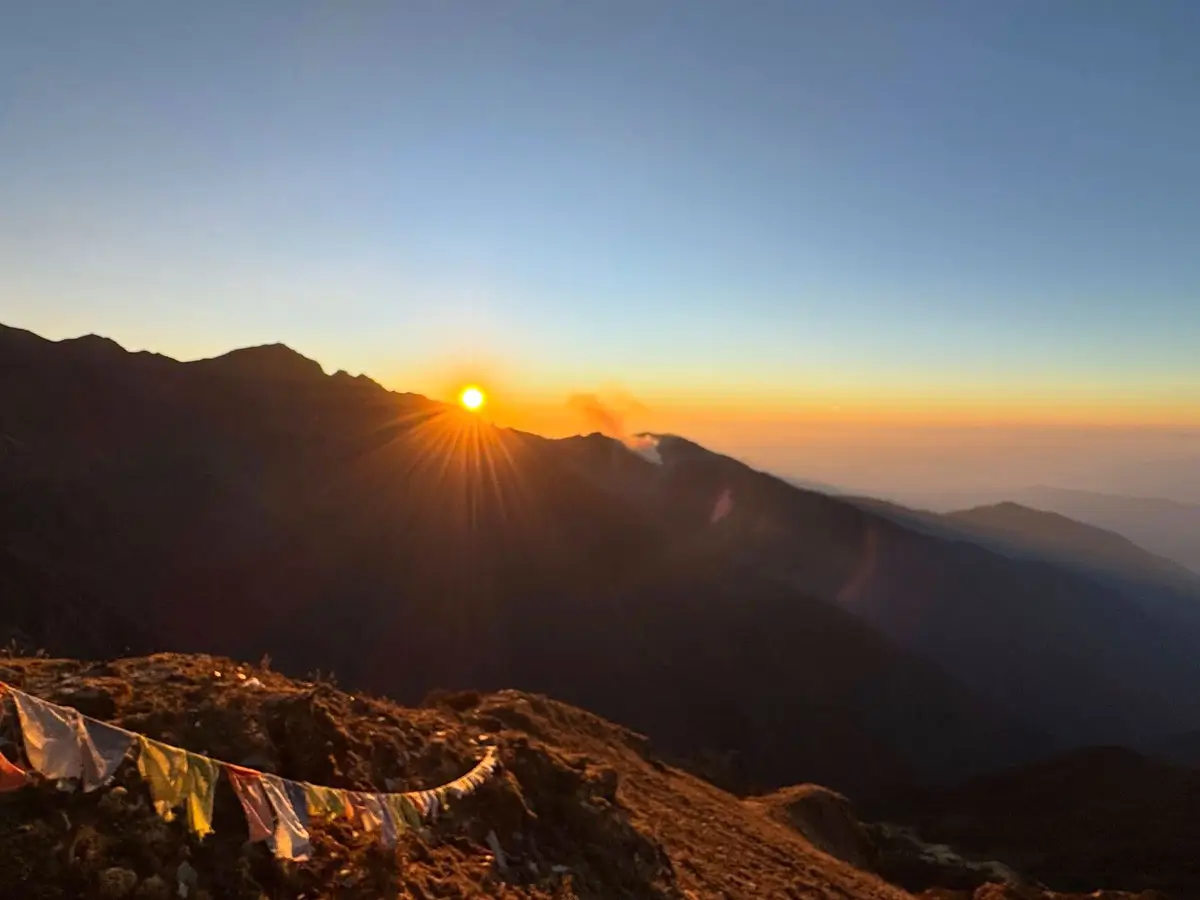
The greatest reward comes when morning light reaches the mountains. From the upper ridge, Machhapuchhre rises directly ahead while Annapurna South and Hiunchuli catch the first gold of sunrise. Behind you, layers of hills descend toward Pokhara, sometimes with a sea of cloud resting below the trail.
For travelers who want a short Himalayan adventure with clear mountain scenery, a peaceful atmosphere and a genuine sense of winter, Mardi Himal in December offers an inspiring balance. It feels adventurous without requiring the commitment of a remote expedition and intimate without losing the grandeur of the Annapurna Himalayas.
Himalaya View on Mardi Trek!
Highlights of the Mardi Trek in December
A remarkable change in scenery: Walk from the green foothills above Pokhara through oak and rhododendron forests before emerging onto an open Himalayan ridge.
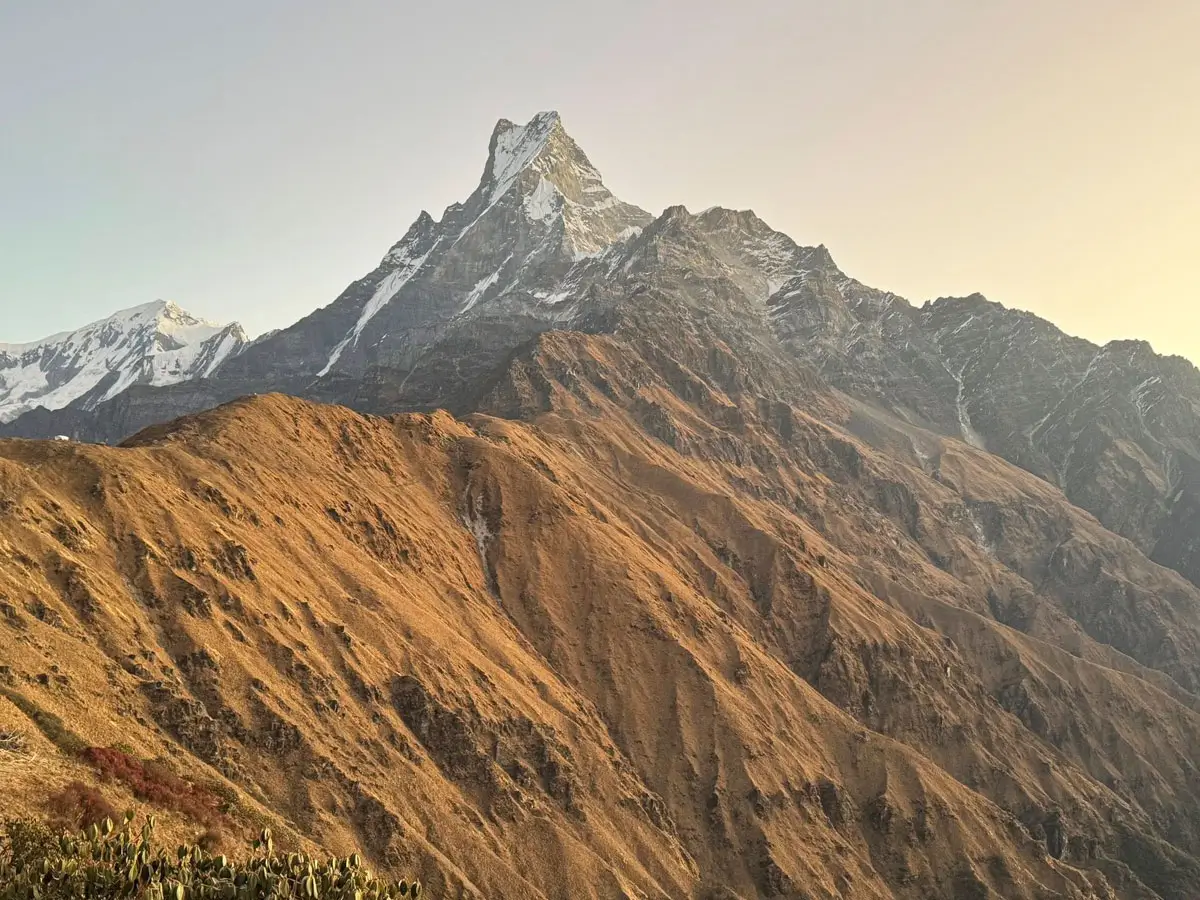
Close-up views of Machhapuchhre: The sacred Fishtail Mountain becomes increasingly dominant as the trail climbs from Low Camp toward Badal Danda and High Camp.
Golden winter sunrises: Watch the first morning light illuminate Machhapuchhre, Annapurna South and Hiunchuli from the upper ridge.
Crisp mountain visibility: December’s generally dry weather can produce beautifully defined views, deep blue skies and excellent long-distance visibility.
The possibility of snow: Fresh snow around High Camp or the Upper Viewpoint can transform the brown alpine ridge into a bright winter landscape without covering the entire route.
Peaceful walking days: Lower visitor numbers allow you to enjoy the forests, ridges and viewpoints at a more personal and unhurried pace.
A rewarding pre-dawn adventure: Begin from High Camp beneath a star-filled sky and gradually watch the mountains emerge as daylight reaches the ridge.
Convenient access from Pokhara: Mardi Himal provides a genuine high-altitude trekking experience without requiring long and complicated travel to a remote trailhead.
No major mountain pass: The route climbs to a high viewpoint but does not involve crossing a technical pass, making it more approachable than many longer winter treks.
Warm teahouse moments: Evenings around the dining-room stove, accompanied by hot soup or Nepali tea, become an enjoyable contrast to the cold air outside.
Excellent winter photography: Low-angle sunlight, sharp mountain shadows, frosted vegetation and occasional clouds below the ridge create distinctive photographic opportunities.
Flexible trekking objectives: Depending on weather and trail conditions, you can aim for the Upper Viewpoint or enjoy a shorter sunrise walk from High Camp without losing the main mountain experience.
Best Mardi Himal Treks for December
We have some Mardi Himal Trek itineraries; please take a look. We are also happy to tailor a Mardi Himal Trek program if these are not suitable for you and you need a customized itinerary.
Short Mardi Himal Trek- 5 Days: Starts and ends in Pokhara and is suitable for those looking for a short trek from Pokhara.
Mardi Himal Base Camp Trek - 12 Days: Itinerary includes arrival and departure days to and from Nepal, a day tour in Kathmandu, and travel days to Pokhara - a complete package.
The Mardi Himal Trek in December is excellent if you want to experience the Himalayas in winter without committing to a long, remote, or technically demanding expedition. The route reaches an impressive elevation, yet it remains close to Pokhara and does not require crossing a major mountain pass.
Experience Several Landscapes in a Short Trek
Few short treks in Nepal offer such a noticeable change in surroundings. The Mardi Himal journey begins among cultivated hills and dense forests before climbing above the tree line onto an open ridge.
The transition becomes even more striking in December: the lower forest may remain green, frost appears in shaded areas, and patches of snow decorate the slopes near High Camp. Each day feels visually different, giving the journey greater variety than its relatively short duration might suggest.
See Machhapuchhre from a Dramatic Perspective
Machhapuchhre is visible from many places around Pokhara, but Mardi Himal presents the mountain from a much closer and more powerful angle. As you follow the ridge, its distinctive double summit appears to rise directly ahead.
December’s lower humidity and dry winter air can provide sharply defined views of the mountain. Annapurna South, Hiunchuli and Mardi Himal complete the surrounding panorama, particularly during sunrise from the upper trail.
Winter on Mardi Himal is not defined only by deep snow; its character can be found in the smaller details: the frost around a teahouse window, steam rising from morning tea, sunlight slowly reaching a shaded trail, and trekkers gathering beside the dining-room stove after sunset.
These moments create an atmosphere that is difficult to experience during the busier and warmer trekking seasons. Even when there is little snow, the cool air and soft winter light give the landscape a distinctive December identity.
Begin Winter Trekking on an Approachable Route
Mardi Himal is a suitable winter trek for active travelers with sensible preparation, as the trail is physically demanding, but it does not involve mountaineering or technical climbing.
Daily distances can be adjusted, and trekkers have several accommodation stops along the route. If snow or ice affects the path above High Camp, the day’s objective can also be changed without losing the beautiful views available from lower points on the ridge. This flexibility makes Mardi Himal less intimidating than many longer high-altitude winter routes.
Make the Most of a Short Nepal Holiday
Travelers do not always have two or three weeks available for trekking. Mardi Himal can be completed within a relatively compact schedule from Pokhara, making it useful for visitors who want to combine trekking with time in Kathmandu, Pokhara, Chitwan or another region of Nepal.
A carefully planned itinerary still allows enough time to enjoy the trail rather than treating it as a rushed climb.
Find Space to Experience the Mountains Personally
December generally receives fewer trekkers than October, November, March or April. This does not mean the trail will always be empty, but the walking experience is usually calmer.
There is more time to pause at viewpoints, photograph changing light and listen to the forest without feeling pressured by a busy stream of people. Teahouse evenings can also feel more personal, providing opportunities to speak with lodge owners, guides and fellow winter travelers.
For trekkers drawn to mountain scenery, photography and a peaceful journey rather than warm weather or blooming rhododendrons, December offers one of the most distinctive versions of the Mardi Himal Trek.
Landscape in Mardi Trek!
Weather and Temperature of Mardi Himal in December
December generally brings dry weather, cool mountain air, and good visibility to the Mardi Himal region; the conditions vary considerably between the lower trail near Pokhara and the exposed ridge above High Camp. A sunny afternoon in the forested area can feel pleasantly mild, and a pre-dawn climb toward the Upper Viewpoint may be well below freezing.
Approximate December Temperature by Elevation
The following figures are broad planning ranges rather than guaranteed forecasts. Temperatures may fall outside these ranges during snowfall, strong wind or a passing cold system.
Trekking area
Approximate elevation
Daytime temperature
Night or early-morning temperature
Pokhara and lower trailheads
800–1,800 m
12°C to 20°C
4°C to 9°C
Deurali and Forest Camp
2,100–2,600 m
7°C to 14°C
-1°C to 5°C
Low Camp and BadalDanda
3,000–3,200 m
3°C to 10°C
-5°C to 1°C
High Camp
Around 3,580 m
-1°C to 7°C
-8°C to -3°C
Upper Viewpoint trail
3,800–4,200 m
-5°C to 5°C
Approximately -10°C to -4°C before sunrise
These temperatures can feel different depending on sunlight and wind. A still afternoon at High Camp may feel comfortable while walking, but the same temperature can feel much colder when wind crosses the exposed ridge.
Daytime Weather
December days are often dry and bright; once sunlight reaches the trail, walking temperatures at lower and middle elevations feel comfortable.
You will commonly begin the morning in layers, remove one or two while climbing, and put them back on during rest stops. The forest provides shelter from wind, but shaded paths may remain frosty even when sunny sections feel warm.
Above Badal Danda, the trail becomes increasingly exposed, with fewer trees to block the wind, and weather changes are easier to notice across the ridge. A windproof jacket therefore becomes as important as insulation.
Morning and Night Conditions
The coldest part of the day is usually just before sunrise, and this is particularly relevant because the Upper Viewpoint walk normally begins early in the morning.
Trekkers may leave High Camp in darkness while temperatures are below freezing. Warm gloves, a hat, a headlamp and layered clothing are essential for this section. Once the sun rises and walking effort increases, the body often becomes warmer quickly.
Temperatures fall again soon after sunset. Teahouse dining rooms may be warmed for part of the evening, but bedrooms are generally unheated. A properly rated sleeping bag is therefore more dependable than relying only on lodge blankets.
Rains, Clouds and Visibility
December is usually one of the drier periods in the Annapurna region and the persistent rain is less common than during the monsoon, while lower humidity often supports clear mountain views.
Morning visibility is generally the most dependable; the clouds can still form during the afternoon, particularly around the forested hills, but they may create an attractive sea of cloud below BadalDanda rather than completely hiding the mountains.
Dry-season weather should never be interpreted as a guarantee. Mountain conditions can change, and occasional snowfall or an unexpected cloudy day remains possible.
Wind along the Ridge
Wind is an important part of the Mardi Himal weather experience. Forest Camp and Low Camp receive some natural protection from trees, while BadalDanda, High Camp and the Upper Viewpoint trail are much more exposed. Even moderate wind can reduce the temperature felt by the body, and you should carry:
A wind-resistant outer jacket
Warm gloves that block airflow
A hat covering the ears
A neck gaiter or buff
Secure sunglasses
An accessible insulating layer
Wind is often gentler in the morning and becomes stronger later, providing another reason to begin the upper walk early.
Daylight Hours
December provides approximately ten and a half hours of daylight in central Nepal. Sunrise occurs relatively late, while darkness arrives early compared with spring or autumn.
Most trekking days remain comfortably manageable when started on time. Trekkers should aim to reach the next teahouse by mid-afternoon instead of using the final daylight as part of the planned walking schedule.
December changes the rhythm of the Mardi Himal trail; although colder temperatures require additional preparation, it offers several advantages.
Generally Dry Walking Conditions
December falls within Nepal’s dry season; the long periods without rain often keep the lower forest trails firmer and more comfortable.
Conditions can still change, particularly at higher elevations, but you are less likely to encounter persistent rainfall, muddy paths or leeches.
Excellent Himalayan Visibility
The cooler air and lower humidity create exceptionally clear views of Machhapuchhre, Annapurna South, Hiunchuli and the surrounding ridges.
The visibility is beautiful in the morning; starting early allows you to enjoy the sharpest views before occasional clouds gather around the mountains later in the day.
A Calmer Trail Experience
December has fewer visitors than peak autumn and spring; the viewpoints, rest stops and narrow forest trails therefore tend to feel less congested.
The quieter pace allows more time to observe the changing landscape, take photographs and appreciate the natural sounds of the forest.
Comfortable Daytime Walking in the Sun
Although the mornings and evenings are cold, walking under the midday sun can feel pleasant.
You can begin warmly dressed, remove an insulating layer while climbing, and put it back on during longer breaks.
Distinctive Photography Conditions
December brings low-angle sunlight, long mountain shadows, and rich contrast between the forests, ridges, and snowy summits, and the possible photographic subjects include:
Frosted leaves in the forest
Clouds resting below Badal Danda
Machhapuchhre framed by rhododendron branches
Golden light over Annapurna South
Stars above High Camp
Fresh snow along the upper ridge
A Chance to Walk in Fresh Snow
When fresh snow reaches High Camp and the upper ridge, it creates one of the most memorable landscapes.
Even a light covering can brighten the trail and make Machhapuchhre appear more dramatic.
A Practical Introduction to Himalayan Winter Trekking
Mardi Himal combines high-altitude scenery with relatively easier access from Pokhara; you will experience freezing mornings, possible snow, and exposed ridge walking without undertaking a multi-week expedition.
The availability of several overnight stops also makes the itinerary adjustable. An extra night can be added, or the upper objective can be changed according to weather and individual comfort.
A Memorable December Holiday
For travelers visiting Nepal around Christmas or New Year, the Mardi Himal trek offers a meaningful alternative to an ordinary holiday.
The experience feels adventurous and celebratory without requiring technical climbing experience.
The Mardi Himal Base Camp!
Possible Disadvantages and Practical Solutions
Every trekking season involves trade-offs, and December is no exception; most challenges on Mardi Himal are manageable when they are anticipated before the journey. Rather than making the trek unsuitable, they require warmer equipment, earlier starts, and a little flexibility.
Possible challenge
What to expect
Practical solution
Cold mornings and nights
Temperatures can fall below freezing around BadalDanda and High Camp.
Carry an insulated jacket, warm base layers, gloves, a hat and a suitable sleeping bag.
Shorter daylight hours
There is less time for walking than during spring or autumn.
Begin after an early breakfast and aim to reach the next teahouse well before sunset.
Frost, snow or ice
Shaded sections and the trail above High Camp may become slippery.
Use trekking poles and carry microspikes when upper-trail conditions require them.
Wind on the open ridge
BadalDanda and High Camp can feel colder when exposed to wind.
Wear a windproof outer layer and avoid remaining stationary for long periods.
Reduced teahouse services
A few lodges may close or operate with smaller menus.
Confirm accommodation through a guide or trekking company before moving to the next stop.
Limited water and charging facilities
Water pipes can freeze, while electricity may be unreliable higher up.
Fill bottles early, carry purification tablets and bring a fully charged power bank.
Changing upper-trail conditions
Fresh snowfall can affect plans for the Upper Viewpoint or Base Camp.
Keep the final objective flexible and follow current advice from guides and teahouse owners.
Faster battery drain
Cold temperatures reduce the performance of phones and cameras.
Carry spare batteries and keep electronics close to the body or inside an insulated pouch.
Colder Evenings
Once the sun drops behind the mountains, temperatures can fall quickly. Bedrooms in trekking lodges are generally not heated, although the dining room may have a stove during the evening.
A good sleeping bag makes a major difference. Changing into dry thermal clothing before bed and keeping the next morning’s clothes inside the sleeping bag can also make early starts more comfortable.
Shorter Walking Window
December days are shorter; fortunately, standard walking distances on the Mardi Himal trek route can be managed within daylight when the day begins on time.
Early arrival also gives trekkers time to rest, enjoy the sunset, and settle into the teahouse before temperatures drop.
Snow and Ice on the Upper Trail
Snow does not continuously cover the entire Mardi Himal route in December; the lower trails may remain completely dry while frost or snow appears above Badal Danda and High Camp.
The most important factor is not simply how much snow has fallen but how it has settled, as the thin frozen layer sometimes may require more care. Trekking poles and condition-appropriate traction improve confidence, while a local guide can help assess whether the Upper Viewpoint remains a sensible objective.
Simpler Services at High Camp
The menu at High Camp may be smaller than in Pokhara or lower villages, and hot showers, charging or internet access may not always be available.
These limitations are part of the high-altitude teahouse experience rather than a serious problem.
Carrying cash, a power bank, water treatment and a few personal snacks prevents most inconvenience.
The Need for Flexibility
Winter weather does not follow a fixed calendar, and a December departure may see dry ground and sunshine, while another may still receive fresh snowfall. A flexible itinerary allows you to respond calmly. If the highest section is unsuitable, sunrise from a lower point along the ridge can still provide outstanding views of Machhapuchhre, Annapurna South and Hiunchuli.
Reaching a particular elevation should never be more important than enjoying the journey responsibly. With realistic expectations, these disadvantages remain manageable. For many travelers, the colder air and simpler rhythm are part of what makes Mardi Himal in December feel so memorable.
Snow Conditions on the Mardi Himal Trek in December
Snow is possible on the Mardi Himal Trek in December, particularly around High Camp and Upper Viewpoint. December does not guarantee continuous snow across the entire route, as the conditions depend on when the first significant winter systems reach the Annapurna region.
One group may walk on a mostly dry ridge beneath clear skies, while another departure several days later may find High Camp covered by fresh snow. This variation is one of the reasons December feels so distinctive.
Where Are You Likely to Find Snow?
Trekking area
Likely December conditions
Pokhara and lower trailheads
Generally dry, with no snow expected
Deurali and Forest Camp
Cool and shaded; frost is more likely than lasting snow
Low Camp
Dry forest paths, frost or occasional light snow
BadalDanda
Possible snow patches, especially later in December
High Camp
Greater chance of fresh snow, frozen ground and overnight frost
Upper Viewpoint trail
Most likely section to contain snow or ice
Route toward Base Camp
Highly dependent on recent weather and current trail conditions
The lower forest usually remains walkable even when snow has reached the high ridge. This means snowfall near High Camp does not automatically affect every day of the itinerary.
Fresh Snow, Packed Snow and Ice
Fresh snow: Fresh snow is often soft and visually beautiful, and a light covering can make the trail enjoyable.
Packed snow: Packed snow develops when people repeatedly walk over the same surface, and it may become firm and slippery, particularly in the morning.
Ice: Ice often forms when snow melts in the daytime and freezes again overnight; the shaded corners and stone steps may retain ice longer than sunny sections.
Trekking poles provide balance in all three conditions, and microspikes may be useful on packed snow or frozen sections, but they are not automatically necessary for every December departure. Their use should depend on the actual state of the upper trail.
Does Snow Make the Trek Much More Difficult?
A light snowfall usually adds winter beauty without completely changing the trek. The main difference is that trekkers need to walk more deliberately and allow additional time on the upper section.
After heavier snowfall, the walk toward the Upper Viewpoint may require a later start, a shorter objective, or an additional day, and these adjustments are practical decisions when on the trail.
Snow at the Upper Viewpoint and Base Camp
The Upper Viewpoint at approximately 4,120 meters is the main objective for many Mardi Himal itineraries. It provides an outstanding panorama without requiring trekkers to continue all the way to Mardi Himal Base Camp at approximately 4,500 meters.
In December, the conditions beyond the Upper Viewpoint can be different from those on the standard trail, and continuing farther should depend on:
Available daylight
Recent snowfall
Trail visibility
Wind conditions
Individual fitness
Advice from an experienced guide
The Base Camp should never be treated as compulsory, and turning around at the Upper Viewpoint or at a lower viewpoint when conditions require it still delivers the central Mardi Himal experience.
What to Carry for Snowy Conditions
Trekkers do not need technical mountaineering equipment for normal December conditions on the standard route, and the useful items include:
Waterproof trekking boots with reliable grip
Trekking poles
Warm trekking socks
Gaiters when deeper fresh snow is expected
Microspikes for packed snow or ice
Waterproof outer layers
Spare gloves
Sunglasses and high-SPF sunscreen
Snow reflects sunlight strongly, so eye and skin protection remain important even when the air feels cold.
The Beautiful Side of December Snow
Fresh snow changes the appearance of Mardi Himal almost instantly. Rhododendron branches become white, the ridge reflects the morning light, and the dark outline of Machhapuchhre stands sharply against the sky.
The most rewarding approach is to hope for winter beauty without expecting a particular amount of snow. December may offer a dry trail, scattered white patches, or a freshly covered ridge, and each version has its own character.
Mardi Himal Trail!
Early, Mid, and Late December Conditions
December does not bring identical conditions from beginning to end. The month gradually moves from late-autumn dryness into a stronger winter atmosphere, particularly at higher elevations.
Dividing December into three periods helps trekkers choose dates according to their comfort with cold, interest in snow, and preferred trail atmosphere.
December Conditions at a Glance
Period
General atmosphere
Snow possibility
Best suited for
Early December
Late-autumn transition with cool, dry days
Lower, but still possible near the upper ridge
Beginners and trekkers preferring milder conditions
Mid-December
Crisp winter weather with colder mornings
Moderate around High Camp and Upper Viewpoint
Mountain views, photography and balanced conditions
Late December
Stronger winter character and colder nights
Greater possibility at higher elevations
Snow seekers and Christmas or New Year travelers
These are general patterns rather than fixed promises. A single weather system can bring snow in early December, while late December can also remain dry and sunny.
Early December: The Autumn-to-Winter Transition
Early December offers the best trekking conditions, as the popular autumn season has recently ended, but winter has not yet established itself. Lower trails are usually dry, and daytime walking is pleasant; the mornings remain cold around Badal Danda and High Camp, although overnight temperatures may be slightly milder than later in the month.
Snow is possible above High Camp, but trekkers may also find the entire route mostly clear.
Early December is particularly suitable for:
First-time winter trekkers
Active beginners
Travelers concerned about extreme cold
Trekkers who prioritize clearer trails over snow
Photographers seeking dry-season visibility
The trail is quieter than in November, while more teahouses may still be operating before the deepest winter period.
Mid-December: The Best Balance of Winter and Accessibility
Mid-December offers an appealing balance; winter becomes more noticeable, but walking conditions are manageable. The forest can be frosty in the morning, and mountain visibility is excellent during stable weather; the low winter sun creates attractive shadows across Machhapuchhre and Annapurna South.
There is an increased possibility of snow on the upper ridge, although it may appear as scattered patches rather than a continuous covering. When light snowfall occurs overnight, you may wake to a white High Camp before the morning sun begins changing the surface.
Mid-December is well suited to travelers who want:
A noticeable winter atmosphere
A reasonable chance of seeing snow
Clear sunrise photography
Quieter trails without the deepest winter cold
A balanced first Himalayan winter experience
For many trekkers, Mid-December offers the most complete combination of accessibility, winter scenery and mountain visibility.
Late December: A Winter Experience
Late December usually feels more wintry, particularly around High Camp and the Upper Viewpoint. Nights become colder, daylight is limited, and snow or ice is more likely on exposed sections. This does not mean the trek becomes inaccessible; many late-December departures enjoy dry days, bright sunshine, and manageable upper-trail conditions.
Late December has its own atmosphere; Christmas or New Year may be celebrated with a simple meal in a teahouse rather than a crowded city event. The surrounding ridge, cold air, and mountain sunrise can make the occasion feel genuinely memorable.
Late December may appeal to:
Trekkers hoping to experience stronger winter conditions
Travelers comfortable with colder mornings
Photographers interested in possible snow
Visitors spending Christmas or New Year in Nepal
Those willing to adjust the upper objective when necessary
Which Part of December Is Best?
There is no single best period for everyone.
Choose early December if you prefer relatively milder weather, clearer trails and a more beginner-friendly introduction to winter trekking.
Choose mid-December if you want the best overall balance of crisp mountain views, quieter trails and possible winter scenery.
Choose late December if you are attracted to colder conditions, a greater possibility of snow and a distinctive Christmas or New Year adventure.
Regardless of the dates, it is sensible to leave some flexibility in the itinerary. Mountain weather cannot be controlled, but thoughtful planning allows trekkers to enjoy whichever version of December they encounter.
The Mardi Himal Trek in December is generally considered moderate and does not require technical climbing or crossing a high mountain pass, making it more approachable than many longer winter treks in Nepal.
Most trekking days in the Mardi Route involve approximately five to seven hours of walking, and the main challenges are steady forest ascents, increasing altitude, and the early-morning climb from High Camp toward the Upper Viewpoint.
What Makes It More Challenging in December?
Cold mornings and evenings
Possible frost or ice above Badal Danda
Snow on the trail near High Camp
Wind along the exposed ridge
A cold pre-dawn viewpoint walk
Shorter daylight hours
These conditions do not automatically make the trek difficult; warm layers, suitable footwear, trekking poles, and a sensible walking pace make a significant difference.
Can Beginners Complete It?
Yes, active beginners can complete the Mardi Himal Trek in December with proper preparation and a well-paced itinerary. Before arriving in Nepal, trekkers should be comfortable with:
Walking for five to seven hours
Climbing stairs or hills
Carrying a light daypack
Hiking on uneven ground
Walking on consecutive days
Regular walking, jogging, cycling or stair training for four to six weeks can provide a useful fitness foundation.
Altitude Considerations
The High Camp is located at approximately 3,580 meters, while the Upper viewpoint is around 4,120 meters. Some trekkers may notice mild headaches, reduced appetite or tiredness as they climb higher.
A gradual ascent, sufficient water, regular meals, and an unhurried pace help the body adjust. Trekkers should communicate openly with their guide if they feel unwell.
The Most Demanding Day
The pre-dawn walk from High Camp toward the Upper Viewpoint is normally the hardest part. It involves cold temperatures, darkness and a continuous ascent. However, reaching the highest point is not compulsory. Trekkers can turn around at a lower viewpoint and still enjoy magnificent sunrise views of Machhapuchhre, Annapurna South and Hiunchuli.
Overall, Mardi Himal is a realistic first winter trek for healthy travelers who prepare properly and remain flexible.
Sunrise view!
Accommodation and Teahouse Experience
Tea houses are locally operated and provide accommodation on the Mardi Himal Trek. These lodges are simple but welcoming, offering a warm place to rest after each day’s walk.
What Are the Rooms Like?
Most rooms contain:
Two single beds
A basic mattress
Pillow and blanket
Small table or hooks
Shared bathroom facilities
Private attached bathrooms may be available at some lower stops but should not be expected at BadalDanda or High Camp.
Are Teahouses Open in December?
Yes, teahouses remain available along the main route in December; however, a few lodge owners may close temporarily during quieter periods, particularly later in the month.
It is helpful to confirm accommodation before leaving for the next stop. A guide or trekking company can contact the lodge in advance, which is especially useful at High Camp.
Heating and Warmth
Bedrooms are normally unheated. Dining rooms may have a stove during the evening, creating a comfortable space to eat, talk and relax.
Lodge blankets are useful, but they may not provide enough warmth on freezing nights. A sleeping bag rated to approximately -10°C is recommended for December, particularly when staying at High Camp.
Toilets, Showers and Electricity
Facilities become more basic as elevation increases.
Western or squat toilets may be available.
Hot showers are easier to find at lower lodges.
Charging may cost extra and cannot always be guaranteed.
Internet access can be slow or unavailable.
Water pipes may freeze overnight at higher elevations.
The simplicity is part of the experience. After a cold afternoon on the ridge, a hot meal and warm dining room often feel more valuable than luxury.
Food, Drinking Water and Facilities
Teahouses along the Mardi Himal route serve simple, filling meals designed for trekking. Menus become smaller with elevation, but adequate food is available throughout December.
Typical Teahouse Meals
Breakfast options may include:
Porridge
Eggs
Tibetan bread or toast
Pancakes
Muesli
Tea, coffee or hot lemon
Lunch and dinner commonly include:
Dal bhat
Vegetable soup
Fried rice
Noodles
Potatoes
Pasta
Momos
Chapati or curry
Dal bhat is especially useful because it provides carbohydrates, vegetables, and protein in one warm meal. Soups, garlic broth, and hot drinks are also comforting during cold evenings. Food becomes more expensive higher up because ingredients must be carried to the lodges. Choosing freshly prepared meals and eating regularly helps maintain energy and warmth.
Drinking Water
Safe water is available from teahouses in several forms:
Boiled water
Filtered refill water
Tap or spring water treated with purification tablets
Water treated through a personal filtration system
You should carry at least one reusable bottle and a reliable purification method. Buying repeated single-use plastic bottles creates unnecessary waste and may not be possible at every stop. At High Camp, fill bottles during the evening because water pipes can freeze overnight, and keeping a bottle inside the room or sleeping bag prevents the water from becoming too cold.
Charging, Internet, and Mobile Network
Electricity and internet access are more dependable at lower elevations and at Badal Danda and High Camp:
Charging may cost extra.
Solar power may be limited.
Wi-Fi can be slow or unavailable.
Mobile signals may appear only at certain points.
A fully charged power bank is highly recommended, and keep phones, cameras, and spare batteries protected from freezing temperatures, as cold weather reduces battery life.
Local Culture and Responsible Trekking
The Mardi Himal route is not only a path to a mountain viewpoint; its lower sections connect with communities where Gurung culture and mountain hospitality remain an important part of everyday life. The villages near the trail have a longer settlement history, while places such as Forest Camp and High Camp developed mainly to serve trekkers. Staying in locally operated teahouses directly supports families who carry food, fuel, and other supplies into the mountains.
Do not leave tissues, wrappers or batteries on the trail and carry non-biodegradable waste back to Pokhara, where disposal facilities are more appropriate.
Use Resources Carefully
Water, electricity, and fuel become more limited at higher elevations. Shorter showers, responsible charging and sensible use of heated spaces reduce pressure on teahouse resources.
In December, supplies may require additional effort to transport, and ordering only what you can eat is a small but meaningful way to avoid waste.
Stay on the Established Trail
Remaining on the marked path protects fragile vegetation and reduces erosion. It is especially important near the open ridge, where alpine plants recover slowly.
Responsible trekking helps preserve the beauty and local character that make the Mardi Himal experience valuable in the first place.
Fishtail View on mardi Himal Trek!
Mardi Himal Trek in December Packing List
December packing should focus on adjustable layers; the conditions may feel mild in the sunny lower forest but fall below freezing around High Camp.
Essential Clothing
Moisture-wicking thermal base layers
Fleece or lightweight insulated mid-layer
Warm down jacket
Waterproof and windproof outer jacket
Comfortable trekking trousers
Waterproof over-trousers
Warm hat covering the ears
Sun hat or cap
Neck gaiter or buff
Insulated gloves
Lighter walking gloves
Warm trekking socks
Dry clothing reserved for sleeping
Avoid cotton base layers because they retain moisture and become cold after sweating.
Footwear
Waterproof trekking boots with good ankle support
Comfortable camp shoes or sandals
Spare trekking socks
Gaiters if fresh or deeper snow is expected
Boots should be broken in before arriving in Nepal.
Trekking Equipment
Sleeping bag rated to approximately -10°C
Adjustable trekking poles
Headlamp with spare batteries
20–30-liter daypack
Backpack rain cover
Reusable water bottles
Water purification tablets or filter
Sunglasses with UV protection
High-SPF sunscreen
Lip balm
Power bank
Personal and Health Items
Personal medication
Basic first-aid supplies
Blister treatment
Hand sanitizer
Toilet paper
Wet wipes
Quick-drying towel
Personal toiletries
Electrolyte packets
High-energy snacks
Documents and Money
Passport
Travel insurance information
ACAP permit
TIMS card
Emergency contact details
Sufficient Nepali cash
Keep important documents inside a waterproof pouch.
Condition-Dependent Equipment
Microspikes are useful when packed snow or ice develops above High Camp. They may not be needed on a dry early-December departure, but carrying them provides flexibility.
Technical crampons and mountaineering equipment are not normally required for the standard Mardi Himal route. Final equipment choices should reflect the latest upper-trail conditions.
Expert Tips for Trekking Mardi Himal in December
Begin Each Day Early: Daylight is limited in December, so starting early gives you enough time to walk comfortably, enjoy viewpoints, and reach the next teahouse before temperatures fall.
Avoid Overheating While Climbing: Wearing every warm layer during a steep ascent can cause excessive sweating, So, begin slightly cool, adjust layers gradually, and keep the down jacket available for breaks and evenings.
Keep One Set of Clothes Completely Dry: Reserve thermal clothing and warm socks for sleeping. Dry nightwear helps the body recover and makes cold mornings much more comfortable.
Protect Water from Freezing: Fill bottles during the evening at High Camp and keep them inside the room. On very cold nights, store a bottle inside the sleeping bag or wrap it in spare clothing.
Keep Batteries Warm: Phones, cameras and power banks lose charge quickly in freezing conditions. Carry spare batteries close to the body and keep electronics inside an insulated pouch overnight.
Eat Before You Feel Exhausted: Cold weather increases energy use. Regular meals, soup, tea and small snacks help maintain warmth and strength throughout the day.
Use Trekking Poles on Frosty Ground: Frost often remains in shaded forest sections after sunny areas have dried. Trekking poles provide additional balance on stone steps, frozen soil and packed snow.
Check Conditions Before Leaving High Camp: Ask the guide, lodge owner, and returning trekkers about the Upper Viewpoint trail. Overnight snowfall can change conditions even when the previous afternoon was clear.
Keep the Highest Point Flexible: The Upper Viewpoint is a rewarding objective, but it is not the only place with excellent mountain views. If conditions are unsuitable, sunrise from a lower ridge point can still become the highlight of the trek.
Walk Slowly Above Low Camp: A steady pace supports acclimatization and saves energy for the upper route. There is no advantage in reaching High Camp exhausted.
Yes, the Mardi Himal trek remains possible in December with warm clothing, suitable footwear, and flexible planning. Early and mid-December generally offer the most manageable winter conditions.
Is December a good time for the Mardi Himal Trek?
Yes, December is a good choice for trekkers who prefer crisp mountain views, quieter trails, and a winter atmosphere. It is colder than autumn, but the route remains approachable for properly prepared travelers.
What is the weather like in December?
In December, the days are generally dry and clear, while mornings and nights are cold.
How cold is High Camp in December?
Daytime temperatures at High Camp may range from approximately -1°C to 7°C, and nighttime temperatures can fall between roughly -8°C and -3°C, with colder conditions possible during snowfall or strong wind.
Does Mardi Himal receive snow in December?
Yes, snow is possible around Badal Danda, High Camp, and the Upper Viewpoint. It is more likely later in December, but no departure can guarantee fresh snow.
Is early or late December better?
Early December is usually better for milder temperatures and clearer trails. Late December offers a stronger winter atmosphere and a greater possibility of snow.
Is the trek safe in December, and do I need insurance?
The trek is generally safe when conditions are checked, and the itinerary remains flexible. Travel insurance should cover trekking above 4,000 meters, medical treatment and emergency evacuation.
Can beginners complete the Mardi Himal Trek in December?
Yes, active beginners can complete it with basic fitness training, a gradual itinerary and appropriate winter equipment.
How difficult is the trek in December?
The trek is considered moderate in December; the cold mornings, possible ice, and the pre-dawn Upper Viewpoint climb add challenge, but technical climbing is not required.
Is altitude sickness a concern?
Altitude symptoms are possible because the Upper Viewpoint reaches approximately 4,120 meters. Walking slowly, staying hydrated and reporting symptoms early help reduce the risk.
Are teahouses open in December?
Most major overnight stops retain accommodation, but some lodges may close temporarily during quieter periods. High Camp accommodation should be confirmed in advance.
Can I reach the Upper Viewpoint in December?
Yes, the Upper Viewpoint is often accessible during December. Final access depends on snowfall, ice, wind, daylight and the condition of the upper trail.
Can I continue to Mardi Himal Base Camp?
Continuing beyond the Upper Viewpoint toward Base Camp depends on current conditions and should remain optional, and many trekkers use the Upper Viewpoint as their main winter objective in December.
Do I need microspikes?
Microspikes are useful on packed snow or ice but may not be needed on a dry trail. Carrying them provides flexibility when conditions change.
Is a guide required?
Foreign trekkers should follow Nepal’s current TIMS and guiding regulations. A licensed guide is particularly valuable in December for checking trail conditions, accommodation and safe turnaround points.
Which permits are required?
Trekkers generally need an Annapurna Conservation Area Permit and a TIMS card.
How many days are needed?
A five- or six-day itinerary from Pokhara provides a comfortable winter pace, and an additional contingency day is helpful after snowfall or for first-time trekkers.
How do I reach the Mardi Himal trail?
Most itineraries begin with a drive from Pokhara to Phedi, Kande, or another nearby trailhead, and the return journey commonly descends toward Siding before driving back to Pokhara.
Is safe drinking water available?
Yes, teahouses sell boiled or filtered water, and trekkers can treat tap water using purification tablets or a personal filter.
Are mobile networks and charging available?
Mobile coverage and electricity are available at some stops but become unreliable near High Camp. Carry a power bank and keep electronic devices protected from freezing temperatures.
Conclusion
The Mardi Himal Trek in December reveals how much scenery can change within a short Himalayan journey, and the trail begins beneath quiet oak and rhododendron forests, climbs through Badal Danda, and finally reaches an open ridge facing Machhapuchhre, Annapurna South, and Hiunchuli.
If you are seeking for a manageable introduction to winter trekking in Nepal, the Mardi Himal offers an inspiring balance of accessibility and adventure.
April is one of the best months for the Ghorepani Poon Hill Trek, offering rhododendron flowers, warmer daytime walks, and Himalayan sunrise views from 3,210 meters. Expect busy teahouses, chilly mornings, and possible afternoon cloud [...]
The Ghorepani Poon Hill Trek in March combines the beginning of rhododendron season with warming days and opportunities for clear Himalayan views. Sunrise at 3,210 meters remains cold, and higher paths can still have snow [...]
The Annapurna Circuit Trek covers approximately 102 kilometers of walking on Outfitter Himalaya’s classic 15-day itinerary, including the Manang acclimatization hike. The journey unfolds through riverside forests, mountain villages and open valleys before crossing Thorong La [...]