Yes, you can trek to Annapurna Base Camp in February. February is a winter trekking month, so expect cold mornings, freezing nights, possible snow, and icy sections on the higher trail. The lower valleys can be relatively comfortable during sunny daytime hours, while conditions become much colder as you approach Machhapuchhre Base Camp and Annapurna Base Camp at 4,130 meters.
February's biggest advantage is the combination of quieter trails, winter mountain scenery, and potentially excellent mountain visibility. The main challenge is that snow and ice can affect the upper trail, so keep your itinerary flexible and check current trail conditions before continuing toward ABC.
Annapurna Base Camp Trek in February: Quick Facts
February ABC Trek
Details
Maximum altitude
Winter
Trail traffic
Generally quieter
Snow
Possible, especially at higher elevations
Night temperatures
Can fall well below freezing
Mountain views
Often excellent during clear weather
Rhododendrons
Generally too early for widespread bloom
Main winter concern
Snow, ice and changing trail conditions
Accommodation
Teahouses operate, but higher lodges should be confirmed
Best preparation
Warm clothing, suitable footwear and flexible planning
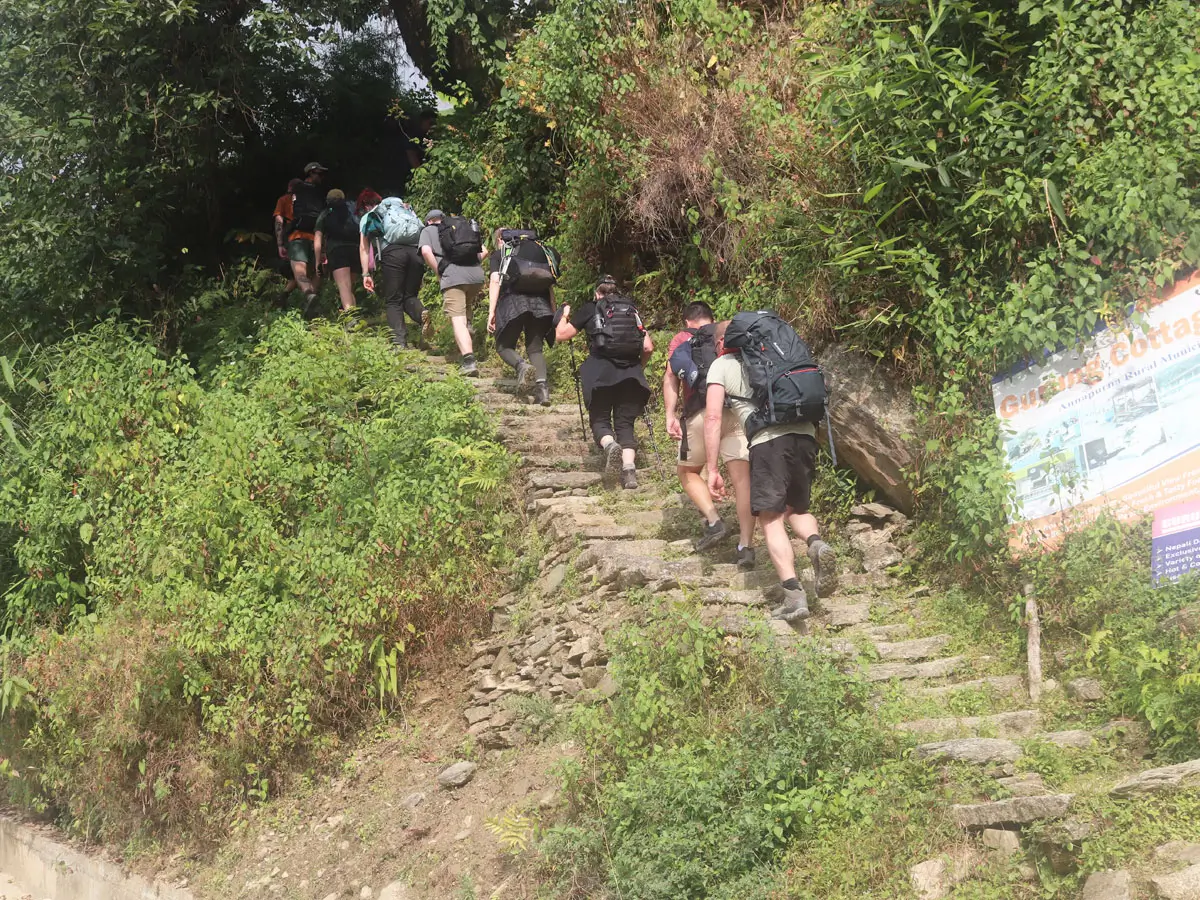
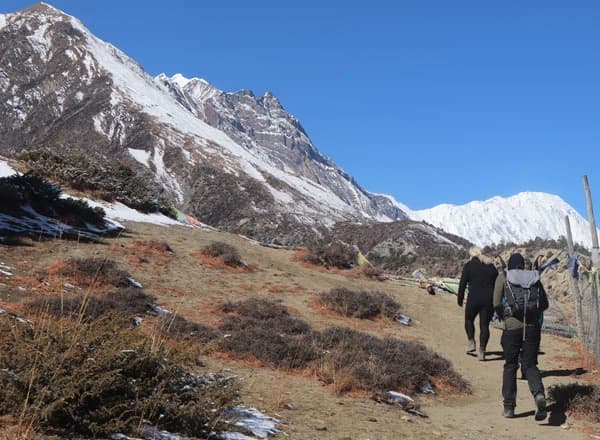
Our trekkers climbing the steps on ABC Trail!
What Makes the Annapurna Base Camp Trek Special in February?
February brings a quieter atmosphere to the Annapurna trails, with winter scenery becoming more prominent as you climb. The journey combines village terraces, sheltered forests, and mountain viewpoints before opening up to the sanctuary's open landscape. These experiences make the month worth considering.
Quieter Trails Beneath the Mountain
February generally attracts fewer trekkers than the main spring and autumn seasons. Between village stops, you can enjoy stretches of walking with fewer groups around you, hearing the river below or birds moving through the trees. For travelers who enjoy peaceful surroundings, this calmer atmosphere is one of the strongest reasons to choose winter trekking.
Winter scenery and Snow across the Annapurna sanctuary
When conditions allow access, Winter Scenery and Snow in the Annapurna Sanctuary transform the landscape around base camp, tracing the surrounding ridges and brightening the mountain amphitheater.
Higher on the route, Snow can cover the ground and trace the surrounding ridges, giving the sanctuary a striking winter appearance. The approach beyond Machhapuchhre Base Camp gradually reveals the scale of the mountains enclosing the valley. When conditions allow access to Annapurna Base Camp, standing beneath these towering faces is the journey's defining experience.
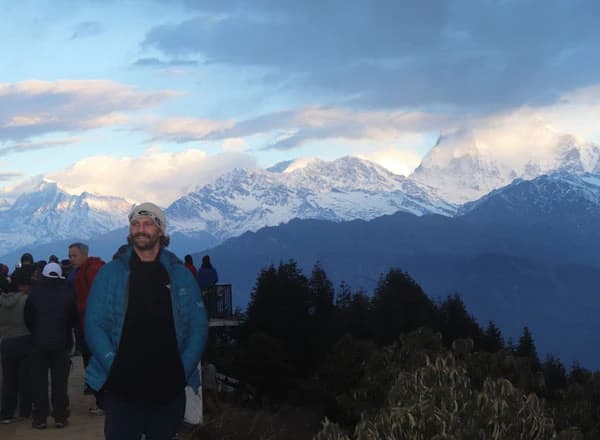
Poon Hill sunrise in the Cold Morning Air
On itineraries through Ghorepani and Poon Hill, the morning climb adds a sweeping mountain panorama before you enter the sanctuary. In clear weather, the first sunlight catches Dhaulagiri and the Annapurna range while the valleys remain in shadow. February's cold makes warm gloves and a jacket especially welcome as you pause to watch the light change.
Forest Walks Before the Spring Flowers Arrive
The Ghorepani-Tadapani forests have their own appeal before the rhododendron season. Moss-covered trunks, evergreen foliage, and winding stone paths add texture and color to these stretches. After snowfall, patches of white may linger beneath the trees. Widespread flowering usually comes later, so February's attraction is the winter forest atmosphere and occasional mountain glimpse between the branches.
Village Stays and Warm Teahouse Evenings
Villages such as Chhomrong bring everyday life into a journey dominated by mountain scenery. Stone stairways connect houses and lodges, with cultivated hillsides below and peaks rising above. After a cold walk, a plate of dal bhat and conversation over tea can become memorable parts of the day. These stops offer opportunities to learn about the region's Gurung and Magar communities through your guide and hosts.
These experiences depend on the weather and your chosen route. Mountain storms and avalanches remain serious hazards, so follow current forecasts and local guidance when deciding whether to continue higher.
Who Is the Annapurna Base Camp Trek in February Best For?
February is particularly suitable for trekkers who:
Prefer quieter trails and fewer trekkers
Enjoy winter mountain scenery
Are comfortable with freezing temperatures
Do not mind the possibility of snow and ice
Can walk for several hours on consecutive days
Are prepared to adjust their itinerary if conditions change
Want the possibility of seeing a snow-covered Annapurna Sanctuary
February may be less suitable if you strongly prefer warm nights, completely snow-free trails or widespread rhododendron blooms.
Advantages and Disadvantages of Trekking to ABC in February
February can be rewarding for travelers who enjoy winter scenery and a quieter journey. However, the experience also involves colder nights and less predictable access to the upper sanctuary. Consider these practical benefits and limitations before choosing your dates.
Advantages of February Trekking
A calmer experience along the trail: February generally brings fewer trekkers than the main spring and autumn seasons. Viewpoints and village stops can feel less crowded, making the month appealing if you prefer a quieter atmosphere during a mountain holiday.
Winter scenery and rewarding photography: Snow can brighten the upper sanctuary and outline the surrounding ridges. During clear spells, sunlight brings out the detail of the mountain faces, creating opportunities for photographers from Poon Hill, Machhapuchhre Base Camp and ABC.
Pleasant walking in the lower hills: sunny afternoons around the lower villages can feel comfortable as you move. February’s cooler conditions may appeal to travelers who find long stair climbs uncomfortable in warmer weather, although shaded paths and mornings remain chilly.
Disadvantages and Things to Consider
Cold continues after the walking ends: Freezing nights higher on the route make evenings, early starts, and getting out of bed more demanding. Warm layers and a suitable winter sleeping bag are essential for comfort, even when teahouses provide blankets.
Snow and ice can increase the effort: Slippery steps require concentration, while deeper snow can slow progress considerably. A walking stage that feels manageable in dry conditions may take longer in February, especially on shaded forest trails and higher approaches.
Reaching base camp is less certain: Heavy snowfall and avalanche danger can make sections around Deurali and towards Machhapuchhre Base Camp unsuitable for travel. Your itinerary may need an extra stop, a route change, or a turnaround based on current local assessments.
Winter services need advance confirmation: Accommodation choices and facilities can be limited at higher stops. Your guide should confirm which lodges are operating before you continue, particularly after snowfall. Fewer trekkers should not be taken as a guarantee that every preferred lodge will be available.
What Is the Weather and Temperature Like at Annapurna Base Camp in February?
February remains part of the winter trekking season, and the sunshine can make walking through the lower villages feel pleasant. Still, the cold becomes more noticeable as the trail climbs towards the Annapurna Sanctuary. This contrast becomes more noticeable as you approach Machhapuchhre Base Camp and ABC at 4,130 meters. A sunny lunch stop and a shaded stretch of forest can feel surprisingly different, so layers are useful throughout the day.
How Cold Is Annapurna Base Camp in February?
The base camp temperature tells only part of the story. Expect a substantial temperature difference between the lower trail and base camp. The following figures are approximate trekking estimates, rather than measured monthly averages.
Part of the route
Daytime conditions
Nighttime conditions
Lower trekking villages
Often around 10–15°C
Cold evenings and mornings; frost is possible in some locations
Middle elevations and forested sections
Around 0–10°C, depending on elevation and sunshine
Temperatures can fall below freezing
Annapurna Base Camp, 4,130m
Around freezing, sometimes reaching 0–5°C on sunny afternoons
Roughly −15 to −10°C, with colder conditions possible
These are broad estimates from published February trekking guidance, rather than measured monthly averages. Actual temperatures can fall outside these ranges.
Wind, cloud cover, and recent snowfall can make conditions harsher than these estimates suggest. Climbing stairs generates warmth, but stopping for photographs can quickly leave you feeling chilled. Choose clothing and sleeping equipment for the coldest part of the trek.
Will You Get Clear Views or Snow?
Clear weather can reveal the mountain ridges in remarkable detail, with sunlight bringing out the folds and shadows in the snow. However, February can also bring winter storms, clouds, and fresh snowfall and snow may remain on higher trails, while shaded paths can retain ice.
Does It Snow at Annapurna Base Camp in February?
Yes, snow is possible on the Annapurna Base Camp trail in February, particularly at higher elevations. However, snowfall is weather-dependent, so you should not book a February trek assuming that fresh snow will fall during your exact travel dates.
Snow remaining from previous storms can stay on shaded sections of the trail even when the weather is clear. Conditions can therefore range from dry paths in lower villages to icy or snow-covered sections closer to the sanctuary.
What Our Guides Check Before the February ABC Trek
February conditions can change quickly in the Annapurna Sanctuary. Before our groups continue toward the higher section, our guide checks recent trail conditions, weather forecasts and the condition of accommodation at the next stop. If snowfall has changed the route, the guide discusses the safest available option with the group rather than following the original itinerary at all costs.
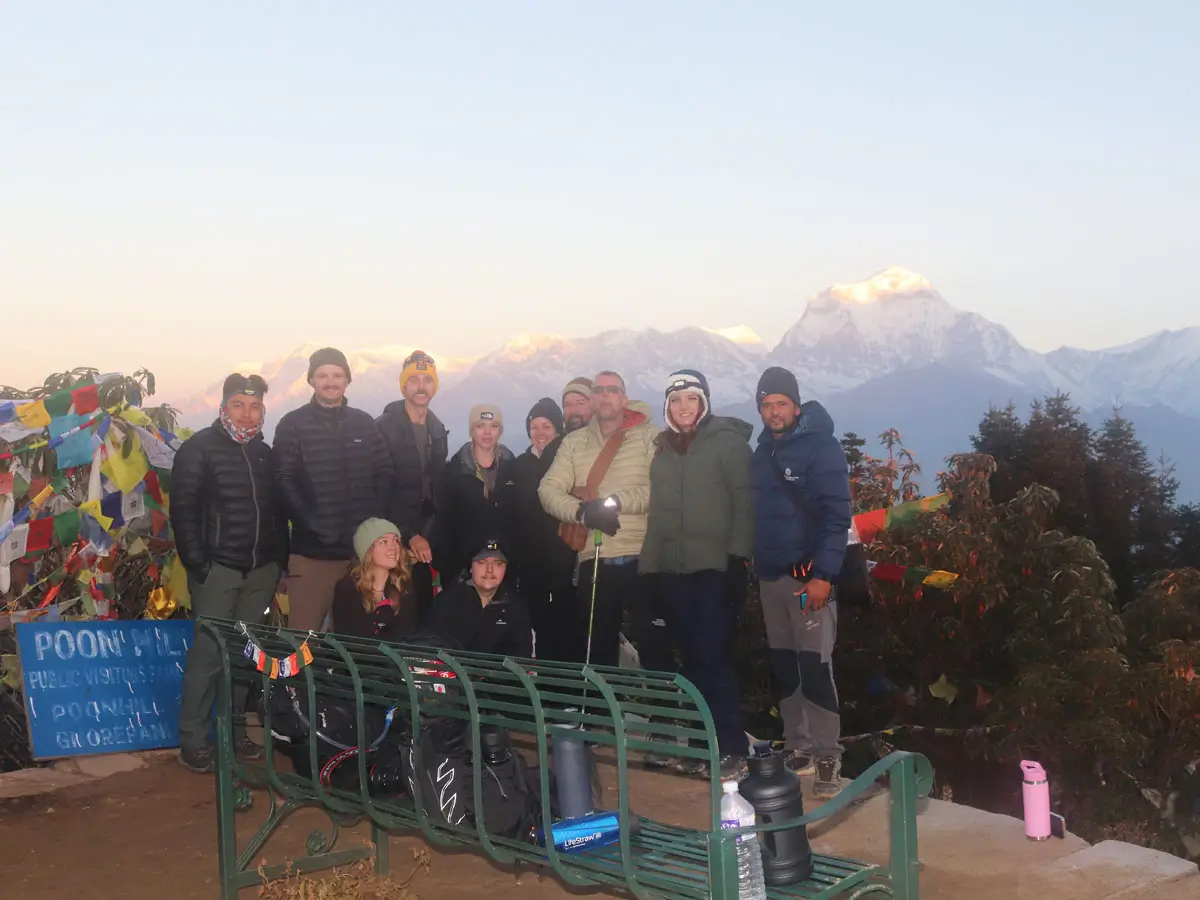
Guide bhimsen with clients in Poon hill!
Early, Mid or Late February: When Should You go?
February gradually moves towards spring, but the change is most noticeable in the lowest hills and conditions higher in the sanctuary remain wintry throughout the month.
Early February: Expect cold starts and lingering snow where earlier storms have covered the trail. Shaded forests around Ghorepani and Tadapani can retain icy patches, while the upper sanctuary may hold more substantial snow. This period appeals to trekkers seeking winter scenery who can keep this itinerary flexible.
Mid-February: Daylight gradually increases, giving you a little more time for walking and breaks. Sunny stretches can feel comfortable while you are moving, although exposed viewpoints and evenings still require warm layers.
Late February: Lower villages often begin to feel milder, making this a worthwhile option if you want winter mountain scenery with somewhat more comfortable walking below. Higher trails can still receive fresh snow, and nights at base camp remain well below freezing.
Recent weather matters more than the week you choose. A storm in late February can create harder conditions than a settled spell earlier in the month. Confirm the forecast and recent trail conditions before departure.
Want to compare February with the rest of the year? See our Best Time to Trek Annapurna Base Camp guide for a month-by-month comparison of weather, crowds, scenery and trekking conditions.
What Are The ABC Trail Conditions Like in February?
February can bring dry village paths, icy forest steps, and deeper snow within the same trek. The changing conditions are part of the winter experience, but they also affect your pace. A short descent on frozen steps may require more care than a longer climb on a clear trail.
From Village Stairways to Snowy Forest Paths
Lower sections often remain relatively clear, with stone staircases passing between terraces and villages. Shaded corners can still hold frost, particularly during cold mornings.
If your itinerary includes Ghorepani and Poon Hill, you may encounter snow before entering the Annapurna Sanctuary. Forest paths towards Tadapani receive less direct sunshine, allowing ice and compacted snow to linger. These stretches can look beautiful beneath snow-dusted branches but require slower, deliberate steps on descents.
How Do Snow and Ice Affect The ABC Trail in February?
Winter conditions vary along the route. A clear path near a village can lead into an icy forest section, while fresh snow may change the walking conditions higher up. On itineraries that include Poon Hill, snow can appear well before you enter the Annapurna Sanctuary.
Trail section
What to expect in February
Ghorepani–Poon Hill–Tadapani
Snow may cover higher forest trails, with ice lingering on shaded steps. Descents can require slower, more deliberate footing.
Chhomrong–Bamboo–Himalaya
Snow can obscure the trail, and parts of this approach pass beneath avalanche-prone slopes. Current conditions need careful assessment.
Machhapuchhre Base Camp–ABC
The open landscape offers dramatic mountain views, but snow, wind and difficult footing can increase walking time.
These are seasonal possibilities, so allow walking times to change with the conditions encountered.
Can Snow Prevent You from Reaching Base Camp?
Yes, Heavy snowfall or unsafe snow conditions can make the upper route impassable. Avalanche exposure around the approach through Deurali towards Machhapuchhre Base Camp deserves particular attention.
Our guide checks recent trail reports and weather forecasts before continuing higher, and we also advise you to be prepared to wait, change the itinerary, or turn back when necessary. Keeping that flexibility protects both the journey and your enjoyment of the mountains.
How Difficult Is ABC in February, and Can Beginners Do It?
Annapurna Base Camp can suit well-prepared beginners in February, but winter adds challenges to the usual trek. Cold mornings, slippery footing, and walking through snow require more effort and concentration, particularly after several consecutive trekking days.
What Makes the Walking More Demanding?
On Outfitter Himalaya’s classic ABC itinerary, most walking days take about five to seven hours, with the longer climb to Ghorepani taking about seven to eight hours, and winter conditions can extend these times.
The stone staircases near Ulleri and repeated descents and climbs around Chhomrong also make leg strength and endurance valuable. Even when the daily distance looks manageable, tired legs and slippery footing can make the final stretch to your lodge feel demanding. For a first Himalayan trek, focus on three preparations:
Build walking endurance: Gradually increase your hill walks and practice walking on consecutive days.
Prepare for uneven ground: Include stairs and controlled downhill walking, using the boots and daypack you intend to bring.
Discuss your experience honestly: Your guide should know your fitness, previous hiking experience and comfort with cold conditions before recommending an itinerary.
How much Does Altitude Matter?
Altitude still matters in ABC at 4,130 meters. Fitness does not prevent altitude sickness: ascend gradually, report symptoms promptly, and avoid continuing higher while unwell. If symptoms worsen, descend and seek medical assessment, take a look about the altitude sickness in Nepal.
If you have little hiking experience and prefer more comfortable conditions, spring or autumn will generally be a better introduction to ABC.
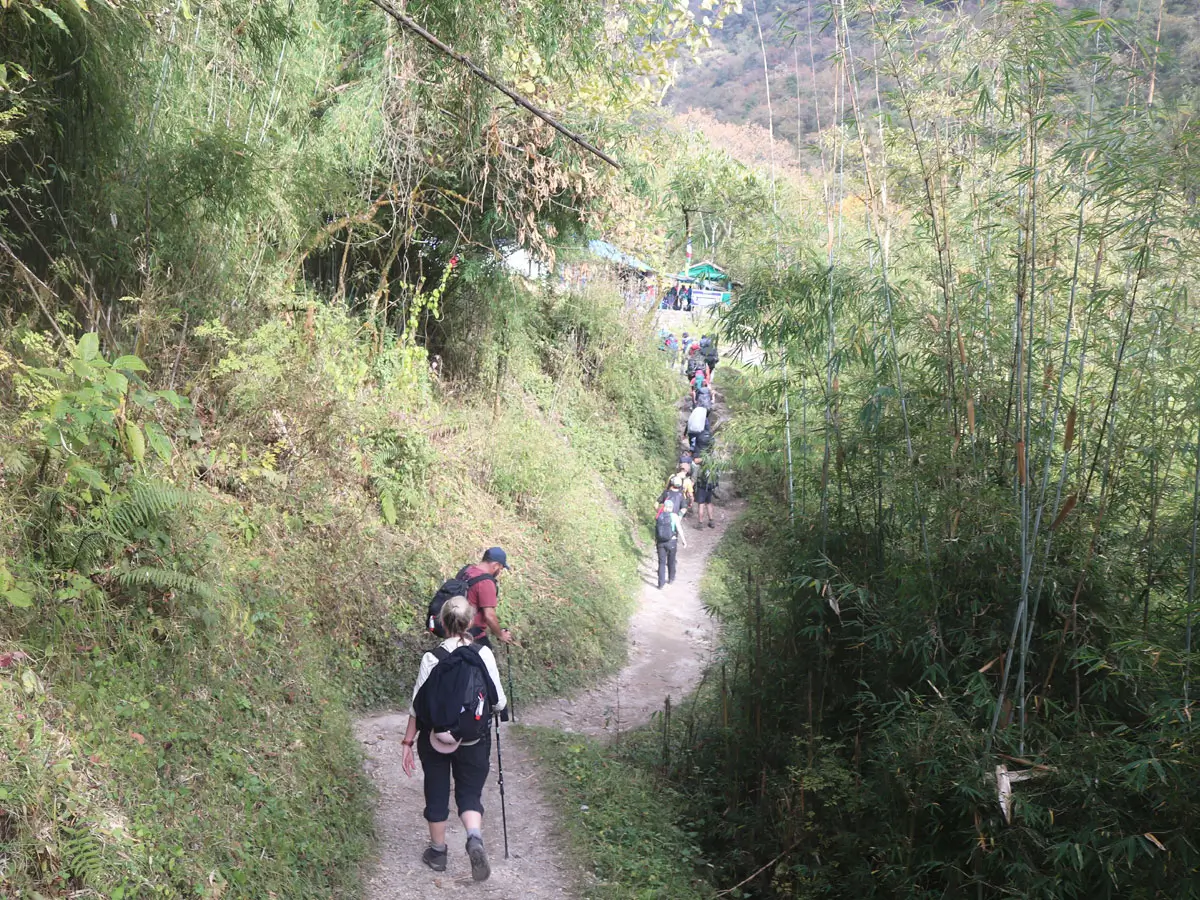
Trekkers walking through bamboo forest!
Are Teahouses Open in February, and What Can You Eat?
Teahouses provide accommodation along the ABC route in February; most are open, but our guide confirms availability at higher stops before continuing upward.
After a cold day outside, a hot meal and conversation in the dining room become welcome parts of the journey, and expect simple mountain facilities:
Rooms: Twin rooms are common where available, while higher lodges may offer shared or dormitory accommodation. Bathrooms are often shared. Prepare for cold bedrooms and bring a suitable winter sleeping bag.
Meals: Dal bhat, noodles, soup, potatoes and eggs are common choices. Menus become more limited higher up, so discuss dietary requirements before departure.
Water and facilities: Drink only boiled or properly treated water. Hot showers, charging, and Wi-Fi may cost extra, and availability varies between lodges. Carry a power bank and enough Nepali rupees for personal expenses.
Accommodation and meals are included in our ABC trekking packages. For more details, see our guides to accommodation and meals on the Annapurna Base Camp trail.
Choose an itinerary with manageable walking days and room for adjustments. Compare the actual trekking schedule and overnight stops, along with the total holiday length.
The five-day Short ABC Trek follows a more direct route with demanding walking days. In February, discuss whether its compressed schedule suits your experience and the expected conditions before finalizing your trip:
Review sleeping elevations: Pay particular attention to the ascent from the Himalaya to ABC, and discuss additional acclimatization stops where needed.
Leave spare time: Keep flexibility between the trek and your international flight, with funds for extra accommodation or transport.
Budget separately for suitable travel insurance, personal extras, and possible delays. Our ABC trek cost guide explains package prices and additional expenses.
What Should You Pack for Annapurna Base Camp in February?
Pack for freezing nights, cold wind, and possible snow, with layers you can adjust during warmer walks through the lower villages. Use our ABC packing checklist, paying particular attention to these winter essentials:
Warm clothing: Bring thermal base layers, a fleece, an insulated down jacket and waterproof outer layers. Add a warm hat, neck covering, insulated gloves and spare trekking socks.
A winter sleeping bag: Choose one suited to the coldest expected overnight temperatures. Check its comfort rating carefully, especially when borrowing or renting.
Footwear and traction: Wear waterproof trekking boots you have already used on hikes, and bring trekking poles. Discuss suitable traction equipment, such as microspikes, with your guide before departure.
Daypack essentials: Carry a headlamp, spare batteries, sunglasses, sunscreen, an insulated water bottle, water treatment, personal medication and a power bank. Protect spare clothing and electronics in waterproof bags.
On our 14-day Annapurna Base Camp Trek, you can request a sleeping bag, down jacket, and duffel bag, which you must return afterward. Confirm they fit and suit February conditions before setting off.
Do I Need Microspikes for ABC in February?
Conditions vary considerably. Microspikes can be useful when ice is present, but whether they are necessary depends on recent snowfall and trail conditions. Check with your guide before departure rather than assuming you will need them.
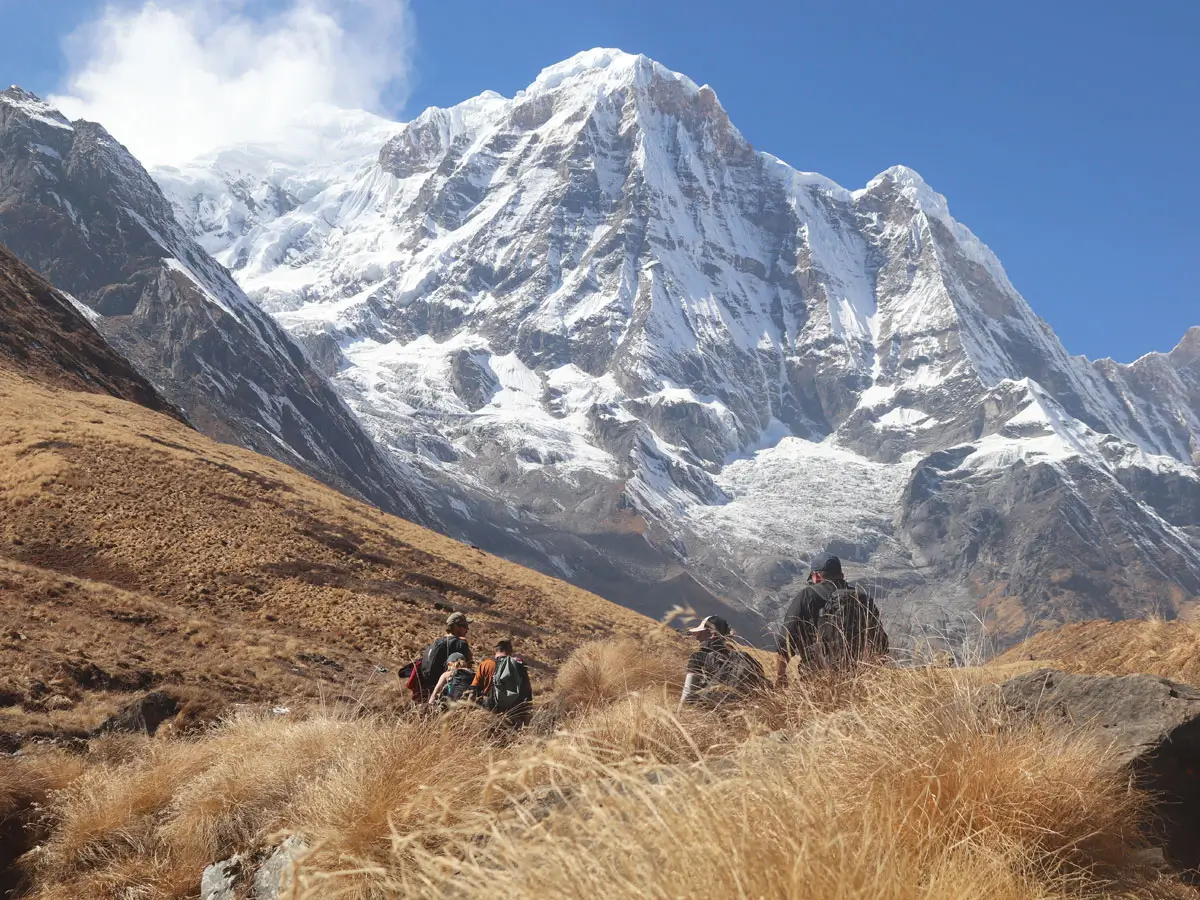
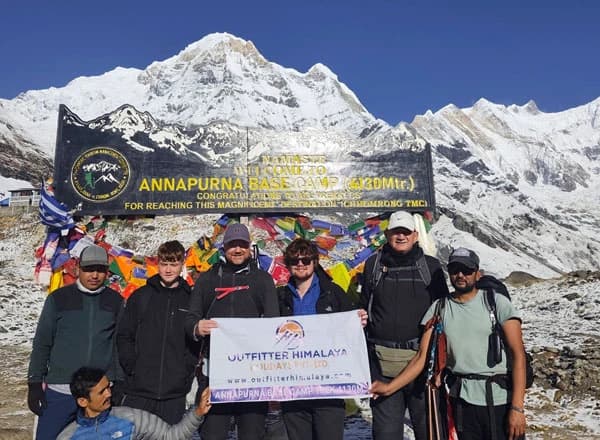
Trekkers reaching ABC- trekkers in February!
Festivals and Cultural Experiences in February
A February journey can bring cultural experiences alongside winter mountain scenery, particularly during your time in Kathmandu. Festival dates change each year, so check which celebrations coincide with your visit.
Maha Shivaratri: When this Hindu festival falls in February, the Pashupatinath temple area fills with pilgrims, flower decorations, and devotional chanting. Sadhus arrive from Nepal and India, while prayers continue into the night. Visiting the accessible public areas offers a memorable glimpse of Nepal’s religious traditions.
Lhosar celebrations: Depending on the year, February may coincide with Sonam Lhosar or Gyalpo Lhosar. These New Year celebrations are associated with the Tamang and Sherpa communities, respectively, and include family gatherings, religious observances, and festive food. Public cultural programs can add music and local flavor to your city stay.
Plan festival visits around confirmed local events. Along the ABC trail, village stays offer their own cultural encounters through everyday conversations, meals, and hospitality. Ask before photographing people or religious ceremonies.
FAQs on Annapurna Base Camp Trek in February
Is February or March better for the Annapurna Base Camp Trek?
February appeals to trekkers seeking quieter trails and a winter atmosphere. March generally brings milder walking conditions and longer days, making it more comfortable for many travelers. Snow and freezing nights remain possible higher up in both months.
Fresh snowfall is possible but cannot be guaranteed for your travel dates. You may encounter snow left by earlier storms even during a clear spell. Snow depth and trail access vary with elevation and recent weather. Our ABC seasonal guide explains the broader winter conditions.
Will the rhododendrons be blooming in February?
February is generally too early for widespread flowering. For colorful forests around Ghorepani and Tadapani, late March and April are better choices. Flowering varies with elevation and the year’s weather, so even spring departures cannot guarantee every hillside will be in bloom. Read about rhododendron season.
Is trekking in February cheaper?
Not necessarily. Your price depends mainly on the itinerary, group size, transport, and included services. Allow for winter equipment and possible extra nights if plans change. Compare the inclusions and additional expenses in our Annapurna Base Camp Trek cost guide.
How Much Does Annapurna Base Camp Trek Cost in February?
The cost depends on the itinerary, group size, transport, accommodation and services included. February may also require additional winter equipment and contingency costs if weather causes delays. See our Annapurna Base Camp Trek Cost guide for current package prices and additional expenses.
Is Annapurna Base Camp open in February?
Yes, Annapurna Base Camp is generally accessible in February, but winter conditions can affect the trail, especially at higher elevations. Snow, ice, strong winds, or heavy snowfall can make the section between Machhapuchhre Base Camp and Annapurna Base Camp difficult or temporarily inaccessible. Trail conditions should be assessed locally, and a flexible itinerary is recommended for February trekking.
Are teahouses open on the ABC trail in February?
Yes, teahouses generally remain open along the Annapurna Base Camp trail in February, although some higher-altitude lodges may operate with limited services during the winter season. Availability can also be affected by heavy snowfall and weather conditions. Booking accommodation in advance and trekking with a local guide can help ensure appropriate arrangements along the route.
Can beginners trek to Annapurna Base Camp in February?
Yes, beginners can trek to Annapurna Base Camp in February if they have reasonable fitness and prepare properly for winter conditions. The trek does not require technical climbing skills, but snow, ice, cold temperatures and potentially slower trail conditions can make it more demanding than in the main trekking seasons. Beginners should prepare with appropriate winter clothing and footwear, allow adequate time for acclimatization, and consider trekking with an experienced local guide.
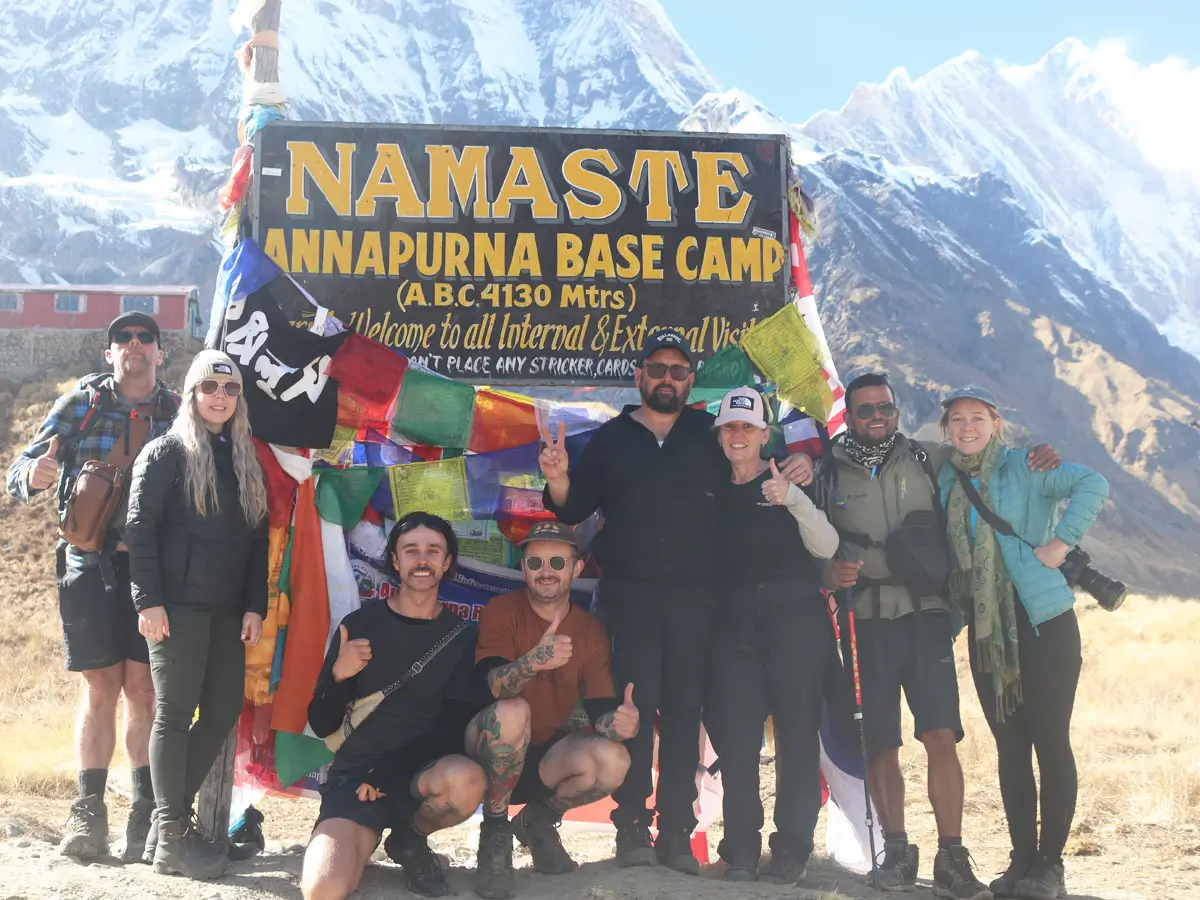
Our clients reach ABC- in February!
Conclusion: Is February the Right Month for Your Annapurna Base Camp Trek?
February can be a rewarding choice for trekkers who enjoy winter scenery and quieter trails. Clear mornings can reveal the snowy Annapurna Sanctuary, while village stays and hot teahouse meals bring warmth to the journey.Choose this month with realistic expectations: freezing nights, possible snow, and an itinerary that can change when conditions require it.
Explore our Annapurna Base Camp Trek and share your travel dates and hiking experience with Outfitter Himalaya to discuss a suitable February itinerary. If you're still deciding when to go, compare February with the other seasons in our Best Time to Trek Annapurna Base Camp guide.
Considering March instead? Our guide to the Annapurna Base Camp Trek in March explains how temperatures, snowfall, rhododendrons and trail conditions begin changing as spring arrives.
The Annapurna Circuit Trek covers approximately 102 kilometers of walking on Outfitter Himalaya’s classic 15-day itinerary, including the Manang acclimatization hike. The journey unfolds through riverside forests, mountain villages and open valleys before crossing Thorong La [...]
The Annapurna Circuit Trek costs about USD 650–1,900 per person with Outfitter Himalaya, depending on the itinerary, group size, and services included. Outfitter Himalaya’s 15-day Classic Annapurna Circuit Trek has published group-size prices of USD [...]
Foreign trekkers need a trekking permit to trek the Annapurna Circuit, and we suggest settling it before you head out. Arranging the correct paperwork before departure helps avoid extra charges and interruptions once your journey [...]