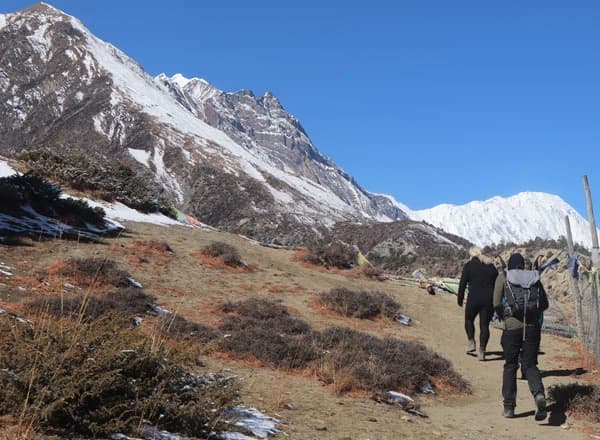
The Annapurna Base Camp Trek in March offers a unique transition from winter to spring. Lower sections of the trail warm up, rhododendrons start to bloom, and days grow longer, while snow and freezing temperatures can still linger around Machhapuchhre Base Camp and Annapurna Base Camp at 4,130 meters.
March is particularly appealing to trekkers who want clear morning mountain views, early spring scenery, lingering snow and fewer crowds than the busiest weeks of April. However, conditions vary considerably by elevation and from early to late March.
If you are prepared for both mild lower-elevation afternoons and cold, potentially snowy conditions at the upper trail, March can be an excellent time to experience Annapurna Base Camp.
Planning a Annapurna Base Camp Trek in March?
If you want the classic Kathmandu-to-Kathmandu experience, our 14-Day Annapurna Base Camp Trek combines Ghorepani, Poon Hill, Tadapani, Chhomrong and the Annapurna Sanctuary at a comfortable pace. The longer itinerary also gives you more time to adjust gradually to the increasing altitude.
Is March a Good Time for the Annapurna Base Camp Trek?
Yes, March is a good month for the Annapurna Base Camp Trek, especially if you want a combination of spring scenery and winter conditions in the high mountains. During March, you can experience:
Clear and often excellent morning mountain views
Comfortable walking temperatures at lower elevations
The beginning of rhododendron season
Snow-covered Annapurna and Machhapuchhre
Fewer trekkers than the busiest part of April
Longer days compared with winter
A changing landscape from spring forests to the snowy Annapurna Sanctuary
However, March is not completely predictable. Early March is generally colder and more wintry, while late March tends to bring milder lower-elevation conditions and a better chance of rhododendron color.
Remember that March doesn't feel the same at every elevation. Pokhara or Chhomrong can feel pleasantly warm while temperatures around MBC and ABC remain below freezing.
Want to Compare March With Other Months?
March marks the start of spring, but Annapurna Base Camp offers a very different experience year-round. For a broader comparison of weather, seasons, mountain views, snow, and trekking conditions, see our guide to the Best Time to Trek Annapurna Base Camp.
Moderate, with long stairways, repeated ascents and high-altitude walking
Average walking time
Approximately 5–7 hours on most trekking days
ABC daytime temperature
Approximately 0°C to 6°C
ABC nighttime temperature
Approximately –10°C to –4°C
Weather pattern
Frequently clear mornings with a greater chance of afternoon cloud
Lower trail conditions
Generally comfortable, with dry or occasionally damp paths
Upper trail conditions
Lingering snow or morning ice possible above Deurali
Rhododendrons
Early blooms may appear from mid-March, with more colour later in the month
Mountain visibility
Often excellent in the morning
Crowd level
Moderate, increasing towards late March
Accommodation
Teahouses operate along the route, but popular lodges may fill later in the month
Required documents
ACAP entry permit and an agency-issued TIMS card
Most suitable for
Spring trekkers, photographers and travellers seeking snow-and-flower contrasts
Temperatures, snowfall and flowering periods are approximate. Conditions can differ between early and late March and from one year to another
March does not create the same conditions along the entire trek. A warm afternoon near Tikhedhunga or Chhomrong can exist alongside freezing temperatures and snow around Machhapuchhre Base Camp and Annapurna Base Camp. Packing for both environments is therefore essential.
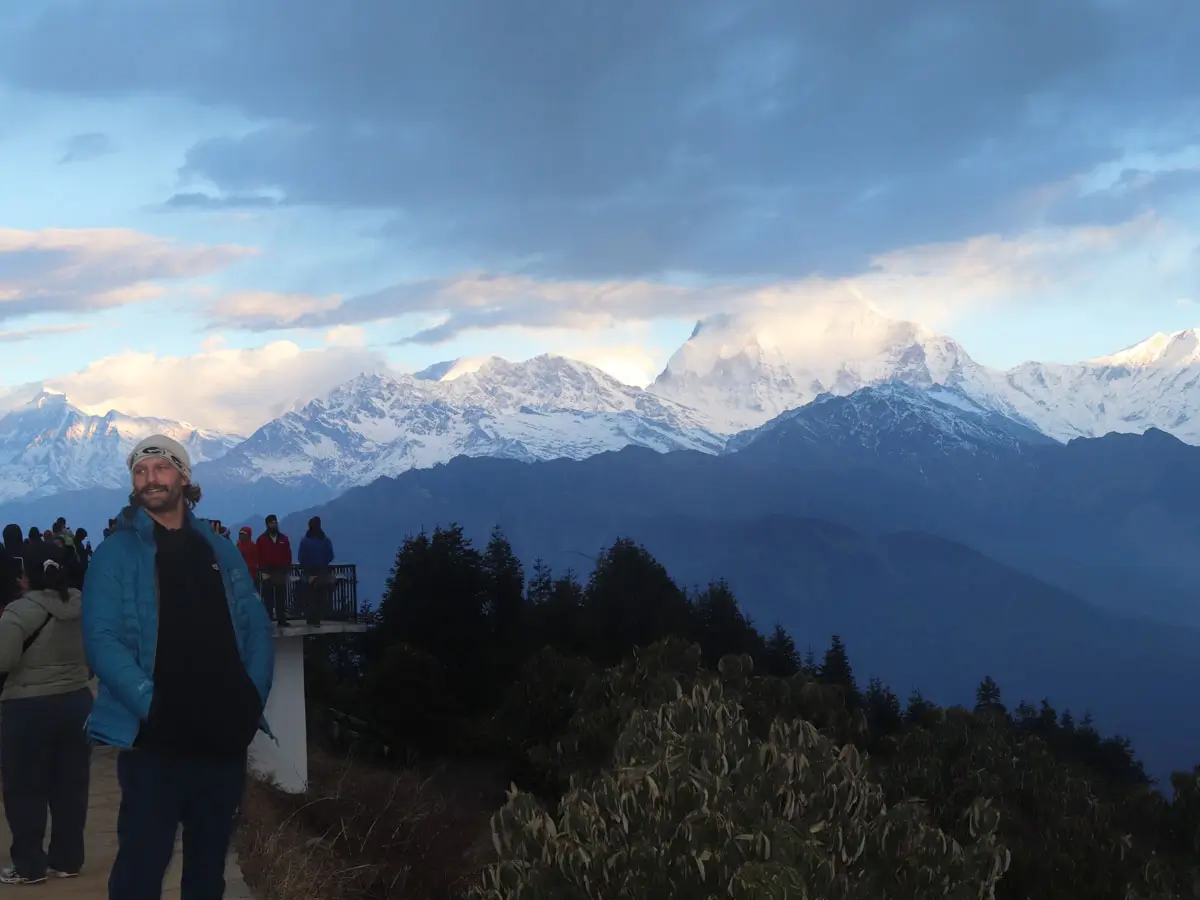
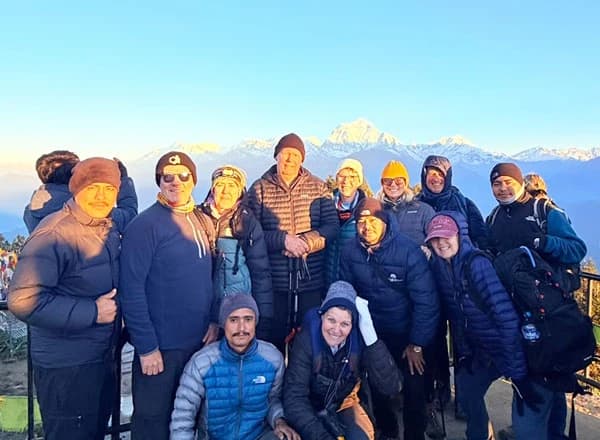
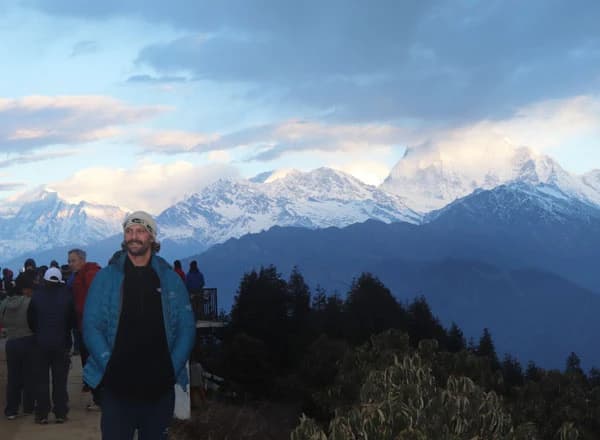
Himalaya view from Poon Hill!
Early March vs. Mid-March vs. Late March
Period
Seasonal character
Snow and trail
Rhododendrons
Crowds
Best suited to
Early March
Winter gradually giving way to spring
Snow and morning ice more likely above Deurali
Mostly buds or scattered early flowers
Quiet to moderate
Snowy scenery and peaceful trails
Mid-March
Clear transition between two seasons
Upper snow may remain but daytime thaw increases
First noticeable colour at suitable lower elevations
Moderate
A balanced snow-and-spring experience
Late March
More established spring conditions
Less persistent snow, although fresh snowfall remains possible
Better chance of colourful forests
Moderate and increasing
Warmer trekking and rhododendron photography
Early March: A Quieter, More Wintry Journey
During approximately the first ten days of March, lower valleys begin to warm, but the upper sanctuary can still resemble winter. Snow is more likely to remain around Deurali, Machhapuchhre Base Camp and Annapurna Base Camp, while shaded sections may hold overnight ice.
The trail is generally quieter than later in spring. Early March is attractive for trekkers who enjoy crisp mornings, snowy landscapes and a calmer teahouse atmosphere. However, rhododendron flowers may still be limited.
Mid-March: The Strongest Seasonal Contrast
Around mid-month, the transition becomes more visible. Fresh growth and early blossoms may appear in lower and mid-elevation forests while the peaks and upper sanctuary remain white.
Daylight continues to increase, and daytime walking generally becomes more comfortable. This period is a strong choice for travelers who want the defining March experience without choosing either the coldest or busiest part of the month.
Late March: More Color and Milder Days
The final part of March usually feels more distinctly like spring. Rhododendron displays become more likely around Ghorepani and Tadapani, lower trails feel warmer, and teahouses welcome more spring trekkers.
Snow cover often becomes less continuous on the upper trail, but late March does not guarantee a snow-free sanctuary. A single weather system can still bring fresh snowfall to the higher elevations.
Which Part of March Should You Choose?
Choose early March for solitude and stronger winter scenery, mid-March for the most balanced seasonal contrast, or late March for a greater chance of rhododendrons and milder walking conditions.
Why trek to Annapurna Base Camp in March
The Annapurna Base Camp route is rewarding in every season, but March offers a distinctive mix of fresh spring color and lingering Himalayan snow. The scenery changes almost daily as the trail arises from terraced foothills into the enclosed world of the Annapurna Sanctuary.
Sunrise from Poon Hill
The early climb to Poon Hill is one of the journey’s first major moments. On a clear March morning, the sky gradually reveals Dhaulagiri, Annapurna South, Hiunchuli and Machhapuchhre as warm sunrise light moves across their snowy faces.
March mornings are frequently well suited to long-distance views, although visibility can never be guaranteed. The combination of cold air, quiet forest, and the first light reaching the mountains makes Poon Hill far more than a quick photography stop.
Rhododendron Forests Around Ghorepani and Tadapani
The route between Ghorepani and Tadapani passes through some of the trek’s most beautiful forests. Moss-covered trunks, stone paths and tall rhododendron trees create an almost storybook atmosphere.
Flowering begins at different times depending on elevation, temperature, and the year’s weather. Early March may show only buds and scattered blossoms, while the second half of the month generally offers a better chance of seeing the season, without expecting every forest to be in full bloom.
Gurung Villages and Terraced Hills
Settlements such as Tikhedhunga, Tadapani and Chhomrong bring a human rhythm to the mountain journey. Stone houses, cultivated terraces, prayer flags and teahouse dining rooms offer a warmer contrast to the wilderness higher above.
Chhomrong is particularly memorable. Built along a steep hillside beneath Annapurna South and Machhapuchhre, it serves as the gateway to the Annapurna Sanctuary. March brings comfortable daytime conditions here, while evenings remain cool enough to gather around a teahouse stove.
Machhapuchhre Base Camp
After the enclosed valley beyond Deurali, the landscape opens dramatically around Machhapuchhre Base Camp at approximately 3,700 meters. The sacred, double-pointed summit of Machhapuchhre rises above the route while the entrance to the sanctuary unfolds ahead.
In March, snow may remain around this section, giving the valley a bright alpine character. Morning light, moving clouds, and the sharp outline of Machhapuchhre can create some of the trek’s finest photographs.
The Annapurna Sanctuary
The approach from Machhapuchhre Base Camp to Annapurna Base Camp reveals the sanctuary's true scale. The trail enters a high basin surrounded by Annapurna I, Annapurna South, Hiunchuli, Gangapurna and other Himalayan giants.
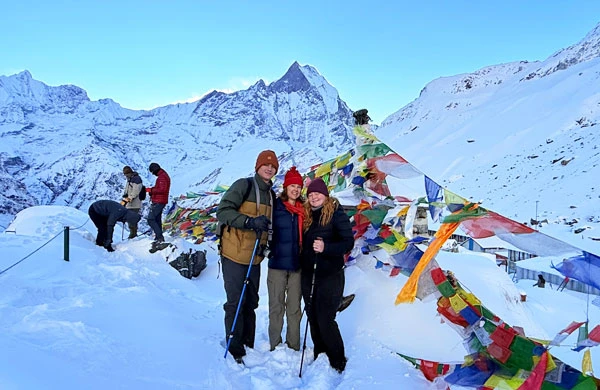
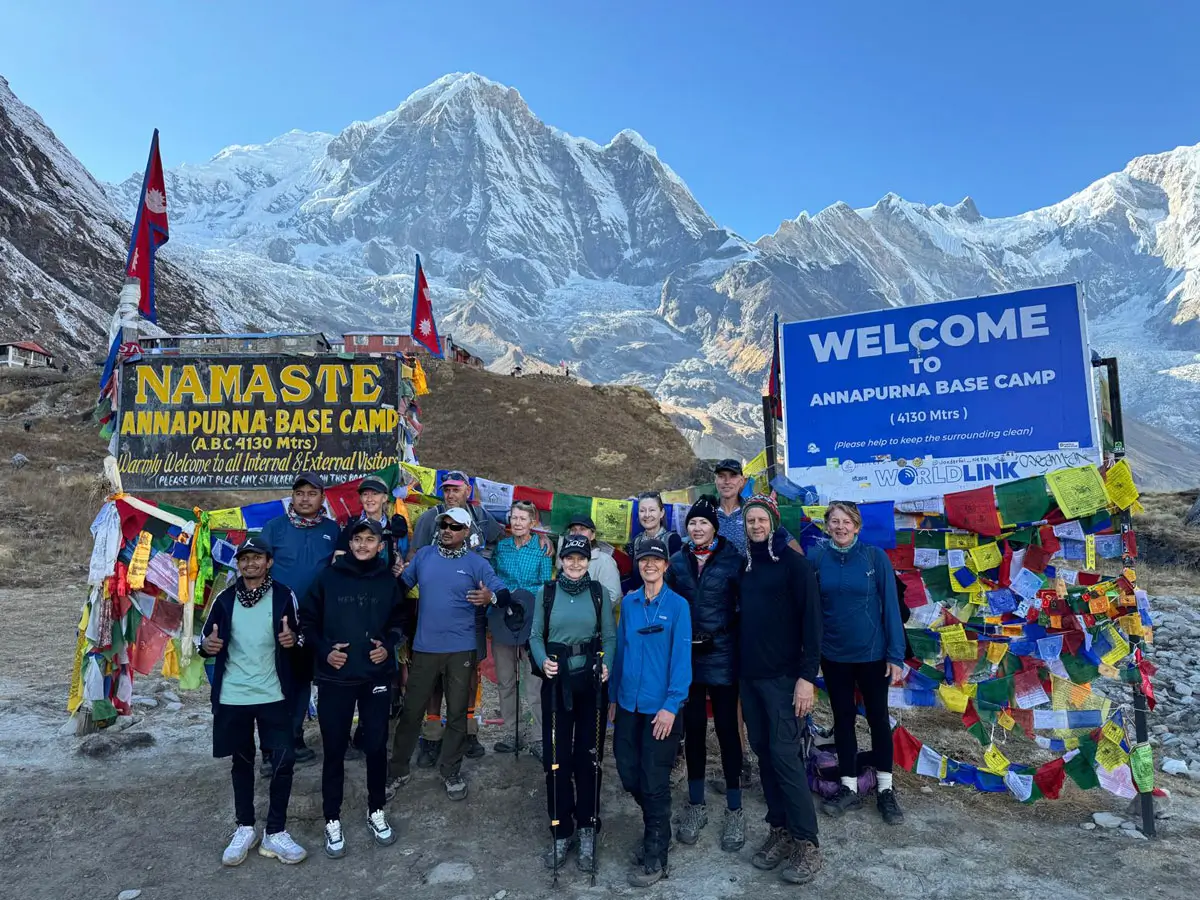
At the center stands Annapurna Base Camp at 4,130 meters. Rather than viewing one distant mountain, trekkers arrive inside a complete circle of peaks, glaciers and ridgelines. Lingering March snow often strengthens the sense of entering a remote white amphitheater.
Sunrise at Annapurna Base Camp
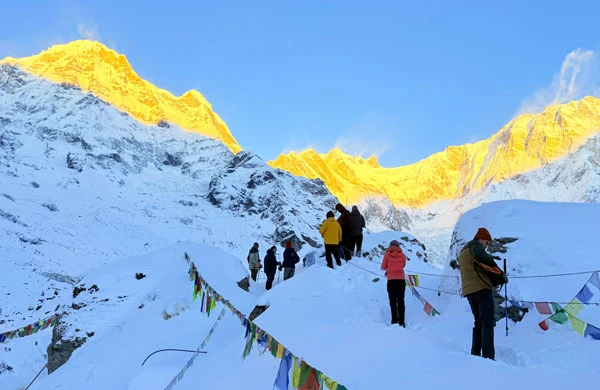
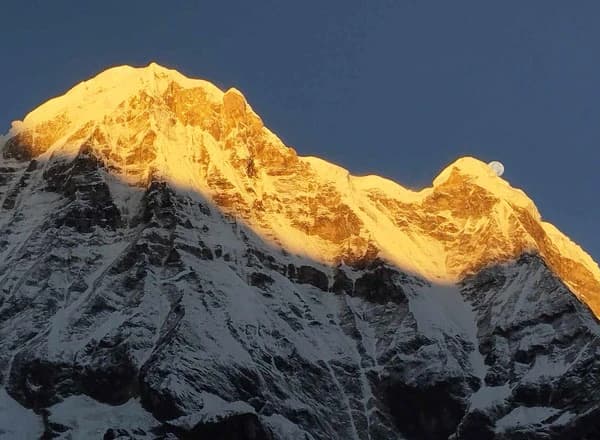
Morning at base camp is the trek's emotional high point. As daylight reaches the sanctuary, sections of the surrounding mountains shift from grey to pale gold before the entire basin becomes visible.
The moment feels both vast and intimate: prayer flags move in the cold air, trekkers step quietly outside the lodge, and Annapurna I rises directly above the sanctuary. Clear weather is never promised, but a well-timed March morning can deliver the kind of Himalayan scene that remains vivid long after the trek ends.
Jhinu Danda and the Return to Spring
The descent to Jhinu Danda gradually returns to warmer forests and cultivated hills. When the local hot spring is open and accessible, trekkers may visit it as a relaxing addition after several days of climbing and descending.
By this stage, the journey's contrast is complete—from early spring forests to the snowy sanctuary and back again
What Makes March Different From Other Spring Months?
March is the opening chapter of spring in the Annapurna region. Unlike April, when the forests are usually more colorful, or May, when warmer and wetter pre-monsoon conditions begin to develop, March still carries a visible trace of winter.
This creates the month’s defining contrast. Around Poon Hill, Tadapani and Chhomrong, the hills begin to brighten with fresh growth and early rhododendron flowers. Higher up, the narrow valley beyond Deurali can remain edged with snow, and the Annapurna Sanctuary often retains its white winter appearance.
Flowers remain at some elevations but begin fading elsewhere
Snow near ABC
More likely to remain
Usually less persistent, but still possible
Generally reduced, although fresh snowfall can still occur
Daytime warmth
Cool to mild
Warmer and more comfortable
Warmest spring month
Trail traffic
Moderate and increasing
Often the busiest spring period
Usually begins to ease
Mountain visibility
Frequently sharp in the morning
Good mornings with more afternoon cloud
Greater chance of haze, cloud and showers
Overall atmosphere
Snow-and-flower contrast
Colourful and energetic
Green, warmer and more changeable
March suits trekkers who want to see the mountains in seasonal transition rather than after spring has fully arrived. The forests are only beginning to awaken, the peaks still look intensely wintry, and the trail carries a quieter early-season energy.
The experience also changes continuously as the route gains altitude. A sunny spring afternoon near Ghandruk can be followed, several days later, by a cold morning beneath the sanctuary's snowy walls. Few other months reveal the Annapurna landscape in such contrasting layers.
How Much Does the Annapurna Base Camp Trek Cost?
The cost depends on your itinerary, group size, accommodation and transportation. Outfitter Himalaya offers several ABC options, from the short trek from Pokhara to the complete Kathmandu-to-Kathmandu itinerary. See our Annapurna Base Camp Trek Cost Guide for a current comparison of packages, inclusions and additional expenses.
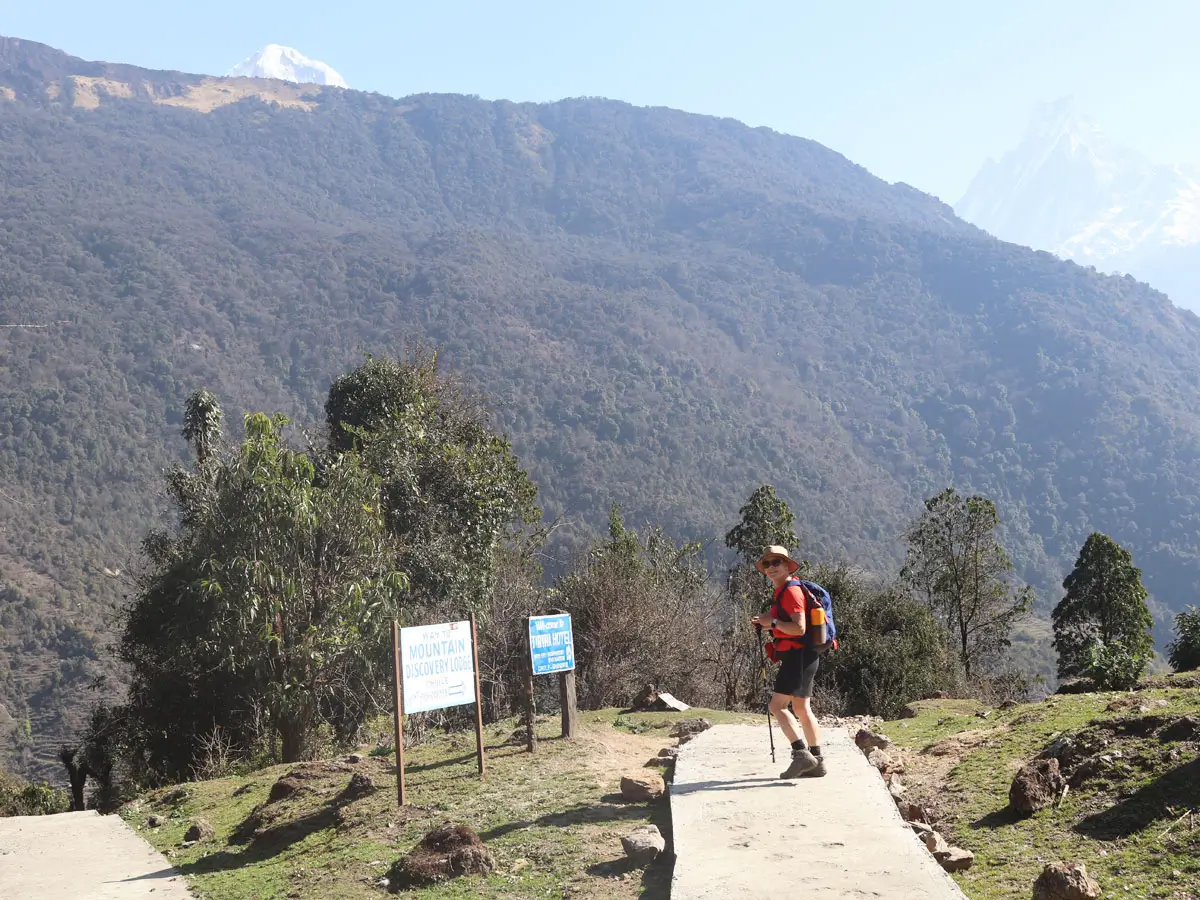
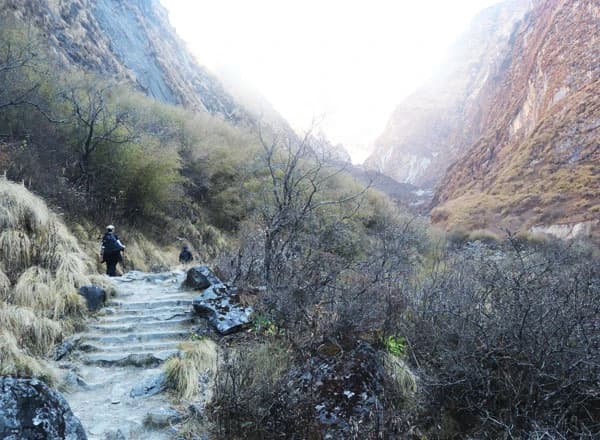
ABC Trail in March!
Annapurna Base Camp Weather and Temperature in March
March brings improving early-spring weather to the Annapurna region, but conditions vary considerably between the lower villages and the high sanctuary. Trekkers may start the day under clear skies, enjoy mild sunshine around Chhomrong, and later encounter cold wind or light snow near Machhapuchhre Base Camp.
A Typical March Day
Time of day
Time of day
Early morning
Cold and frequently clear, with frost or frozen trail sections at higher elevations
Late morning
Increasing sunshine and comfortable walking temperatures on the lower route
Afternoon
Greater possibility of cloud, mountain mist or a brief shower at lower elevations
Evening
Temperatures fall quickly once sunlight leaves the valley
Night
Cold in the villages and commonly below freezing near MBC and ABC
The clearest mountain views often appear during the morning. As the ground warms, cloud can begin forming around the surrounding ridges, particularly later in March. Starting early therefore improves both visibility and the amount of daylight available for reaching the next teahouse.
Rain and Snow in March
March is generally drier than the approaching pre-monsoon months, but it should not be described as completely rain-free. Short showers can occur around Pokhara and the lower hills, while the same weather system may produce snow higher in the sanctuary.
Occasional western weather systems can also bring fresh snowfall to the Himalayas. These events do not define the entire month, but they explain why one March departure may find a mostly clear upper trail while another walks through fresh snow.
Weather at Different Elevations
Below Chhomrong, daytime conditions often feel comfortably spring-like. Forest shade can remain cool, and damp stone steps may require attention after rain.
Between Dovan and Deurali, the valley becomes narrower and receives less direct sunlight in some places. Morning frost and lingering ice can remain even when lower villages feel warm.
Above Deurali, the environment becomes more exposed. Wind, snow cover, and rapidly changing clouds have a greater influence on comfort and walking speed. Around Machhapuchhre Base Camp and Annapurna Base Camp, direct sunlight may feel surprisingly warm, but temperatures drop quickly when clouds arrive, or the sun disappears behind the peaks.
March weather is part of the trek’s beauty, not a reason to avoid it. The key is to expect variation: pack accessible layers, keep clothing in waterproof bags, and let the guide adjust departure times based on the day’s conditions.
Annapurna Base Camp Temperatures in March by Elevation
March temperatures change sharply as the route climbs from Pokhara to Annapurna Base Camp. Lower valleys can feel warm in the afternoon, while nights inside the high sanctuary remain firmly wintry.
Location
Elevation
Approx. daytime temperature
Approx. nighttime temperature
Pokhara
830 m
18°C to 27°C / 64°F to 81°F
9°C to 15°C / 48°F to 59°F
Tikhedhunga
1,540 m
14°C to 22°C / 57°F to 72°F
5°C to 10°C / 41°F to 50°F
Chhomrong
2,170 m
10°C to 18°C / 50°F to 64°F
2°C to 7°C / 36°F to 45°F
Ghorepani
2,860 m
5°C to 13°C / 41°F to 55°F
–2°C to 4°C / 28°F to 39°F
Himalaya
2,920 m
4°C to 12°C / 39°F to 54°F
–3°C to 2°C / 27°F to 36°F
Deurali
3,230 m
2°C to 9°C / 36°F to 48°F
–6°C to 0°C / 21°F to 32°F
Machhapuchhre Base Camp
3,700 m
0°C to 7°C / 32°F to 45°F
–8°C to –2°C / 18°F to 28°F
Annapurna Base Camp
4,130 m
0°C to 6°C / 32°F to 43°F
–10°C to –4°C / 14°F to 25°F
These are broad planning ranges rather than guaranteed daily readings. Fresh snowfall, wind, cloud cover and cold weather systems can produce lower temperatures.
What These Temperatures Feel Like on the Trail
Direct sunlight can make a March afternoon feel warmer than the thermometer suggests. Trekkers may walk in a light base layer around the lower villages, but temperatures change quickly when they enter a shaded forest or when clouds move across the sanctuary.
The coldest periods are usually before sunrise and after sunset. Teahouse bedrooms are generally unheated, even when the shared dining room has a stove. A suitably warm sleeping bag remains important for nights around Machhapuchhre Base Camp and Annapurna Base Camp.
Early March usually sits closer to the colder end of these ranges. Temperatures gradually become milder later in the month, especially below 3,000 meters, but freezing nights can still occur at base camp throughout March. A flexible layering system is therefore more useful than relying on one heavy jacket.
Advantages and Considerations of the ABC Trek in March
March offers one of the most varied versions of the Annapurna Base Camp Trek. Its greatest strengths come from the same seasonal transition that requires thoughtful preparation.
Advantages of Trekking in March
Two seasons in one journey: Lower valleys begin welcoming spring while the upper sanctuary can remain beautifully snow-covered.
Clear morning panoramas: Crisp early-morning air frequently creates excellent views from Poon Hill, Tadapani, Chhomrong and Annapurna Base Camp.
Beginning of rhododendron season: Forest color starts returning, particularly during the second half of the month.
Snow-covered Himalayan scenery: Annapurna I, Machhapuchhre, Hiunchuli and Annapurna South retain their dramatic winter appearance.
Fewer trekkers than peak April: March feels active and social without always carrying the same volume of spring traffic
Considerations Before Choosing March
Cold high-altitude nights: Temperatures around MBC and ABC often fall below freezing, so a warm sleeping bag and layered clothing are essential.
Variable upper-trail conditions: Snow, ice, or slush may affect sections above Deurali, depending on recent weather.
Flowering cannot be guaranteed: Early March may show buds and scattered blossoms rather than full rhododendron forests.
Afternoon cloud is possible: Mountain views are often strongest in the morning, making early starts valuable.
Conditions differ greatly by elevation: Packing only for warm lower valleys can leave trekkers uncomfortable in the sanctuary.
Crowds increase later in the month: Popular teahouses may become busier as March approaches the main April season.
Difficulty, Altitude and Acclimatization in March
The Annapurna Base Camp Trek does not require climbing skills, but trekkers must manage long walking days, steep stone staircases, repeated ascents and descents, and a final elevation of 4,130 meters.
March can add snow or frozen sections to the upper route, making balance and pacing more important. However, properly equipped beginners with reasonable fitness can complete the trek through a gradual itinerary and professional guidance.
What Makes the Trek Physically Demanding?
The challenge comes from several factors rather than one extremely difficult climb:
The long staircase above Ulleri
Repeated climbing and descending around Chhomrong
Consecutive trekking days of approximately five to six hours
Thinner air above 3,000 meters
Possible snow or ice beyond Deurali
Cold mornings and nights at higher elevations
The long descent after reaching base camp
Prepare with regular walking, stair climbing, cardiovascular exercise, and basic leg strengthening. Training with a daypack also helps the body become comfortable carrying weight over several hours.
Short on Time?
If you already have a limited number of days in Nepal, our 5-Day Short Annapurna Base Camp Trek from Pokhara takes a more direct route to the Annapurna Sanctuary. It is designed for fit travelers who want to reach ABC without the longer Poon Hill and Kathmandu itinerary.
Acclimatization on the ABC Route
Outfitter Himalaya's route approaches the sanctuary through Tikhedhunga, Ghorepani, Tadapani, and Chhomrong, and spending several days walking before entering the highest section gives the body more time to adjust than a rushed direct itinerary.
The final ascent above Himalaya and Deurali still gains elevation quickly. Walking slowly, eating properly, drinking regularly, and communicating honestly with the guide are essential. Fitness helps with the physical work, but it does not make anyone immune to altitude sickness.
Recognizing Altitude Symptoms
Mild acute mountain sickness commonly involves a headache together with symptoms such as:
Nausea or reduced appetite
Dizziness
Unusual tiredness
Disturbed sleep
Never hide symptoms to protect the itinerary. A trekker who feels unwell should not continue higher until the guide has assessed the situation and symptoms have improved. A worsening headache, repeated vomiting, confusion, loss of coordination, or breathlessness at rest requires urgent action and descent.
Use medication such as acetazolamide only after receiving appropriate medical advice. It should not replace gradual ascent or honest symptom monitoring.
March-Specific Acclimatization Tips
Cold weather can reduce the desire to drink, so keep water accessible rather than waiting until you feel thirsty. Avoid alcohol while ascending, maintain a steady pace, and change damp clothing before the temperature falls.
The goal isn't to reach base camp as quickly as possible. A comfortable rhythm gives trekkers time to notice changing landscapes, recover between walking days, and arrive inside the sanctuary with enough energy to appreciate it.
How to Prepare for Annapurna Base Camp in March
You do not need to be an athlete, but preparation makes the trek more comfortable.
Before arriving in Nepal:
Walk regularly for several weeks
Include stair climbing or uphill walking
Build basic leg strength
Practice longer walks with a daypack
Break in your trekking boots before the trek
Get used to walking for several hours on consecutive days
Prepare for both warm lower elevations and freezing upper elevations
Fitness helps with the physical demands of the trek, but it does not prevent altitude sickness.
Prefer a More Comfortable Return?
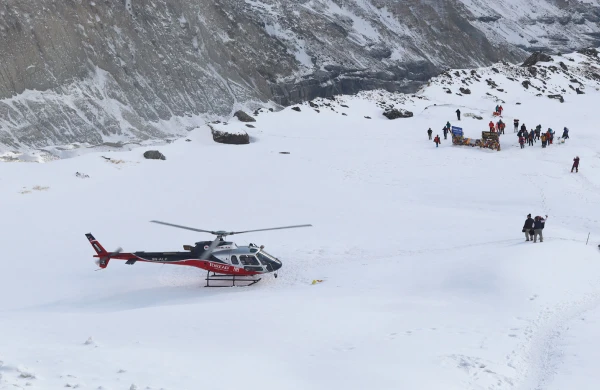
If you would like to trek to Annapurna Base Camp but avoid the full downhill return journey, consider our 12-Day Annapurna Base Camp Trek with Helicopter Return. The itinerary combines the trek with upgraded accommodation and a scenic helicopter flight from ABC to Pokhara.
Snow and Trail Conditions in March
March trail conditions change with elevation, shade, and recent weather. Lower paths may feel completely spring-like, while snow and ice can remain several days higher in the Annapurna Sanctuary
Trail section
Likely March conditions
Tikhedhunga to Ghorepani
Long stone staircases that are usually dry but may be damp in forest shade
Ghorepani to Tadapani
Forest trail with roots, stones and occasional muddy sections
Chhomrong to Bamboo
Repeated descents and climbs on stone steps, with moisture in the enclosed forest
Bamboo to Himalaya
Cooler and more shaded, with possible frost on early-morning paths
Himalaya to Deurali
Increasing possibility of frozen patches and lingering snow
Deurali to MBC
Snow, ice or slush may affect exposed sections after winter weather
MBC to ABC
Open alpine trail where snow cover, wind and visibility can change walking conditions
What Happens to Snow During March?
Snow remaining from winter often freezes overnight and becomes firmer in the morning. As sunlight and daytime temperatures increase, the same surface may soften into slush. This is why an upper trail can feel stable early in the day but slower and wetter during the afternoon.
Early March usually has a greater possibility of continuous snow around Machhapuchhre Base Camp and Annapurna Base Camp. Later in the month, exposed sections often begin clearing, although shaded areas can retain ice and a new weather system can cover the route again.
The Deurali–MBC Section
The valley between Deurali and Machhapuchhre Base Camp passes beneath steep, snow-holding slopes. Recent snowfall, wind, overnight freezing, and daytime warming influence its condition. A fixed calendar date cannot determine whether the section is suitable to cross.
Guides normally gather recent information from lodges, other trekking teams and local trail authorities before choosing the route and departure time. When seasonal alternatives or restrictions are in place, trekkers should follow the locally recommended trail rather than selecting a route independently.
An early departure may be appropriate when the guide determines that colder morning conditions provide a better crossing window. After heavy snowfall or an unfavorable assessment, waiting or adjusting the itinerary is the responsible decision. This flexibility is normal mountain planning, not a failed trek.
Are Microspikes Necessary in March?
Microspikes are not required on every March departure, but carrying them is sensible, especially in early March or after recent snowfall. They can improve grip on compact snow and frozen trail sections but do not make every condition safe.
Waterproof trekking boots, gaiters and trekking poles are also valuable. Poles improve balance on snow, slush and the route’s many stone staircases, while gaiters help keep snow and moisture out of the boots.
What Our Guides Watch for in March
One advantage of trekking with an experienced local team is that we assess March conditions on the ground rather than assume them from the calendar. Above Deurali, our guides pay particular attention to:
Recent snowfall
Overnight freezing
Ice on shaded sections
Wind and visibility
Snow depth and trail condition
Information from lodges and other trekking teams
The group's pace and physical condition
A trail that is comfortable one day can become slower after fresh snowfall. Similarly, an early departure may provide better conditions when snow is firm in the morning. The goal is not to follow the itinerary at any cost. The goal is to complete the trek safely and comfortably, based on the conditions on the mountain.
Rhododendron Season and the Awakening Forests
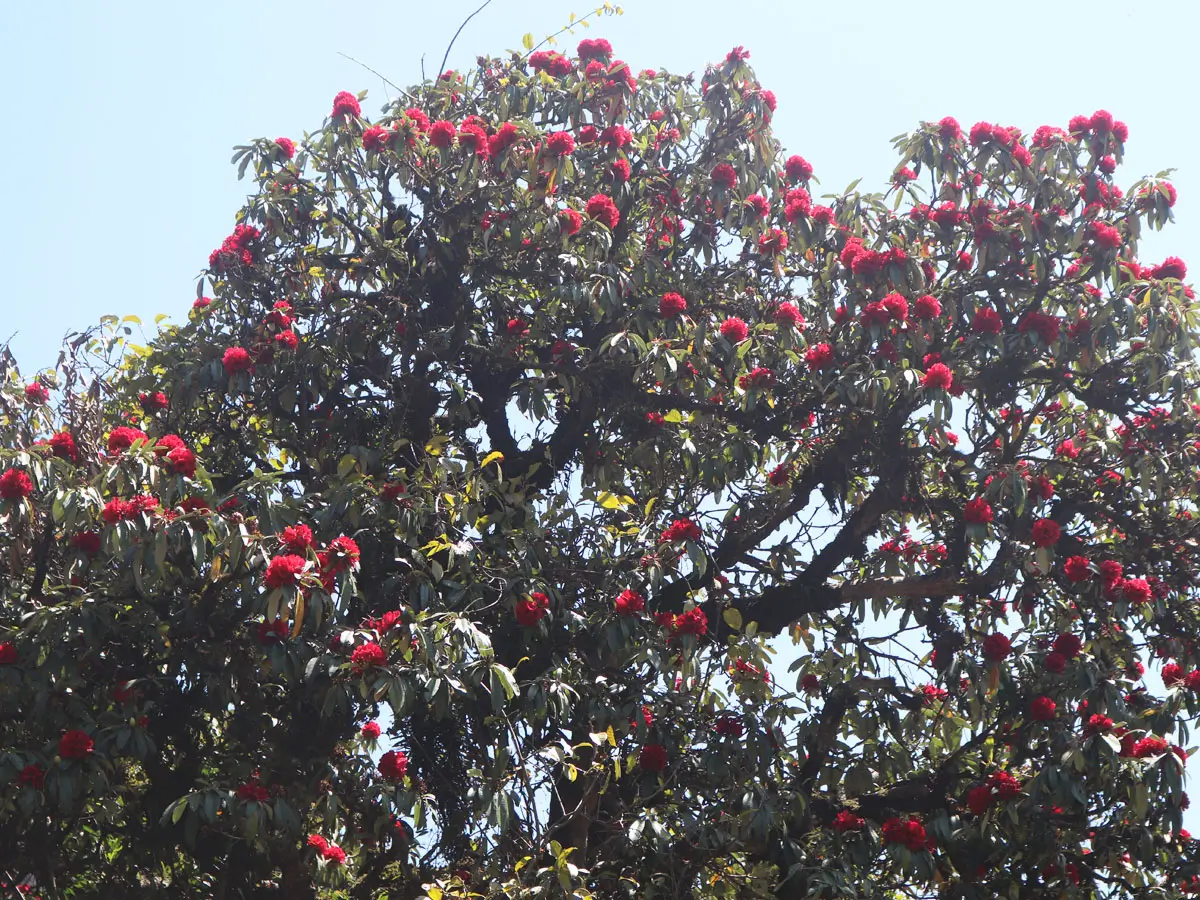
March marks the beginning of rhododendron season along the Annapurna Base Camp route. Nepal’s national flower, known locally as Laligurans, begins adding red, pink, and occasionally white color to forests that have remained quiet through winter.
Flowering depends on elevation, slope direction, sunlight, and that year's weather. Trees at warmer, lower elevations usually bloom first, while forests higher towards Ghorepani and Tadapani may remain in bud until later.
Where Can You See Rhododendron?
The most promising forest sections on Outfitter Himalaya’s route include:
The climb above Ulleri towards Ghorepani
Forests surrounding Ghorepani
The trail between Ghorepani and Tadapani
Wooden sections approaching Chhomrong
The route from Ghorepani to Tadapani is particularly atmospheric. The trail winds beneath tall trees, over roots and stone steps, with moss covering trunks and branches. When the flowers begin to open, bright color appears between the darker forest and distant white mountains.
Will Rhododendrons Be in Full Bloom?
Full flowering should not be promised for every March trek. Early in the month, trekkers may see buds, fresh leaves, and scattered blossoms rather than complete forest color. The possibility of a stronger display generally improves from mid-to late March, although peak timing changes annually.
This gradual awakening is part of March’s character. The landscape does not feel like a finished spring postcard; it feels alive and in motion. One hillside may remain quiet, while another has already begun turning red.
More Than Flowers
Spring also brings a noticeable change to the lower forest atmosphere. Days lengthen, birds become more active, and warmer sunlight reaches between the trees. After the open mountain views of Poon Hill, these sheltered forests give the trek a softer, more intimate beauty.
Visitors should leave flowers on the trees, stay on the established trail, and avoid damaging roots or young vegetation for photographs. Experiencing the forest respectfully helps preserve the same spring color for local communities and future trekkers.
Want Poon Hill and ABC in One Shorter Trek?
If the combination of Poon Hill sunrise, rhododendron forests and Annapurna Base Camp is what attracts you to the March trek, our 9-Day Annapurna Base Camp Trek via Poon Hill combines these highlights in one itinerary, starting and ending in Pokhara.
Rhododrendron flower blooming in march!
Mountain Visibility and Photography in March
March can be highly rewarding for Himalayan photography. Winter often leaves the peaks heavily snow-covered, while improving spring weather creates regular opportunities for clear morning views. The best visibility usually appears from sunrise through late morning, before clouds build around the ridges.
Best March Photography Locations
Location
Main photographic subject
Useful timing
Poon Hill
Dhaulagiri and the Annapurna range at sunrise
Before sunrise to early morning
Ghorepani–Tadapani trail
Rhododendron forest with mountain glimpses
Rhododendron forest with mountain glimpses
Tadapani
Machhapuchhre and Annapurna South above wooded hills
Sunrise and early morning
Chhomrong
Village terraces beneath Annapurna South
Early morning
Machhapuchhre Base Camp
Machhapuchhre, snowy valley and changing cloud
Early morning
Annapurna Base Camp
Himalayan amphitheatre, glaciers and prayer flags
Sunrise and the hour immediately afterwards
Teahouses, food and facilities in March
March marks the return of the main spring trekking season, so teahouses along the Annapurna Base Camp route are generally operating. The experience remains simple, especially above Chhomrong, but a warm meal and a shared dining room can feel wonderfully welcoming after a cold day in the mountains.
Teahouse Accommodation
Most teahouses provide twin-sharing rooms with basic mattresses, pillows, and blankets. Bedrooms are usually unheated, while the common dining room may have a stove in the evening; please see our Annapurna Base Camp Trek Accommodation blog for more details.
Food Available on the Trail
Teahouse menus commonly include:
Dal bhat with rice, lentils and vegetables
Vegetable or egg fried rice
Noodles and noodle soup
Momos
Pasta and potatoes
Porridge, pancakes and eggs
Garlic soup and vegetable soup
Tea, coffee, hot lemon and ginger drinks
Drinking Water
Teahouses offer boiled water for a fee, and you can also carry a reliable filter or purification tablets for suitable local water sources. We have a dedicated blog about the Foods and drinks in the ABC Trek for further information.
What to Pack for the Annapurna Base Camp Trek in March
March brings changing conditions on the Annapurna Base Camp Trek. Lower elevations can be warm during the day, while the higher sections around Machhapuchhre Base Camp and Annapurna Base Camp can be cold, windy, and snowy.
Pack layered clothing, including thermal base layers, a fleece or warm mid-layer, an insulated down jacket, and a waterproof/windproof shell. Comfortable trekking trousers, warm socks, gloves, a hat, and a neck gaiter are also recommended.
Outfitter Himalaya offers several ways to experience Annapurna Base Camp, depending on your available time, starting point and preferred trekking style. Compare the itineraries and choose the route that best matches your time, fitness and travel preferences.
An extended Annapurna adventure combining Poon Hill, ABC and Mardi Himal.
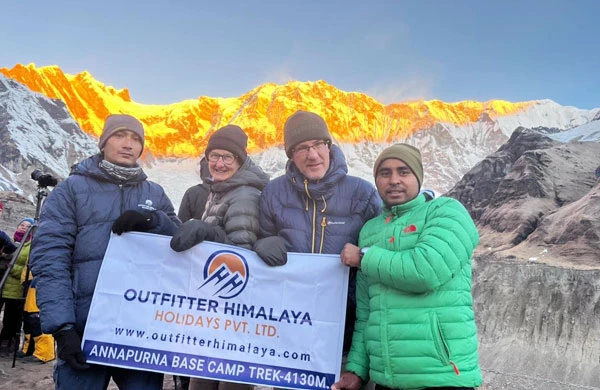
Our guide Raj- reach ABC with Clients
Tips from Raj, Senior Guide at Outfitter Himalaya and Raj has more than 20 years of experience guiding trekkers in the Annapurna region.
Choose Your Dates and Start Early: March offers different experiences throughout the month. Early March is generally quieter with more winter scenery, while late March can bring milder days and early rhododendron blooms. Whichever dates you choose, start your walks early for better mountain views and more time to handle changing conditions.
Dress in Layers and Keep Warm Gear Handy: Start your morning slightly cool rather than wearing all your layers during steep climbs. Keep your down jacket, gloves, shell, gaiters, and microspikes in your daypack, especially on the higher sections where weather can change quickly.
Take Care of Your Gear and Batteries: Dry damp socks, insoles, and clothing properly at the teahouse, but avoid placing them directly against hot stoves. Cold can drain phone and camera batteries quickly, so charge whenever electricity is available and keep spare batteries or devices warm at night.
Stay Flexible with Your Trekking Schedule: Snow and changing mountain conditions can sometimes slow the trek. A buffer day gives you flexibility, rather than forcing you to continue in poor conditions. In late March, we also recommend coordinating accommodation in advance at higher elevations.
Prepare for the Practical Essentials: Check Nepal's Holi dates if you are traveling in March, particularly if you plan to spend time in Kathmandu or Pokhara. Most importantly, make sure your travel insurance specifically covers trekking to 4,130 meters and emergency helicopter evacuation. Above all, listen to your guide and local conditions—the mountains always deserve flexibility and respect.
FAQS for Annapurna Base Camp Trek in March
Is March a good time for the Annapurna Base Camp Trek?
Yes, March offers clear morning views, gradually warming days, moderate crowds, and the start of rhododendron season. Snow may remain in the upper sanctuary, creating an attractive contrast between spring forests and white Himalayan scenery.
How cold is Annapurna Base Camp in March?
Daytime temperatures at ABC commonly range from approximately 0°C to 6°C. Nighttime temperatures may fall between –10°C and –4°C, with colder conditions possible during snowfall, cloud, or strong wind.
Is there snow at Annapurna Base Camp in March?
Lingering winter snow is common around MBC and ABC, particularly during early March. Snow cover usually becomes less continuous as the month progresses, although fresh snowfall can occur at any point.
Does it rain on the ABC Trek in March?
March is generally drier than late spring and the monsoon, but it is not completely rain-free. Brief showers can occur at lower elevations, while the same weather system may produce snow higher in the sanctuary.
Are rhododendrons blooming in March?
Flowering begins gradually during March. Early departures may see buds and scattered blossoms, while the chance of stronger color increases in the second half of the month. Blooming dates vary with elevation and annual weather.
Do I need microspikes for the ABC Trek in March?
Not on every departure, but carrying lightweight microspikes is a good idea. They may improve grip on compact snow or frozen sections above Deurali. Their use should follow current trail conditions and the guide’s advice.
Can beginners trek to Annapurna Base Camp in March?
A physically prepared beginner can complete the trek with suitable training, gradual pacing, and a well-planned itinerary. Previous hiking experience is helpful, but technical climbing ability is not required.
Is altitude sickness possible at Annapurna Base Camp?
Yes, ABC is high enough for acute mountain sickness, regardless of fitness. Trekkers should ascend gradually, report headaches or nausea honestly, and avoid going higher when symptoms worsen.
Are teahouses open in March?
Teahouses generally operate throughout the route during March. Higher lodges have limited capacity, and dormitory accommodation may occasionally be necessary. Availability becomes tighter as spring traffic increases later in the month.
Can I charge my phone or use Wi-Fi?
Many teahouses offer charging and paid Wi-Fi, but reliability decreases at higher elevations. Carry a power bank and keep batteries warm because cold conditions can reduce their capacity.
How crowded is the ABC Trek in March?
Early March is usually relatively peaceful. Trekker numbers rise throughout the month as temperatures become milder and rhododendrons begin flowering, but March is often less crowded than the busiest part of April.
Can I experience Holi during a March trek?
Possibly, Holi follows the lunar calendar and often occurs in March. Celebrations are most visible in Kathmandu, Pokhara, and other towns, so check the annual date and add a city day before or after the trek if it matches your visit.
How long is Outfitter Himalaya’s ABC Trek?
Outfitter Himalaya’s complete Annapurna Base Camp program lasts 14 days and covers approximately 90 kilometers of trekking. Its route includes Poon Hill, Tadapani, Chhomrong, Machhapuchhre Base Camp, and Annapurna Base Camp.
What special equipment should I carry for the ABC Trek in March?
Carry warm layered clothing, a waterproof outer shell, a cold-weather sleeping bag, waterproof trekking boots, gaiters and trekking poles. Lightweight microspikes are also sensible when snow or ice remains above Deurali. Keep gloves, insulation and weather protection inside your daypack.
Want to Extend Your Annapurna Adventure?
If you have more time and want to explore beyond Annapurna Base Camp, our 17-Day ABC with Poon Hill and Mardi Himal Trek combines three highlights of the Annapurna region: Poon Hill, Annapurna Base Camp and Mardi Himal.
Conclusion: Is the Annapurna Base Camp Trek in March Worth It?
The Annapurna Base Camp Trek in March offers a unique transition from winter to spring. The lower trails begin to warm, rhododendrons start to bloom, while snow can still cover the higher sections around Machhapuchhre and Annapurna Base Camp.
With proper layers, steady pacing, a licensed guide, and flexibility for changing conditions, March is a rewarding time to trek. You can experience Poon Hill sunrises, blooming forests, Gurung culture, snow-covered mountains, and the dramatic Annapurna Sanctuary in one journey.
April is one of the best months for the Ghorepani Poon Hill Trek, offering rhododendron flowers, warmer daytime walks, and Himalayan sunrise views from 3,210 meters. Expect busy teahouses, chilly mornings, and possible afternoon cloud [...]
The Ghorepani Poon Hill Trek in March combines the beginning of rhododendron season with warming days and opportunities for clear Himalayan views. Sunrise at 3,210 meters remains cold, and higher paths can still have snow [...]
The Annapurna Circuit Trek covers approximately 102 kilometers of walking on Outfitter Himalaya’s classic 15-day itinerary, including the Manang acclimatization hike. The journey unfolds through riverside forests, mountain villages and open valleys before crossing Thorong La [...]