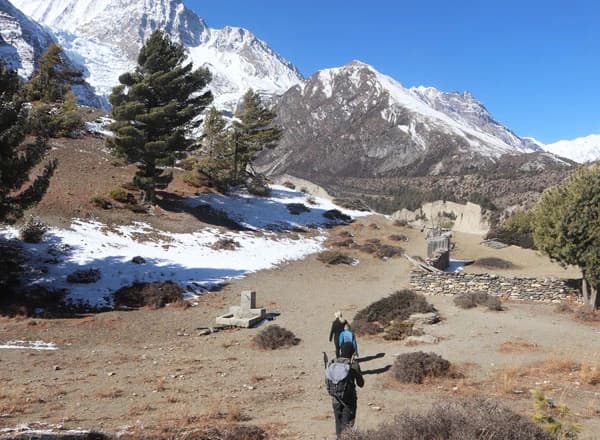
The Annapurna Base Camp Trek covers approximately 85–90 km (53–56 miles) on Outfitter Himalaya's classic route via Ghorepani and Poon Hill. Most trekking days involve 7–12 km of walking and take around 5–7 hours, although some stages require 7–8 hours.
The total distance varies depending on the route you choose. Shorter ABC itineraries, helicopter-return options, and the ABC–Mardi Himal combination cover different distances, so it is important to compare the route before choosing an itinerary.
Annapurna Base Camp Trek Distance: Kilometers and Daily Walking
From the stone staircases above Tikhe dhunga to the forested ridges of Ghorepani and the glacial heart of the Annapurna Sanctuary, the journey to Annapurna Base Camp is measured in more than kilometers. Every section brings a different landscape, walking rhythm, and elevation challenge before the trail finally reaches ABC beneath Annapurna I, the world’s tenth-highest mountain.
Before setting out, trekkers naturally want practical answers. How far must you walk each day? How many hours will you spend on the trail? Which stages involve the greatest elevation changes, and why do different websites provide different total distances?
No single distance fits every ABC itinerary. The total changes based on the trailhead, road access, return route, and whether you include places such as Ghorepani, Poon Hill, and Mardi Himal. This guide follows Outfitter Himalaya’s classic Annapurna Base Camp Trek route via Ghorepani, Poon Hill, Tadapani, and Chhomrong. We also compare shorter ABC itineraries, helicopter-return options, and the extended Mardi Himal combination so you can understand how your chosen route affects the total trekking distance.
This guide explains the total Annapurna Base Camp Trek distance, expected daily walking hours, important elevation changes, and how different route choices affect the number of kilometers you walk.
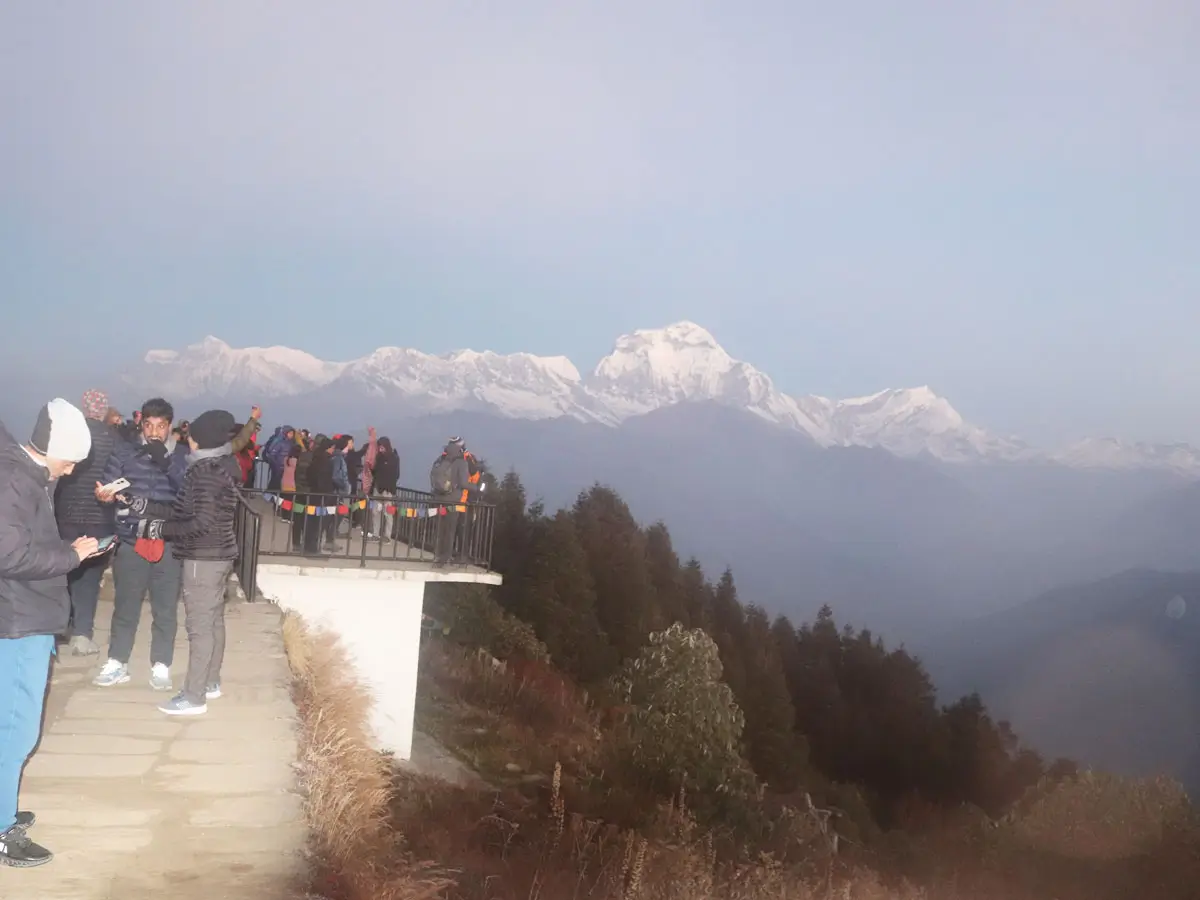
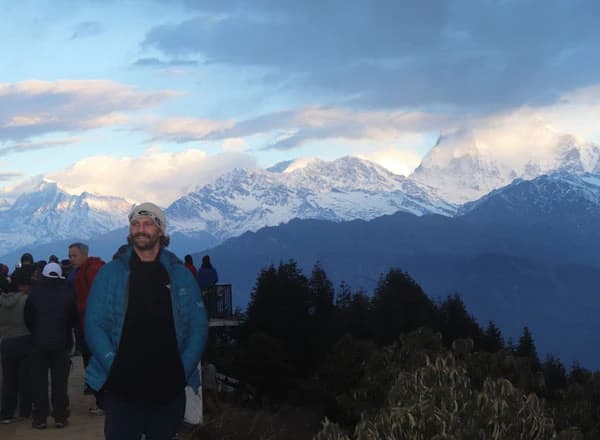
The Himalaya view from Poon Hill!
Annapurna Base Camp Trek Distance at a Glance
The 14-day package include sightseeing, road travel and hotel stays, but the actual trekking takes place over nine days. Here are the essential figures for the walking portion:
Trek detail
Approximate figure
Total walking distance
85–90 km (53–56 miles)
Number of trekking days
9 days
Distance on most full walking days
7–12 km
Usual daily walking time
5–7 hours
Longest walking days
Up to 7–8 hours
Highest elevation
Annapurna Base Camp at 4,130 m
Important viewpoint
Poon Hill at 3,210 m
Trekking route
Nayapul–Poon Hill–ABC–Jhinu Danda
Note: The total is approximate because trail measurements can vary depending on the exact starting point, the GPS method used, and local road transfers and the distances traveled by vehicle between Kathmandu, Pokhara, and the trailheads are not included in the 85–90-kilometer trekking total.
How Many Kilometers Is the Annapurna Base Camp Trek?
The Annapurna Base Camp Trek covers approximately 85–90 kilometers on Outfitter Himalaya’s classic route via Ghorepani, Poon Hill, and Tadapani. The actual distance depends on the starting point, trail conditions, and selected itinerary. Most trekking days involve around 7–12 kilometers of walking and take approximately 5–7 hours, with some longer stages requiring 7–8 hours.
How far is the Annapurna Base Camp? : Daily Distance, Walking Hours and Elevation
The following table presents the walking stages in Outfitter Himalaya’s 14-day itinerary. Days 1, 2, 3, 13, and 14 cover arrival, sightseeing, and travel between Kathmandu and Pokhara, so they are not included as trekking distance.
Itinerary day
Walking route
Approx. distance
Walking time
Key elevation
Day 4
Nayapul to Tikhedhunga
7 k
3–4 hours
1,540 m
Day 5
Tikhedhunga to Ghorepani
11 km
7–8 hours
2,860 m
Day 6
Ghorepani–Poon Hill–Tadapani
12 km
6–7 hours
Poon Hill: 3,210 m
Day 7
Tadapani to Chhomrong
10 km
6–7 hours
2,170 m
Day 8
Chhomrong to Himalaya
11 km
6–7 hours
2,920 m
Day 9
Himalaya to Annapurna Base Camp
11 km
6–7 hours
4,130 m
Day 10
Annapurna Base Camp to Dovan
12 km
6–7 hours
Dovan: 2,600 m
Day 11
Dovan to Jhinu Danda
12 km
1,760 m
1,760 m
Day 12
Jhinu Danda to the road-access point, then drive to Pokhara
Short walk
4–5 hours combined
Pokhara: 830 m
Note: These measurements are intended for planning rather than precise navigation. Minor variations may occur when trail sections, bridge crossings, or vehicle-access points change.
Although most trekking days cover around 7–12 kilometers, the Annapurna Base Camp Trek can feel more demanding because of steep stone staircases, repeated ascents and descents, and walking at higher elevations. Distance is only one factor in determining how challenging a trekking day will be. For a more detailed explanation of the terrain, walking effort, and preparation required, read our guide to Annapurna Base Camp Trek difficulty.
Why Do Annapurna Base Camp Trek Distance Figures Differ?
Online estimates for the Annapurna Base Camp Trek vary because there is no single required starting point or itinerary, and the final distance depends on several route choices.
Chosen approach: Traveling through Ghorepani, Poon Hill and Tadapani adds distance compared with the direct trail through Jhinu Danda and Chhomrong.
Road-access point: Expanding rural roads allow some itineraries to begin closer to the main trekking trail than others.
Return arrangement: walking back from ABC creates a longer journey than returning by helicopter.
Method of measurement: GPS devices, mapping applications and trekking companies may record junctions, lodge locations and short side trips differently.
Note: Some published totals also combine road travel from Pokhara with the walking route, while others calculate only the trail kilometers. For clarity, the 85–90-kilometer figure in this guide refers only to the distance traveled on foot during Outfitter Himalaya’s classic itinerary. It does not include road journeys between Kathmandu, Pokhara and the trailheads.
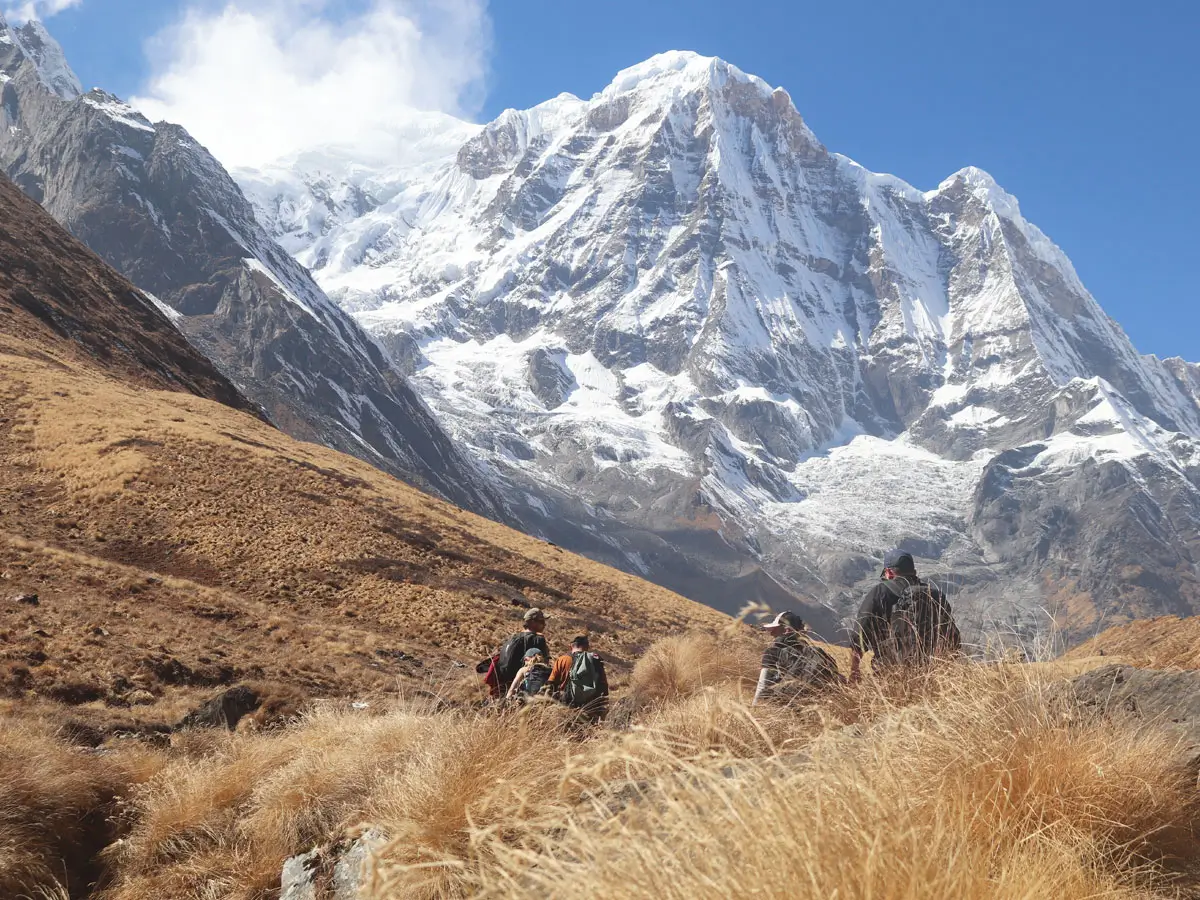
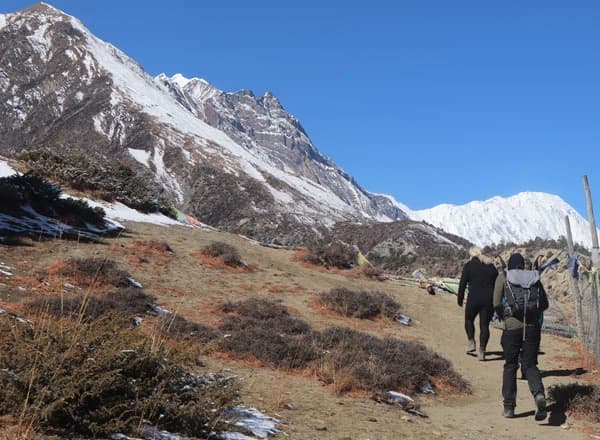
Our clients walking todards ABC!
Annapurna Base Camp Trek Distance versus Difficulty
Does the Annapurna Base Camp Trek Feel Longer Than 85–90 Kilometers?
The ABC trail is considerably more demanding than walking the same distance on a level road. It repeatedly descends to rivers and climbs back to mountain villages, so you will gain and lose hundreds of meters without traveling many kilometers forward. Stone staircases, uneven forest paths, altitude and weather also influence daily speed.
The Longest and Most Demanding Walking Days
Tikhedhunga to Ghorepani: Although this stage is only about 11 kilometers, it normally requires seven to eight hours. The long climb towards Ulleri includes thousands of stone steps and makes this one of the most physically demanding days.
Ghorepani to Tadapani via Poon Hill: The day begins with a pre-dawn ascent to Poon Hill, then continues across forested ridges to Tadapani. You cover around 12 kilometers, but the repeated climbing and descending make it feel longer.
Chhomrong to Himalaya: This 11-kilometer section first descends to Chhomrong Khola, then climbs through Sinuwa, Bamboo, and Dovan. The constant elevation changes require more effort than the distance suggests.
Himalaya to Annapurna Base Camp: The final ascent covers about 11 kilometers, rising from 2,920 meters to 4,130 meters. The scenery grows more dramatic, but thinner air naturally slows the pace.
Altitude is another important factor when planning the Annapurna Base Camp Trek. Although the daily distance may be manageable, walking at higher elevations requires proper pacing, hydration, and awareness of altitude-related symptoms. Learn more about the Annapurna Base Camp Trek altitude and AMS in our dedicated guide to altitude, acclimatization, and trekking preparation.
The return stages cover similar or greater daily distances, yet descending can be faster. However, prolonged downhill walking puts extra pressure on the knees, so trekking poles stay useful even after the main ascent. For more information about the physical challenges, steep sections, and preparation required, read our detailed guide to Annapurna Base Camp Trek difficulty.
How Route Choice Changes the ABC Trek Distance
Outfitter Himalaya offers several ways to reach Annapurna Base Camp. The destination stays the same, but the number of trekking days and kilometers change depending on the approach and return arrangement.
Extended route combining Poon Hill, ABC and Mardi Himal
The 14-day and 9-day itineraries cover similar trail distances because the extra days in the complete package cover Kathmandu, Pokhara, and transportation. The five-day route reduces both distance and duration but concentrates the ascent and descent into longer, more physically demanding stages.
The helicopter-return itinerary removes several days of downhill walking after reaching base camp. It suits travelers who want to experience the scenic approach through Poon Hill while reducing the strain and time required for the return journey.
Note: All distances are approximate because trailheads and local road-access points can change.
The total cost of the Annapurna Base Camp Trek depends on the route, duration, group size, transportation, accommodation, and services included in your package. If you are comparing different ABC itineraries, read our Annapurna Base Camp Trek cost guide to understand the available packages and what affects the overall price.
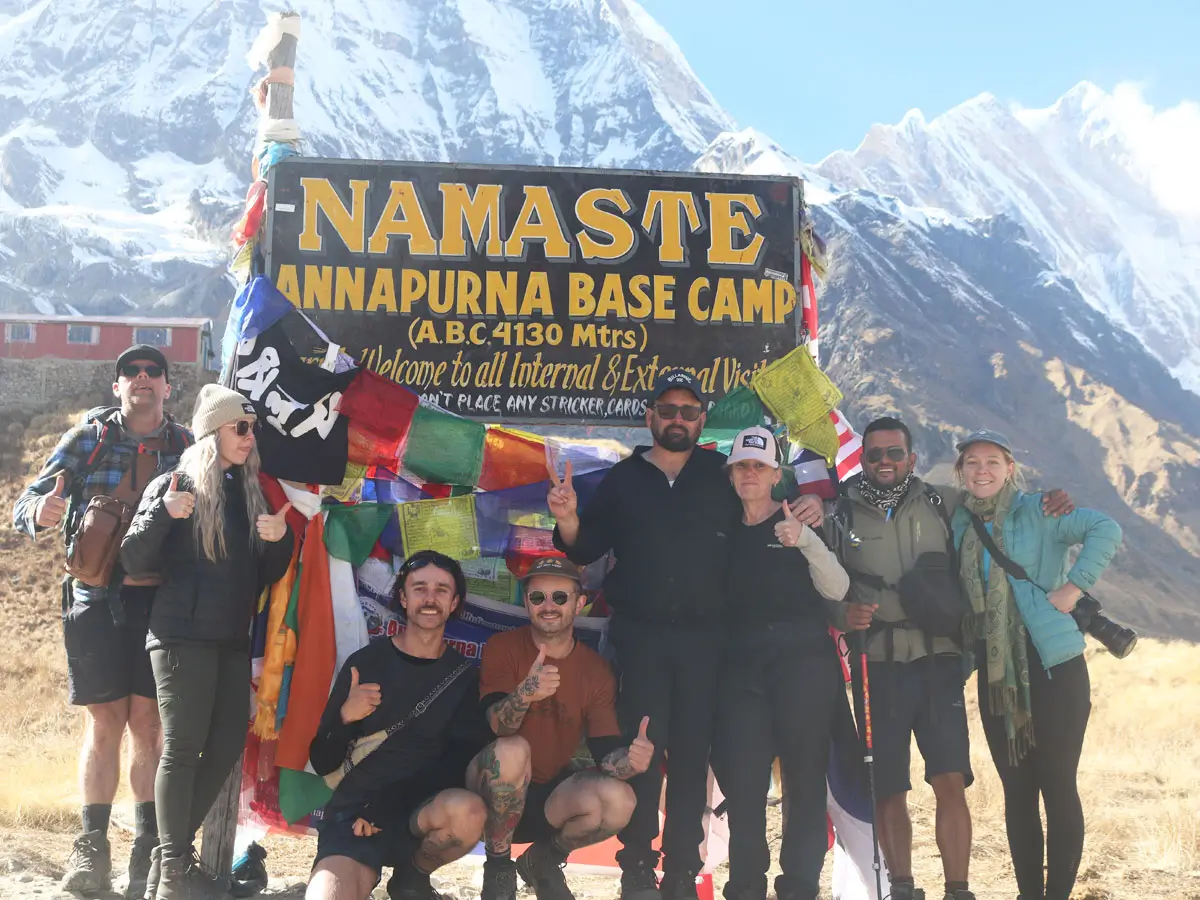
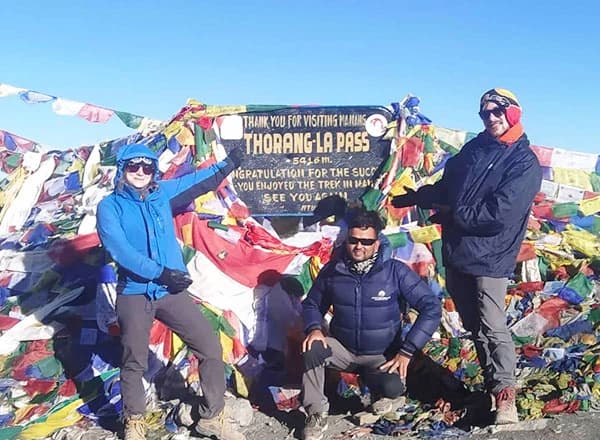
Our trekkers with guide Bhim reached ABC!
How to Prepare for the Daily Walking Distance
The classic ABC route is achievable for reasonably fit first-time trekkers, but preparation should match the terrain, not just the total kilometers. Training on hills and stairs is more useful than practicing only on flat roads or a treadmill.
Our Tips
Regular walks of two to four hours
Hill climbing or stair training
Squats, lunges and basic core exercises
Occasional hikes while carrying a light daypack
Practice in the trekking boots you will use in Nepal
During the trek, maintain a comfortable pace instead of trying to finish each stage quickly, and carry water, snacks, waterproof clothing, and essential personal items in a manageable daypack. Trekking poles are especially helpful on the Ulleri steps and during the long descent from the sanctuary.
Physical fitness makes the daily distance easier, but it does not remove the effects of altitude. Walk steadily, stay hydrated, and inform your guide if you develop a headache, nausea, dizziness, or unusual fatigue as the route climbs towards Annapurna Base Camp.
The Annapurna Base Camp Trek includes overnight stays in mountain villages and teahouses along the trail. Understanding the available accommodation can help you prepare for the walking days and plan your expectations for comfort and facilities. Read our guide to accommodation on the Annapurna Base Camp Trek to learn more about teahouses and guest houses along the route.
The season you choose can influence trail conditions, weather, visibility, and the experience of walking the Annapurna Base Camp route. Spring and autumn are popular trekking periods, but conditions vary throughout the year. Read our guide to the best time for Annapurna Base Camp Trek to help you plan your trip according to your preferred travel season.
Annapurna Base Camp Trek Distance FAQS
How long is the Annapurna Base Camp Trek?
Outfitter Himalaya’s classic route via Ghorepani and Poon Hill covers approximately 85–90 kilometers, or 53–56 miles, on foot.
How many kilometers do you walk each day on ABC Trek?
Most full trekking days cover around 7–12 kilometers. The time required varies because steep steps, uneven terrain and elevation changes affect walking speed.
How many hours do you walk daily on the ABC Trek?
Trekkers normally walk for five to seven hours per day. The climb from Tikhedhunga to Ghorepani may take seven to eight hours.
How many days are spent trekking?
The complete package lasts 14 days, but nine days involve trekking. The remaining days cover arrival, sightseeing, and travel between Kathmandu and Pokhara.
Can beginners manage the daily distance?
Yes. A reasonably fit beginner can complete the classic itinerary with advance training, a steady pace, and suitable preparation. Previous mountaineering experience is not required.
Does road travel count towards the total distance?
No. The 85–90-kilometer estimate refers to walking distance. Vehicle journeys between Kathmandu, Pokhara and the trailheads are calculated separately.
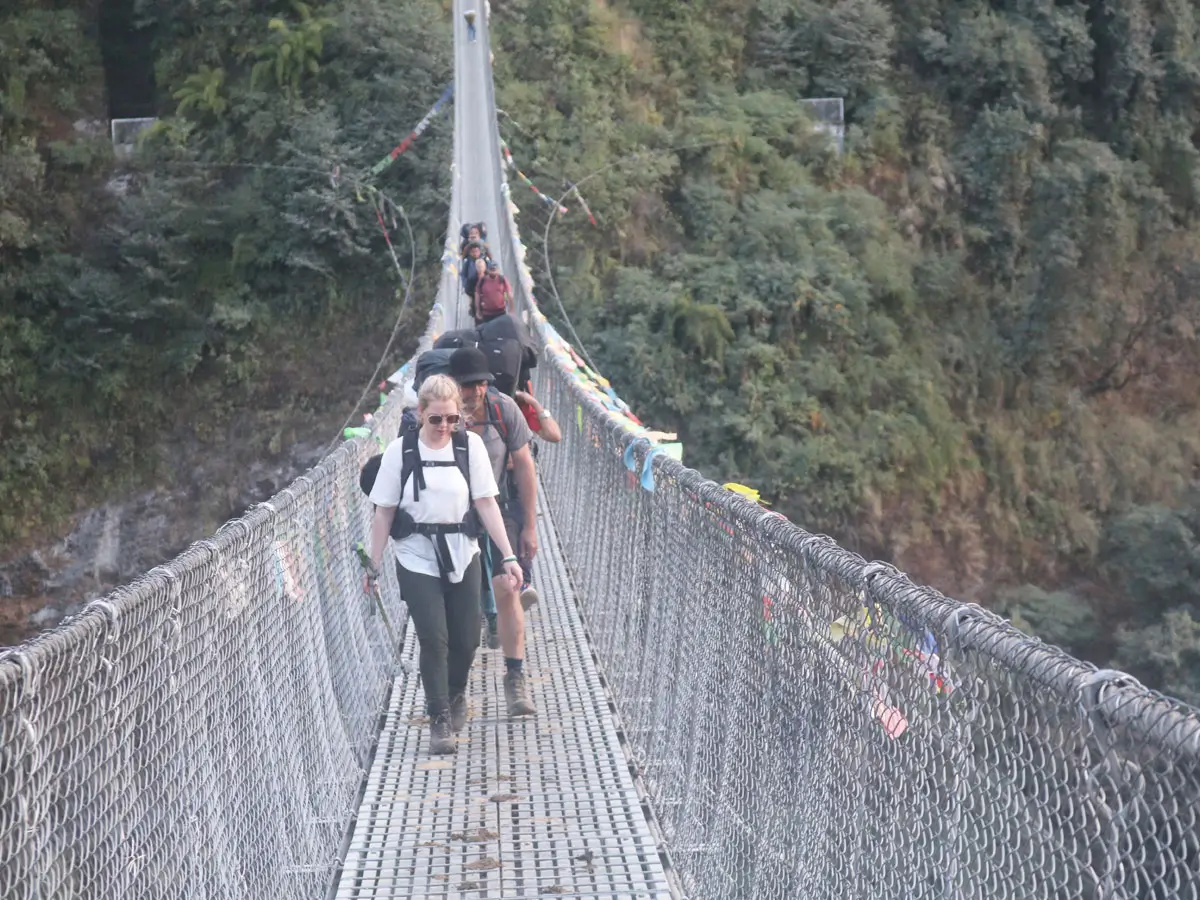
Our clients crossing bridge on ABC Trek!
Conclusion: How Far is the Annapurna Base Camp Trek?
Outfitter Himalaya’s classic Annapurna Base Camp Trek covers approximately 85-90 kilometers over nine trekking days. Most full stages cover 7-12 kilometers and take five to seven hours of walking, with longer days taking up to eight hours.
The numbers are manageable for a reasonably fit trekker, but don't judge the trail by distance alone. Stone steps, repeated elevation changes and the final ascent to 4,130 meters make steady pacing and preparation important.
Traveling through Ghorepani, Poon Hill, Tadapani and Chhomrong adds kilometers compared with the direct route, but it also adds sunrise views, forest trails and traditional villages to the experience. Trekkers with less time can choose the five-day direct itinerary. Meanwhile, those who want to shorten the return walk can choose the helicopter-return option, and travelers seeking a longer adventure can combine ABC with Poon Hill and Mardi Himal.
Whichever route you choose, understanding the daily distance and elevation profile makes it easier to select a suitable itinerary and arrive prepared for the journey to Annapurna Base Camp.
The Annapurna Circuit Trek covers approximately 102 kilometers of walking on Outfitter Himalaya’s classic 15-day itinerary, including the Manang acclimatization hike. The journey unfolds through riverside forests, mountain villages and open valleys before crossing Thorong La [...]
The Annapurna Circuit Trek costs about USD 650–1,900 per person with Outfitter Himalaya, depending on the itinerary, group size, and services included. Outfitter Himalaya’s 15-day Classic Annapurna Circuit Trek has published group-size prices of USD [...]
Foreign trekkers need a trekking permit to trek the Annapurna Circuit, and we suggest settling it before you head out. Arranging the correct paperwork before departure helps avoid extra charges and interruptions once your journey [...]