Planning the Annapurna Base Camp Trek in November?
November is one of the best months to trek into the Annapurna Sanctuary, offering generally dry trails, stable autumn weather, excellent Himalayan visibility, and comfortable daytime trekking temperatures. The main thing to prepare for is the cold at higher elevations, particularly around Machhapuchhre Base Camp and Annapurna Base Camp.
For most trekkers, early to mid-November offers the best balance of clear skies, manageable temperatures, and excellent mountain views. Late November is also a good time to trek. However, temperatures drop further, and winter conditions become more noticeable at higher elevations.
If you want to experience Annapurna Base Camp with clear mountain scenery and reliable trekking conditions, November is an excellent choice.
Annapurna Base Camp Trek in November at a Glance
Factor
What to Expect in November
Season
Late autumn
Weather
Generally dry and stable
Mountain visibility
Excellent on clear days
Daytime conditions
Cool and comfortable for trekking
Higher-altitude nights
Cold, often around or below freezing
Rainfall
Generally low
Snow
Possible at higher elevations, particularly later in November
Trail conditions
Usually dry and firm
Crowds
Busy, but generally calmer than October
Tea houses
Open
Main challenge
Cold mornings, nights, and shorter daylight
Is November a Good Time for the Annapurna Base Camp Trek?
Yes, November is one of the best months for the Annapurna Base Camp Trek.
The monsoon has ended, the autumn weather is generally stable, and the atmosphere is often clear enough to provide excellent views of Annapurna I, Annapurna South, Machhapuchhre (Fishtail), Hiunchuli, and surrounding peaks.
In short, November is ideal if you want:
Clear Himalayan views
Dry and generally stable trails
Comfortable daytime walking
A classic autumn trekking experience
Less congestion than the busiest October period
Excellent photography conditions
A good chance of completing the trek according to your planned itinerary
November combines many of the conditions trekkers look for when choosing a Himalayan trekking season. The weather is generally dependable, the landscape is transitioning into the colder part of autumn, and the mountain scenery is often exceptional.
Clear Himalayan Mountain Views
One of the biggest reasons to choose November is visibility. On clear days, the mountain panorama around the Annapurna Sanctuary can be spectacular. From different points along the trail, you may see:
Annapurna I – 8,091 m
Annapurna South
Machhapuchhre (Fishtail)
Hiunchuli
Gangapurna
Annapurna III and surrounding peaks
Generally Dry Trekking Conditions
November comes after Nepal's monsoon season, so prolonged rainfall is uncommon. The trails are generally dry and firm, which makes the many stone steps and uphill sections of the ABC route more comfortable than during the wet season.
However, "dry season" does not mean that every day is guaranteed to be completely dry. Mountain weather can change, and occasional rain or snow is always possible at higher elevations.
Comfortable Temperatures During the Day
At lower and middle elevations, daytime temperatures in November are generally comfortable for walking.
You may start the morning wearing several layers. Still, as the sun rises and you begin climbing, you will often be able to remove a layer or two.
At higher elevations, temperatures remain colder, particularly when walking early in the morning or when the sun disappears behind the mountains.
Excellent Photography Conditions
November is a particularly attractive month for landscape photography.
Clear skies, sharp mountain silhouettes, autumn light, and dramatic sunrise views create excellent opportunities throughout the trek.
The sunrise from Annapurna Base Camp is one of the highlights. Watching the first light reach the surrounding peaks is especially rewarding after an early-morning walk from the nearby lodge at Machhapuchhre Base Camp.
A More Relaxed Atmosphere Than Peak October
November is still a popular month for trekking in the Annapurna region. However, after the busiest autumn period, some sections of the trail can feel less congested.
If you want good autumn weather but prefer to avoid the busiest possible trekking atmosphere, November can offer a good compromise.
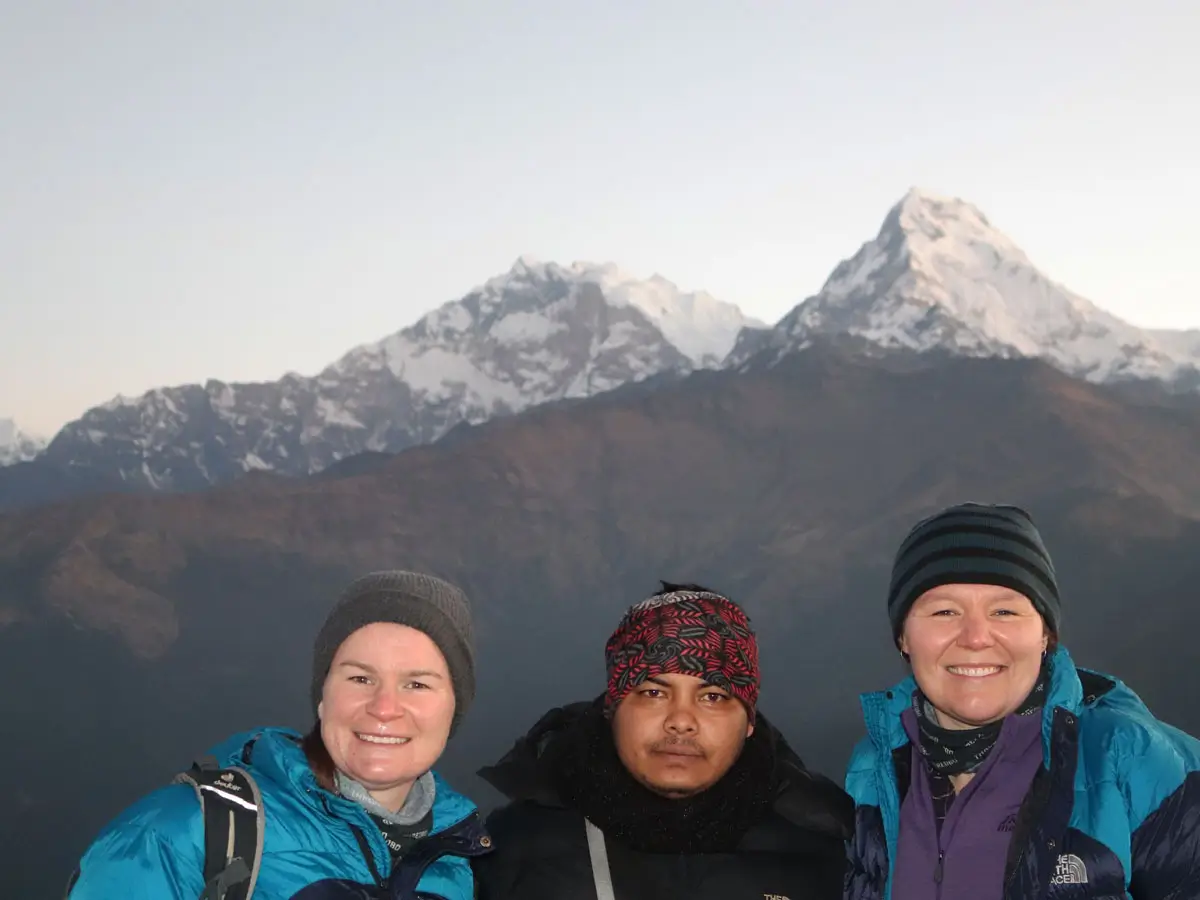
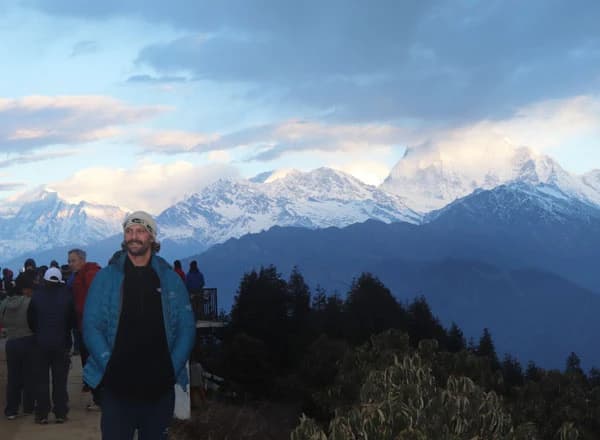
Poon Hill view point!
Annapurna Base Camp Weather in November
November generally brings dry, stable, and cool autumn weather to the Annapurna region.
Weather conditions change considerably with altitude, so it is important not to think of "November weather" as one temperature throughout the entire trek.
At lower elevations, conditions can feel pleasantly warm in the sunshine. At Annapurna Base Camp, the environment is much colder, particularly before sunrise and after sunset.
Morning Weather
Mornings are usually crisp and cold.
At higher elevations, frost can occur, and temperatures around Machhapuchhre Base Camp and Annapurna Base Camp can be near or below freezing.
If your itinerary includes an early-morning departure for sunrise at ABC, warm layers are essential.
Daytime Weather
Daytime is generally the most comfortable time to trek.
Once the sun is up, conditions at lower and middle elevations can become quite pleasant. At higher elevations, temperatures remain cool, but the clear skies and dry trails usually make for excellent walking conditions.
Evening and Nighttime Weather
Temperatures fall quickly after sunset.
The higher you travel, the more noticeable the cold becomes. Nights at Machhapuchhre Base Camp and Annapurna Base Camp can be freezing, so a suitable sleeping bag and warm clothing are important.
Late November is generally colder than early November.
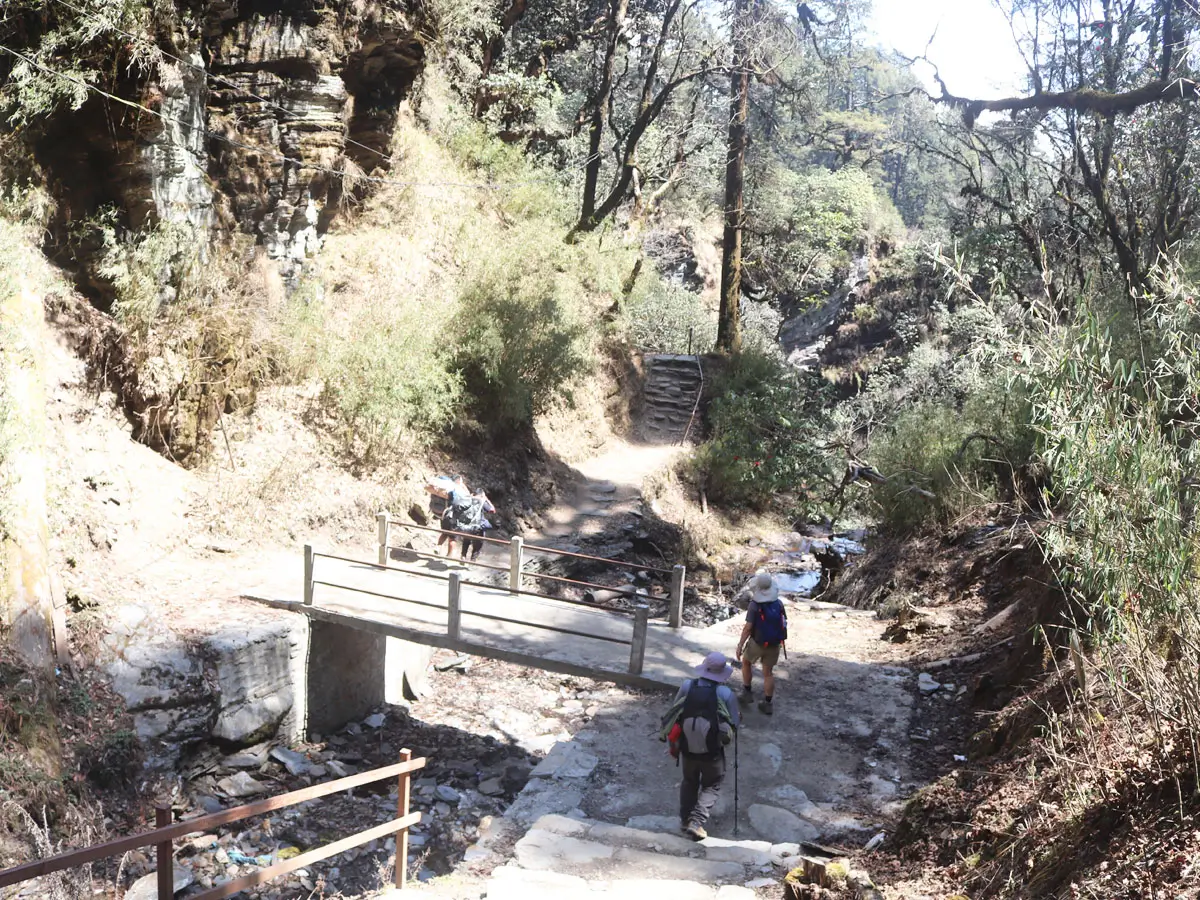
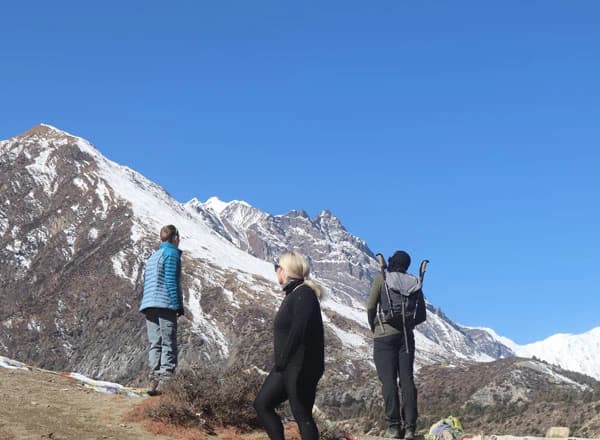
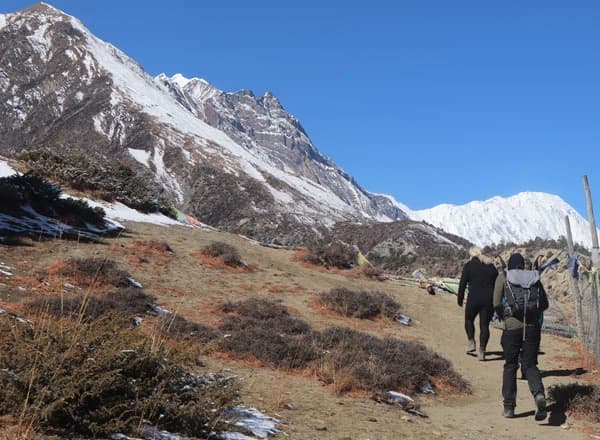
Walking towards ABC!
Annapurna Base Camp Temperature in November
Temperatures vary according to elevation, weather, and time of day. The following ranges are useful as a general planning guide rather than a guarantee.
Area
Approx. Elevation
Typical Daytime Range
Typical Nighttime Range
Pokhara
830 m
Mild to warm
Cool
Ulleri /Ghandruk/Chhomrong
1,400 - 2,200m
Cool to comfortable
Cool
Ghorepani /Tadapani/Bamboo / Dovan
2300 - 2800m
Cool
Cold
Deurali
3,200 m
Cool
Cold
Machhapuchhre Base Camp
3,700 m
Cold
Around freezing or below
Annapurna Base Camp
4,130 m
Cold
Around freezing or below
Does It Snow at Annapurna Base Camp in November?
Snow is possible at higher elevations in November, but significant snowfall is not normally expected throughout the month.
Early November generally has a lower chance of snowfall. As winter approaches, the possibility of light snow at higher elevations increases, particularly toward the end of November.
Weather in the mountains can change quickly, so trekkers should be prepared for colder-than-expected conditions even when the forecast looks favorable.
The possibility of snow is one reason your guide should always have flexibility to adjust the itinerary if necessary.
Early, Mid or Late November: When Is Best?
The entire month can be good for trekking, but there are differences as November progresses.
Period
Weather
Temperature
Crowds
Best For
Early November
Stable and clear
Slightly warmer
Moderate to busy
Best overall balance
Mid-November
Generally clear and dry
Cooler
Moderate
Views and quieter trails
Late November
Clear but colder
Coldest of the three
Generally quieter
Trekkers comfortable with cold
Early November
Early November is a particularly good choice if you want to balance excellent mountain views with relatively comfortable temperatures.
The trails are still part of the busy autumn trekking season, but conditions are generally very favorable.
Mid-November
Mid-November can provide an excellent combination of clear skies, dry trails, and gradually quieter trails.
Temperatures are cooler, particularly in the mornings and evenings, but daytime trekking remains comfortable on most days.
Late November
Late November can still be an excellent time for the ABC Trek.
The biggest difference is the cold. Higher-altitude mornings and nights become increasingly wintry, and occasional snowfall becomes more likely.
If you are comfortable with cold weather and want a quieter trekking atmosphere, late November can be rewarding.
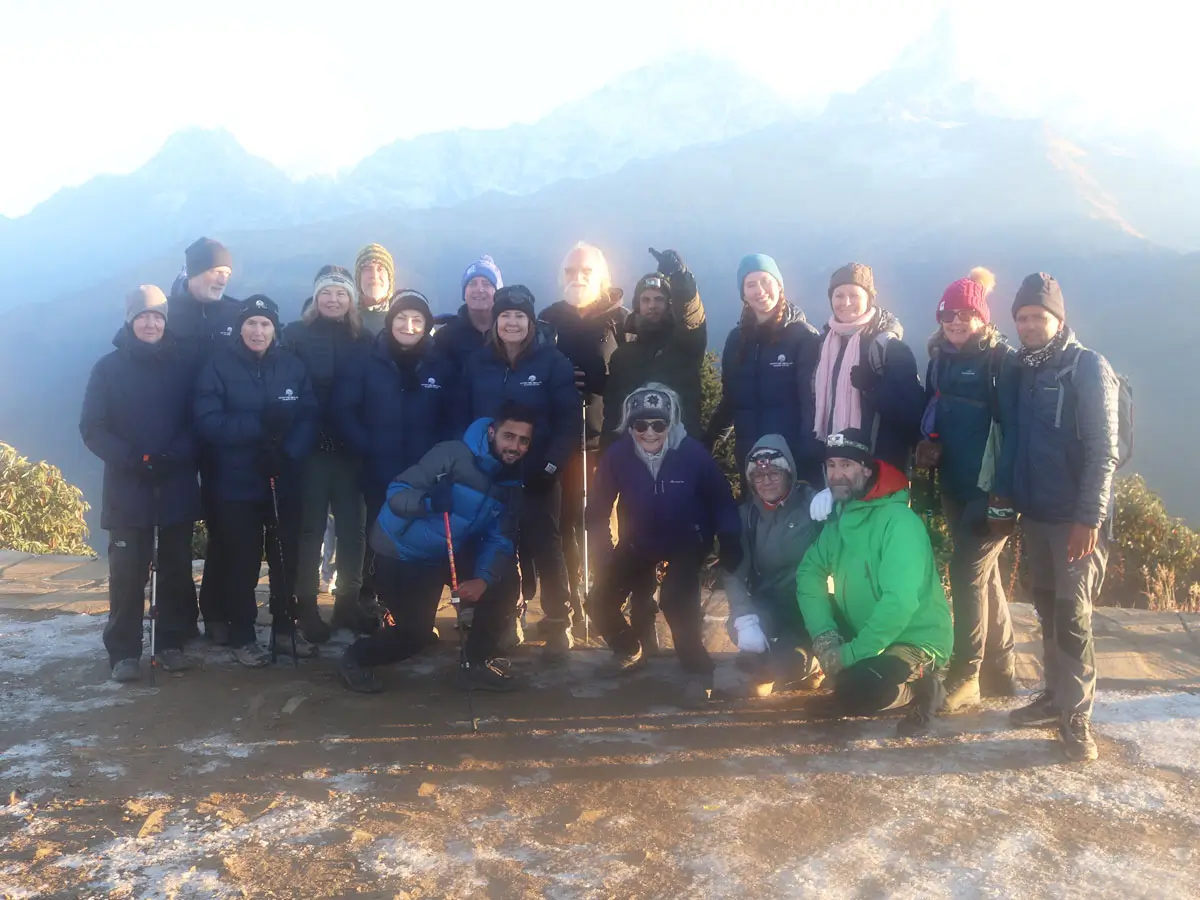
Reaching ABC!
What Is the Annapurna Base Camp Trek Like in November?
A November ABC Trek begins in the warmer foothills before gradually entering the cooler mountain environment.
The journey typically passes through traditional villages, terraced hillsides, forests, and increasingly dramatic mountain landscapes before entering the Annapurna Sanctuary.
You can expect considerable variation during a single day of trekking.
A morning that begins in a cool village may become pleasantly warm once the sun reaches the trail. Higher up, however, the temperature drops noticeably again.
The final approach to Machhapuchhre Base Camp and Annapurna Base Camp feels very different from the lower sections of the route. The vegetation becomes more sparse, the surrounding mountains dominate the landscape, and the cold becomes much more noticeable.
One of the most memorable parts of a November itinerary is reaching Annapurna Base Camp and experiencing the mountain amphitheater under clear autumn skies.
Is the Annapurna Base Camp Trek Difficult in November?
The Annapurna Base Camp Trek is generally considered a moderate trek, but it should not be underestimated. The main challenges are not technical climbing. Instead, you need to be prepared for:
Long walking days
Repeated uphill and downhill sections
Thousands of stone steps on parts of the route
Increasing altitude
Cold mornings and nights
A maximum elevation of 4,130 meters
November can make the trail easier in some respects because conditions are generally dry and stable. At the same time, colder temperatures at higher elevations add another challenge.
For most healthy and reasonably fit trekkers, the trek is achievable with appropriate preparation and a sensible pace. Our guide monitor your condition as you gain altitude and respond appropriately if you develop symptoms of altitude sickness.
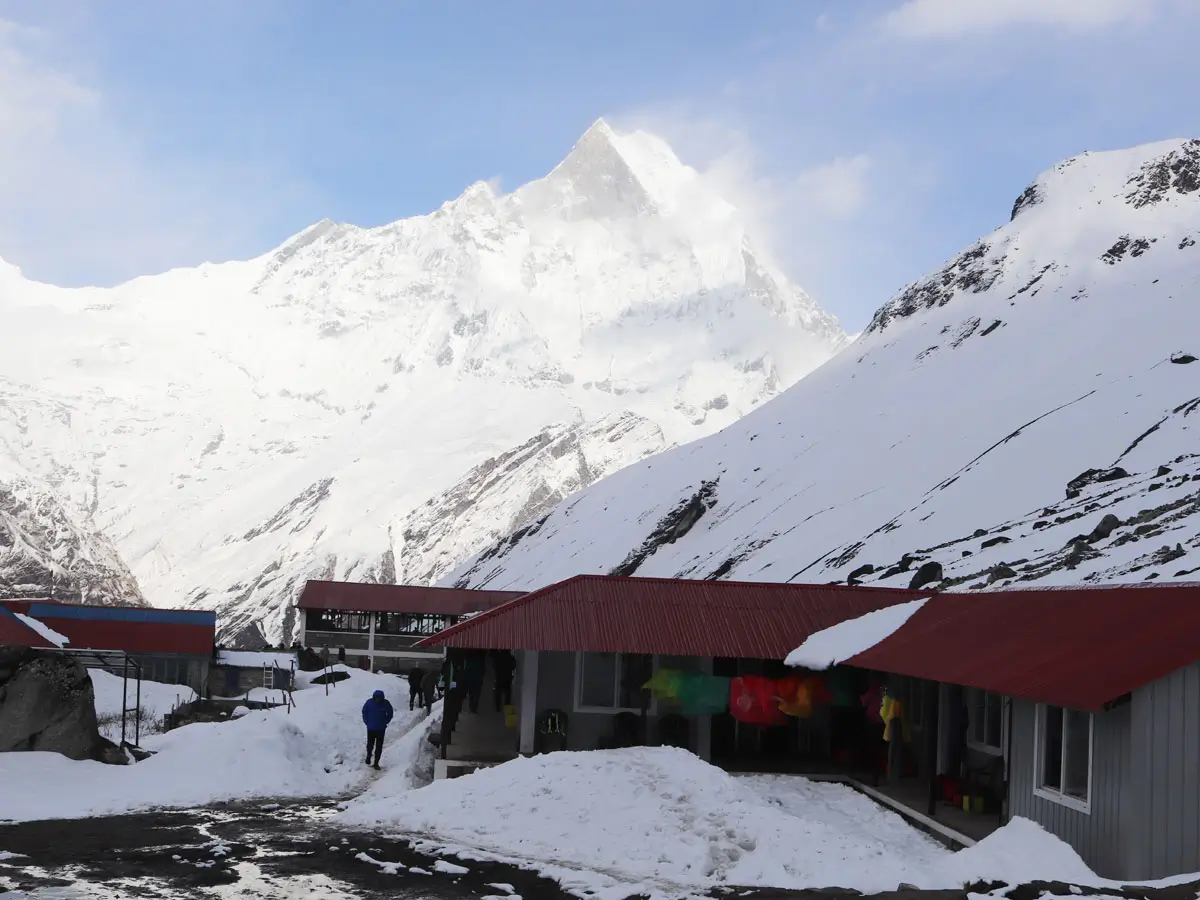
Tea houses in ABC!
Altitude and Acclimatization on the November ABC Trek
The highest point of the trek is Annapurna Base Camp at 4,130 meters. Altitude affects people differently, and being physically fit does not completely eliminate the possibility of altitude sickness. The best approach is to:
Ascend gradually
Maintain a comfortable walking pace
Stay properly hydrated
Eat regular meals
Avoid excessive alcohol at altitude
Tell your guide immediately if you feel unwell
Follow your guide's advice if altitude symptoms develop
Cold weather can also make you feel tired, so maintaining adequate nutrition, hydration, and rest is particularly important in November.
What to Pack for Annapurna Base Camp in November
Packing for November is mainly about preparing for temperature changes. You may experience warm sunshine during the day and freezing conditions at night, so a good layering system is more useful than relying on one very heavy jacket.
Do not judge your clothing requirements by the temperature in Pokhara.
Pokhara can feel pleasantly warm while Annapurna Base Camp is close to freezing. Your packing should be based on the coldest part of the trek, not the starting point.
Tea Houses and Accommodation in November
November falls within the main trekking season, so tea houses along the established Annapurna Base Camp route are generally operating. However, November is still popular.
During busy periods, it is sensible to begin your trekking day at a reasonable hour and work with your guide to secure suitable accommodation.
At higher elevations, facilities are more basic than in Pokhara or Kathmandu. Expect simple rooms, shared facilities in many places, and common dining areas where the main source of warmth may be a stove.
The colder it gets outside, the more valuable a warm sleeping bag and suitable clothing become.
What About Food and Drinking Water in November?
Tea houses along the ABC route serve a range of meals, commonly including dal bhat, noodles, pasta, rice dishes, soups, eggs, Tibetan-style bread and other simple trekking food.
Warm meals and hot drinks are especially welcome in November.
Continue drinking enough water even when you do not feel as thirsty as you would in warmer weather. Hydration remains important while trekking at altitude.
Your guide can also advise you on safe drinking water options along the route.
Why November Is Good for Photography
If photography is an important part of your trek, November is an excellent month to consider. Clear conditions can produce:
Sharp mountain silhouettes
Deep blue skies
Dramatic sunrise light
Snow-covered Himalayan peaks
Golden autumn landscapes
Clear views down the valley
At higher elevations, early morning is often particularly rewarding. Remember that cold temperatures can reduce battery life, so keep spare batteries or a power bank protected from the cold where possible.
November Trekking Tips From Our Experience
Based on our experience organizing Annapurna Base Camp treks in autumn, November is especially popular with travelers seeking clear mountain views after the peak October rush. The biggest difference trekkers notice is usually the colder mornings and nights at higher elevations, rather than the difficulty of daytime walking.
Start early: Shorter daylight hours make early starts useful, particularly on longer trekking days.
Layer rather than overdress: You can become warm while walking uphill and cold quickly when you stop. Several adjustable layers are more practical than one very heavy layer.
Prepare seriously for the cold at ABC: Do not assume that because November is an autumn trekking month, the high-altitude nights will be mild.
Protect yourself from the sun: Clear mountain skies can mean strong UV exposure. Sunglasses, sunscreen and a hat are important even when the air feels cold.
Keep hydrated: Cold weather can reduce your sensation of thirst, but altitude and physical exertion still increase your need for fluids.
Listen to your guide: Mountain conditions can change. Your guide's local knowledge is particularly important when deciding whether to continue, change the timing, or modify the itinerary due to weather or health concerns.
Annapurna Base Camp in November vs October
Both October and November are excellent months for the ABC Trek, but the experience is slightly different.
October is generally warmer and is one of the busiest periods of the autumn trekking season: Choose October if you prefer slightly warmer conditions and do not mind peak-season crowds.
November is cooler but can provide exceptionally clear mountain views and a somewhat calmer atmosphere as the month progresses: Choose November if you want excellent autumn conditions and are comfortable with colder mornings and nights.
Annapurna Base Camp in November vs December
The transition from November to December brings a more noticeable winter feel.
November generally offers a better balance between autumn trekking conditions and cold-weather scenery.
December is colder, particularly at higher elevations, and winter conditions become increasingly relevant.
If you want the classic combination of stable autumn weather, dry trails, and comfortable daytime trekking, November is generally the safer choice between the two. For a complete seasonal comparison, see our guide to the best time to trek Annapurna Base Camp.
Choose November if you want excellent autumn conditions and are comfortable with colder mornings and nights.
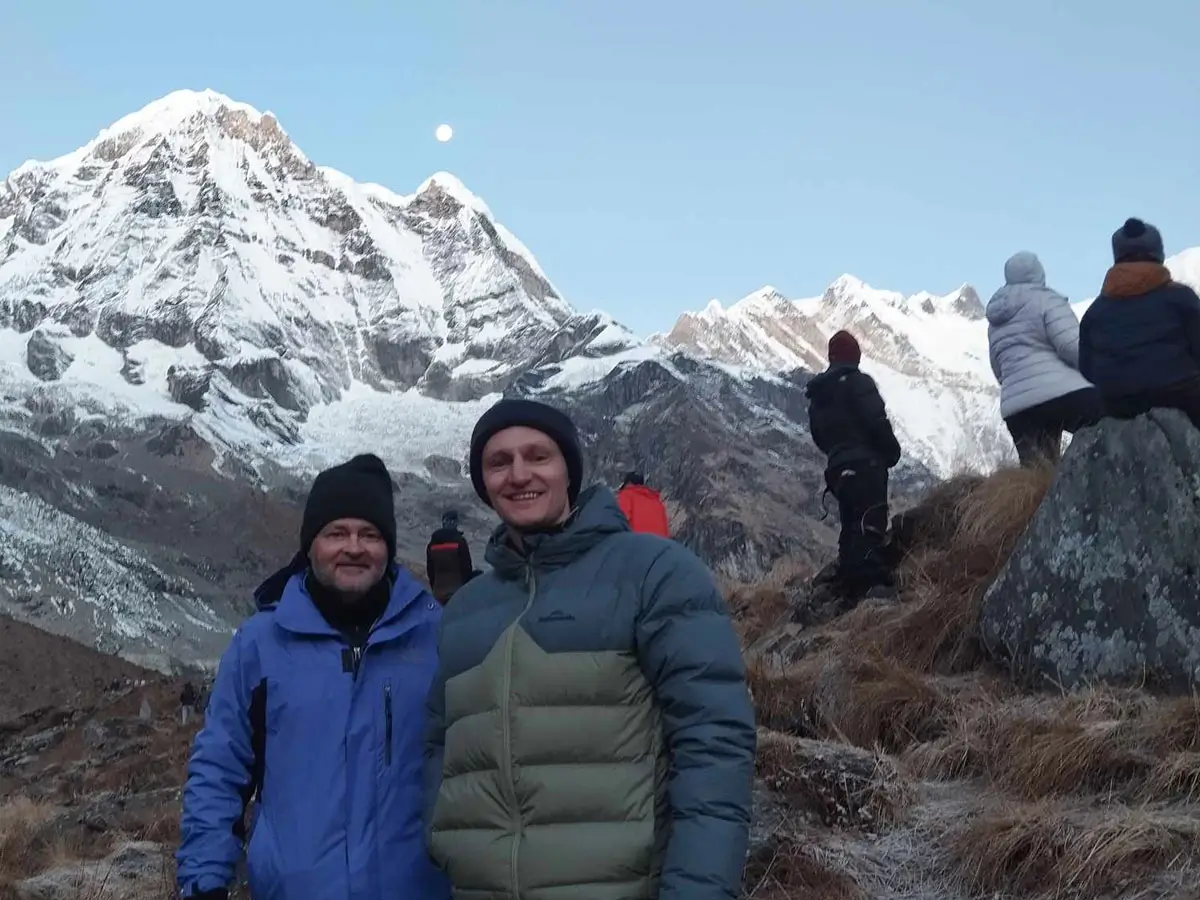
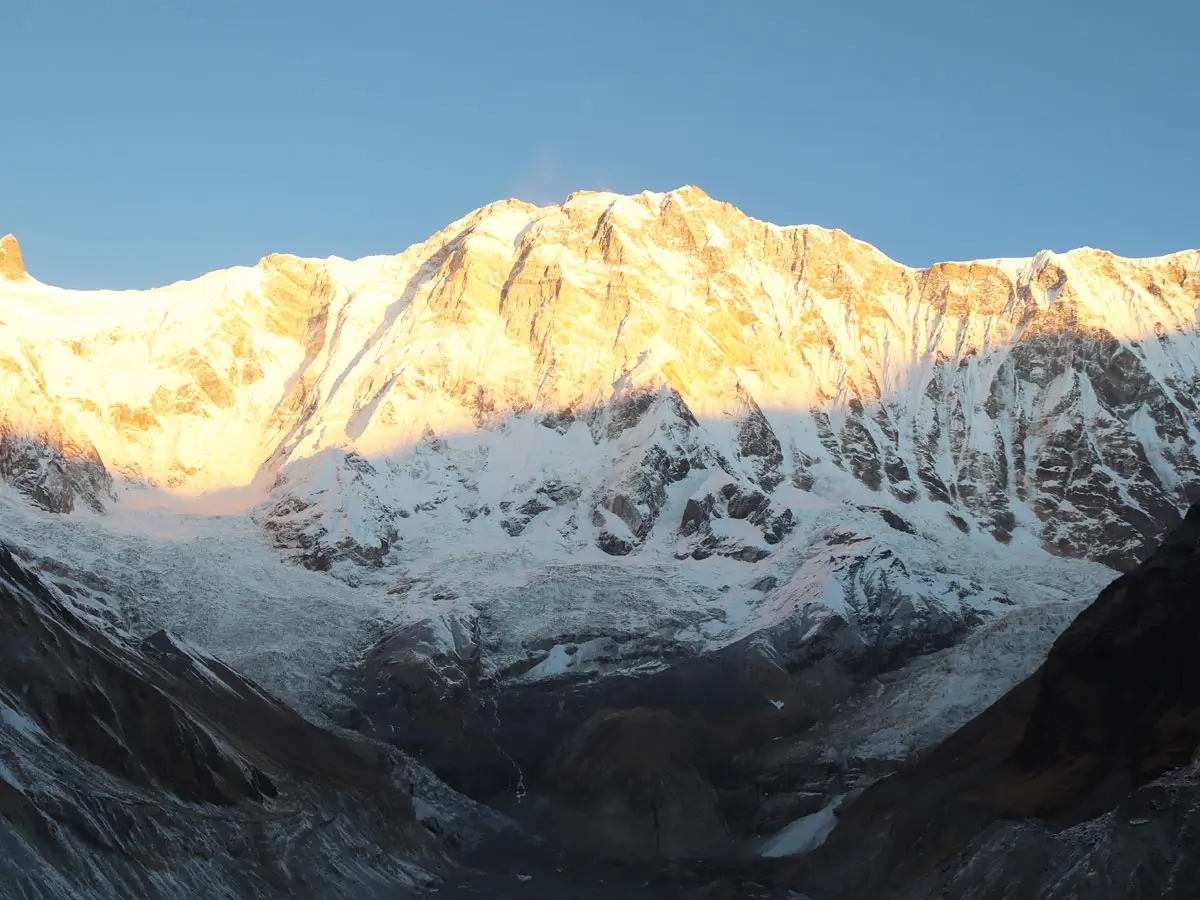
The Annapurna Glacier!
Recommended Annapurna Base Camp Trek Itinerary for November
For travelers who want the classic Annapurna Base Camp experience, a 14-day itinerary provides a comfortable framework for the journey. A well-planned itinerary allows you to travel from Kathmandu toward the Annapurna region, trek through the foothills and mountain villages, enter the Annapurna Sanctuary, reach Annapurna Base Camp at 4,130 meters, and return to Kathmandu.
The route also allows time to experience places such as Ghorepani, Chhomrong, Tadapani, Chhumrong, Himalaya, Machhapuchhre Base Camp, and the Annapurna Sanctuary, rather than rushing directly to ABC.
Our 14-Day Annapurna Base Camp Trek is designed for travelers who want to experience the classic ABC route with a gradual itinerary and local trekking support. See the complete itinerary, inclusions, departure information, and current availability on our Annapurna Base Camp Trek page.
Annapurna Base Camp Trek in November: Frequently Asked Questions
Is November the best month for the Annapurna Base Camp Trek?
November is one of the best months, but there is no single "best" month for every trekker. November is particularly attractive because of its generally dry weather, clear mountain views, and comfortable daytime trekking conditions. The trade-off is colder weather at higher elevations.
How cold is Annapurna Base Camp in November?
Annapurna Base Camp is cold in November, particularly at night and before sunrise. Temperatures can fall to around freezing or below freezing, especially later in the month. Warm layers and a suitable sleeping bag are essential.
Does it snow at Annapurna Base Camp in November?
Snow is possible at higher elevations, particularly later in November, but significant snowfall is not normally expected throughout the month. Mountain weather can change quickly, so trekkers should be prepared for winter-like conditions at ABC.
Is Annapurna Base Camp crowded in November?
November remains a popular trekking month, so the trail is not empty. However, it can feel less crowded than the busiest periods of October, particularly later in the month.
Are tea houses open during the Annapurna Base Camp Trek in November?
Yes, November falls within the main trekking season, and tea houses along the ABC route remain open. Accommodation can still become busy during November.
Is November suitable for beginner trekkers?
Yes, November's generally dry trails and stable weather can make it a good month for first-time Himalayan trekkers. However, the trek still requires reasonable fitness, preparation, and awareness of altitude.
How many hours do you walk each day on the ABC Trek in November?
Walking time depends on the itinerary and individual pace, but many trekking days involve approximately 5–7 hours of walking. Your guide may adjust the pace or schedule according to weather, trail conditions, and your physical condition.
What should I wear for Annapurna Base Camp in November?
Use a layering system consisting of thermal base layers, fleece, a warm down jacket and a protective outer layer. Warm gloves, a hat, thermal trousers, and a suitable sleeping bag are particularly important at higher elevations.
Is early or late November better for the ABC Trek?
For most trekkers, early to mid-November provides the best balance between comfortable temperatures and excellent mountain visibility. Late November can be quieter and still very clear, but it is colder and requires stronger preparation for winter conditions.
Which is better for ABC: October or November?
Both are excellent. October is generally warmer and busier, while November is cooler and can offer a quieter trekking atmosphere with excellent visibility. The better choice depends on whether you prioritize warmer temperatures or fewer crowds.
Is Annapurna Base Camp Trek in November Worth It?
Absolutely, November is one of the strongest months for the Annapurna Base Camp Trek. The combination of generally dry trails, stable autumn weather, excellent Himalayan visibility, and comfortable daytime trekking makes November an attractive choice for both experienced trekkers and first-time Himalayan visitors.
Annapurna Base Camp Trek by Month
Planning your trek around a particular month? Explore our monthly guides to understand how weather, temperatures, crowds, and trail conditions change throughout the year.
The Ghorepani Poon Hill Trek in March combines the beginning of rhododendron season with warming days and opportunities for clear Himalayan views. Sunrise at 3,210 meters remains cold, and higher paths can still have snow [...]
The Annapurna Circuit Trek covers approximately 102 kilometers of walking on Outfitter Himalaya’s classic 15-day itinerary, including the Manang acclimatization hike. The journey unfolds through riverside forests, mountain villages and open valleys before crossing Thorong La [...]
The Annapurna Circuit Trek costs about USD 650–1,900 per person with Outfitter Himalaya, depending on the itinerary, group size, and services included. Outfitter Himalaya’s 15-day Classic Annapurna Circuit Trek has published group-size prices of USD [...]